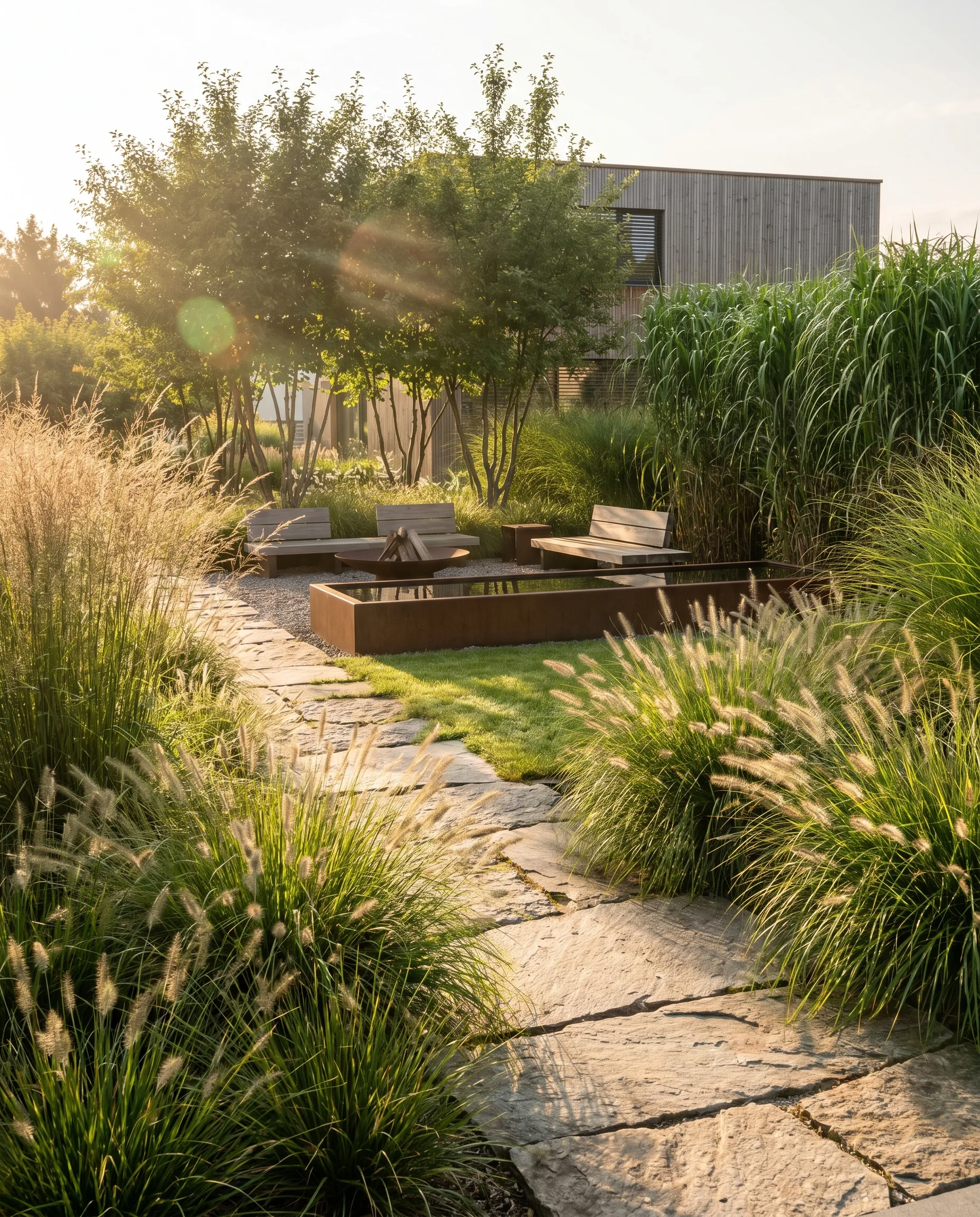
New-Build Garden Ideas: From Bare Ground to a Finished Garden
You’re standing on your plot of land, the house is still a shell or has just been completed — and all around you is compacted soil, construction debris, and maybe even the imprint of a crane or two. Welcome to the starting point of every new-build garden. The good news: right now is the best time to begin with concrete new-build garden ideas. Because planning early saves real money later — and prevents expensive mistakes.
This article shows you what the journey from a raw building site to a finished garden looks like: realistic, step by step, with real numbers.
Why the shell stage is the best time to plan your garden
Dive deeper: What a new-build garden costs and the order you should follow.
Many homeowners push the garden to the very end — understandable, because interior fit-out, the kitchen, and flooring are taking center stage. But it comes back to bite you. Once levels, service connections, and site grading are finished, certain decisions become significantly more expensive — or simply no longer possible.
What you should absolutely coordinate early:
- Conduits for irrigation control, lighting, and outdoor sockets to be installed during the house build
- Outdoor water connections (at least two, on opposite sides of the house)
- Power connections for garden lighting, pond pumps, or a carport
- Drainage: plan gradients, soakaways, or a connection to the sewer system early on
- Finished ground level aligned properly — especially at transitions and terrace levels
If you think through these points during the shell stage, you’ll often pay only a few hundred euros. Retrofitting can easily cost ten times as much.
The key decision: What kind of garden do you want?

Before you think about terrace surfacing or hedge plants, there’s an honest foundational question: Which garden type fits your life?
Family garden
A lawn for running around, trampoline, sandbox, robust planting, maybe a raised bed for the kids. Practical and low-maintenance — beauty comes, but function comes first.
Kitchen garden
Vegetable beds, fruit trees, herb spirals, compost. Ideal combined with a family garden. Needs good sun exposure and a nearby water connection.
Representative ornamental garden
Clear structures, premium materials, topiary, designed borders. Higher maintenance, but visually striking — and a strong selling point when it comes time to move.
Combinations
In practice, most homeowners mix: representative in the front, family- and kitchen-focused in the back. That’s perfectly sensible — what matters is that you choose it intentionally, rather than letting it happen by chance.
New-build garden costs: What’s realistic?
Let’s be honest. A new-build garden isn’t an item you tick off with €5,000 — at least not for a high-quality single-family home.
Rough guide values:
| Specification | Cost per m² |
|---|---|
| Basic build (lawn, fences, little paving) | approx. €60–100 |
| Solid, complete garden | approx. €100–180 |
| Premium build (natural stone, lighting, automation) | €250 and up |
Another rule of thumb landscapers often mention: 12–18% of the build cost is a realistic benchmark for a well-proportioned garden. For a €300,000 house, that’s roughly €36,000 to €54,000 for the garden. It sounds like a lot — but it’s an outdoor space you see and use every day, and it significantly shapes your property value.
Tip: Never get just one quote. Three quotes from regional specialist contractors are essential — and with solid pre-planning, you can actually compare offers in a meaningful way.
Step by step: From bare ground to a finished garden
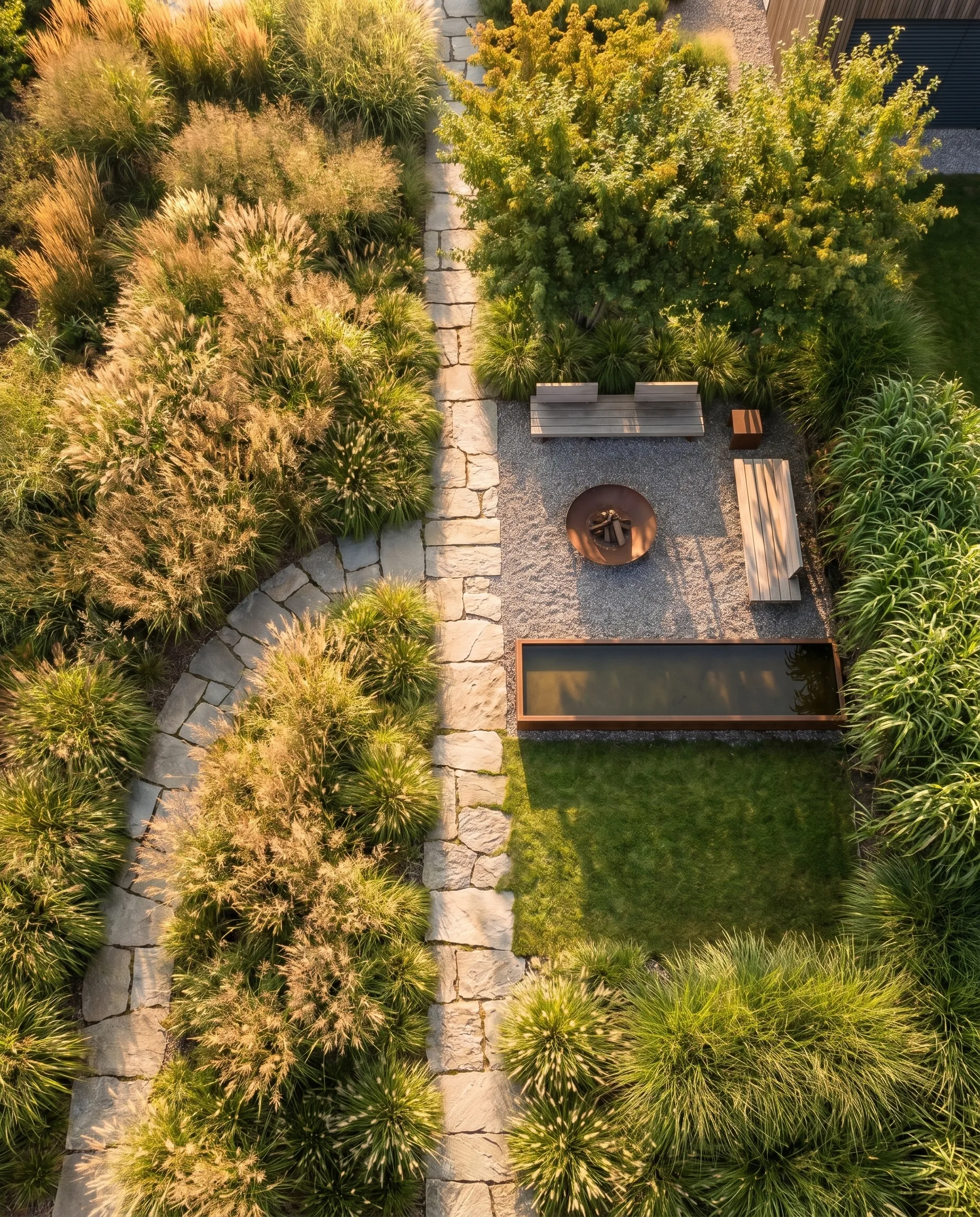
Step 1: Rough planning and concept
Define your usage zones and sketch paths, terrace, lawn area, and planting beds. Use the compass (sun!), sightlines from the house, and the routes of your utility lines as your guide.
Step 2: Earthworks and site grading
The subsoil after a new build is usually compacted and full of construction waste. Topsoil needs to be brought in or improved. Gradients, slopes, and level changes are set now. This step costs time and money — but it’s the foundation for everything.
Step 3: Utilities and drainage
Lay lines for water, electricity, and irrigation; install drains and soakaways; place inspection chambers. If you didn’t run conduits during the house build, this is the latest point it needs to happen.
Step 4: Paths and terrace
The biggest cost block after the earthworks. Material choice (concrete, natural stone, timber, porcelain paving) has a huge impact on appearance, maintenance, and price. Don’t underestimate terrace size: 30–40 m² makes sense for a family.
Step 5: Edging, fences, and walls
Property boundaries, privacy screening, retaining walls where the terrain steps. Also legally relevant: observe boundary offsets and local neighbor regulations.
Step 6: Soil improvement and lawn installation
Add topsoil (at least 20–30 cm for lawn, deeper for beds), loosen the soil, then seed or install turf. Turf is more expensive but usable immediately — often worthwhile for families with kids.
Step 7: Planting
Plant trees first (they need time), then shrubs, then perennials and groundcovers. Think about shade areas in 10–15 years once the trees have matured.
Step 8: Features and finishing touches
Lighting, irrigation controller, furniture, play equipment, pergola — the elements that make the garden truly liveable. And the part where most people overshoot the budget in the end, because they underestimated it.
Visualize your plan: Bring ideas to life
One of the biggest stumbling blocks in garden planning is imagination. What will it actually look like once the ground is green, the terrace is laid, and the hedge is in?
With GardenPilot you can turn a simple photo of your bare plot into a photorealistic preview of your finished garden — including a rough cost range. It helps you make ideas concrete, set priorities, and compare contractors’ quotes on a solid basis. That way, expensive planning mistakes can be avoided before the first excavator arrives.
Before you set your garden budget (often 12-18% of the build cost): upload a photo of your property and see a realistic preview + rough cost range based on the current state — so you invest with focus and avoid costly misplanning. Visualize your garden with GardenPilot (here’s how it works).
Frequently asked questions
When is the best time to start garden planning for a new build?
Ideally, you start planning during the shell stage — at the latest once the service connections and site levels are defined. That way you can have conduits, outdoor water points, and drainage installed cost-effectively. The actual garden build is best started after all trades on the house are completed.
How much does a new-build garden cost on average?
A solid, complete garden typically comes in at €100–180 per m², with premium builds at €250 and more. As a rough guide, 12–18% of the house build cost is a realistic benchmark. For a €300,000 house, that’s around €36,000–€54,000.
Can I create my new-build garden in phases?
Yes — and many homeowners do. The key is that the technical infrastructure (utility lines, drainage, grading) is fully planned and built from the outset. What you can phase in over time: planting, features, lighting. What you should never phase: earthworks, drainage, and utility installation.
Do I absolutely need a landscape contractor, or can I do a lot myself?
Leave earthworks, drainage, and paving to professionals — that’s where the most expensive mistakes happen. Planting, lawn seeding, and many finishing details are easy to handle yourself, giving you more budget room for the trades that require true craftsmanship.
Plan your own garden
Upload a photo of your garden and get a professional AI concept in minutes.
Start for freeMore articles from Garden Planning & Costs
Creating a Garden: The Builder’s Checklist — So You Don’t Forget a Thing
Garden Timeline When Building a House: What to Do When (Step by Step)
When does the lawn go in, when the patio, when the planting? The right sequence for creating your garden after building your house saves real money — and prevents costly mistakes that are hard to fix later.
Redesigning Your Garden After Buying a Home: Rework What’s There Smartly and Protect Your Budget
You’ve bought a house—and now you’re looking at an ’80s lawn or bare, raw soil. Before you commit the first ten thousand euros, it pays to assess what’s already there honestly, set priorities, and follow a clear planning sequence. This article shows you how.