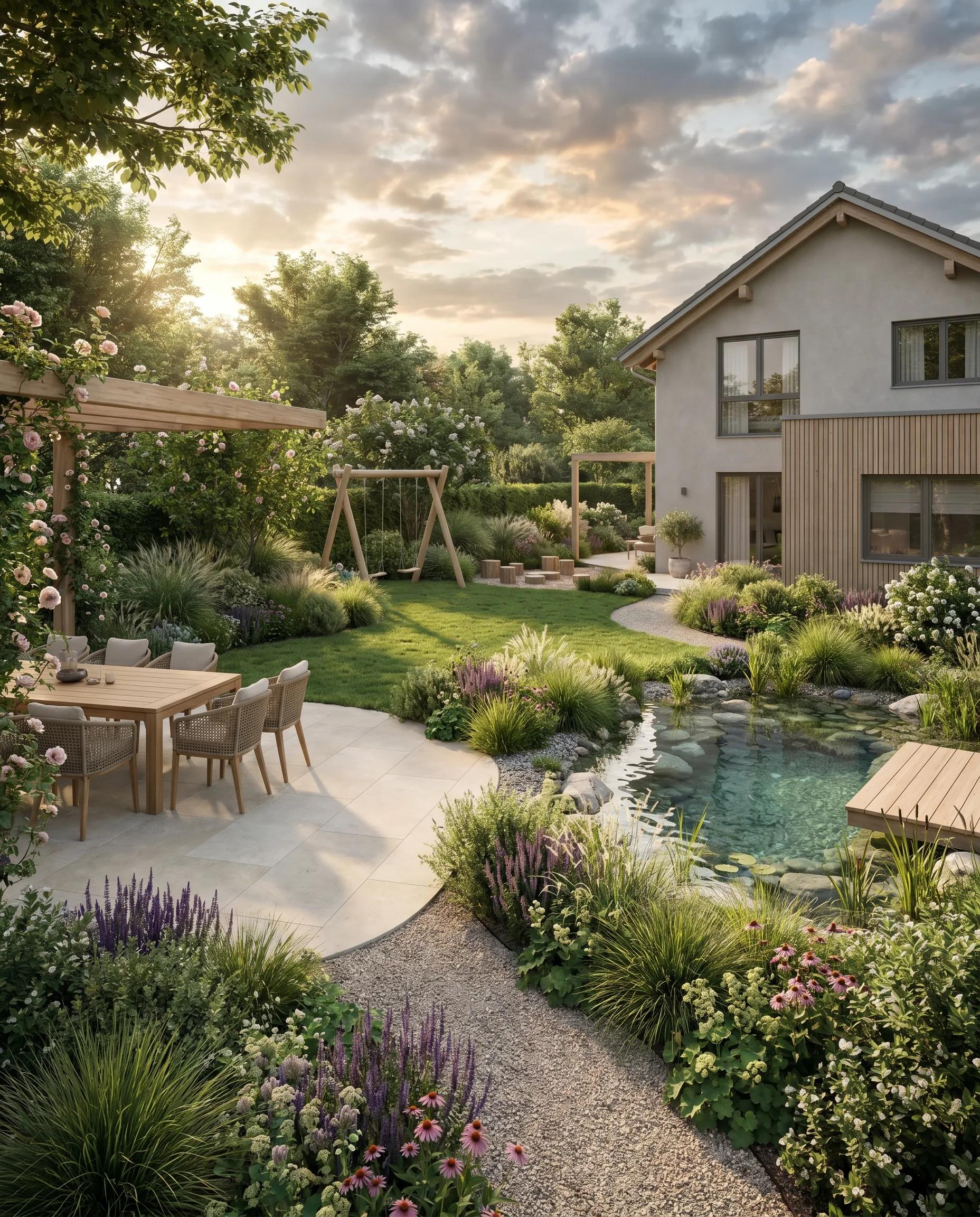
Garden Timeline When Building a House: What to Do When (Step by Step)
The shell is up, the trades come and go — and outside there’s still a ravaged patch of earth that’s meant to become your dream garden one day. Not a pretty sight, but it’s exactly the right moment to plan. Because the order in which you create your garden after building your house largely determines whether you stay on budget — or pay for expensive rework. This guide shows you what to tackle when — and why the sequence should never be left to chance.
Why the right order during a house build matters so much for your garden
Go deeper: What a new-build garden costs — and the order to tackle it in.
Many homeowners push the garden to the very end — often for budget reasons, sometimes simply out of exhaustion. That’s understandable, but strategically risky. If you forget conduit runs for irrigation or garden electrics while the ground is still open, you’ll pay twice later: once for digging everything up, and once for the actual installation.
And there’s another reality: Heavy machines for earthworks need space and dry ground. If landscapers and paving crews come after interior work is finished, access is often blocked. Planning early lets you coordinate smartly.
A realistic budget range helps you set priorities: A high-end, fully finished garden typically costs €100 to €180 per square meter — and for ambitious concepts with natural stone, pools, or sophisticated technology, €250 and up is entirely possible. Specialist contractors often estimate roughly 12 to 18 percent of the build cost — for a €300,000 house, that’s €36,000 to €54,000. It sounds like a lot, but it’s realistic if you want a cohesive, premium result.
The right order: 8 steps from bare soil to a finished garden
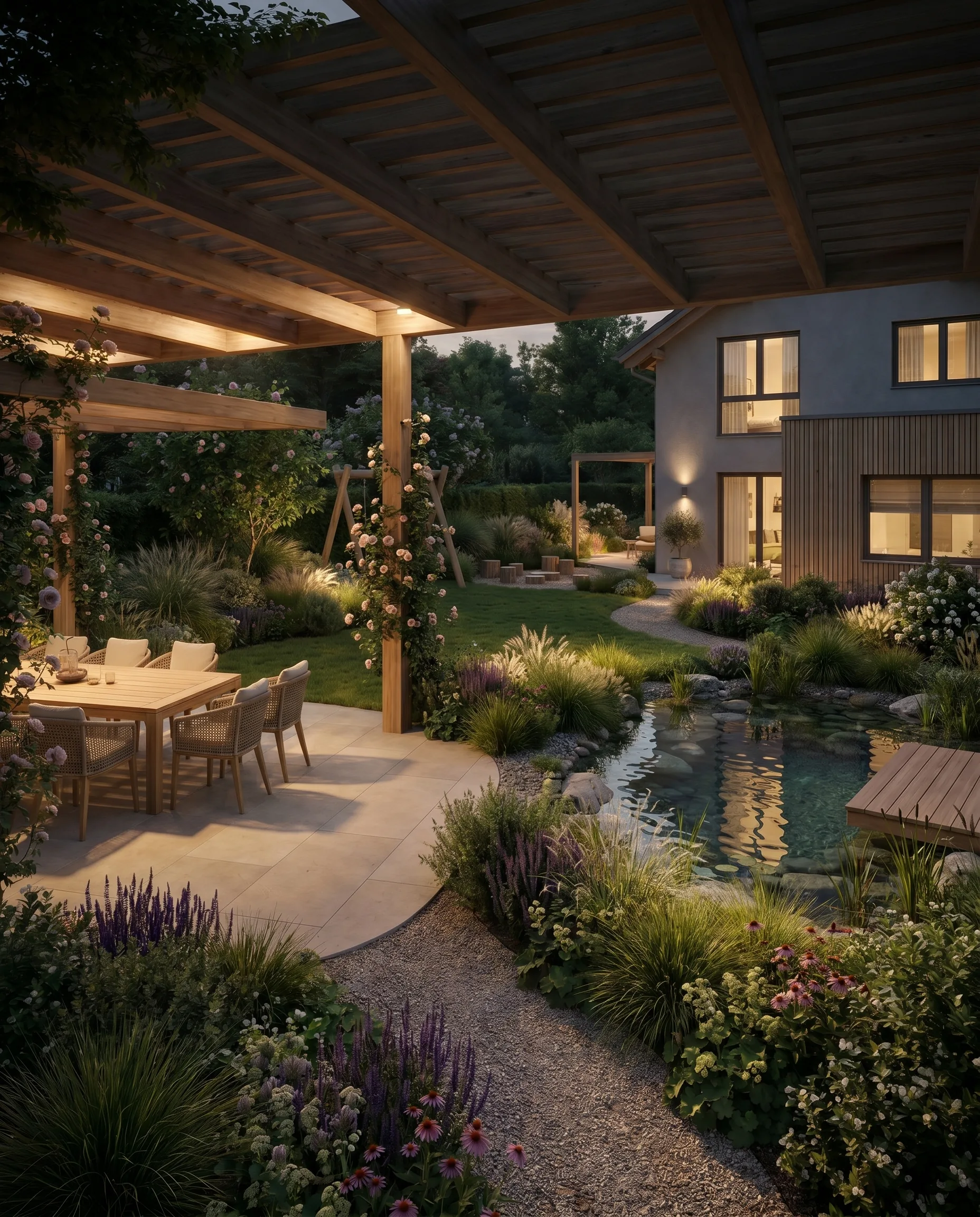
Step 1: Rough planning — while the house is still being built
Timing: In parallel with the shell build, at the latest once levels and key terrain points are fixed.
Before a single spade goes into the ground, you need one fundamental decision: What should your garden do for you? A family haven with lawn and play area? A productive garden with raised beds and fruit trees? Or a representative show garden with a patio as a second living room? This question influences everything — from path layout to drainage.
What to clarify now:
- Sun orientation and the house’s shade patterns
- Sightlines and privacy screening from the street and neighbors
- Location of the patio, garage access, tool shed
- Need for conduits for power, water, and irrigation (plan these now while the ground is open!)
Tip: With a tool like GardenPilot, you can turn a photo of your bare plot into a photorealistic preview of your future garden and get a rough budget estimate. It’s a huge help when comparing quotes from landscaping companies — and it protects you from expensive planning mistakes.
Step 2: Earthworks and terrain shaping
Timing: After the shell build is complete, before other trades block access.
Now the big machines arrive. Construction debris is hauled away, the terrain is shaped, slopes are built up or cut back. If you have a hillside plot or need an infiltration area, it’s handled here.
Important: Topsoil removed during the build should be stored and reinstated now. Good topsoil is expensive — up to €40 per cubic meter including delivery.
Step 3: Utility lines and drainage
Timing: Immediately after earthworks, while the ground is still open.
This is the step most often forgotten — with the most expensive consequences. Now you install:
- Conduits for garden electrics (lighting, pumps, EV charging)
- Water lines for outdoor taps and automatic irrigation
- Drainage channels for the patio and paths
- French drains/drainage systems for poor permeability soils or slopes
- Cistern or rainwater tank, if planned
If you cut corners or forget it here, you’ll definitely be digging it up again later.
Step 4: Paths and patio
Timing: Once lines are laid and the terrain has its final shape.
The patio and main paths are the structural framework of your garden — they come before the lawn and before planting. Paving and patio crews need clear access and a stable sub-base.
Material choice has a major impact on price:
- Concrete slabs: from approx. €30–€50/m²
- Natural stone paving: €80–€150/m²
- Timber/WPC decking: €60–€120/m²
Plan patios generously — expanding later is almost always more expensive than sizing it correctly from the start.
Step 5: Edging, walls, and fencing
Timing: In parallel with, or directly after, patio and paths.
Bed edging, natural stone walls, privacy fences, and hedge planning belong in this phase. They define areas, retain soil, and create structure — before loose soil and plants follow.
Step 6: Soil improvement and lawn
Timing: Once all construction work is finished and no heavy equipment will be driving over the area.
Now you prep the lawn: condition the topsoil, incorporate sand or compost if needed, test the pH level. Then choose either seeded lawn (cheaper, but takes time) or sod/roll-out turf (more expensive, but usable immediately — approx. €8–€15/m² installed).
Important: Sod in midsummer needs intensive watering — factor that in if you don’t have an irrigation system.
Step 7: Planting
Timing: Preferably spring or autumn, after the lawn.
Trees, shrubs, perennials, and hedges go into the ground last — but they have the longest planning horizon. A specimen tree needs 10 to 15 years to reach its full impact. Plant it early and you gain time.
Planting priorities:
- Large shrubs and trees (privacy, shade)
- Hedges (boundary, privacy)
- Shrubs and perennials
- Groundcover plants
Step 8: Features and finishing details
Timing: Ongoing — even after you move in.
Garden lighting, irrigation controllers, play equipment, outdoor furniture, privacy screens in wood or metal — these are the details that turn a finished garden into your garden. A lot of it can be added step by step.
Timeline at a glance
| Phase | Timing | Priority |
|---|---|---|
| Rough planning | During shell build | High — don’t postpone |
| Earthworks | After shell build | High |
| Utilities/drainage | With earthworks | Very high |
| Paths/patio | After that | High |
| Walls/fences/edging | Parallel to patio | Medium |
| Lawn | Before planting | Medium |
| Planting | Spring/autumn | Medium |
| Features | Ongoing | Flexible |
Before you set your garden budget (often 12–18% of the build cost): upload a photo of your plot and see a realistic preview + rough cost range based on the current state — so you invest with purpose and avoid costly misplanning. Visualize your garden with GardenPilot (how it works).
Frequently asked questions
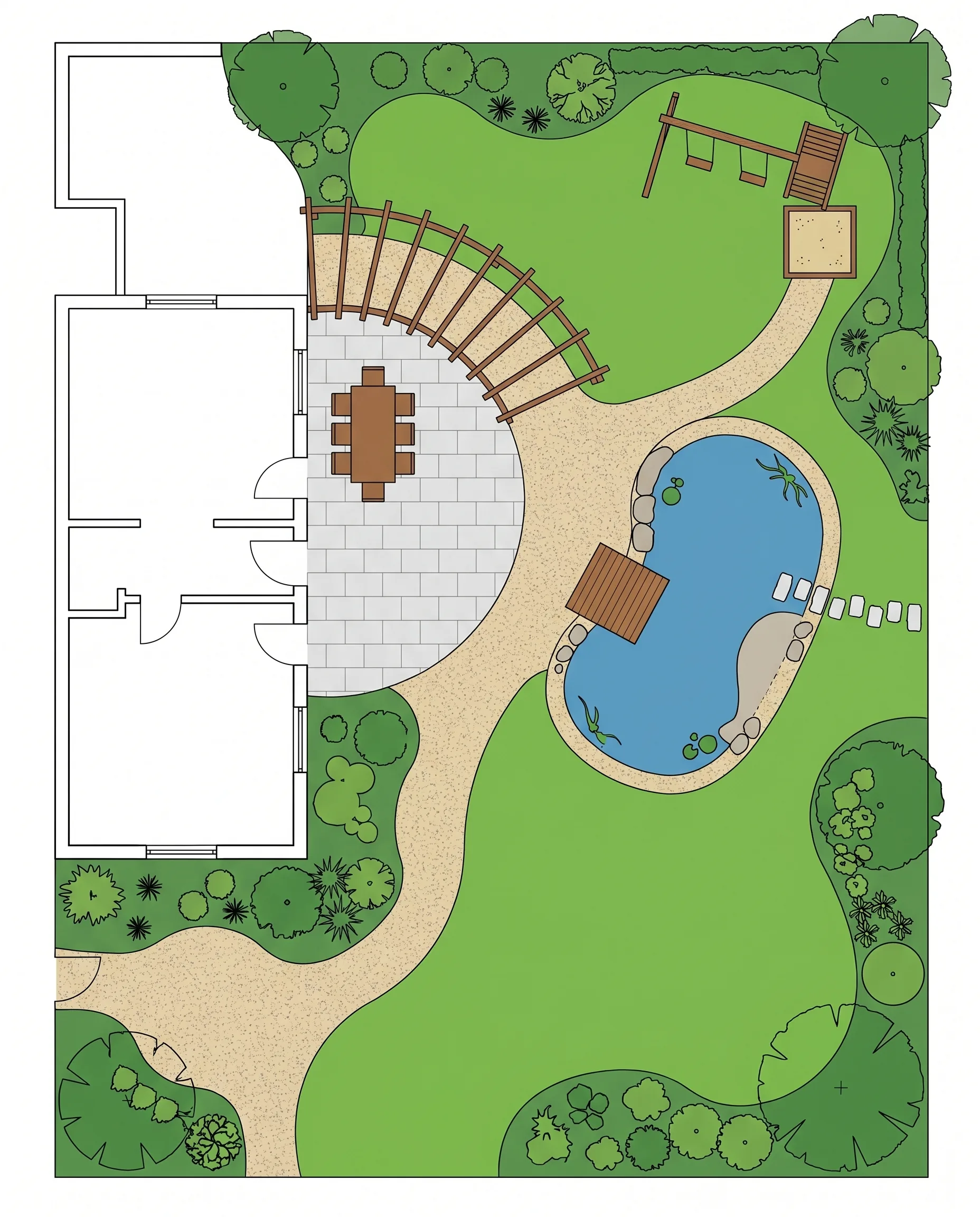
When is the best time to start the garden during a house build?
The best time for planning is in parallel with the shell build — at the latest once levels and terrain conditions are defined. The execution of the heavy groundwork should start right after the shell phase is complete, before other trades make access to the plot difficult. If you postpone the garden until “after moving in,” you often pay twice for conduits and lines.
How much does it cost to have a complete garden installed for a new build?
A realistic range is €100 to €180 per square meter for a solid, high-quality turnkey garden. With demanding materials like natural stone, pools, or automatic irrigation, €250 and more is not uncommon. As a rough guide: specialist firms calculate 12 to 18 percent of the build cost — for a €300,000 house, that equals €36,000 to €54,000.
Can I do parts of the garden myself?
Yes — but with good judgement. Planting, seeding a lawn, smaller bed projects, and adding furniture or lighting are all very doable DIY. Earthworks, drainage, concrete work, and paving, however, are best left to professionals — mistakes in these areas are difficult to undo and often lead to follow-up costs.
How can I avoid expensive planning mistakes in the garden after building the house?
The most common mistake is starting without a clear concept and then having to rebuild everything afterward. Structured planning — ideally with a visual preview and a realistic budget range — helps you set priorities and truly compare quotes from landscaping companies. Tools like GardenPilot let you create a photorealistic rendering of your garden from a photo of your bare plot, so you can walk into conversations with professionals with clarity and confidence.
Plan your own garden
Upload a photo of your garden and get a professional AI concept in minutes.
Start for freeMore articles from Garden Planning & Costs
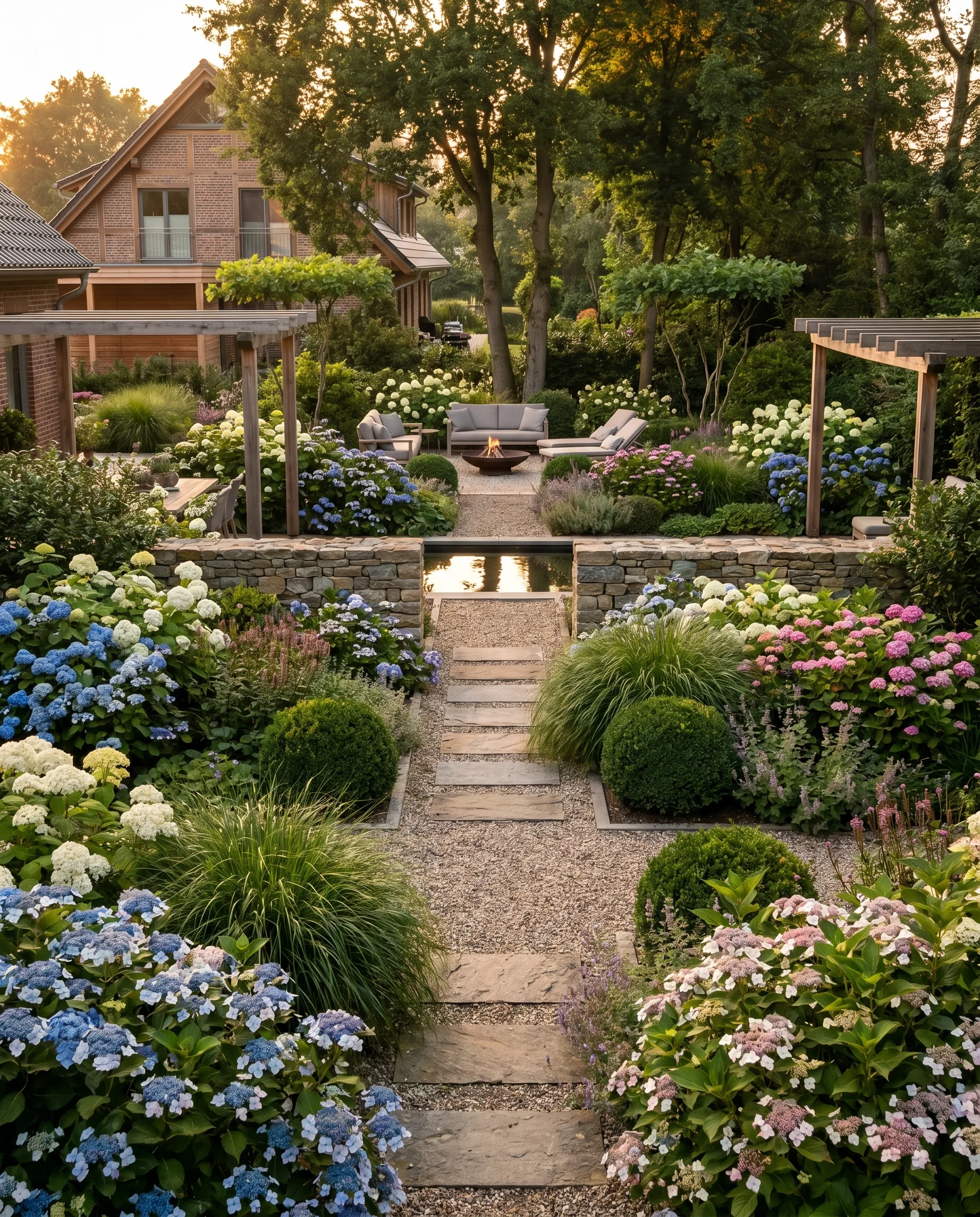
Creating a Garden: The Builder’s Checklist — So You Don’t Forget a Thing
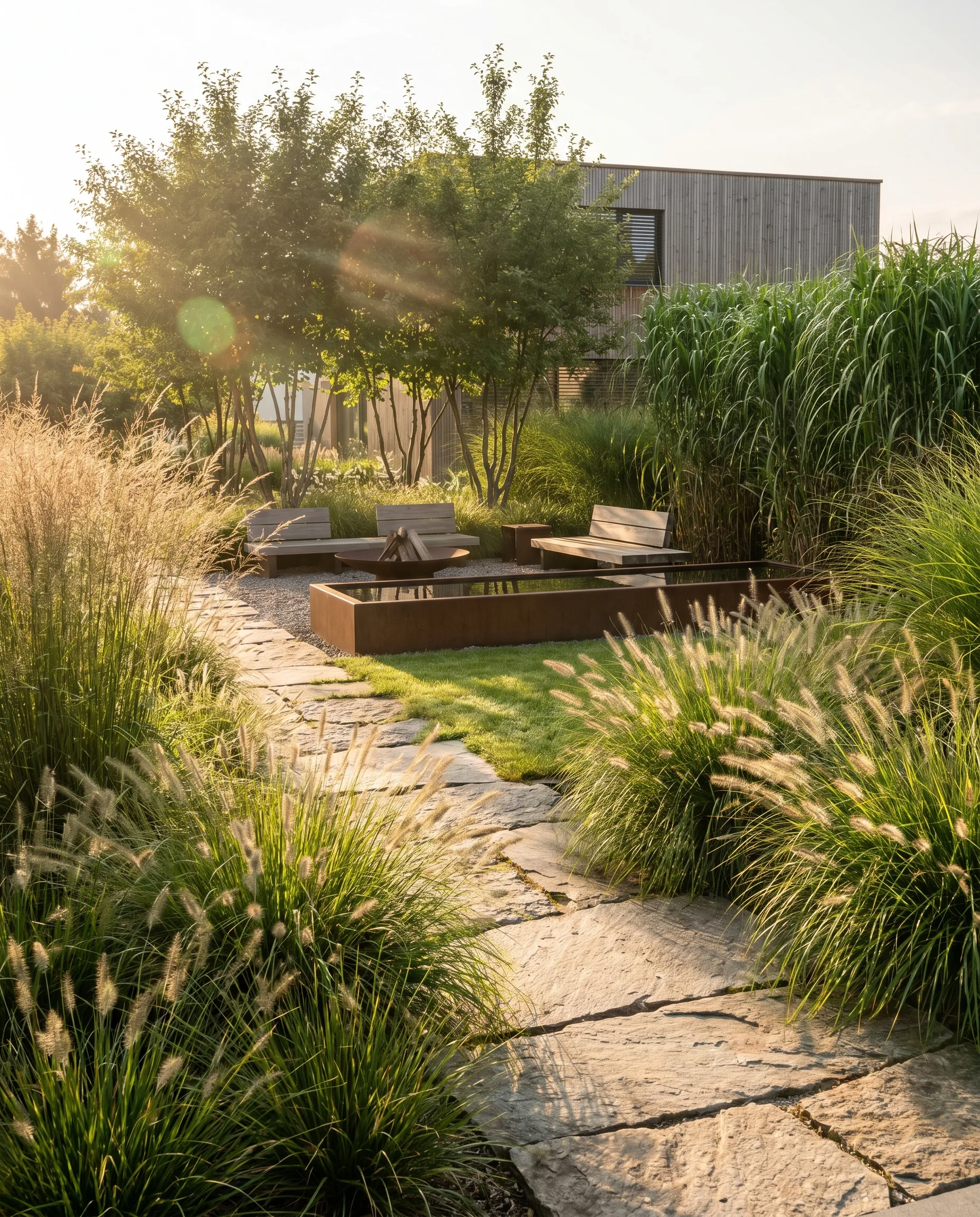
New-Build Garden Ideas: From Bare Ground to a Finished Garden
You’ve just built — and now you’re looking at a patch of rubble and compacted clay. Here you’ll learn how to use the right new-build garden ideas to plan a finished garden step by step, what it really costs, and which decisions you should make early on.

Redesigning Your Garden After Buying a Home: Rework What’s There Smartly and Protect Your Budget
You’ve bought a house—and now you’re looking at an ’80s lawn or bare, raw soil. Before you commit the first ten thousand euros, it pays to assess what’s already there honestly, set priorities, and follow a clear planning sequence. This article shows you how.