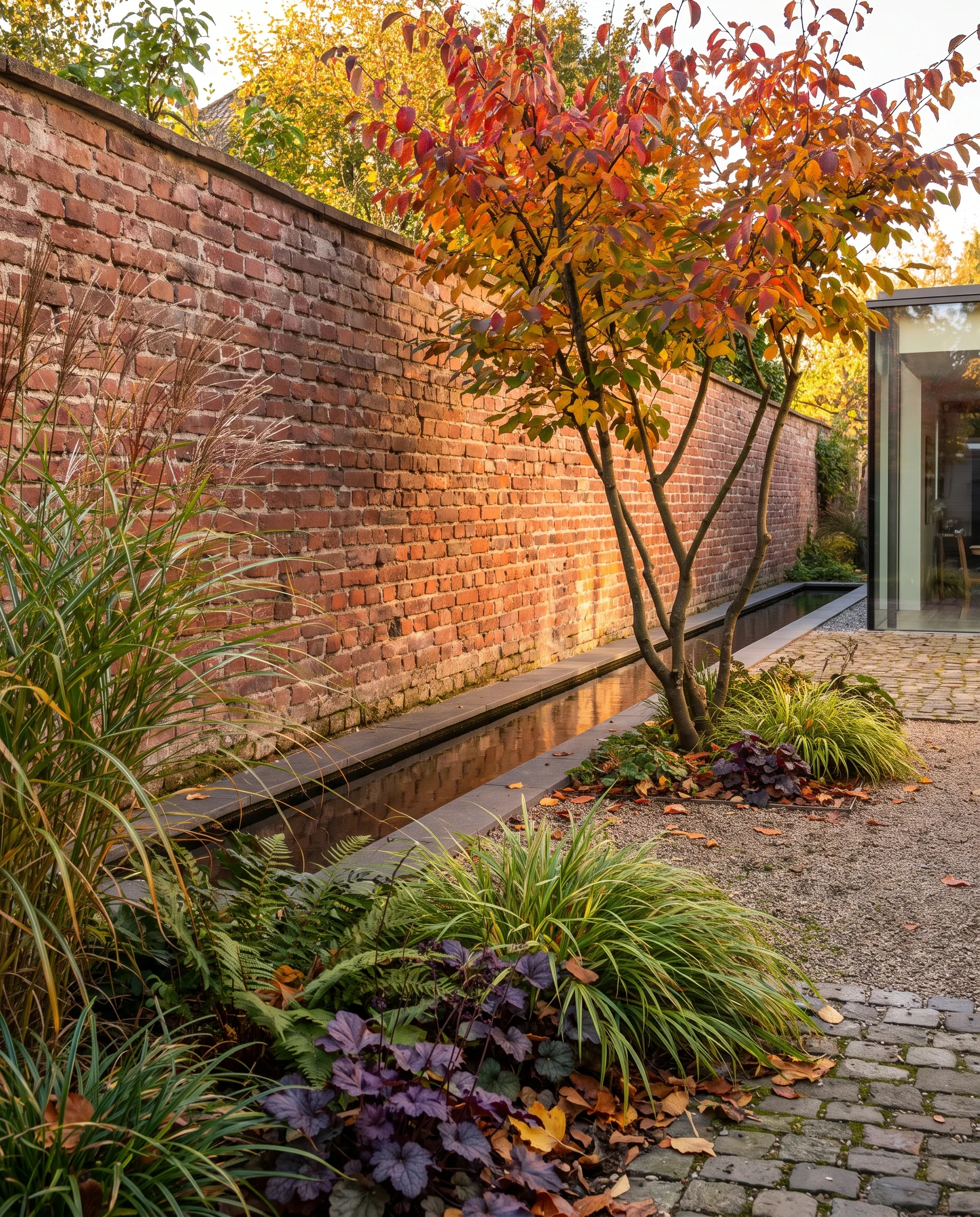
In October and November, things slow down in the garden. Even so, autumn is when decisions are made that you will see all next year: trees, hedges, many perennials and spring bulbs go into the ground now. This guide covers which jobs really need doing in autumn, what you are better off leaving where it is – and how to use the quieter months to plan your garden makeover for spring.
At a glance
- Planting: Trees, shrubs, hedges and hardy perennials do well when planted in autumn, and so do bulbs for spring – as long as the soil is neither frozen nor waterlogged.
- Leaves: clear them off the lawn and paths, leave them under shrubs and in beds.
- Perennials and grasses: leave them standing and cut them back in spring.
- Hedges: In Germany, hard pruning is allowed again from 1 October. Nests and overwintering spots are still off-limits.
- Planning: Before you plant a tree or a hedge, be clear about how the garden will be laid out. Take photos of how it looks now.
What really needs doing in autumn
Leaves: off the lawn, into the beds
On the lawn, a layer of leaves cuts the grass off from light and moisture. Rake them off regularly, and clear paths and steps too, where wet leaves get slippery.
In beds and under shrubs, leaves can stay. There they protect the soil, and insects and hedgehogs spend the winter in leaf piles. A single pile in a quiet corner is enough.
Leave perennials and grasses standing
You don't need to cut back faded perennials and ornamental grasses in autumn. Insects overwinter in hollow stems and seed heads, and some seeds are food for birds. Cut them back in spring. A side effect: your garden has more structure in winter than it would with bare, cut-back beds.
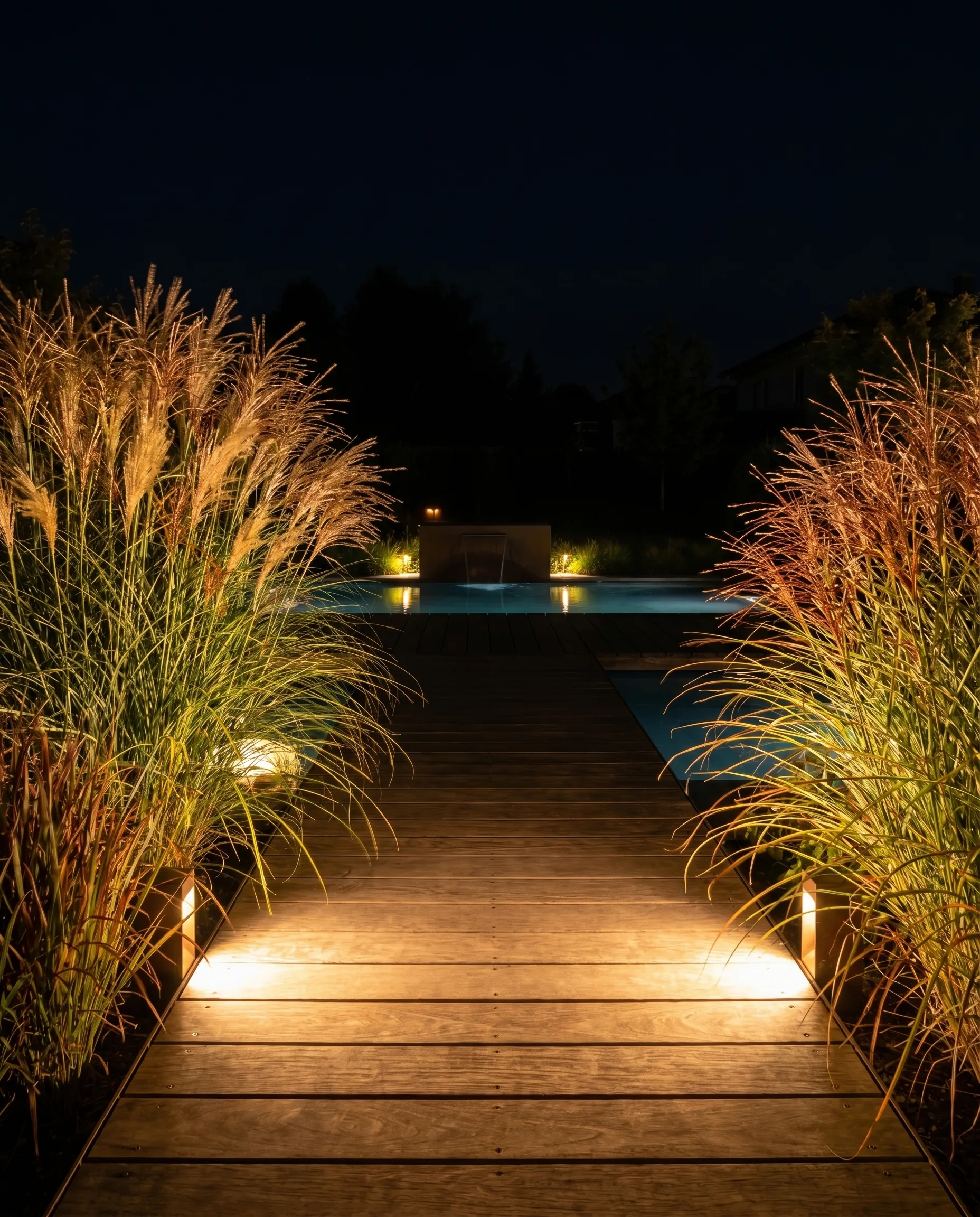
Lawn: keep mowing while it grows
As long as the grass keeps growing in mild weather, you can keep mowing – with the cutting height set a little higher than in summer. More important than the last cut is that no leaves are left lying on the lawn. If you feed in autumn, use a potassium-rich lawn fertiliser: potassium strengthens the roots.
Hedges and shrubs: what is allowed from October
In Germany, the Federal Nature Conservation Act (§ 39(5) BNatSchG) prohibits cutting back hedges, thickets and other woody plants hard, coppicing or removing them between 1 March and 30 September. During that period only gentle shaping and maintenance cuts are allowed. From 1 October, you may prune hard again. If you live elsewhere, check the rules in your country.
Two things still apply:
- Nests and overwintering spots: Breeding sites and resting places of specially protected animals must not be damaged or destroyed at any time of year (§ 44 BNatSchG). Look into the hedge before you cut, and leave any leaf pile underneath alone – a hedgehog may be sleeping in it.
- Larger trees: Many towns and municipalities in Germany have their own tree protection by-laws. Before you fell or heavily cut back a tree, ask them what applies.
Protect anything frost-sensitive
- Container plants that can't take frost should go to a sheltered spot before the first frosty nights. Group hardy plants in pots close together against a house wall; this helps protect the roots from the cold.
- Outdoor tap: Turn off and drain any pipes you won't need over winter. Otherwise water can freeze in them and damage the pipe.
Why autumn is a good time to plant
In autumn, the soil is still warm and it rains more often. Newly planted trees and shrubs can still grow roots and take up water and nutrients more quickly in spring. Plant as long as the soil is neither frozen nor waterlogged. Plants without a pot – bare-root or root-balled – are usually only available in autumn and winter. Water well after planting.
- Hedges and shrubs: Decide first what the hedge should do. If it needs to block the view in winter too, you need evergreens such as yew; if summer screening is enough, deciduous plants such as hornbeam or field maple are also an option. And don't just look at how the plant looks today – think about how big it will be in a few years.
- Distance to the neighbours: Whether and which boundary distances apply to hedges and trees differs from one German state to the next. Check what applies where you live before you plant.
- Trees: A feature tree is the longest-lasting decision in a garden. It determines where shade will fall and how much space is left beneath it.
- Perennials: You can plant hardy perennials in autumn or in spring. Slightly tender ones are better planted in spring.
- Bulbs: Early bloomers such as daffodils and crocuses should go in as early in autumn as possible; tulips are planted later, around November. As a rule of thumb, plant bulbs two to three times as deep as they are tall.
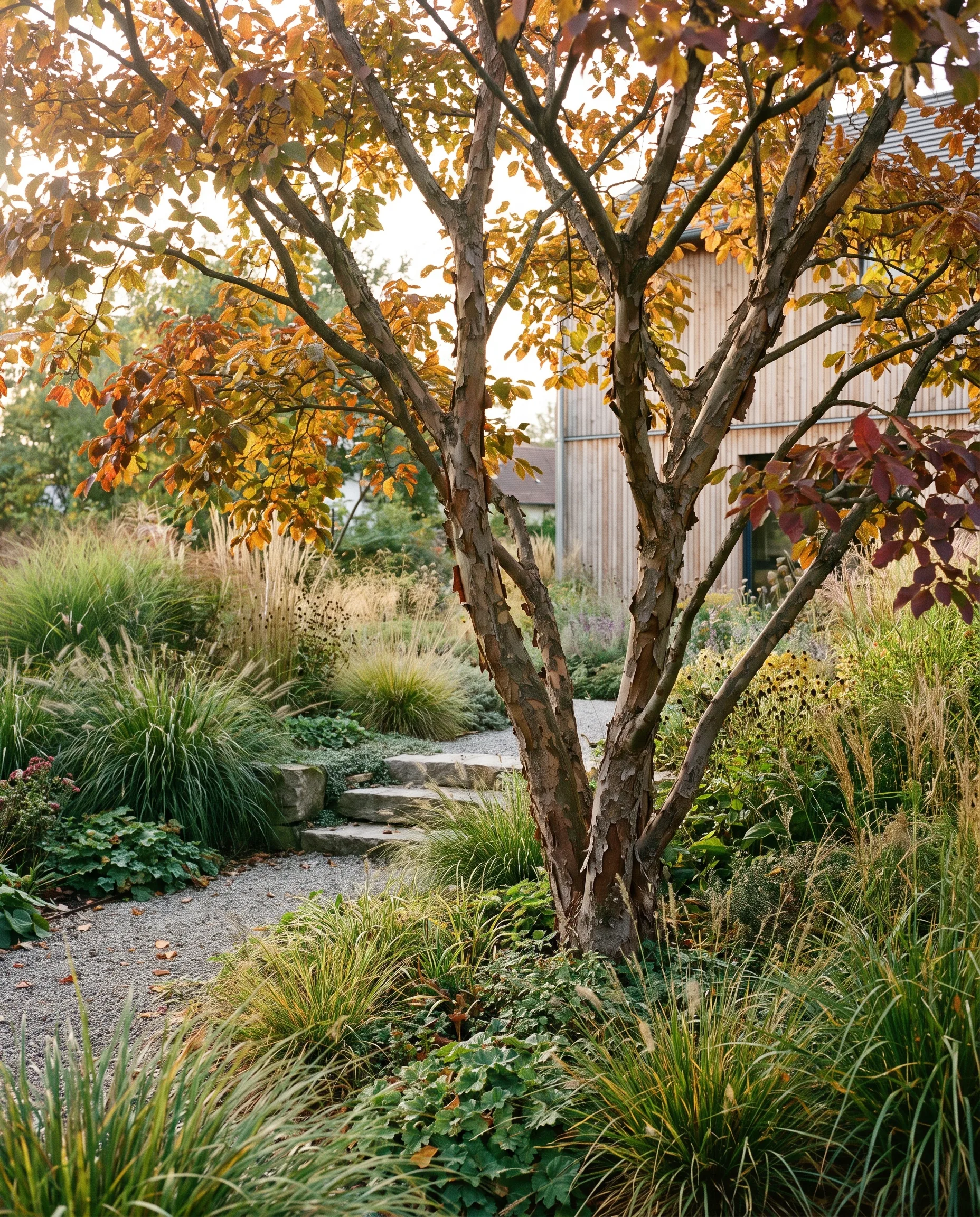
Why you should plan now
If you want to plant in autumn, you need to know where things will go. A tree or a hedge stays put for many years, and moving it is hard work. So it pays to settle the layout first – seating area, paths, lawn, beds – and plant afterwards. If that feels too tight for this autumn, that's fine: plan over the winter and plant in spring. Container-grown plants can be planted all year round.
Autumn has one advantage for this: when hardly anything is flowering and the leaves are falling, you can see what holds your garden together. Walls, paths, trees and hedges remain; everything else steps back. You can see where screening is missing in winter and where the low sun still reaches.

Take photos of how it looks now. Ideally from where you see your garden most often: from the terrace, the kitchen window, the garden gate. Take them in daylight. Note what should stay, what bothers you and what is missing. Next summer you'll have a real comparison.
Five questions to settle now
- Where do you want to sit next summer? And when does the sun reach that spot – morning, midday or evening?
- What stays? Old trees, walls, the terrace: everything you don't want to touch is the fixed frame for everything else.
- Where do you need screening – including in winter? This decides whether the hedge has to be evergreen.
- How much maintenance do you want? You'll find ideas in low-maintenance natural garden and low-maintenance modern garden.
- What can it cost? For an overview, see How much does garden design cost?. How a redesign works step by step is covered in Redesigning your garden: costs and process.
A rough sketch is enough to settle the layout. Whether you like the result is easier to judge from a picture.
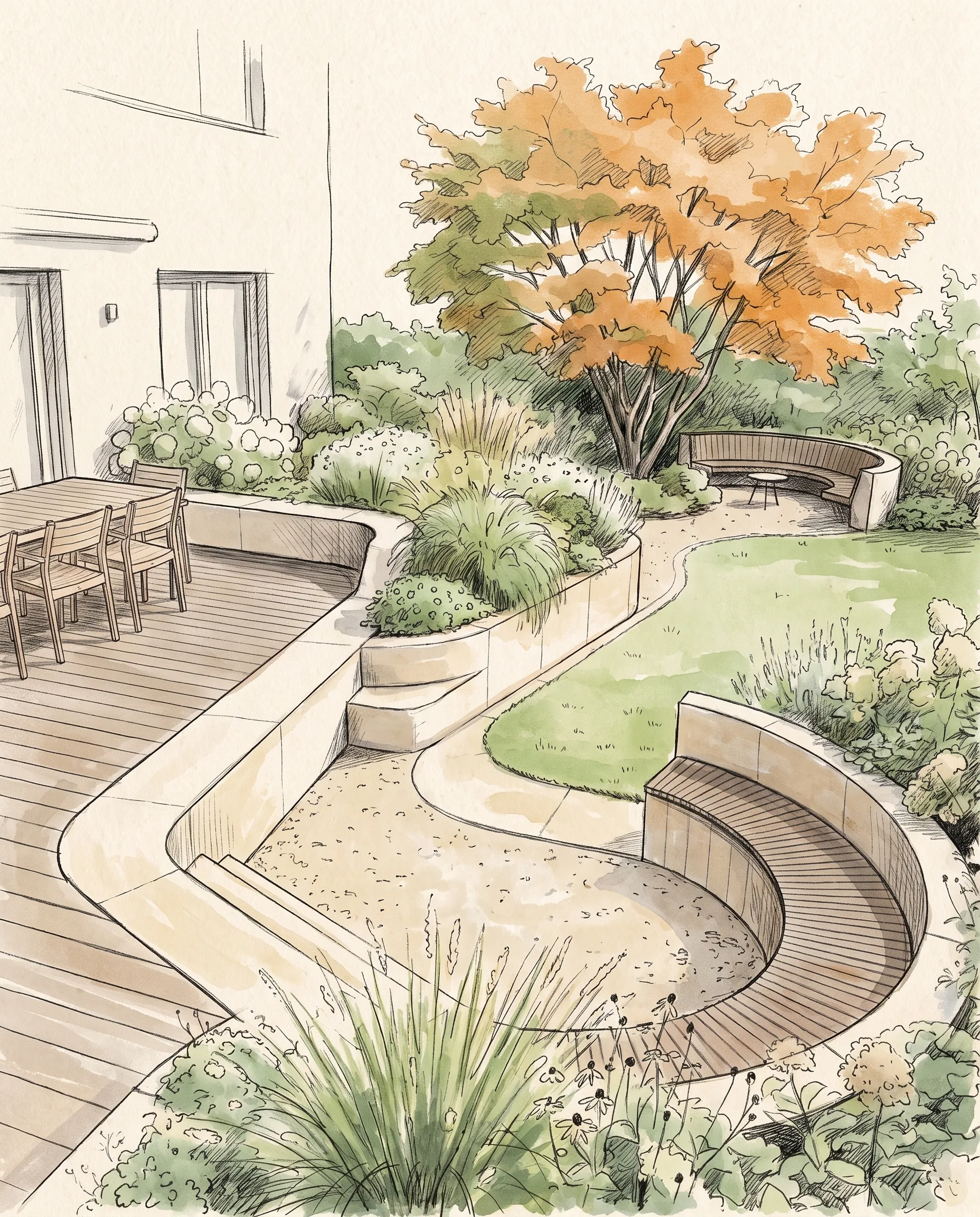
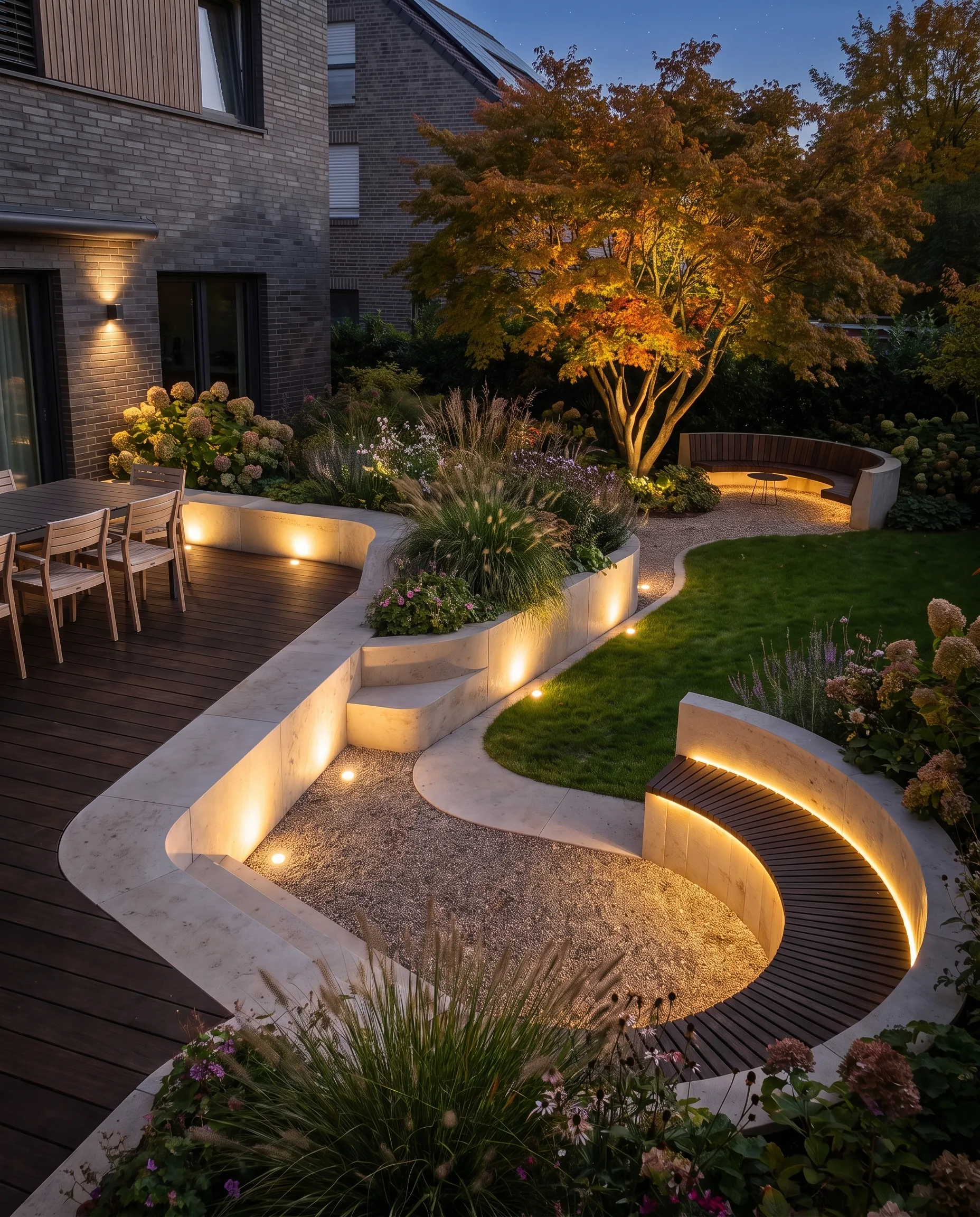
Try your ideas on your own garden
You can use your photos of the current state straight away. With GardenPilot, you upload a photo of your garden, choose a theme world and add what matters to you – for example "hedge for privacy along the left boundary, seating area at the end of the garden". The result is a picture of your own garden with a new design. Your house, the viewpoint and fixed structures are meant to stay as they are; lawn, beds and planting are redesigned.
The first picture is free, and you don't need to enter any payment details. Each further picture or variant costs 1 credit. The pictures are visualisations to compare and decide – not construction plans. How it works in detail is explained in AI garden design with a photo.
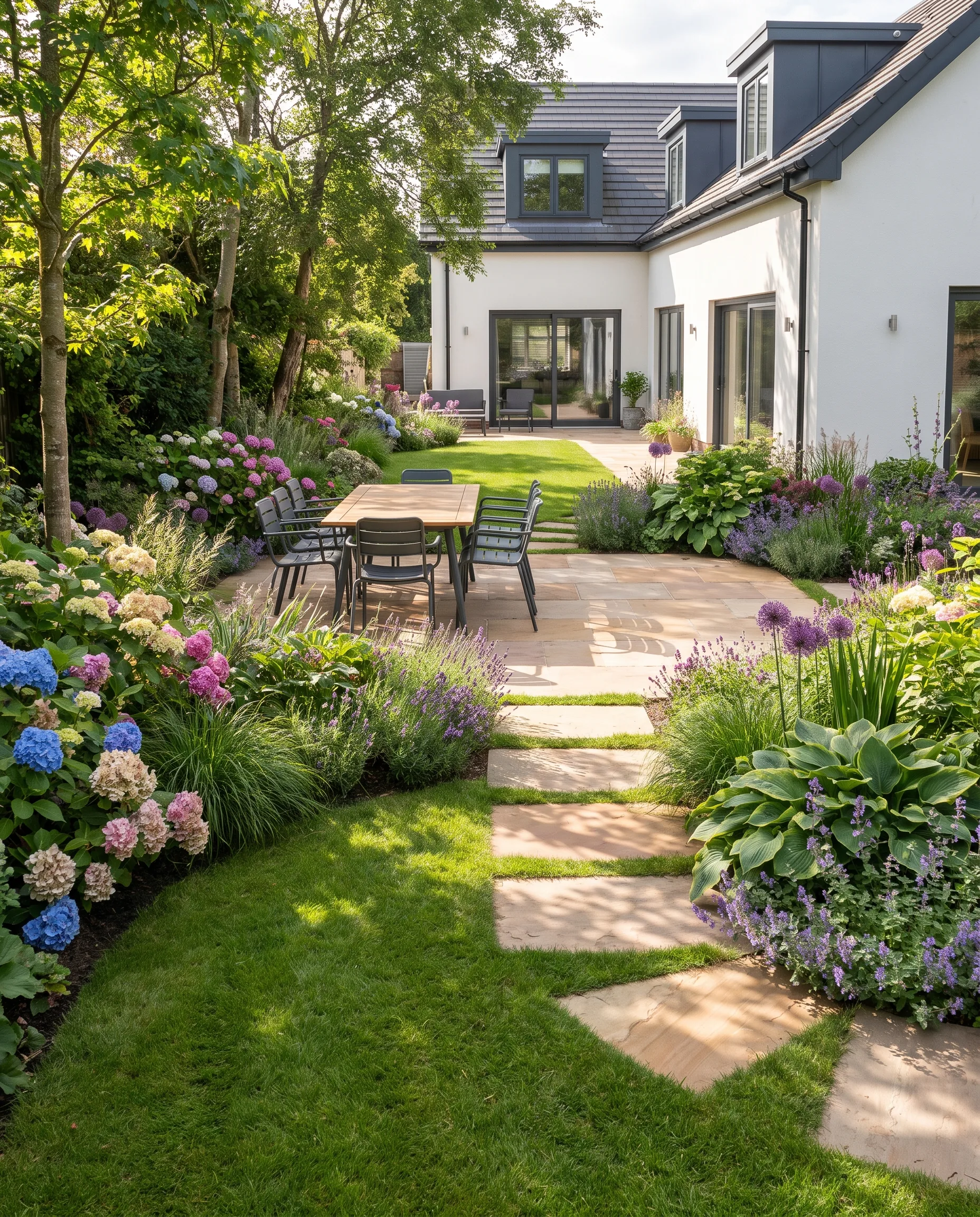
What could your garden look like next summer? Upload a photo – the first picture is free. Start free with your photo
Frequently asked questions
When can I cut my hedge back hard?
In Germany, from 1 October to the end of February. From 1 March to 30 September, § 39(5) BNatSchG only allows gentle shaping and maintenance cuts. Occupied nests and overwintering spots must not be destroyed at any time of year.
Do I have to remove the leaves from my garden?
From the lawn and paths, yes: on the lawn they cut the grass off from light and moisture, on paths they get slippery. In beds and under shrubs you can leave them. There they protect the soil and give animals a place to spend the winter.
Can I still plant in November?
Trees, shrubs and hedges, yes – as long as the soil is neither frozen nor waterlogged. Tulip bulbs are traditionally planted in November. Slightly tender perennials are better planted in spring.
Should I cut back perennials in autumn?
You don't have to. Leave faded perennials and grasses standing over winter; insects overwinter in the stems and seed heads. Cut them back in spring.
What would this look like in your garden?
Upload a photo of your garden and see design ideas on your own space. The first image is free.
Start free with your photoMore articles from Garden Planning & Costs
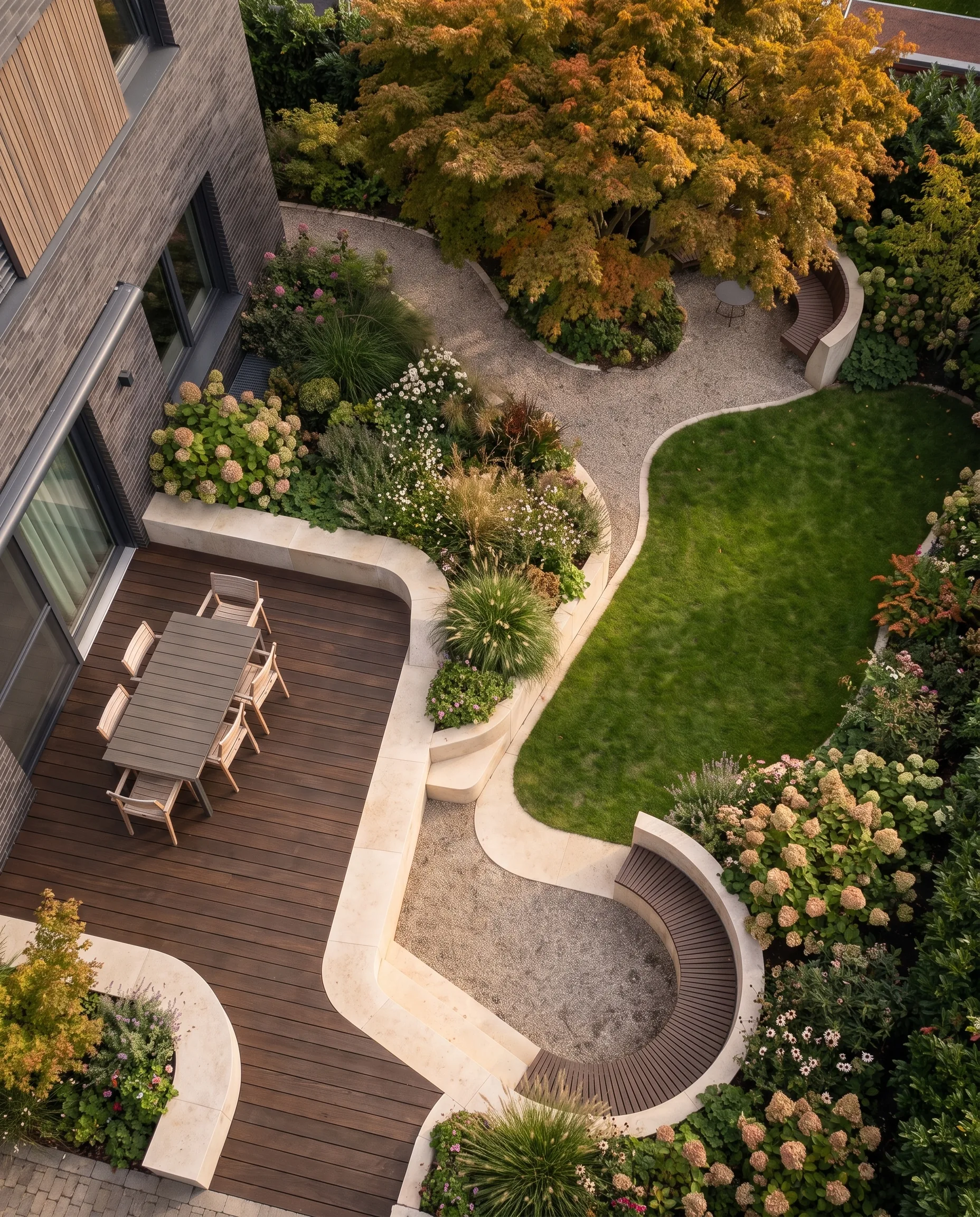
Creating a Garden for a New Build: The Checklist for Home Builders
Topsoil, levels, conduits, rainwater: what to clarify for the garden while the excavators are still on site at your new build.
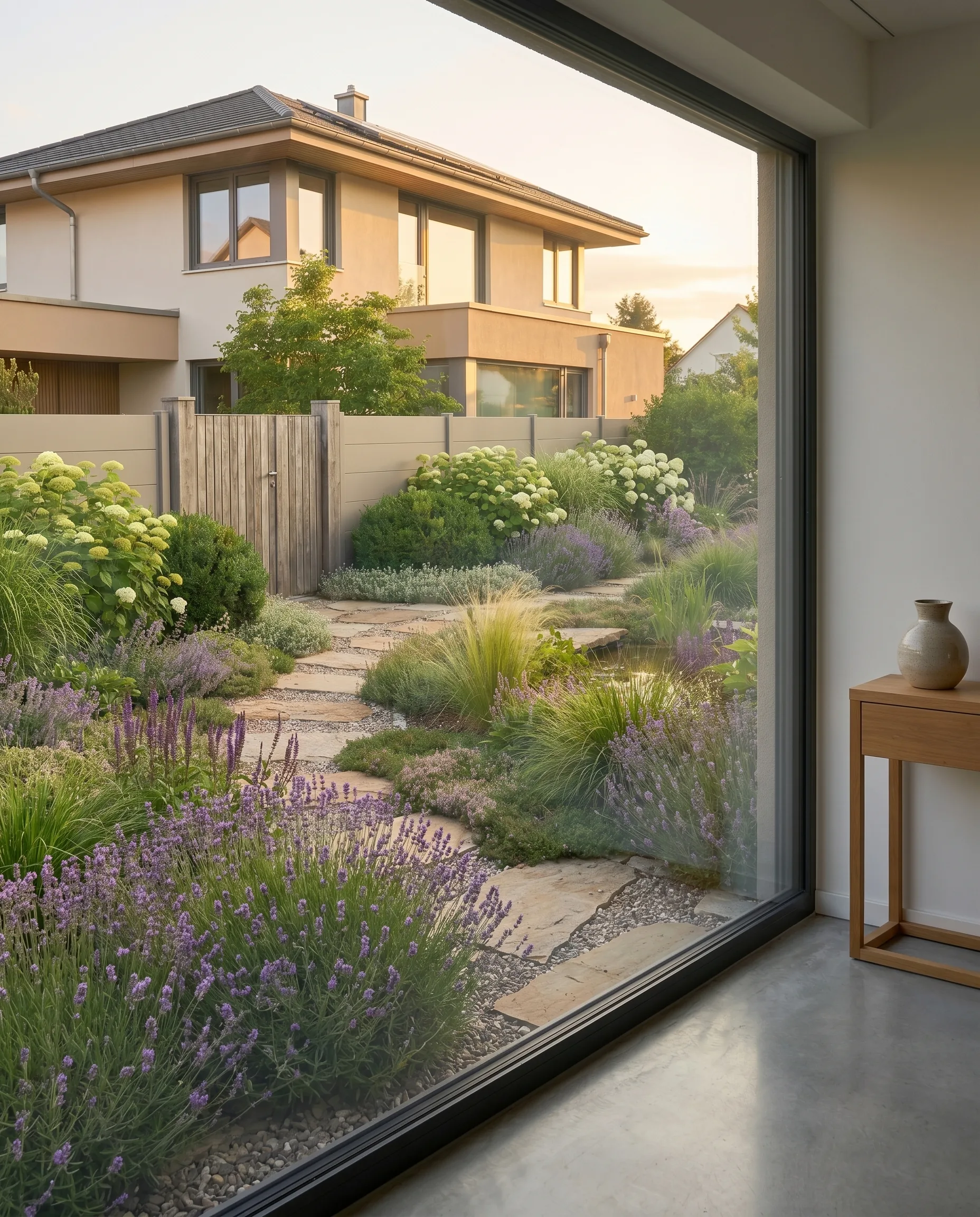
New-Build Garden: 9 Ideas for the Garden at Your New House
No old tree, neighbours close by, large windows, compacted soil: nine design ideas for the typical starting points of a new-build garden.
Order of Work When Building a House: When What Happens in the Garden
Topsoil first, lawn last: which garden jobs belong in which construction phase, from the building application to sowing season.