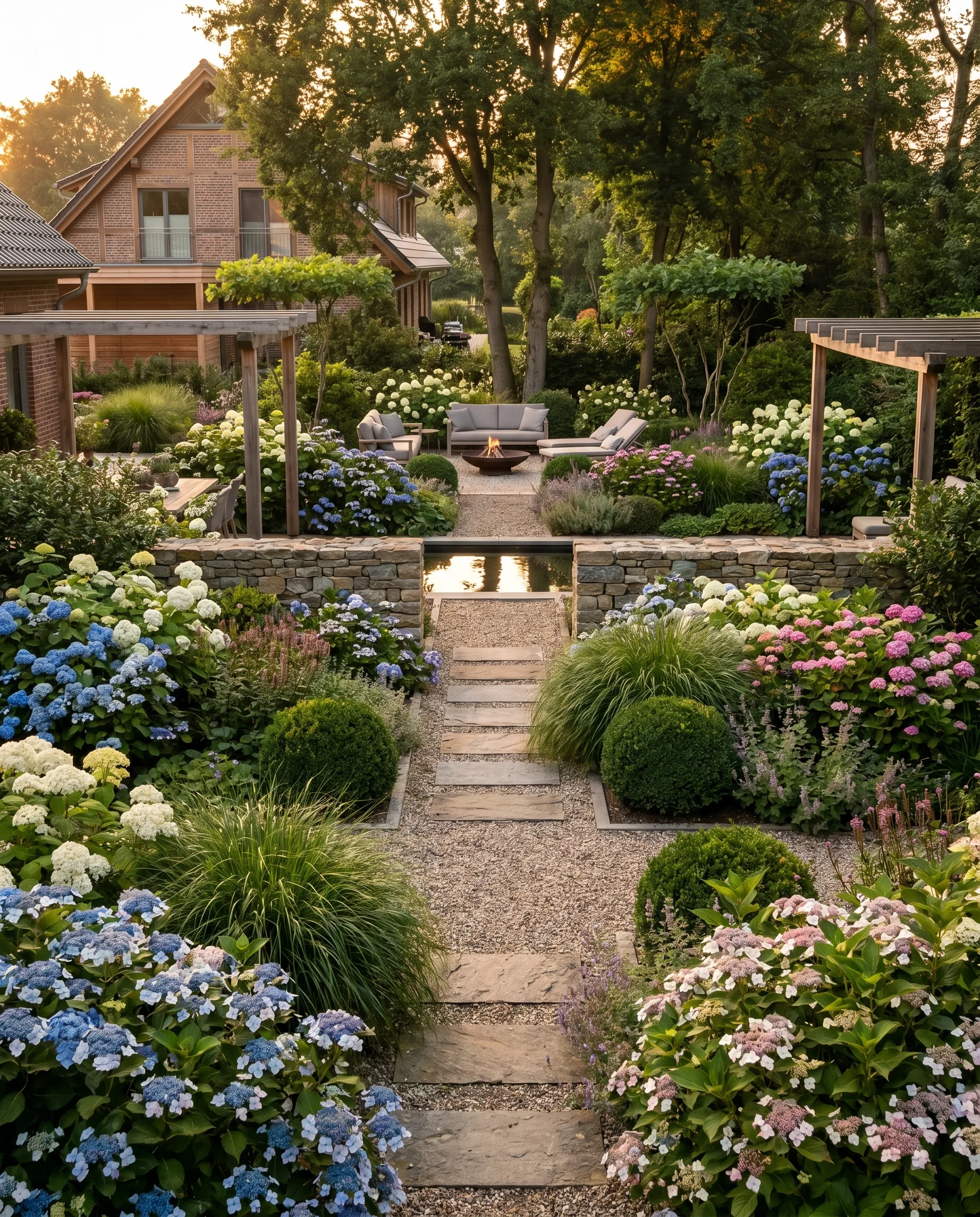
Creating a Garden: The Builder’s Checklist — So You Don’t Forget a Thing
You’ve built the house, the shell is up — and in front of you lies a patch of compacted clay, rubble, and the occasional construction-tire track. Welcome to your future garden. With the right builder’s garden checklist, you’ll stay on top of everything, save real money, and avoid mistakes that are hard to fix later.
Why the timing right now matters so much
Go deeper: What a new-build garden costs — and the order to tackle it in.
Right after the shell is finished is the ideal moment to start garden planning — not later. Levels are defined, entrances and window positions are fixed, and trades are still on site. If you have conduit runs installed now for irrigation, garden lighting, and water points, you’ll pay a fraction of what retrofitting costs. A conduit under the terrace might be an extra 50 euros during construction — afterwards, you’ll be ripping up tiles to achieve the same result and paying ten times more.
Rule of thumb for budgeting: Specialist contractors often calculate the garden at 12–18% of the build cost. For a 300,000-euro house, that’s realistically 36,000 to 54,000 euros for a solid, fully finished garden. Per square meter, costs typically range from 100 to 180 euros depending on the specification — and with premium materials and elaborate planting, 250 euros and more. These figures help you assess early quotes.
Step 1: The fundamental decision — what should your garden do for you?
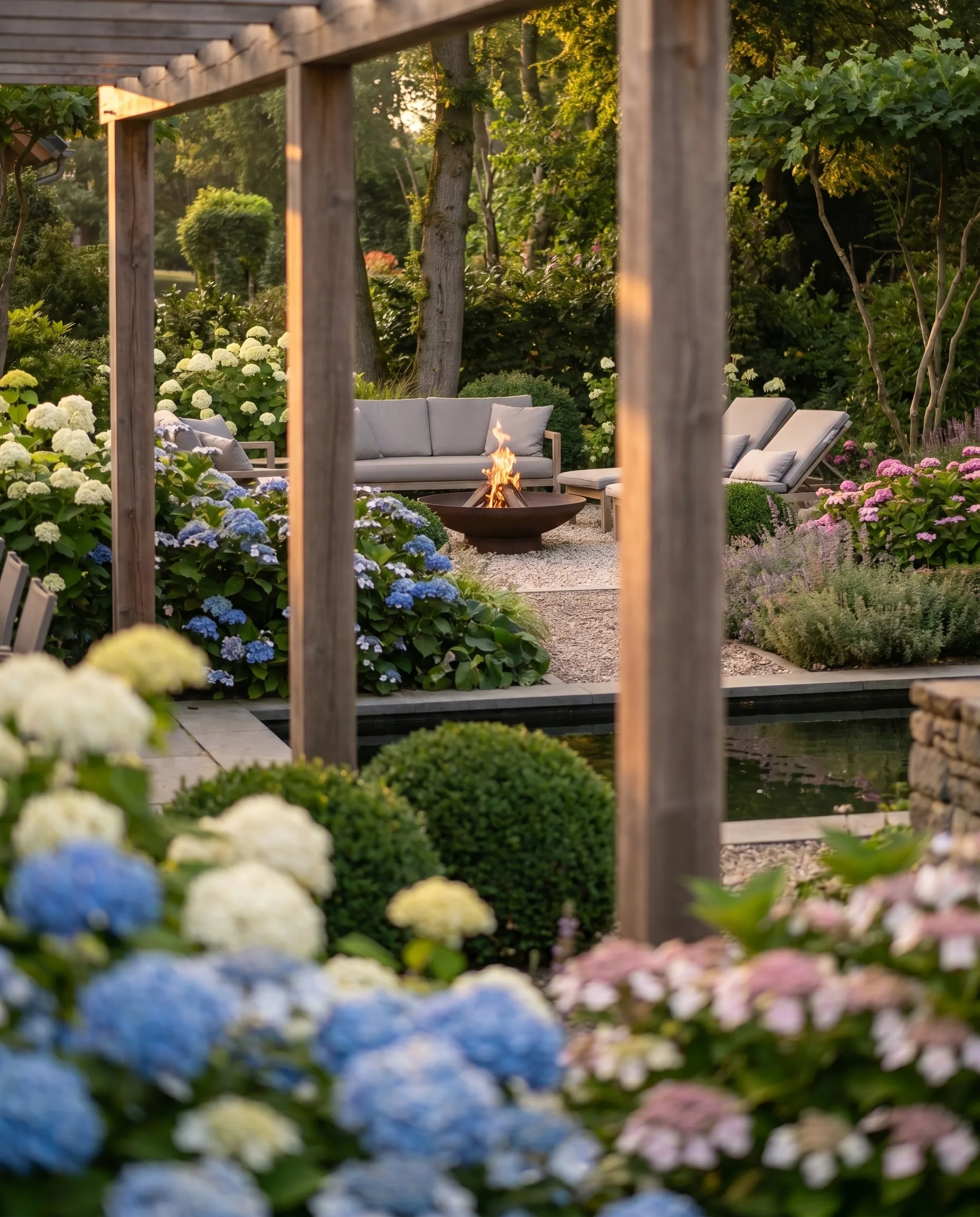
Before you plan even a single spade in the ground, answer one question honestly: Who is this garden for — and what is it meant to do?
- Family garden: lawn for play, a dedicated play area, safe planting without toxic species, durable paths
- Kitchen garden: vegetable beds, fruit trees, greenhouse, compost area — plan water points nearby
- Ornamental / statement garden: premium materials, designed planting concepts, evening lighting
- Combination: by far the most common in practice — zoning becomes everything
This decision determines it all: how you allocate the budget, which materials you choose, and what technical infrastructure you’ll need.
The complete checklist: creating a garden step by step
✅ Phase 1: Planning & preparation
- Measure the plot and create an as-built plan (tree register, check utility lines)
- Define the usage concept (family/kitchen/ornamental garden or a mix)
- Carry out a sun–shade analysis (orientation, shading from the house)
- Clarify sightlines and privacy (neighbors, street)
- Set a realistic budget — ideally include a 10% contingency
- Create a visualization: With a tool like GardenPilot, you can generate a photorealistic preview directly from a photo of your raw ground and estimate a rough cost range — before you place the first order
✅ Phase 2: Coordination with the house build
- Plan conduits for irrigation control under paths and terraces
- Coordinate the garden water connection / outdoor taps with plumbing
- Discuss outdoor power supply (lighting, pump, possibly an EV charger) with the electrician
- Coordinate terrace and path drainage with the drainage plan
- Reserve access and a storage area for garden works with the site manager
- Site entrance: soil here becomes heavily compacted — special treatment later will be necessary
✅ Phase 3: Earthworks & grading
- Have all construction rubble removed (including buried material — often underestimated)
- Soil assessment or at least a spade test: how deep is the topsoil, what is the subsoil like?
- Plan grading: slope away from the house, avoid low spots
- Strip topsoil, store it, then reinstate it after forming the subgrade
- Deep-loosen or replace compacted areas (construction zone)
- Create embankments with sufficient slope (max. 1:1.5 without reinforcement)
✅ Phase 4: Utilities & drainage
- Plan the irrigation system and lay lines (before lawn and planting!)
- Install drainage in problem areas
- Plan rainwater harvesting / a cistern (worth it for large areas)
- Lay lines for outdoor sockets and garden lighting
- Install outdoor taps at sensible intervals (rule of thumb: max. 15–20 m hose length)
✅ Phase 5: Paths, terrace & edging
- Define terrace size and material (natural stone, porcelain, timber, WPC)
- Plan the route of paths — functional and visually cohesive
- Build the sub-base properly (frost protection, load-bearing layer — don’t cut corners here!)
- Plan retaining walls and slope reinforcement where levels change
- Coordinate boundary enclosure (fence, hedge, wall) with neighbors, check setback distances
- Plan lawn edging — it saves a huge amount of maintenance later
✅ Phase 6: Soil & lawn
- Check topsoil quality (pH, structure, humus content)
- Improve soil if needed: compost, sand for heavy soils
- Decide: seeded lawn or turf? (turf costs more, but it’s usable immediately)
- Consider the best sowing window: April–May or August–September
- Prepare the lawn base carefully (remove stones, level, compact)
✅ Phase 7: Planting
- Plant shrubs and trees first — they need the most space and time
- Create a planting plan based on mature height and spread, not current pot size
- Order hedge plants early (bare-root plants in autumn/winter are significantly cheaper)
- Choose perennials and groundcovers to suit light conditions
- Plan mulch: saves water and suppresses weeds
✅ Phase 8: Features & finishing touches
- Garden house / tool shed: pour the foundation in good time
- Create a compost area (shady, accessible, but not too close to the house)
- Play equipment: plan foundations and fall protection
- Implement the lighting concept
- Documentation and final handover with the executing company
Before you set your garden budget (often 12–18% of the build cost): upload a photo of your property and see a realistic preview + rough cost range based on the current state — so you invest with precision and avoid expensive planning mistakes. Visualize your garden with GardenPilot (how it works).
Frequently asked questions
When is the best time to start the garden?
The ideal time is immediately after the shell is finished — at the latest once all exterior work on the house is complete. That way, terrain levels and access points are defined, and you can still have conduits and connections installed cost-effectively. Depending on the season, you can wait with the finished lawn and planting — but not with the groundwork planning.
What does a new-build garden realistically cost?
As a rough guide, budget 100–180 euros per square meter for a solid build, and 250 euros or more for higher-end specifications. A common rule of thumb is around 12–18% of the build cost. For a 300,000-euro house, that’s 36,000–54,000 euros for the garden. These numbers vary widely depending on region, slope, soil quality, and material choices.
Do I absolutely need to hire a specialist contractor?
Not necessarily for everything — but for earthworks, drainage, the sub-base for paths and terraces, and irrigation installation, professional expertise is genuinely worthwhile. Mistakes in the base layers or drainage are hard to correct later without ripping everything back up. DIY can pay off for sowing a lawn, planting, and straightforward bed work.
How can I meaningfully compare quotes from different landscaping companies?
Only with a concrete plan. If you request quotes without a plan, you’re comparing apples to oranges — because each company includes different services. Create a visualization and a rough concept first, for example with GardenPilot, then ask at least three companies to quote based on the same plan. You’ll immediately see who’s pricing fairly.
Plan your own garden
Upload a photo of your garden and get a professional AI concept in minutes.
Start for freeMore articles from Garden Planning & Costs
New-Build Garden Ideas: From Bare Ground to a Finished Garden
You’ve just built — and now you’re looking at a patch of rubble and compacted clay. Here you’ll learn how to use the right new-build garden ideas to plan a finished garden step by step, what it really costs, and which decisions you should make early on.
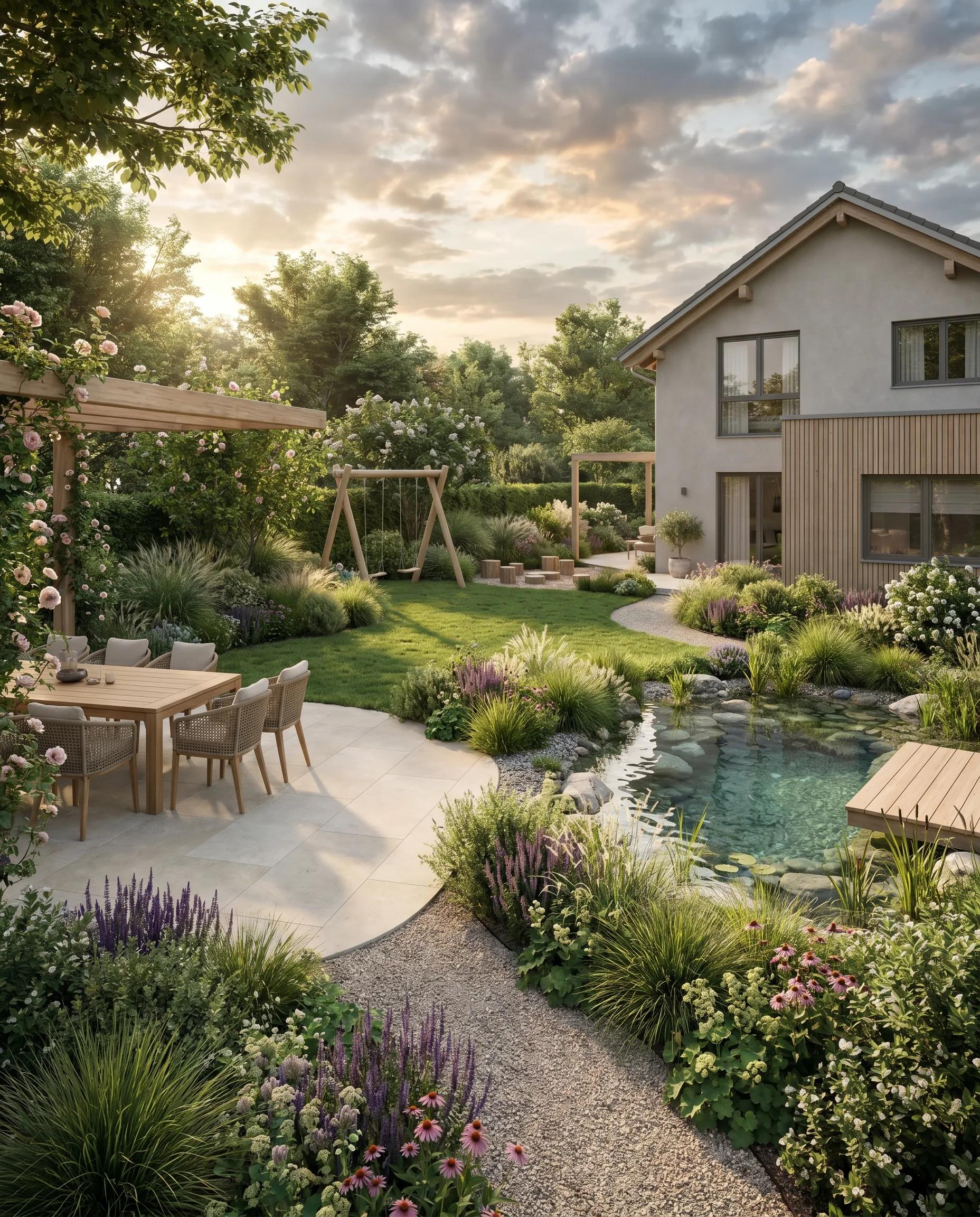
Garden Timeline When Building a House: What to Do When (Step by Step)
When does the lawn go in, when the patio, when the planting? The right sequence for creating your garden after building your house saves real money — and prevents costly mistakes that are hard to fix later.
Redesigning Your Garden After Buying a Home: Rework What’s There Smartly and Protect Your Budget
You’ve bought a house—and now you’re looking at an ’80s lawn or bare, raw soil. Before you commit the first ten thousand euros, it pays to assess what’s already there honestly, set priorities, and follow a clear planning sequence. This article shows you how.