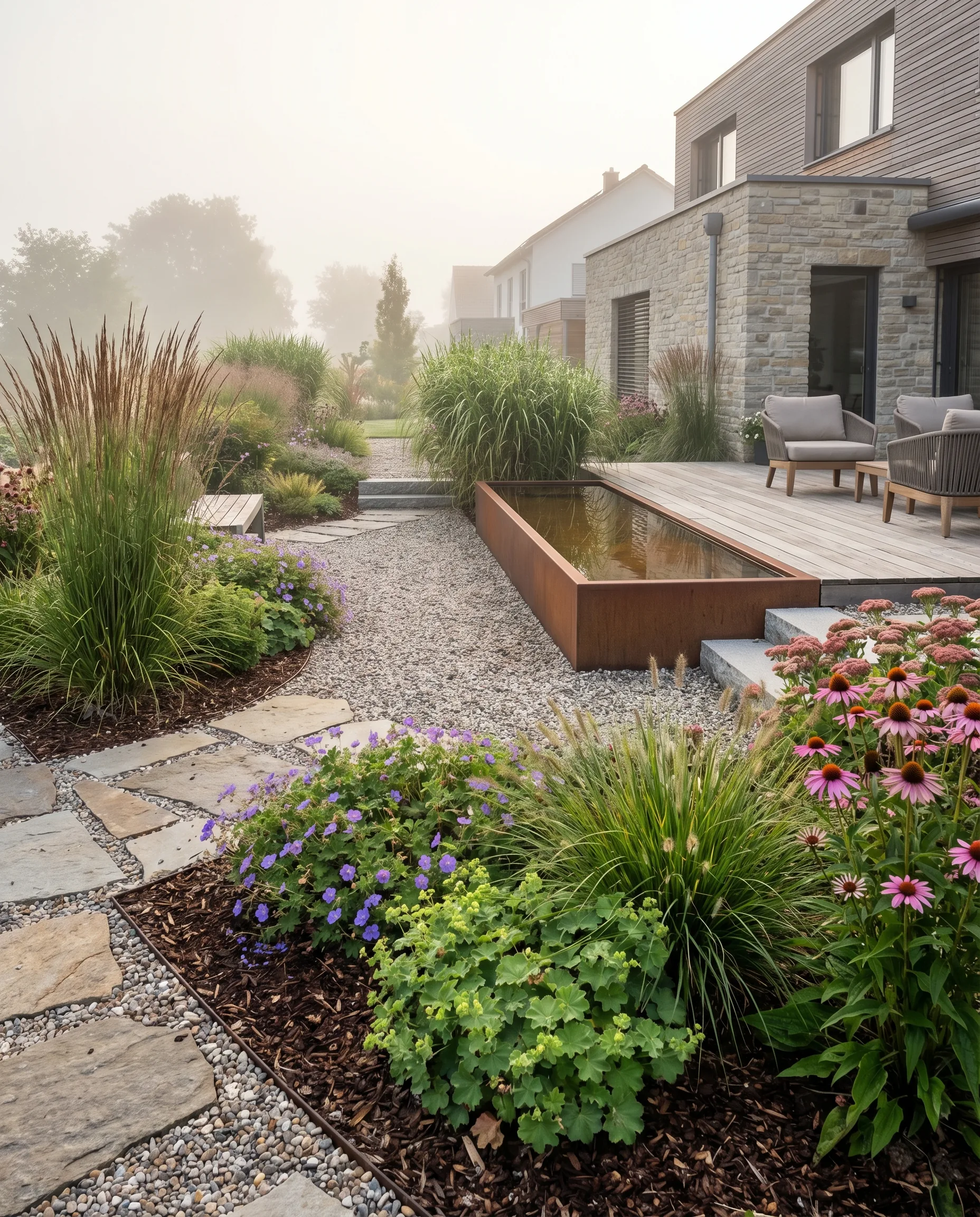
Creating a Low-Maintenance Natural Garden: Keep the Workload Manageable
A natural garden doesn’t have to mean lots of work. Choose the right plants, favor repetition over endless variety, and define clear care zones—and you’ll get a lively, nature-inspired garden without spending every weekend in the beds. Low-maintenance doesn’t mean sterile. It means: thoughtfully limited and beautifully repeated.
What defines a low-maintenance natural garden
Low-maintenance and natural are not opposites—quite the contrary. Natural gardens work with nature, not against it. And with the right planning, that makes them surprisingly easy to care for.
The core principles:
- Lively, but not chaotic – plants can develop, but within clear boundaries
- Clear care zones – defined areas for pruning, watering, and seasonal upkeep
- Robust plants – species that need little attention and largely regulate themselves
- Recurring structures – the same plants in groups instead of lots of one-offs
- Fewer day-to-day interventions – the garden needs seasonal care, not daily attention
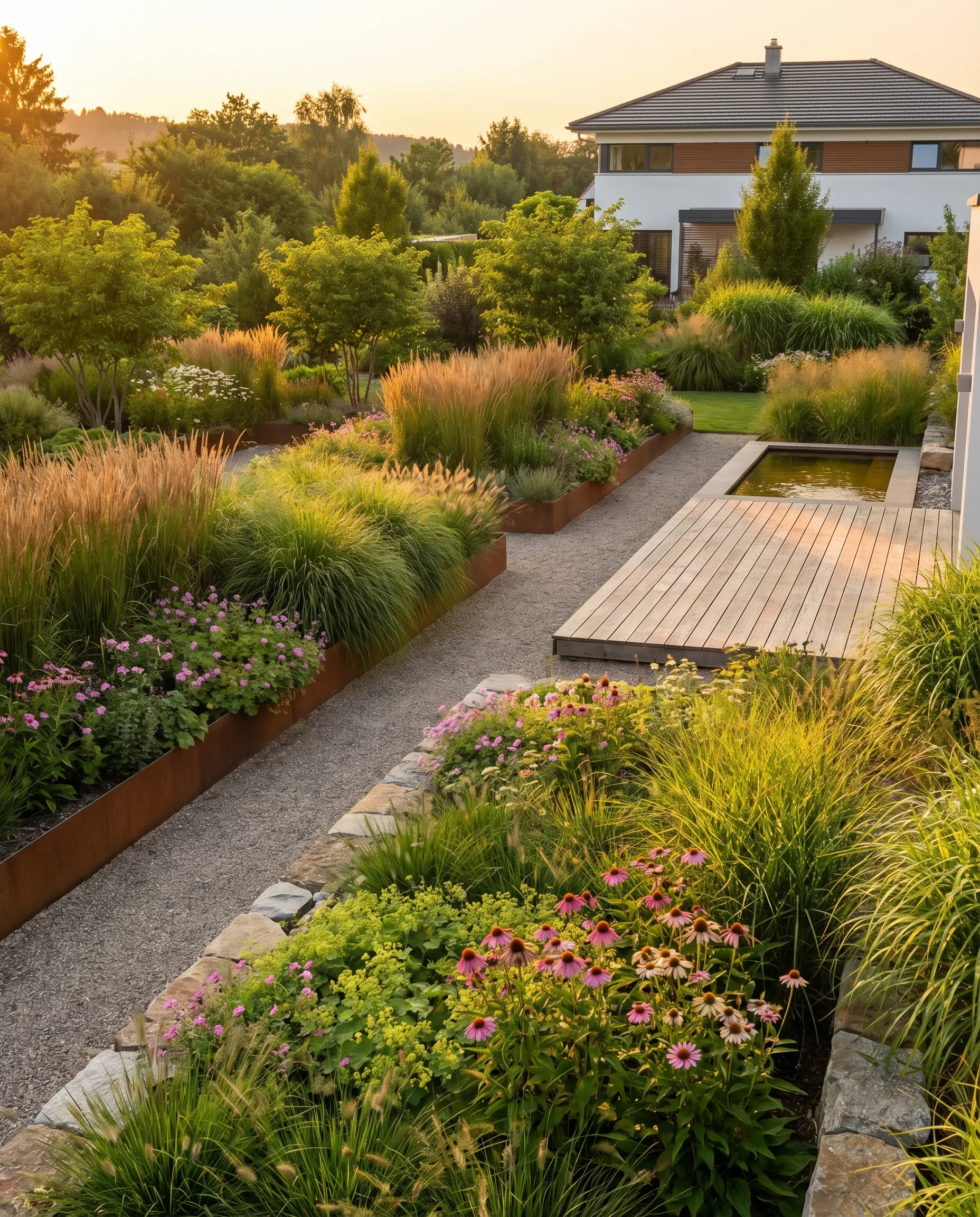
The goal: a garden that looks natural and full of life, yet causes very little work in everyday life.
Which plants suit low-maintenance natural gardens
Plant choice determines the maintenance level. If you focus on robust, long-lived species, you save yourself a lot of work.
Plants that work especially well:
- Hardy ornamental grasses – Calamagrostis, Miscanthus, or Stipa typically need just one cut-back in spring
- Reliable perennials – cranesbill (Geranium), lady’s mantle, and catmint spread in a controlled way and suppress weeds
- Long-blooming stalwarts – yarrow, coneflower, and sedum bloom reliably and need very little care
- Structural shrubs as calm anchor points – individual shrubs or small trees give the garden year-round shape
A simple rule of thumb: plants that thrive in nature on lean soils usually need less water, less fertilizer, and less pruning in the garden.
Why repetition saves more work than variety
One of the most common mistakes in natural gardens: too many different plants. It may look exciting on paper—but in daily life it means more work.
Why repetition works better:
- Less plant knowledge required – learn 8 plant types and you can care for the whole garden
- Clearer care routines – the same plants need the same pruning at the same time
- A calmer overall look – repetition creates rhythm and visual ease
- Easier cutting back and replacing – if a plant fails, you immediately know what goes in its place
That doesn’t mean monotony. Even with 8–10 main species, you can create a varied, atmospheric garden—if the combinations are right.
Paths, gravel, and natural stone as a low-maintenance foundation
It’s not only plants—hardscaping also influences how much work your garden takes. The right materials can significantly reduce maintenance.
What makes surfaces low-maintenance:
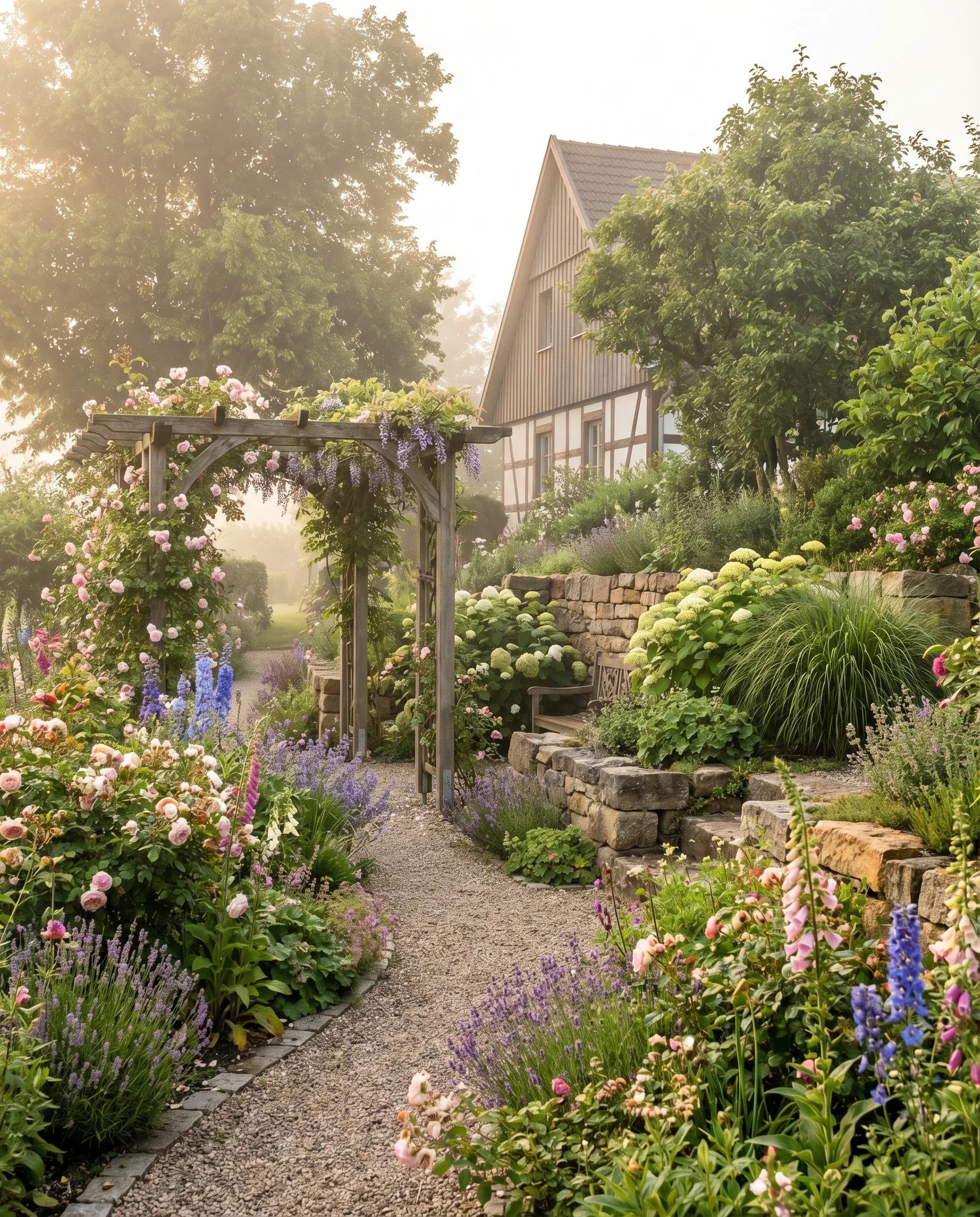
- Edged beds – crisp lines between bed and path prevent plants from creeping into walkways
- Durable paving – natural stone and gravel last for years and require very little upkeep
- Controlled transitions – clean borders between zones reduce follow-up work
- Less demanding edges – mulch, gravel, or groundcovers instead of bare soil along borders
If you’d like to use water as a design element without increasing maintenance, you’ll find helpful approaches in our article on designing a garden by the water.
Low-maintenance vs. cottage or romantic styles
Cottage gardens and romantic gardens can look similarly natural—but they differ in maintenance.
Where the approaches overlap:
- All three rely on flowers, natural materials, and soft forms
- All three can be implemented with robust plants
- All three benefit from clear underlying structure
Where cottage and romantic styles can demand more care:
- The cottage garden thrives on dense planting—meaning more cut-back and more attention
- The romantic garden often uses more delicate roses and perennials
- Both styles work with more plant varieties, which makes care more complex
How to keep the look anyway:
- Create the main effect with a few tough, reliable species
- Use delicate plants only as accents, not as the base
- Use quiet spaces and structural shrubs as a low-maintenance framework
Does a low-maintenance natural garden suit every home?
Yes—with the right coordination, a low-maintenance natural garden works with almost any type of house.
It’s especially well suited to:
- Traditional single-family homes with plaster or brick façades
- Country houses and older buildings that “expect” a natural setting
- Homes with warm materials like wood or natural stone
Also ideal as a soft counterpoint to modern architecture:
- A low-maintenance natural garden can intentionally heighten the contrast with crisp, modern façades
- The combination works best when the transition between architecture and garden is designed
Conclusion
Low-maintenance doesn’t mean sterile—it means thoughtfully limited and beautifully repeated. A natural garden can be lively, blooming, and atmospheric without creating weekend after weekend of work. The key lies in plant selection, repetition, and clear care zones.
If you want a garden that looks natural and stays easy to manage day to day, you can test concepts tailored to your home directly with GardenPilot.
Related articles
- Natural Garden Ideas: Flowers, Grasses, Natural Stone, and Soft Forms
- Cottage Garden: Romantic Garden Design with Structure and Lightness
- Romantic Garden: Creating Atmosphere with Paths, Plants, and Light
- Designing a Garden by the Water: Natural Shorelines, Paths, and Calm Transitions
A nature-inspired design with minimal effort only works with the right species for your site—preview what truly works for your garden beforehand. Upload a photo of your garden and use AI to see how it could look—along with a rough cost range before you invest. This helps you avoid expensive planning mistakes. Visualize your garden with GardenPilot (how it works).
Frequently asked questions
Which plants are suitable for a low-maintenance natural garden?
Especially suitable are site-adapted, native perennials such as coneflower, cranesbill (Geranium), or sedum, which manage without regular watering and fertilizing. Grasses and wild perennials are also resilient against pests and blend harmoniously into a natural look.
How do I create sensible care zones in a natural garden?
Divide the garden into intensively maintained areas close to the house and more extensive, lightly managed zones farther back. That way, you focus your effort on manageable areas, while wildflower meadows or shrub zones can largely be left to themselves.
How can I prevent weeds in a natural garden without much work?
Dense planting with groundcover perennials, or mulch layers made from bark mulch or lawn clippings, leaves weeds little light and space to germinate. If you close the planting well, you reduce maintenance significantly over the long term.
Is a natural garden also suitable for small gardens?
Yes—on a small footprint, you can create a natural garden by choosing a few well-repeated plant species and relying on structural elements such as deadwood or a small dry-stone wall. Precisely because repetition replaces large plant diversity, the garden feels cohesive and remains low-maintenance.
Gallery
Plan your own garden
Upload a photo of your garden and get a professional AI concept in minutes.
Start for freeMore articles from Nature-Inspired Gardens
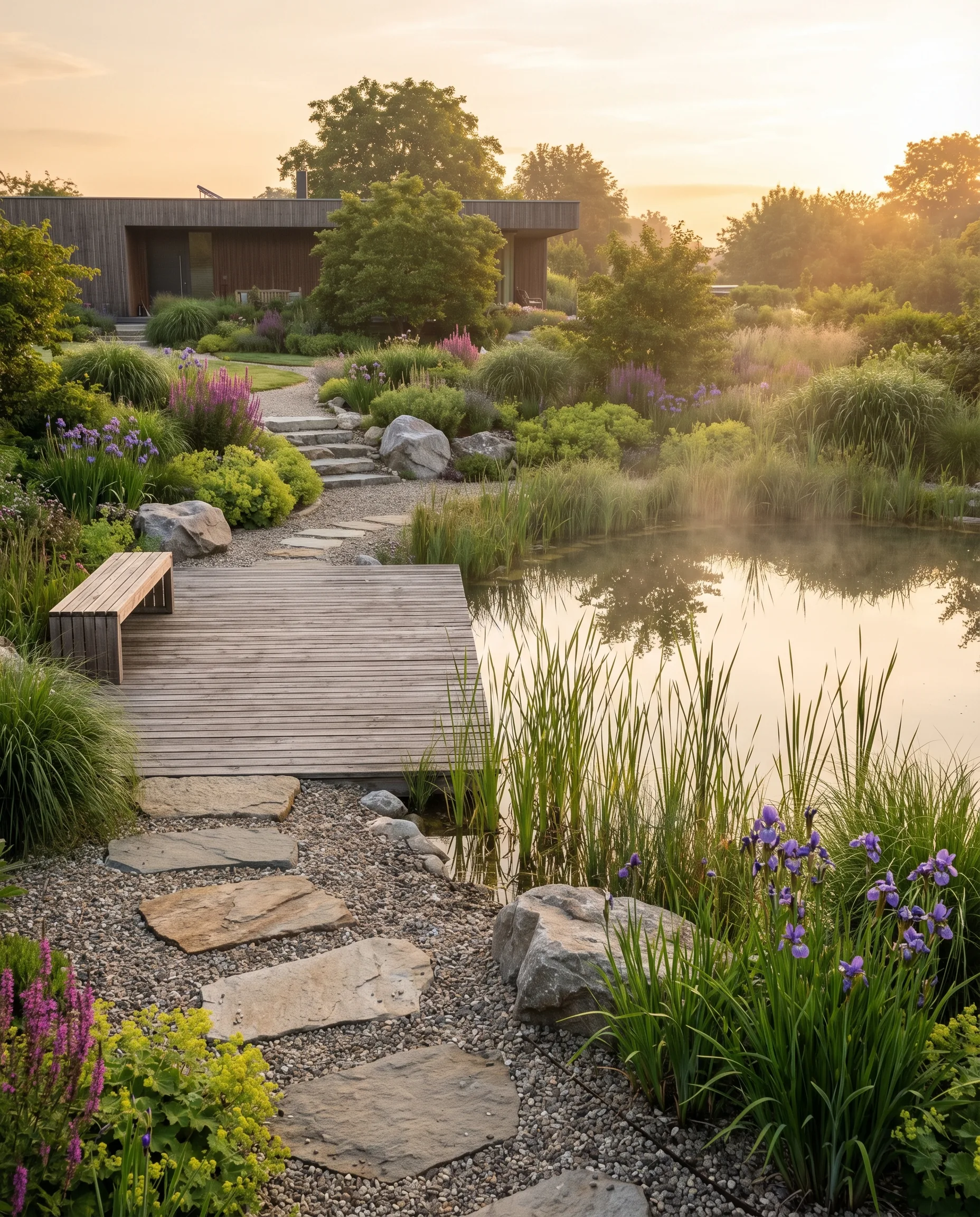
Designing a Garden by the Water: Natural Banks, Paths, and Calm Transitions
How to create a natural, harmonious garden by the water—with soft banks, natural stone, gravel, and calm transitions.
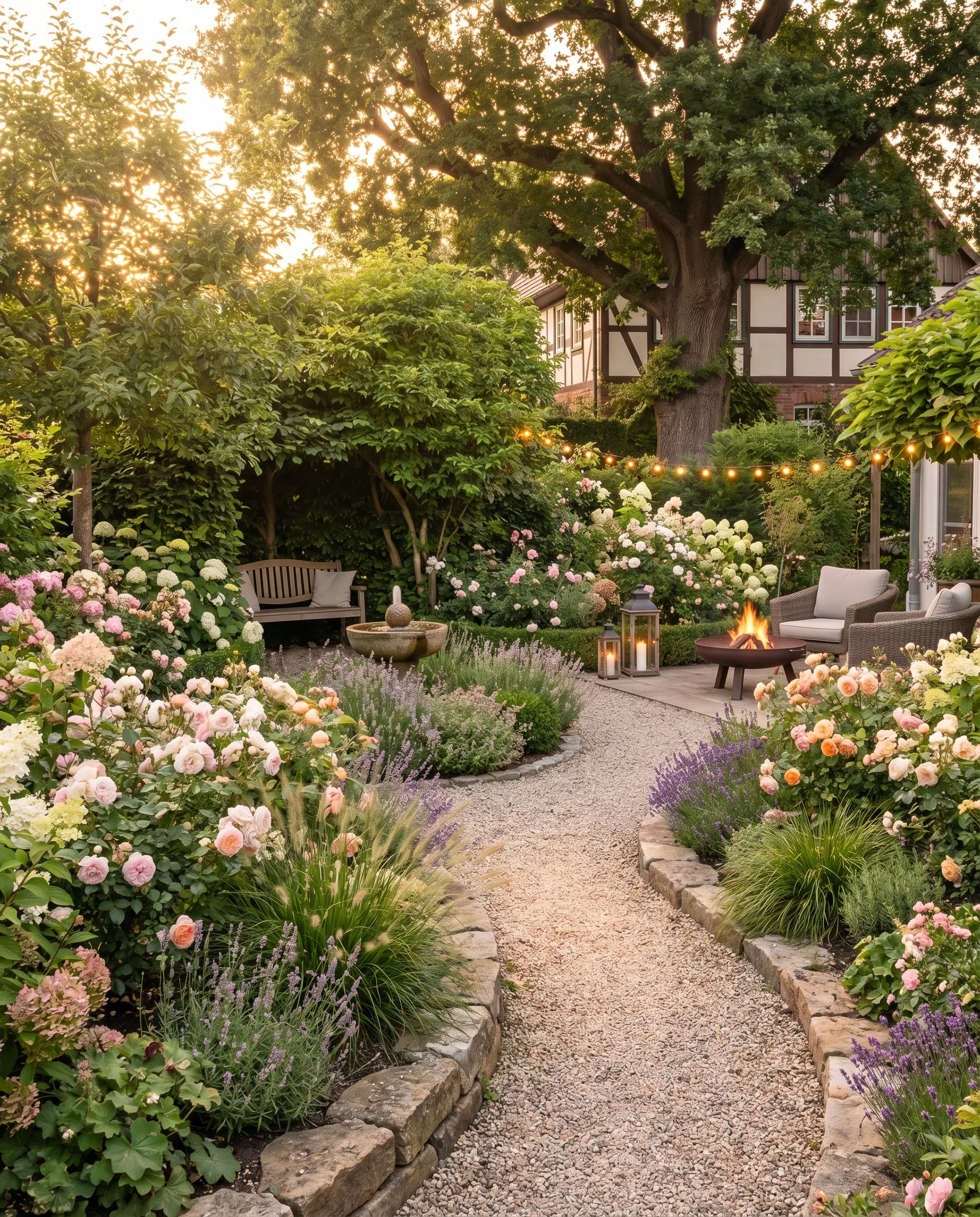
Romantic Garden: How to Create Atmosphere with Paths, Planting and Lighting
A romantic garden thrives on atmosphere, soft paths, blooms and warm light—for an evocative garden design with true presence and charm.
Cottage Garden: Romantic Garden Design with Structure and Effortless Charm
A cottage garden combines a profusion of flowers, natural stone, pathways and relaxed planting into a romantic garden design with real structure.