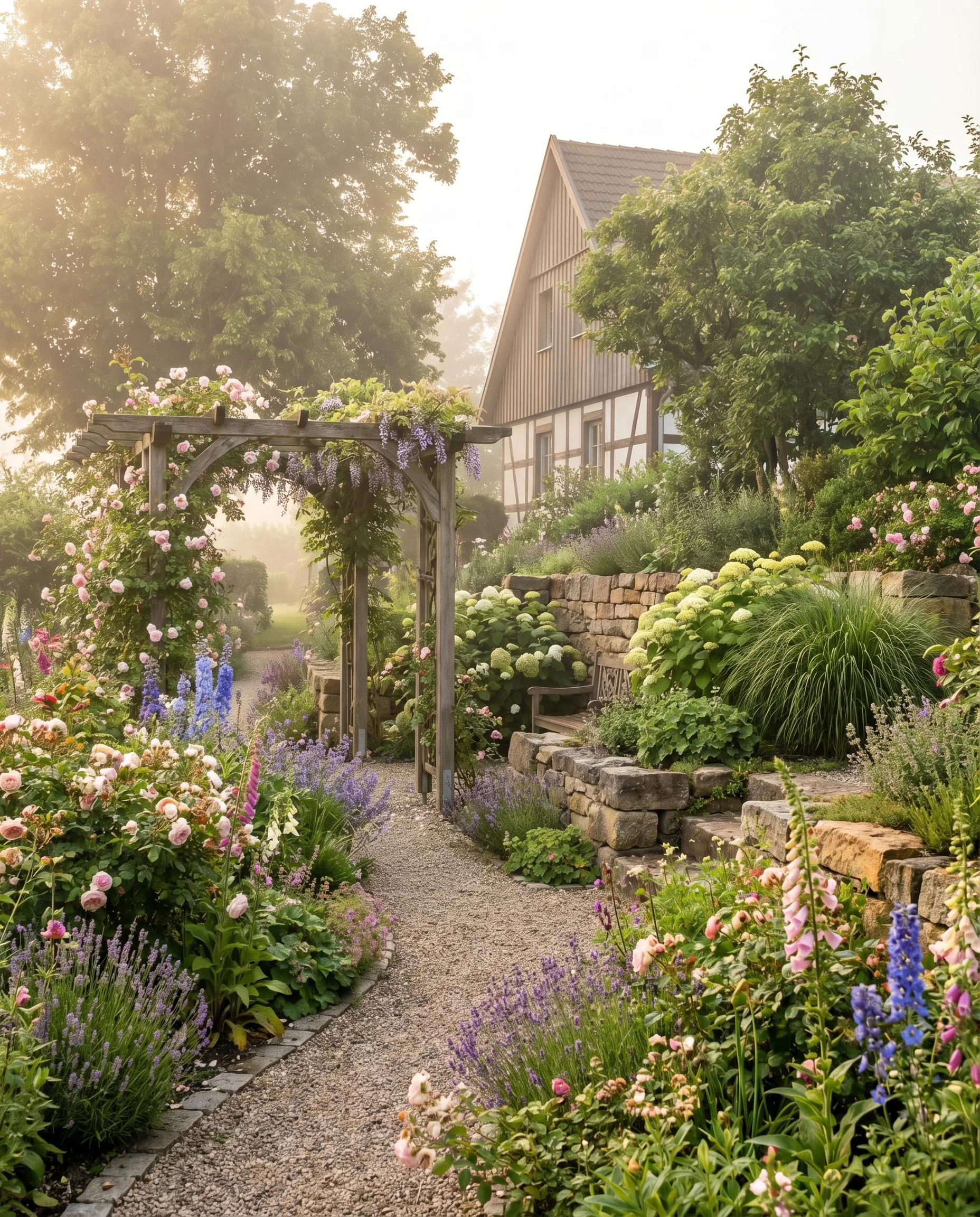
Designing a Natural Garden: Ideas for Lively, Harmonious Outdoor Spaces
A natural garden is a garden that doesn’t work against nature—it works with it. It thrives on flowers, grasses, natural stone and soft transitions: a design that feels organic, even though it’s thoughtfully composed. Anyone who wants to design a natural garden is choosing atmosphere, vibrancy and a visual language inspired by the outdoors.
What Defines a Natural Garden
A natural garden differs fundamentally from a modern or minimalist garden. Instead of straight lines and strict geometry, the focus is on soft shapes, layered planting and lively surfaces.
The core principles of natural garden design:
- Soft transitions – no harsh edges between materials, but flowing boundaries
- Lively planting – perennials, grasses and blooms arranged in relaxed, natural-looking groups
- Natural materials – natural stone, wood, gravel and bark mulch instead of concrete and corten steel
- Different heights and textures – groundcovers, mid-height perennials and tall grasses create spatial depth
- Atmosphere over geometry – the garden feels like it has grown over time, not like it was constructed
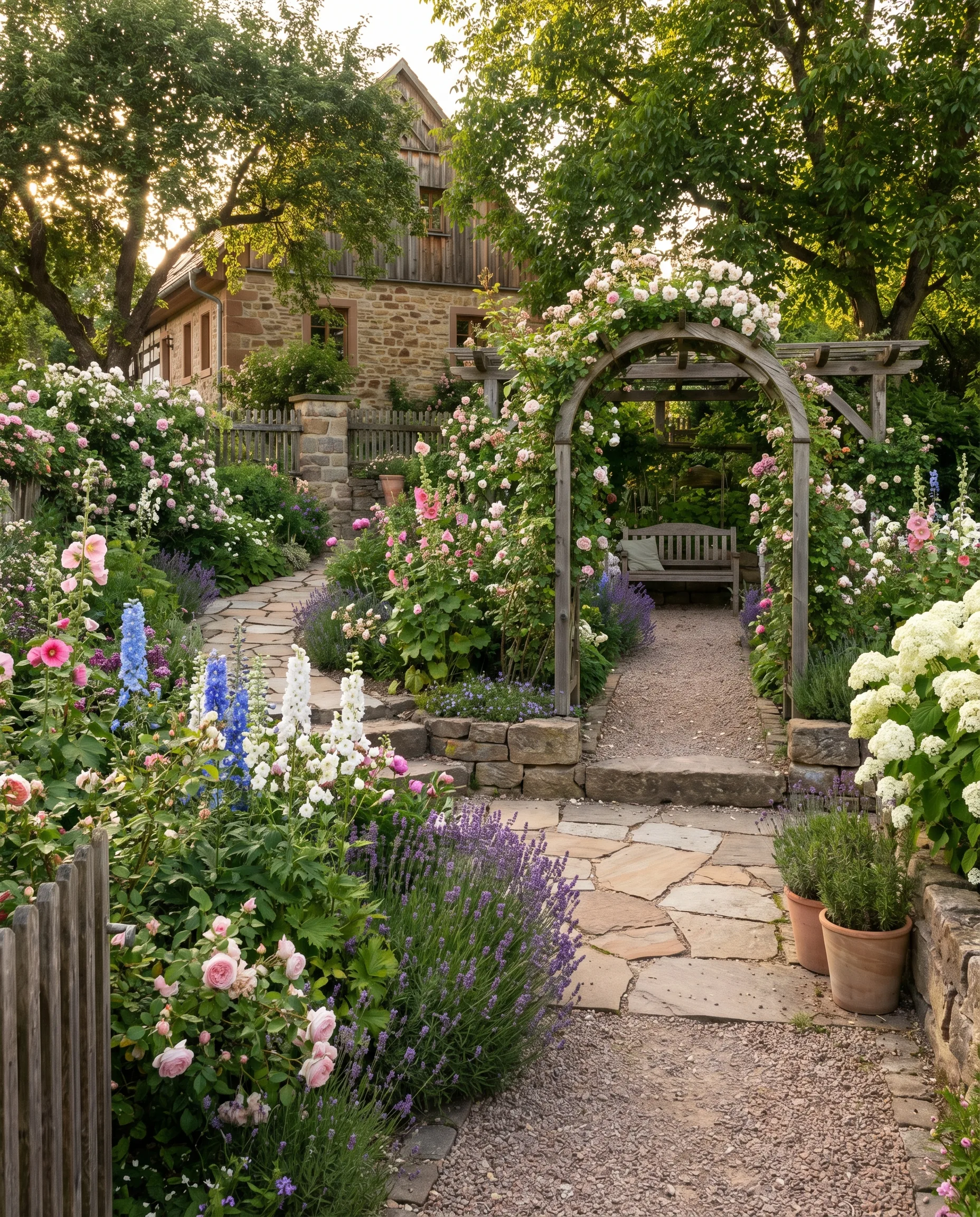
Natural gardens aren’t unkempt. They’re intentionally designed—just in a way that makes the design feel invisible.
Which Homes Pair Especially Well with Natural Gardens
A natural garden doesn’t only work on rural properties. It suits surprisingly many types of homes—as long as the design is aligned with the architecture.
Homes that harmonize especially well with natural garden design:
- Country homes and villas – the classic combination of warm architecture and vibrant planting
- Period homes with character – timber framing, natural stone or rendered façades benefit from soft, flowering gardens
- Traditional single-family homes – the most common starting point, and ideal for a nature-inspired approach
- Homes with warm materials – timber cladding, brick or light renders create the perfect backdrop
- Modern homes that want contrast – a natural garden can be a deliberate, soft counterpoint to clean architecture
Rule of thumb: the warmer and more textured the façade, the better a natural garden fits. But even with modern houses, the contrast between crisp architecture and living nature can be especially compelling.
Flowers, Grasses and Perennials as the Foundation of Natural Gardens
Planting is the heart of every natural garden. Unlike modern gardens—where plants are used sparingly and tightly controlled—natural gardens thrive on abundance, movement and seasonal change.
Design principles for planting:
- Relaxed layering – groundcovers, low perennials, mid-height bloomers and tall grasses form stacked levels
- Movement through grasses – Miscanthus, Calamagrostis or Stipa add lightness and respond beautifully to wind
- Blooms as mood-makers – lavender, roses, geraniums, yarrow and coneflower create seasonal highlights
- Seasonal dynamics – bulbs lead in spring, perennials in summer, and grasses with seed heads take over in autumn
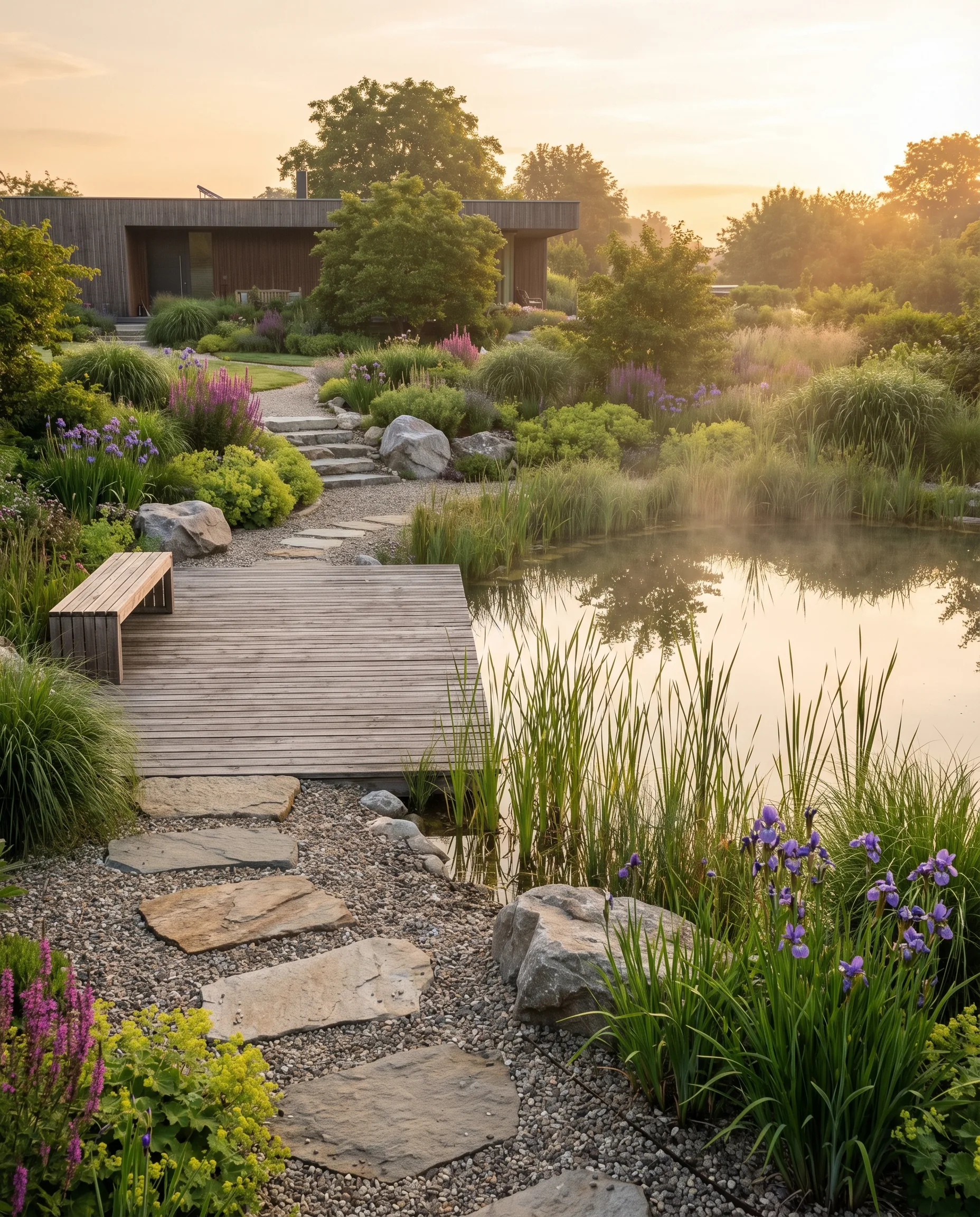
The goal: a garden that changes throughout the year and offers something special in every season.
A Romantic Garden Language in a Natural Style
Natural gardens often have a romantic quality—not kitschy, but atmospheric. Curving paths, tucked-away seating and gentle light create an inviting mood that makes you want to linger.
Elements that create this atmosphere:
- Curving paths – made of natural stone, gravel or stepping stones that wind through the planting
- Seating with focal views – a bench beneath a tree, a small terrace at the end of a path
- Soft lighting – warm-white in-ground lights, lanterns or candles instead of harsh illumination
- Cozy focal points – a rose arch, a flowering hedge or a single tree as a visual anchor
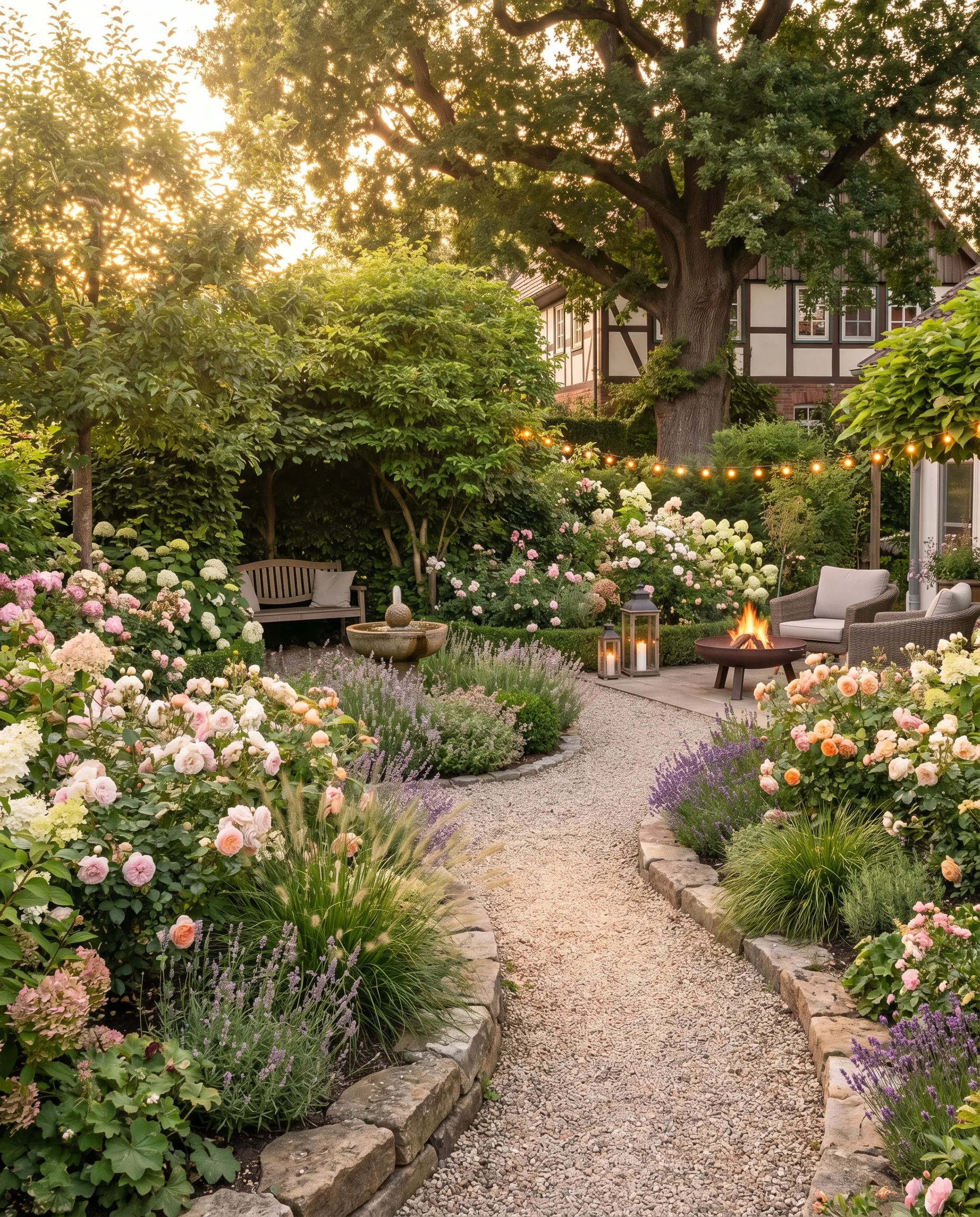
If you’d like to explore the romantic side of garden design in more depth, our article on the romantic garden offers practical ideas for atmosphere and layout.
The Cottage Garden as a Particularly Characterful Variation
The cottage garden is the most lush and emotionally expressive interpretation of natural garden design. It differs from the classic natural garden through:
- More abundance – denser planting, greater variety of blooms, stronger color contrasts
- A stronger focus on flowers – roses, hollyhocks, delphiniums and peonies as the main stars
- A traditional character – elements such as wooden fences, gates and mixed borders
- A more emotional impact – a cottage garden tells a story, not just a mood
A cottage garden isn’t for minimalists—but it’s perfect for anyone who wants a garden with personality, fragrance and overflowing beauty. Learn more in our article on the cottage garden.
Can a Natural Garden Be Low-Maintenance?
A common concern: natural gardens look like a lot of work—are they? The answer: it depends on the planning.
What makes a natural garden low-maintenance:
- Repetition instead of a jumble – a few plant types in larger drifts rather than lots of one-offs
- Long-lived plants – perennials and grasses that self-seed or spread slowly
- Clear maintenance zones – defined areas for pruning and seasonal care
- Mulch and groundcovers – suppress weeds and reduce watering
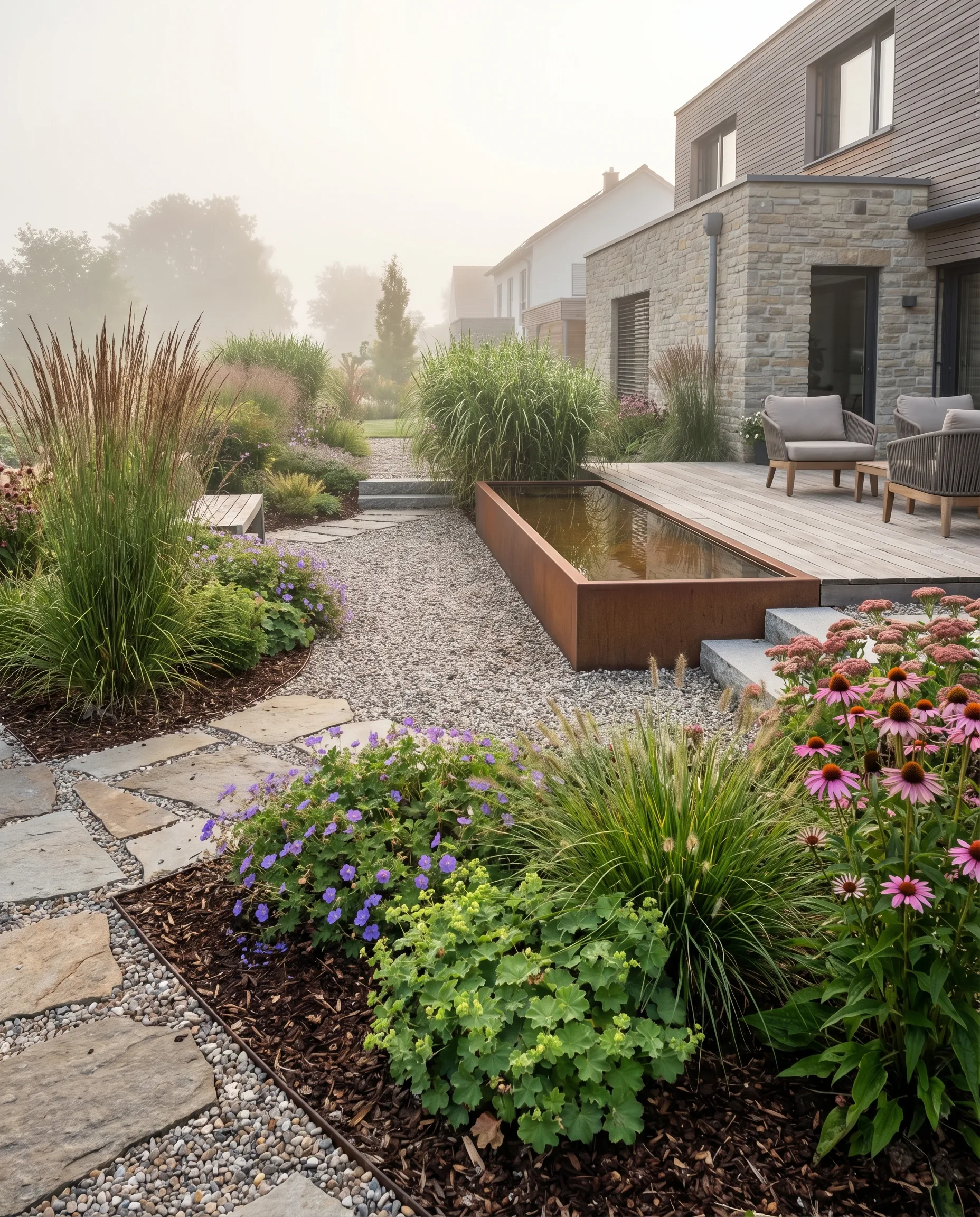
A natural garden doesn’t have to be a lot of work—if you plan it well. We show you how in our article on the low-maintenance natural garden.
Water, Shorelines and Natural Transitions in the Garden
Water is one of the most powerful design elements in natural gardens. Unlike modern gardens—where water is contained in crisp, geometric basins—here it’s allowed to feel natural.
Water feature ideas for natural gardens:
- Natural pond – with a soft shoreline, bog plants and water lilies
- Stream – a quietly babbling element that leads through the garden
- Spring stone – a single stone where water emerges, surrounded by ferns and mosses
- Gravel and natural-stone edges – soft transitions instead of hard borders
Water brings calm, reflection and life into the garden. If you’d like to dive deeper into the topic, our article on designing a garden by water offers concrete design ideas.
Conclusion
A natural garden isn’t unplanned—it’s deliberately composed and rich in atmosphere. It thrives on the connection between architecture and nature, the dynamics of the seasons, and a design that feels effortless even though it’s carefully considered. If you love liveliness, blooms and soft shapes, natural garden design is the perfect approach.
Want to see how a natural garden would look with your own home? With GardenPilot, you can visualize different nature-inspired styles directly based on a photo.
Related Articles
- Cottage Garden: Romantic Garden Design with Structure and Lightness
- Romantic Garden: Creating Atmosphere with Paths, Plants and Light
- Low-Maintenance Natural Garden: Create Lushness with Minimal Effort
- Designing a Garden by Water: Natural Shorelines, Paths and Calm Transitions
Flowers, grasses and natural stone sound effortlessly harmonious—but whether the combination looks cohesive in your garden or simply unfinished is something you can clarify in advance with a realistic visualization. Upload a photo of your garden and see, with AI, how it could look—along with a rough cost range—before you invest. That way, you avoid costly planning mistakes. Visualize your garden with GardenPilot (how it works).
Frequently Asked Questions
Which plants are particularly well suited to a natural garden?
Native perennials such as wildflowers, coneflower (Echinacea), yarrow, and grasses like feather grass or moor grass blend seamlessly into natural gardens. They’re low-maintenance, undemanding, and provide valuable food and habitat for insects and birds.
How do I create natural beds with soft transitions?
Instead of straight bed edging, opt for flowing lines that you can mark out on the ground using a garden hose or rope. Transitions between plant groups are intentionally designed to be fluid by pulling lower species into taller drifts.
Which natural stone is suitable for paths and bed edging in a natural garden?
Regional materials such as basalt, sandstone, limestone or unworked fieldstone are especially suitable, as they blend visually with the overall look. Loosely laid stepping stones or natural paving also promote water infiltration and offer shelter for small animals.
How do I maintain a natural garden so it doesn’t look overgrown?
A natural garden doesn’t need intensive upkeep, but it does benefit from targeted interventions: pruning in spring rather than autumn preserves structure and protects overwintering insects. Regular thinning and selective replanting prevent any single species from taking over.
Gallery
Plan your own garden
Upload a photo of your garden and get a professional AI concept in minutes.
Start for freeMore articles from Nature-Inspired Gardens
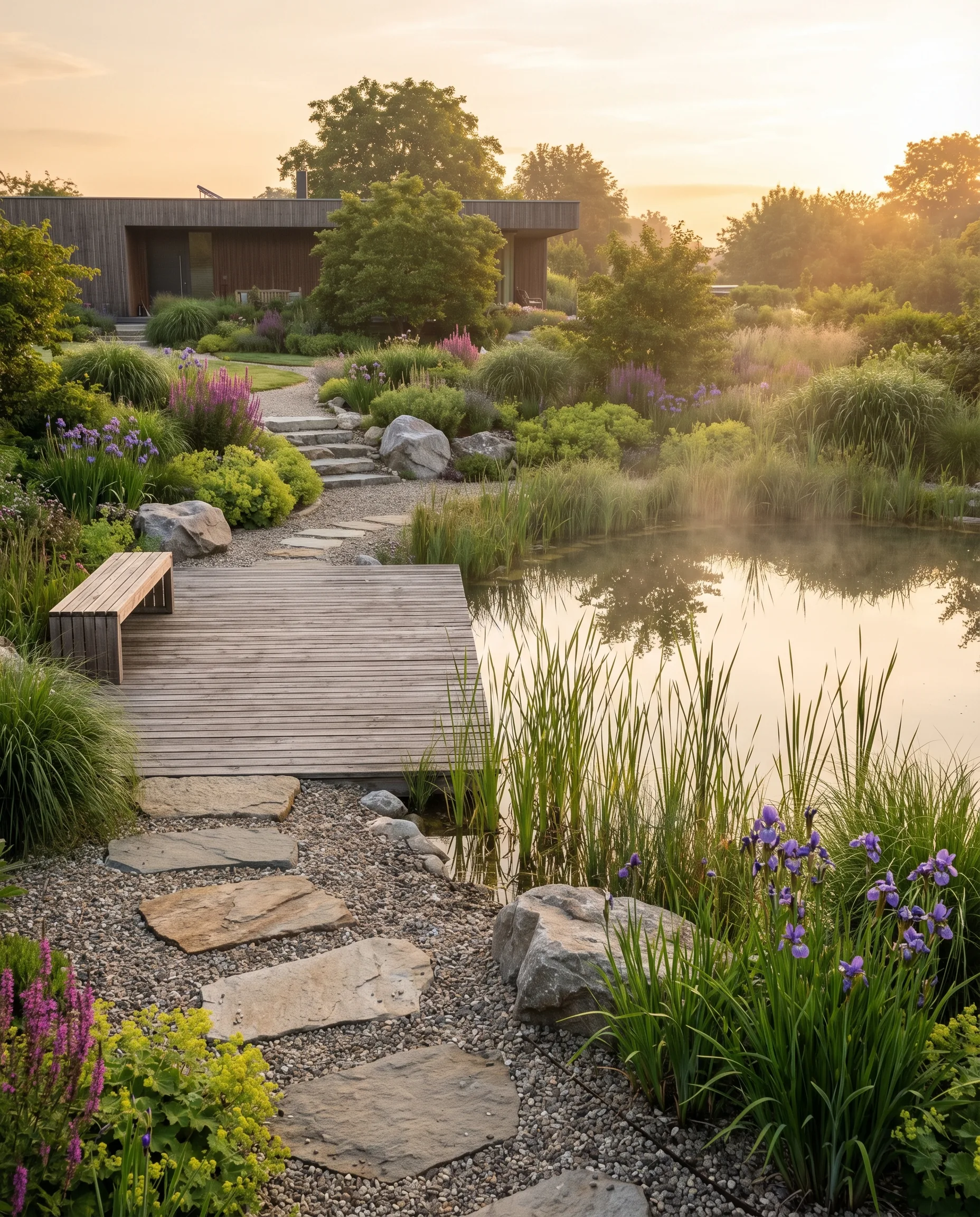
Designing a Garden by the Water: Natural Banks, Paths, and Calm Transitions
How to create a natural, harmonious garden by the water—with soft banks, natural stone, gravel, and calm transitions.
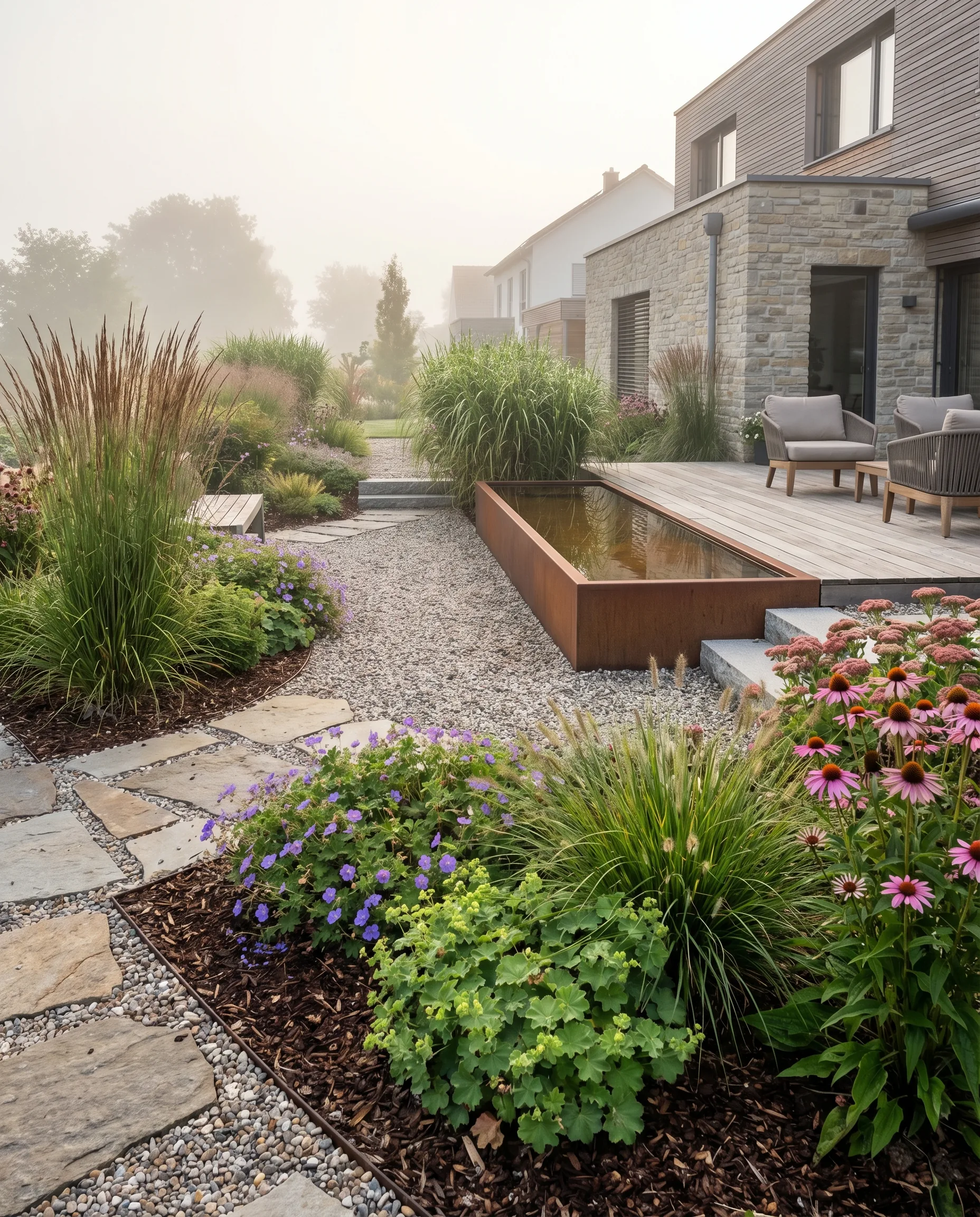
Low-Maintenance Natural Garden: Lush, Living Design with Minimal Effort
A natural garden can be vibrant and still low-maintenance—with the right plant choices, repetition, and clear care zones.
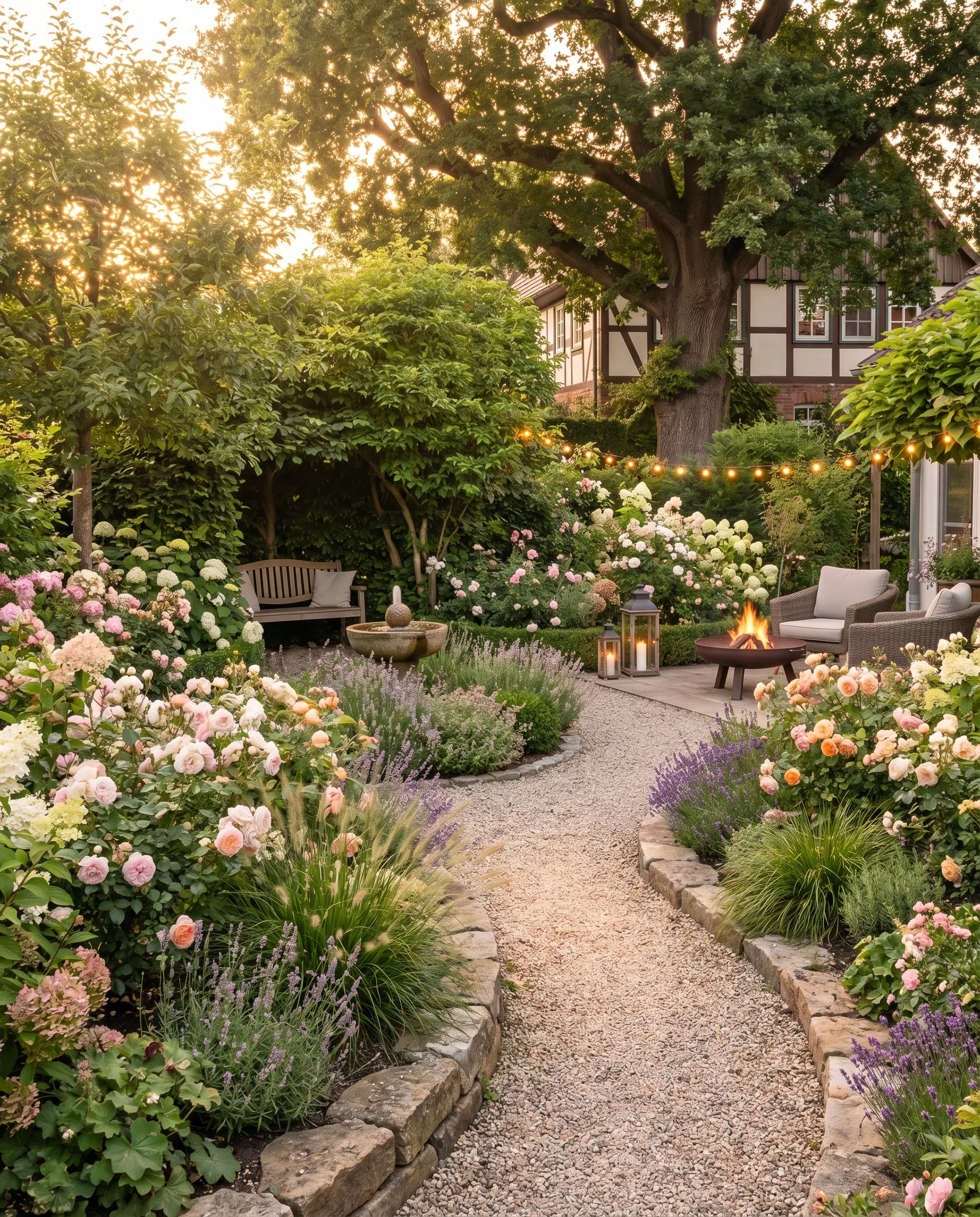
Romantic Garden: How to Create Atmosphere with Paths, Planting and Lighting
A romantic garden thrives on atmosphere, soft paths, blooms and warm light—for an evocative garden design with true presence and charm.