Designing a Nature-Inspired Front Garden: How to Make Your Entrance Feel Lively and Welcoming
What Defines a Nature-Inspired Front Garden
A nature-inspired front garden is the exact opposite of a minimalist entryway. This isn’t about reduction and control—it’s about vitality, warmth, and natural beauty.
The most important characteristics:
- Soft shapes – curved bed edges, organic path lines, flowing transitions
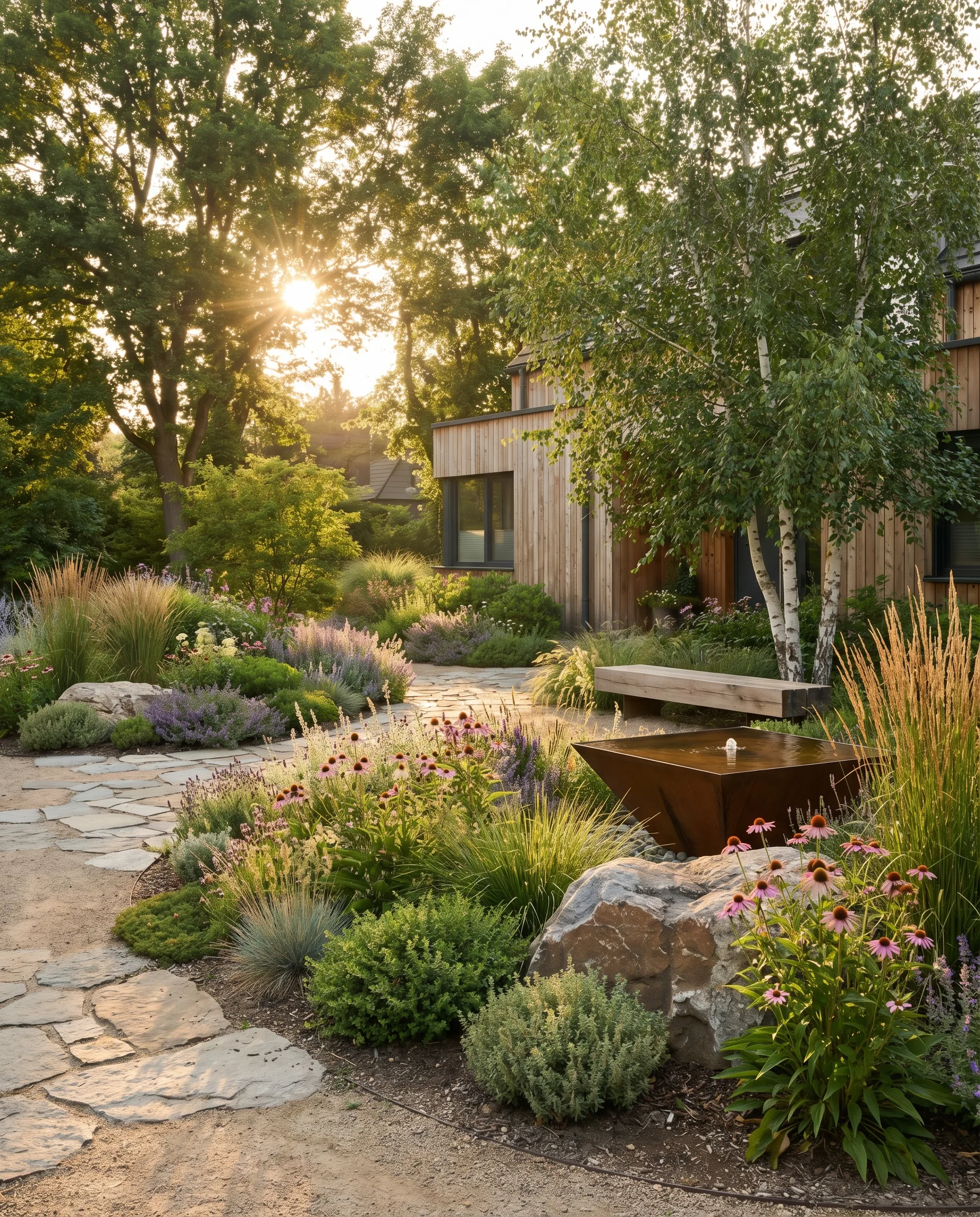
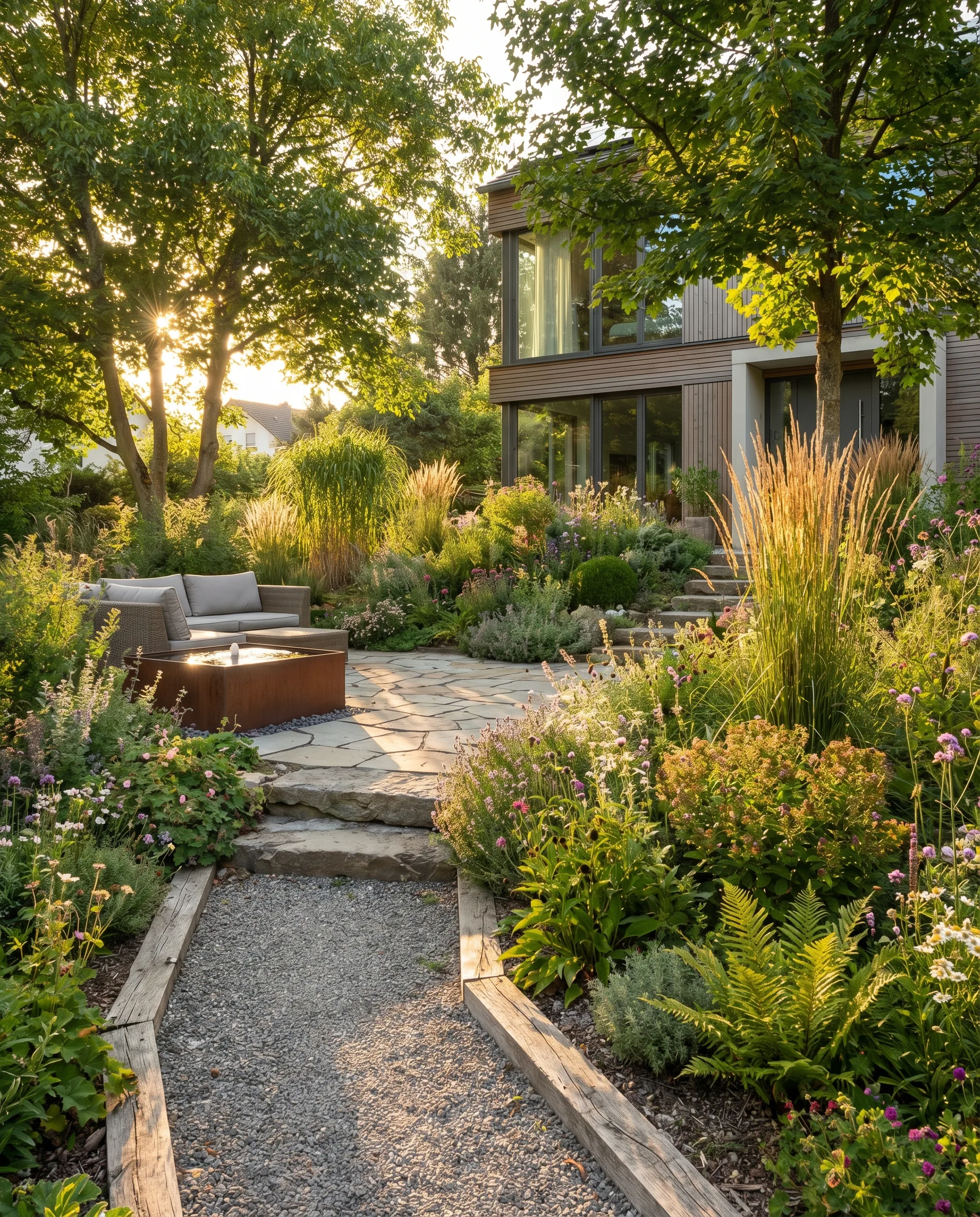
- Lively planting – a mix of perennials, grasses, and flowering plants arranged naturally
- Natural materials – natural stone, gravel, wood instead of concrete and corten steel
- More layering and movement – varied heights, textures, and bloom times create a dynamic look
The result: a front garden that feels as if it has grown—rather than been built. A warm, personal welcome right at the door.

Paths and Transitions in a Nature-Inspired Front Garden
In a nature-inspired front garden, the path isn’t a rigid design feature—it’s part of the landscape. It blends in instead of taking over.
Natural Stone as a Path Material
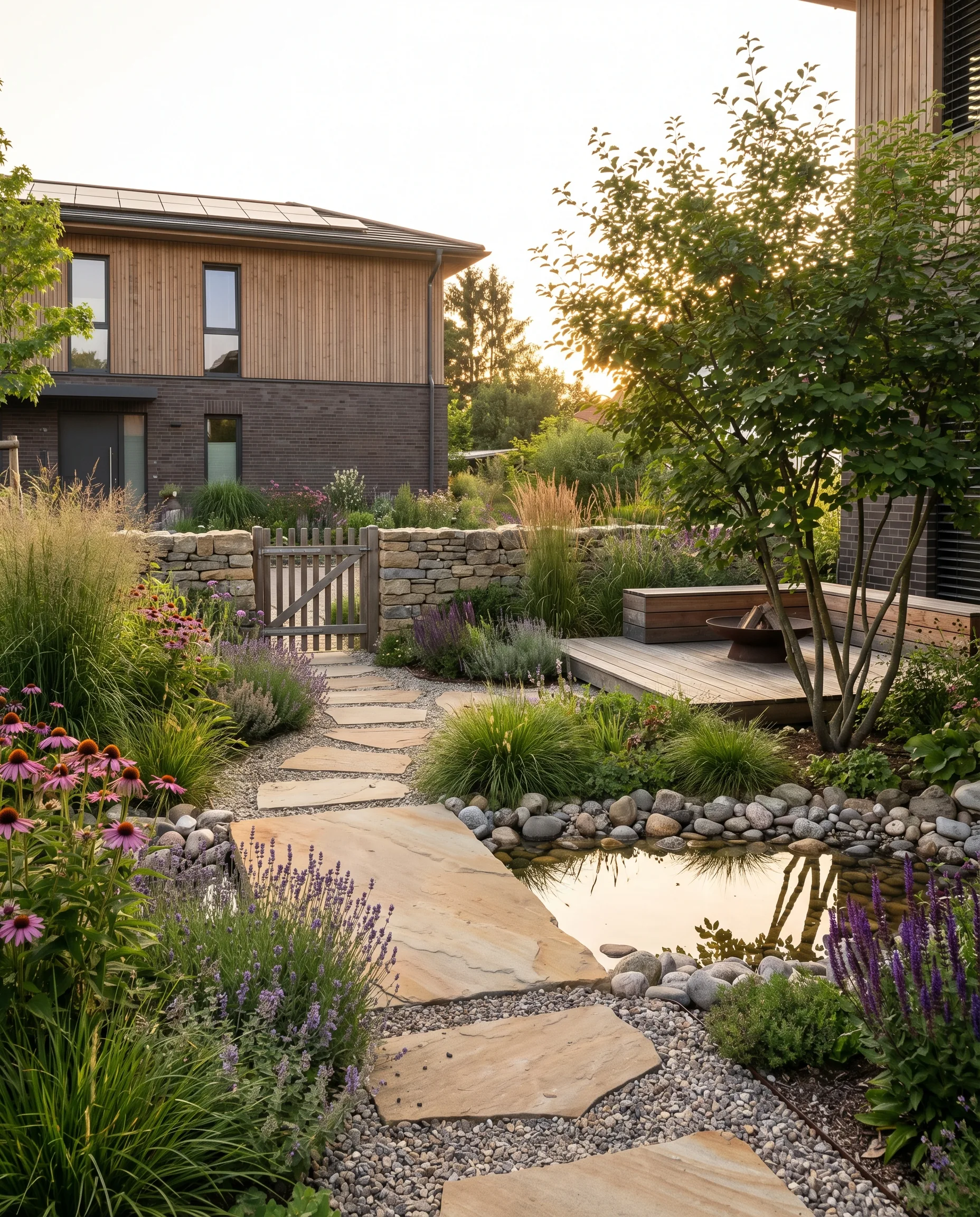
Irregular natural stone slabs, polygonal paving, or stepping stones made of sandstone suit the nature-inspired style perfectly. Their uneven shapes and natural tones integrate beautifully with the planting.
Organic-Looking Lines
Instead of straight axes, paths meander gently through the front garden. The curves don’t need to be dramatic—even a subtle bend creates a more natural feel.
Less Strict Alignment
The path doesn’t have to run symmetrically toward the front door. A slightly offset approach that passes through a planting bed adds interest and invites discovery.
Gravel and Joints as a Soft Connection
Wide joints between stepping stones—filled with gravel or planted with thyme or moss—make the transition from path to bed feel seamless and fluid.

👉 More on paths: Garden Path Ideas – Stylishly Designing Paths in the Front Garden
How to Combine Flowers, Perennials, and Grasses the Right Way
Planting is the heart of a nature-inspired front garden. This is where the atmosphere is created—but only if the combinations are well considered.
Height Layering
Plan in three tiers:
- Front (low): groundcovers and low perennials—cranesbill, lady’s mantle, cushion plants
- Middle (medium): flowering perennials and grasses—salvia, lavender, anemone, sedge
- Back (tall): taller grasses, roses, or compact shrubs—Chinese silver grass, shrub roses, hydrangeas
Bloom Times
Combine plants with different flowering periods so the front garden feels alive from March through October:
- Spring: daffodils, tulips, forget-me-nots
- Summer: lavender, roses, coneflower, salvia
- Autumn: stonecrop, asters, grasses with seed heads
Texture Contrasts
Visual tension comes from switching between:
- fine foliage (grasses) and large leaves (hosta, lady’s mantle)
- upright forms (salvia, delphinium) and arching/spilling forms (cranesbill, grasses)
- smooth surfaces and richly structured textures
Loose Repetition Instead of Strict Symmetry
Nature-inspired plantings look best when the same plants appear in multiple spots—not in exact rows, but in relaxed groups. This creates a natural pattern that feels cohesive without looking stiff.

When a Nature-Inspired Front Garden Fits Better Than a Modern One
Not every style suits every home. The nature-inspired approach shines especially with certain house types and preferences:
Classic Homes
Single-family houses with a gabled roof and plaster façade look harmonious and welcoming with nature-inspired planting. The front garden enhances the homey character.
Country House, Period Properties, and Timber-Framed Homes
Historic or traditional buildings benefit particularly from soft, flowering front gardens. Natural stone, roses, and perennials amplify the architectural charm.
A Desire for Warmth and Liveliness
If a modern front garden feels too cool or sterile to you, the nature-inspired approach is the right choice. It radiates emotion and personality—something crisp lines and concrete can’t deliver.
| Nature-Inspired Front Garden | Modern Front Garden |
|---|---|
| curved shapes | clean lines |
| many different plants | few, structured species |
| natural stone, gravel, wood | concrete, corten steel, large slabs |
| lively and emotional | calm and architectural |
| more maintenance | less maintenance |
👉 For comparison: Designing a Modern Front Garden – Clean Lines, Structure, and Premium Materials
Does a Nature-Inspired Style Work in Small Front Gardens Too?
Yes—if the planting stays controlled. A small nature-inspired front garden can be wonderfully charming, but it needs clear rules:
- Focus on a few key species – three to five perennials, one to two grasses, one woody plant. That’s all you need.
- No chaotic mix – each plant should appear at least three times to create a pattern
- Crisp bed edging – even a nature-inspired bed needs a defined edge so it doesn’t “fray”
- Path as an organizing element – the path gives the small space structure, even if the planting is informal
👉 More on this: Small Front Garden – Ideas for Narrow and Compact Entrances
Common Mistakes in Nature-Inspired Front Gardens
The nature-inspired style is often misunderstood as “just let everything grow.” But nature-inspired doesn’t mean unplanned. The most common mistakes:
Too Many Species
If every plant appears only once, you don’t get a coherent garden image—you get a jumble. Nature-inspired gardens need repetition to feel harmonious.
Lack of Structure
Without a basic framework of shrubs, grasses, or anchor perennials, the planting can look arbitrary. Every bed needs one to two structural plants that remain visible even in winter.
Unclear Paths
If the path disappears into greenery, the front garden loses its function. Even in a nature-inspired style, the path must remain clearly defined and easy to walk.
No Calm Areas
A nature-inspired front garden doesn’t need planting everywhere. Restful areas—a strip of gravel, a small lawn, a wider path—give the eye a break and let the beds shine.
Conclusion
A nature-inspired front garden isn’t the opposite of planning—it’s nature, consciously composed. The art lies in combining blooms, textures, and materials so the overall look feels lively yet harmonious.
The three most important principles:
- Repetition – a few plant species in relaxed groups instead of lots of single specimens
- Layering – three height levels for depth and year-round impact
- Material harmony – natural stone, gravel, and wood as a natural foundation
Follow these principles and you’ll create an entrance that feels vibrant, welcoming, and still beautifully cared for.
Next Step
If you’d like to see how a nature-inspired front garden would look at your home, GardenPilot lets you visualize different styles directly—based on a photo of your entrance.
Visualize your front garden now →
Related Articles
- Designing a Front Garden – An Overview of Modern and Nature-Inspired Ideas
- Small Front Garden – Ideas for Narrow and Compact Entrances
- Designing a Modern Front Garden – Clean Lines, Structure, and Premium Materials
- Garden Path Ideas – Stylishly Designing Paths in the Front Garden
A blooming front garden should invite, not overwhelm—see in advance which plant combinations create lightness instead of overgrowth in your specific entrance area. Upload a photo of your garden and use AI to see how it could look—complete with a rough cost range before you invest. This helps you avoid expensive planning mistakes. Visualize your garden with GardenPilot (here’s how it works).
Frequently Asked Questions
Which perennials are especially suitable for a nature-inspired front garden?
Hardy perennials such as daylilies, cranesbill, yarrow, and catmint are ideal because they’re easy to care for while also attracting bees and butterflies. Combine them with ornamental grasses like blue fescue or feather grass to add year-round structure to the bed.
How do I maintain a nature-inspired front garden with as little effort as possible?
The key is choosing the right plants: native wild perennials and well-established grasses need little water and no fertilizer once they’ve settled in. A mulch layer of bark mulch or gravel suppresses weeds and reduces the need for regular weeding.
Can a nature-inspired front garden be designed open to the street?
Yes—an open front garden without a fence or wall is even encouraged in many municipalities and feels welcoming to visitors and wildlife alike. Low flowering perennials and grasses create a visual boundary without blocking the view.
Which wildflowers bloom in the front garden from spring to autumn?
By combining spring bloomers such as cuckooflower, summer bloomers like wild mallow or knapweed, and late bloomers such as autumn aster, you can ensure a long flowering season. This gives insects a rich, varied food source for many months.
Gallery
Plan your own garden
Upload a photo of your garden and get a professional AI concept in minutes.
Start for freeMore articles from Front Gardens
Small Front Garden: Ideas for Narrow and Compact Entryways
Design small front gardens smartly—ideas and tips for entryways with limited space.
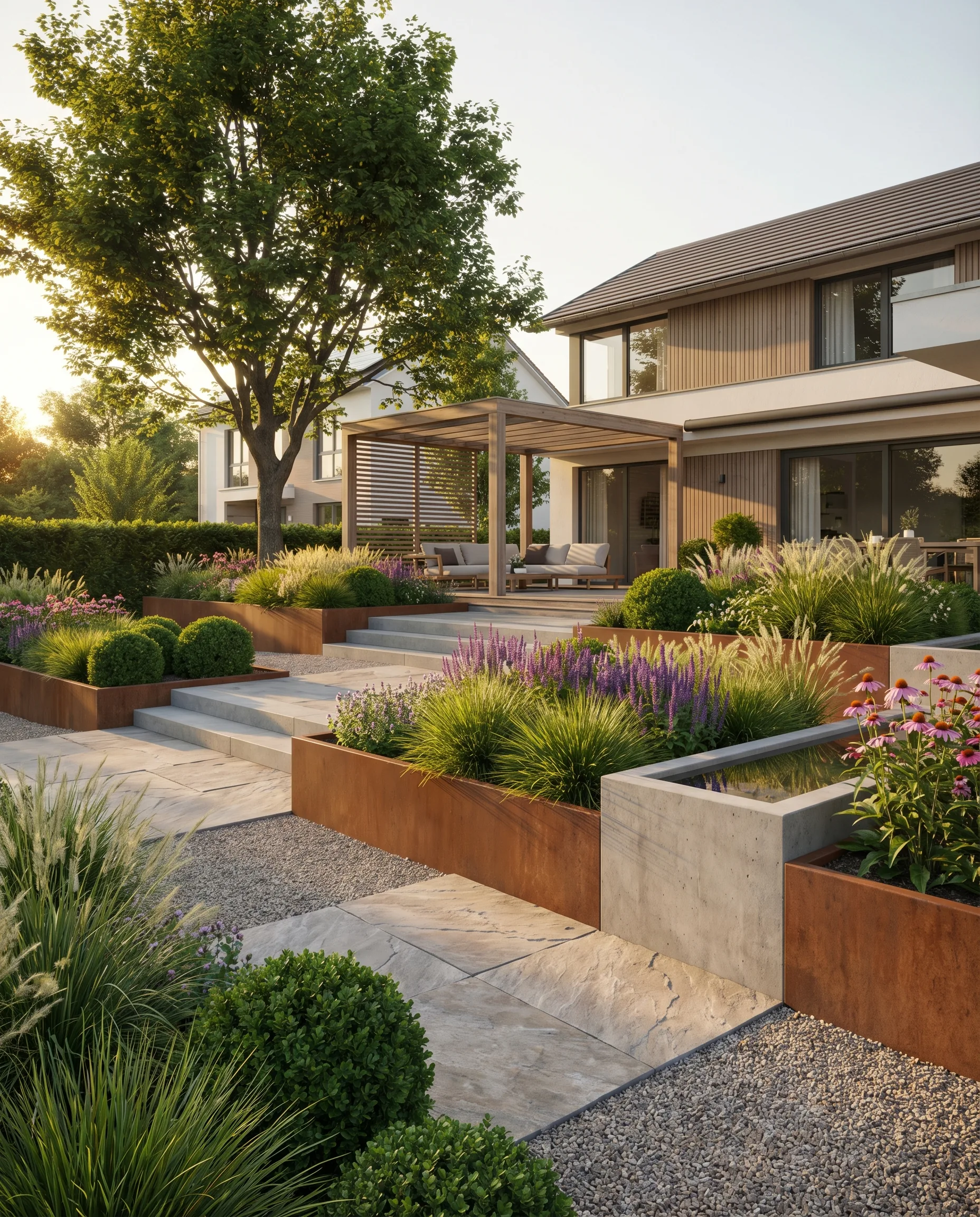
Designing a Modern Front Garden: Clean Lines, Structure and Premium Materials
Modern front gardens with clean lines, concrete, Corten steel and minimalist planting—how to create a contemporary entrance area.
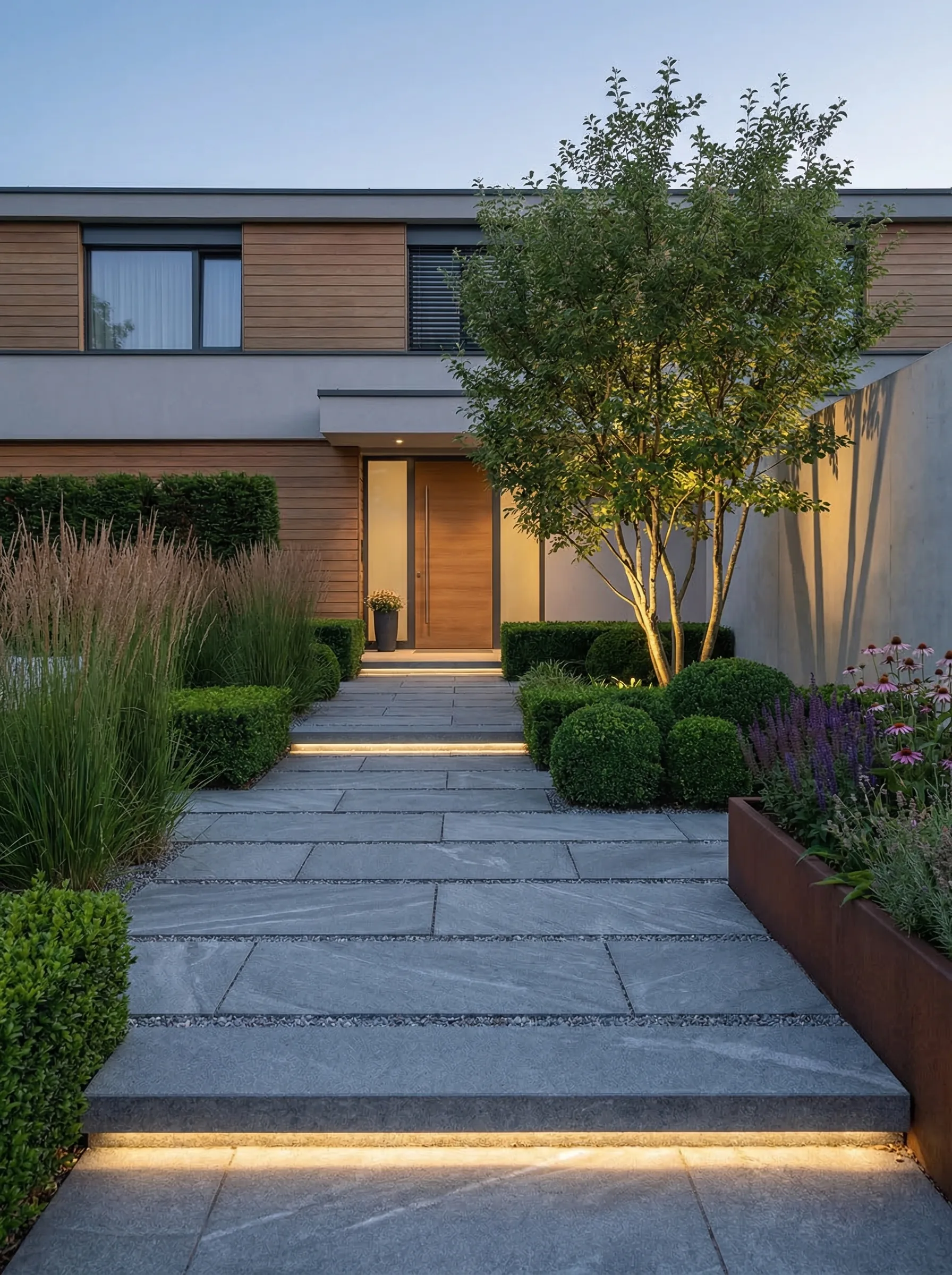
Designing Your Front Garden: Modern & Natural Ideas for Stylish Entrance Areas
Your front garden is the first impression of your home. Discover modern and natural ideas for stylish entrance areas—with practical tips you can put into action.