Designing a Small Front Garden: How Even a Small Area Can Look High-End
Why small front gardens are often harder to design
A small front garden doesn’t forgive mistakes. While an unsuitable element barely stands out in a large space, it becomes an immediate issue on just a few square meters.
The specific challenges:
- Limited space – every square meter has to work
- High visibility – the entire area is taken in at a glance
- Every mistake shows – the wrong material, an unsuitable plant, or a fussy path disrupts the overall look immediately
At the same time, this is exactly where the opportunity lies: A deliberately designed small front garden can look more premium than a large, unplanned area. It all comes down to the right decisions.
The most important rule: fewer elements, more order
The biggest mistake in small front gardens is overcrowding. Too many materials, too many plant varieties, too many ideas in too little space.
The solution is simple—but it takes discipline:
- No clutter – better to execute three elements beautifully than ten halfway
- Focus on a clear framework – path, planting bed, entry. That’s all you need.
- Calm edges and clear routes – crisp boundaries create visual order
- Consistent materials – one paving material, one edging material, done
Small spaces need reduction as a design principle. Anything that isn’t chosen intentionally feels distracting here.
Path designs that work well in small front gardens
In a small front garden, the path is often the most important—sometimes the only—design element. It has to function, but it also needs to organize the entire space.
Linear paths
Straight paths work best in small areas. They lead directly to the entrance and don’t waste space with curves.
Narrow axes
The path doesn’t need to be wide—80 to 100 cm is enough. What matters is a clear axis that neatly divides the remaining space.
Stepping stones vs. a continuous surface
Individual stepping stones set in gravel or lawn can feel lighter in a small area than a continuous paved path. Key: consistent spacing and uniform stone size.
Small steps and level changes
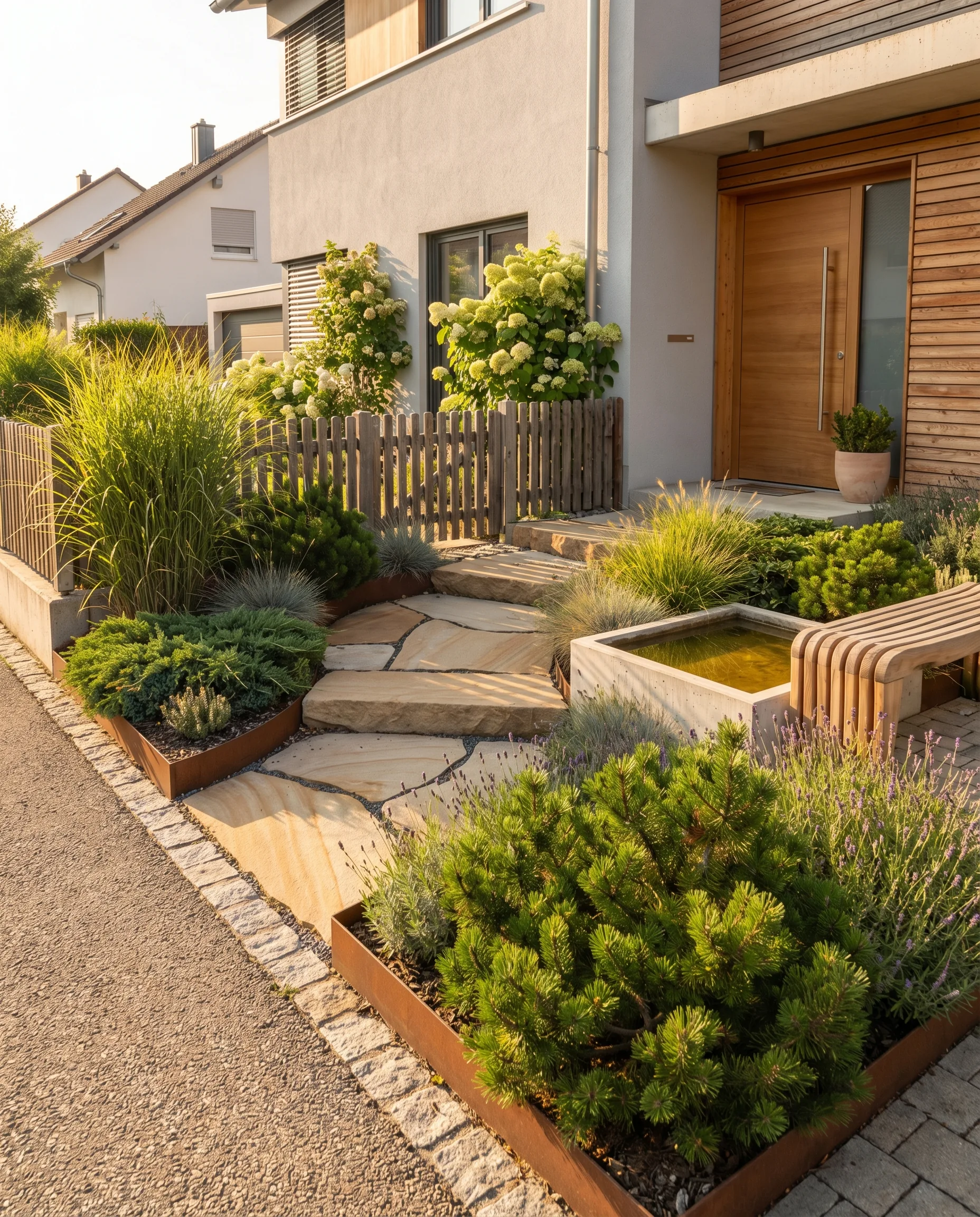
Even a 15 cm height difference can structure a small front garden and add spatial depth. Steps create zones without taking up space.
👉 More on paths: Garden Path Ideas – Designing Front Garden Paths in Style
Modern design for small front gardens
Modern design often works especially well in small spaces—because the core principles of modern style are exactly what small areas need:
- Large-format slabs make the ground feel calmer and the space appear larger
- Restrained planting with fewer species creates order instead of chaos
- Clean shapes use the available space efficiently
- Consistent materials prevent visual noise
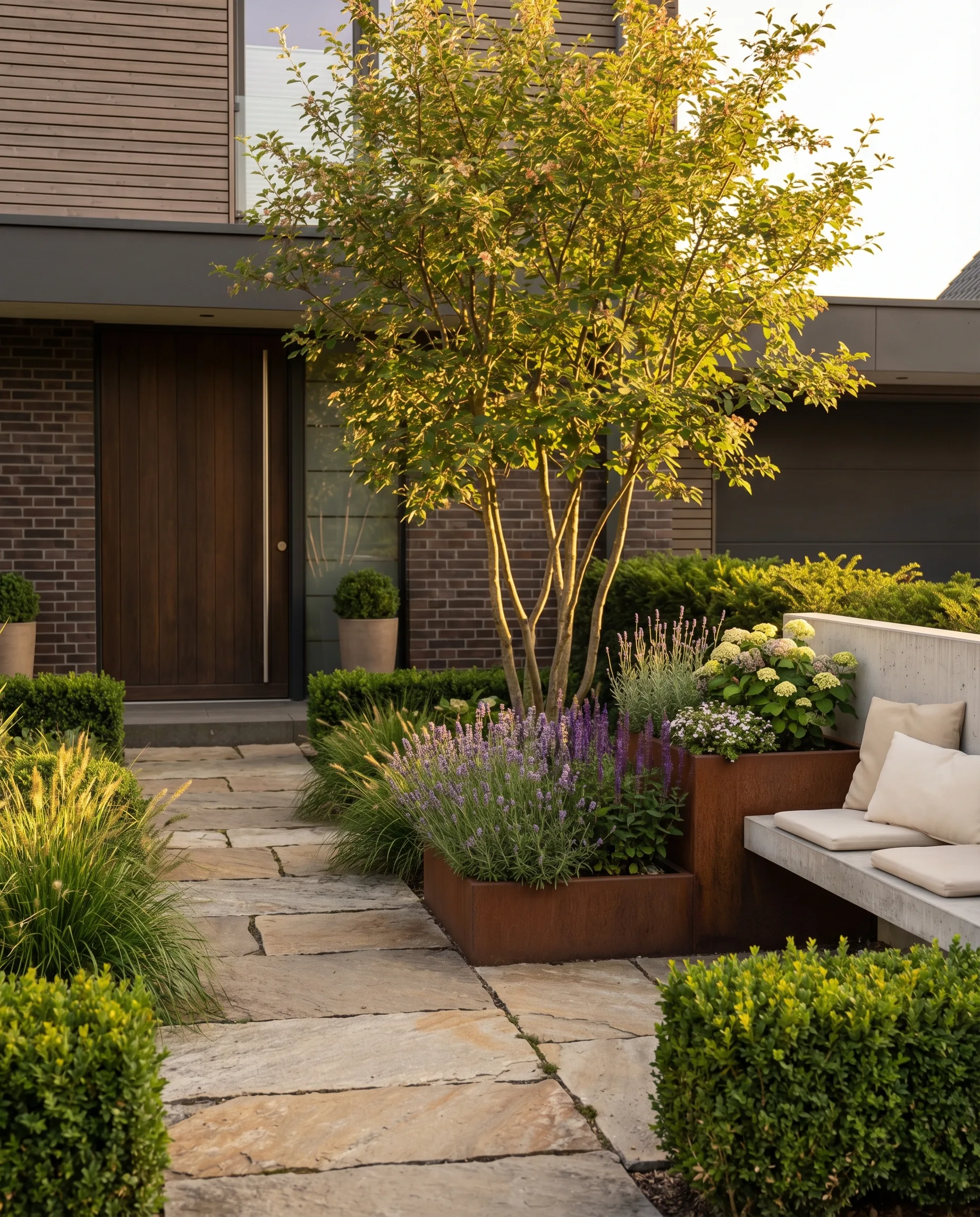
A narrow, straight path with large-format slabs, flanked by two symmetrical groups of ornamental grasses—often, that’s all a small modern front garden needs.
👉 Learn more: Design a Modern Front Garden – Clean Lines, Structure, and Premium Materials
Creating a natural-style small front garden
A naturalistic approach can also work in a small area—just with different rules than in a large garden.
When it works
Flowers, perennials, and grasses can look charming in a small space when they’re combined intentionally. The key: not too many different species, but a few varieties repeated in larger groups.
When it looks chaotic
When every plant appears only once, a small area quickly starts to look restless. Even in limited space, naturalistic design needs a recognizable pattern—for example, three groups, each made up of one perennial, one grass, and one groundcover.
The trick
Limit yourself to 5–7 plant species and repeat them. This creates a natural look that still feels organized.
👉 Learn more: Natural Front Garden – Blooming Ideas for a Lively Entryway
Plants that add structure in a small space
In a small area, plant selection decides success or failure. What matters isn’t variety, but structural impact:
Grasses
Compact ornamental grasses like blue fescue, sedge, or low fountain grasses add movement and texture without dominating.
Compact shrubs
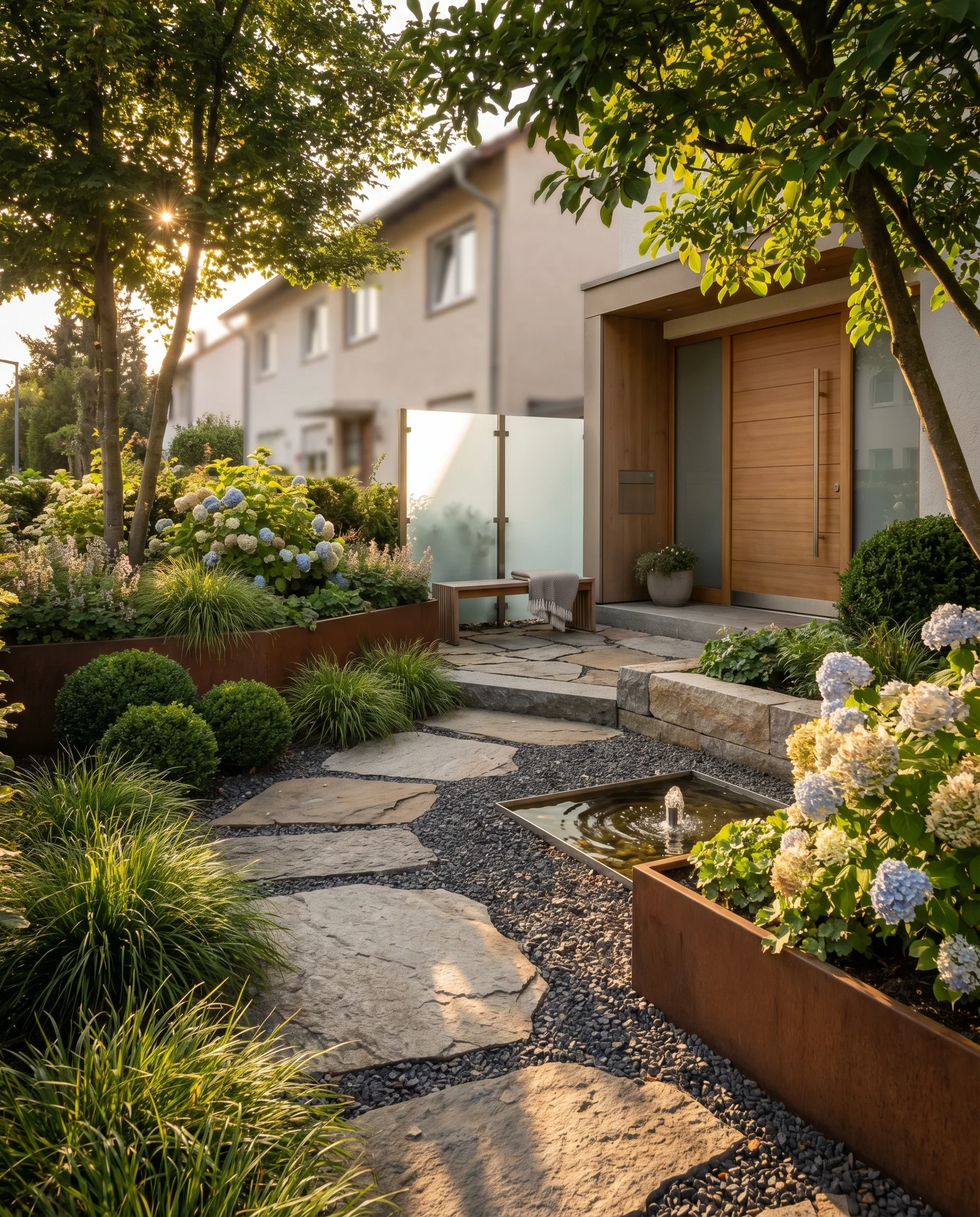
Ball-shaped evergreens (holly, boxwood), dwarf conifers, or compact hydrangeas create vertical accents with minimal footprint.
Repeated perennials
Three to five perennials of the same species planted in a line or group have more impact than ten different individual plants. Good options: lady’s mantle, cranesbill, lavender.
A clear focal point
Choose one plant as the main feature—a small tree, a special shrub, or a striking perennial. Everything else supports it.
Common mistakes in small front gardens
The most common mistakes aren’t about budget—they’re about planning:
Too many materials
Gravel + pavers + natural stone + wood + Corten steel = visual overload. In a small space: maximum two ground materials.
Too many plant species
Every plant only once = a collection, not a garden. Better: fewer species, planted in groups.
Overly busy paving
Small cobbles or mosaic patterns look restless in a small space. Better: large formats that calm the area.
No visual guidance
Without a clear direction (path, axis, focal point), a small front garden feels aimless. The eye needs guidance—from the sidewalk to the entrance.
Conclusion
Small front gardens thrive on clarity, rhythm, and scale. The goal isn’t to fit as much as possible into the space—but to choose the right things.
The three most important principles:
- Reduction – few materials, few plant species, few elements
- Clear structure – a defined path, crisp edges, distinct zones
- Appropriate scale – large slabs instead of small cobbles, compact plants instead of large shrubs
Follow these principles and you can create a front garden—even on three square meters—that feels premium and welcoming.
Next step
Only have a little space in front of your house? With GardenPilot, you can test different solutions for small front gardens directly on your photo—modern, naturalistic, or something in between.
Visualize your small front garden now →
Further reading
- Designing a Front Garden – An Overview of Modern and Naturalistic Ideas
- Design a Modern Front Garden – Clean Lines, Structure, and Premium Materials
- Natural Front Garden – Blooming Ideas for a Lively Entryway
- Garden Path Ideas – Designing Front Garden Paths in Style
On just a few square meters by the front door, every decision counts twice—an ultra-realistic preview of your entryway saves costly corrections. Upload a photo of your garden and use AI to see how it could look—complete with a rough cost range before you invest. That way, you avoid expensive planning mistakes. Visualize your garden with GardenPilot (here’s how it works).
Frequently asked questions
Which plants are suitable for a very small front garden?
For narrow and compact entryways, slim-growing trees and shrubs such as columnar hornbeam or Japanese maple are particularly suitable, as they take up very little width. Groundcovers like barrenwort or cranesbill fill areas with minimal maintenance and look tidy without becoming overgrown.
How do I design a small front garden without a lawn?
Instead of lawn, low-maintenance alternatives include gravel with embedded stepping stones, paved areas in natural stone, or groundcovers planted as a continuous carpet. These options significantly reduce upkeep and often look more high-end in a small space than a tiny lawn that’s difficult to mow.
How can I make a narrow front garden look larger?
Light-colored materials, clean lines, and a deliberately restrained planting scheme make a small front garden feel more generous. A diagonally laid path or vertical elements like trellises can also add depth and height to the view.
Roughly how much does it cost to design a small front garden?
Costs depend heavily on the materials you choose and the extent of planting, so it’s not possible to name a flat figure. As a rule of thumb: natural stone and specimen plants cost more upfront, but can reduce long-term maintenance and replacement costs.
Gallery
Plan your own garden
Upload a photo of your garden and get a professional AI concept in minutes.
Start for freeMore articles from Front Gardens
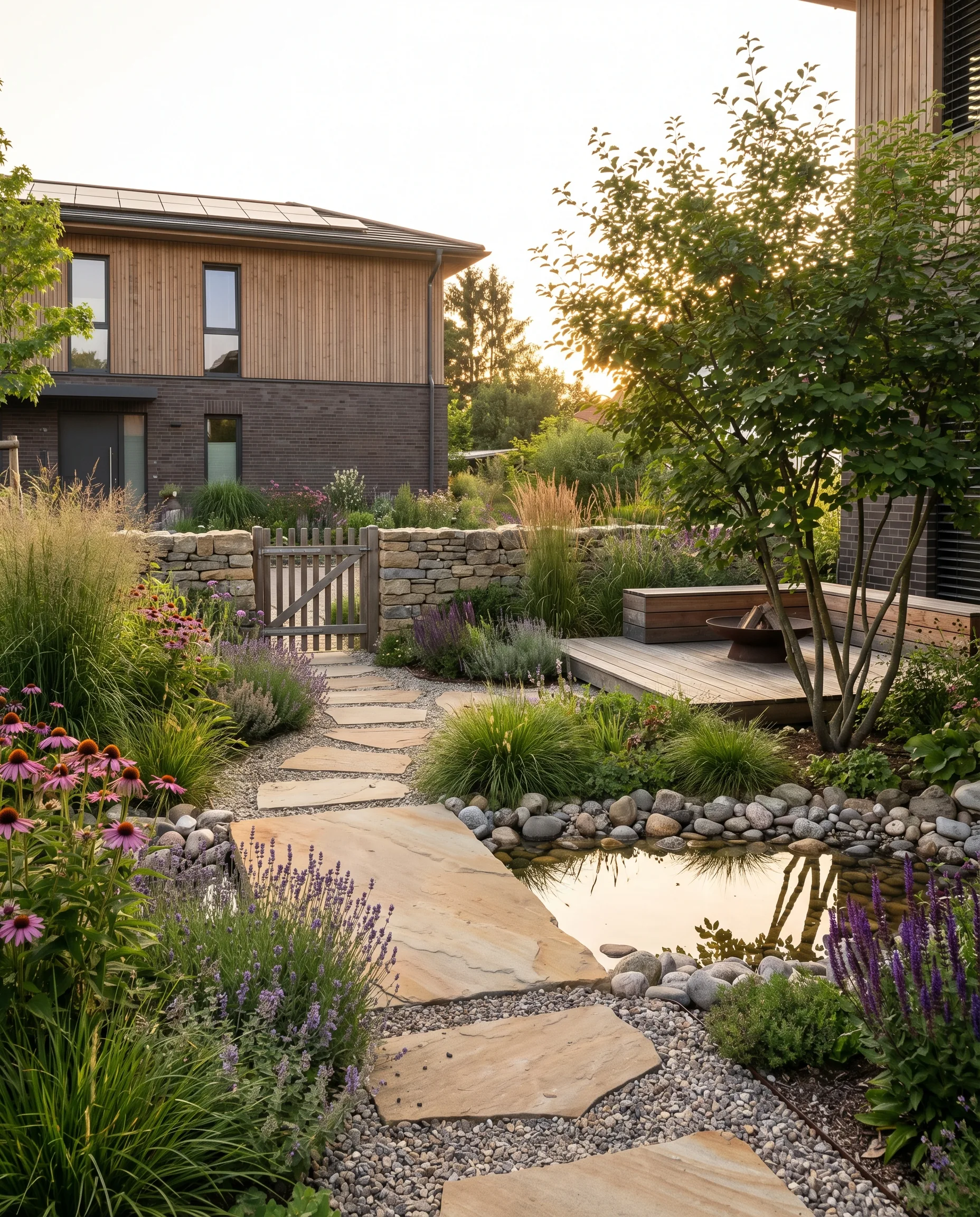
Nature-Inspired Front Garden: Blooming Ideas for a Lively Entrance
Nature-inspired front gardens with perennials, grasses, and wildflowers—lively, pollinator-friendly, and welcoming.
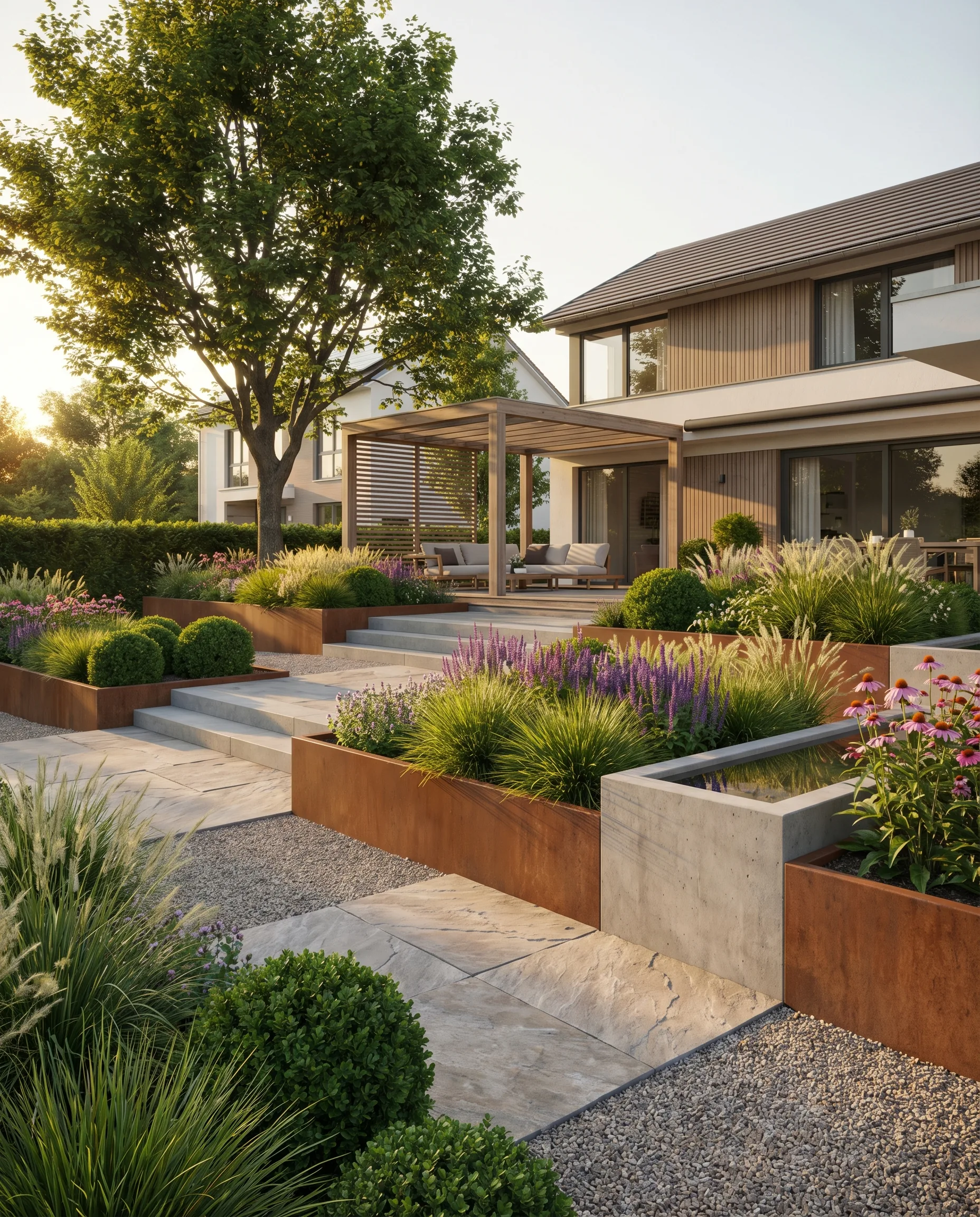
Designing a Modern Front Garden: Clean Lines, Structure and Premium Materials
Modern front gardens with clean lines, concrete, Corten steel and minimalist planting—how to create a contemporary entrance area.
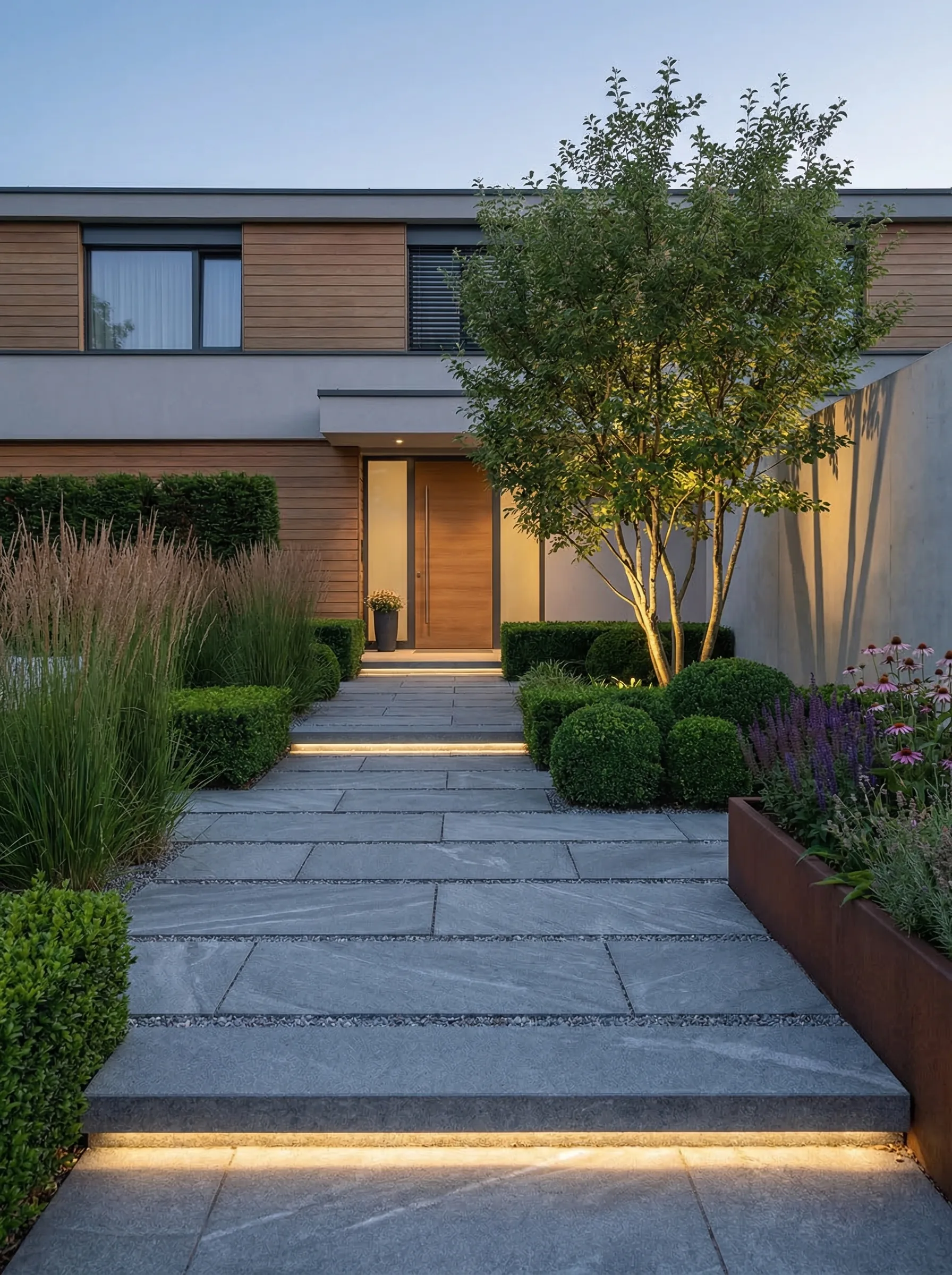
Designing Your Front Garden: Modern & Natural Ideas for Stylish Entrance Areas
Your front garden is the first impression of your home. Discover modern and natural ideas for stylish entrance areas—with practical tips you can put into action.