Garden Path Ideas: How to Design Front Yard Walkways that are Stylish and Functional
Why a Front Yard Path Is More Than Just a Connection
The path to your front door is the most important design element in the front yard—and at the same time the most underestimated. Many see it as nothing more than a link between the street and the house. In reality, it does much more:
- Paths structure the space – they divide the area into zones and give the front yard a clear order
- They shape the first impression – a wide, calm path feels welcoming; a narrow, uneven track looks makeshift
- They guide the eye and movement – the path directs where you look and how you move through the space
Whether modern or naturalistic, large or small: the path determines whether the front yard works as a whole.
Straight Paths for Modern Front Yards
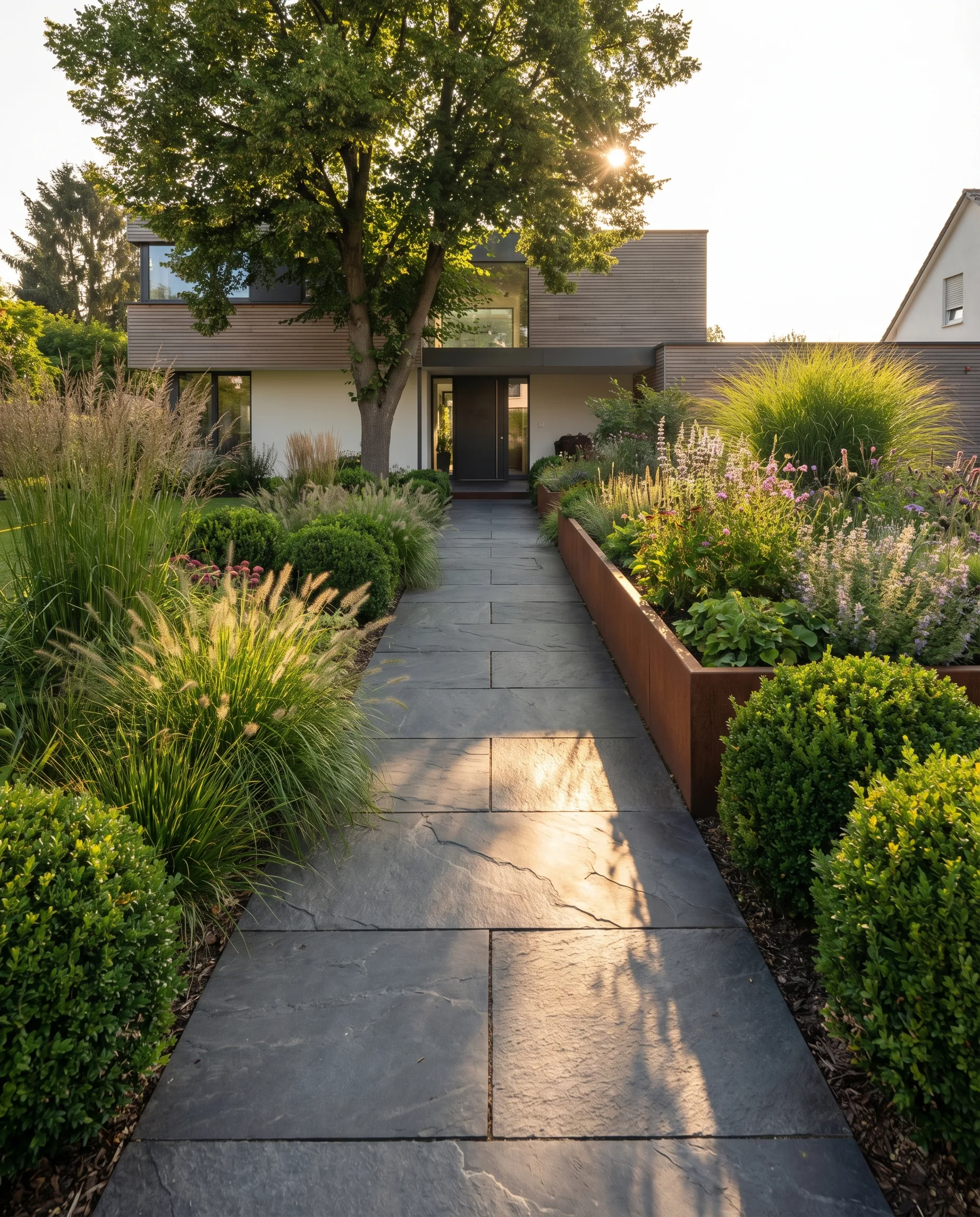
In a modern front yard, the path isn’t just functional—it’s the design backbone. Straight, crisp lines underline the architectural language of the house.
Large-Format Slabs
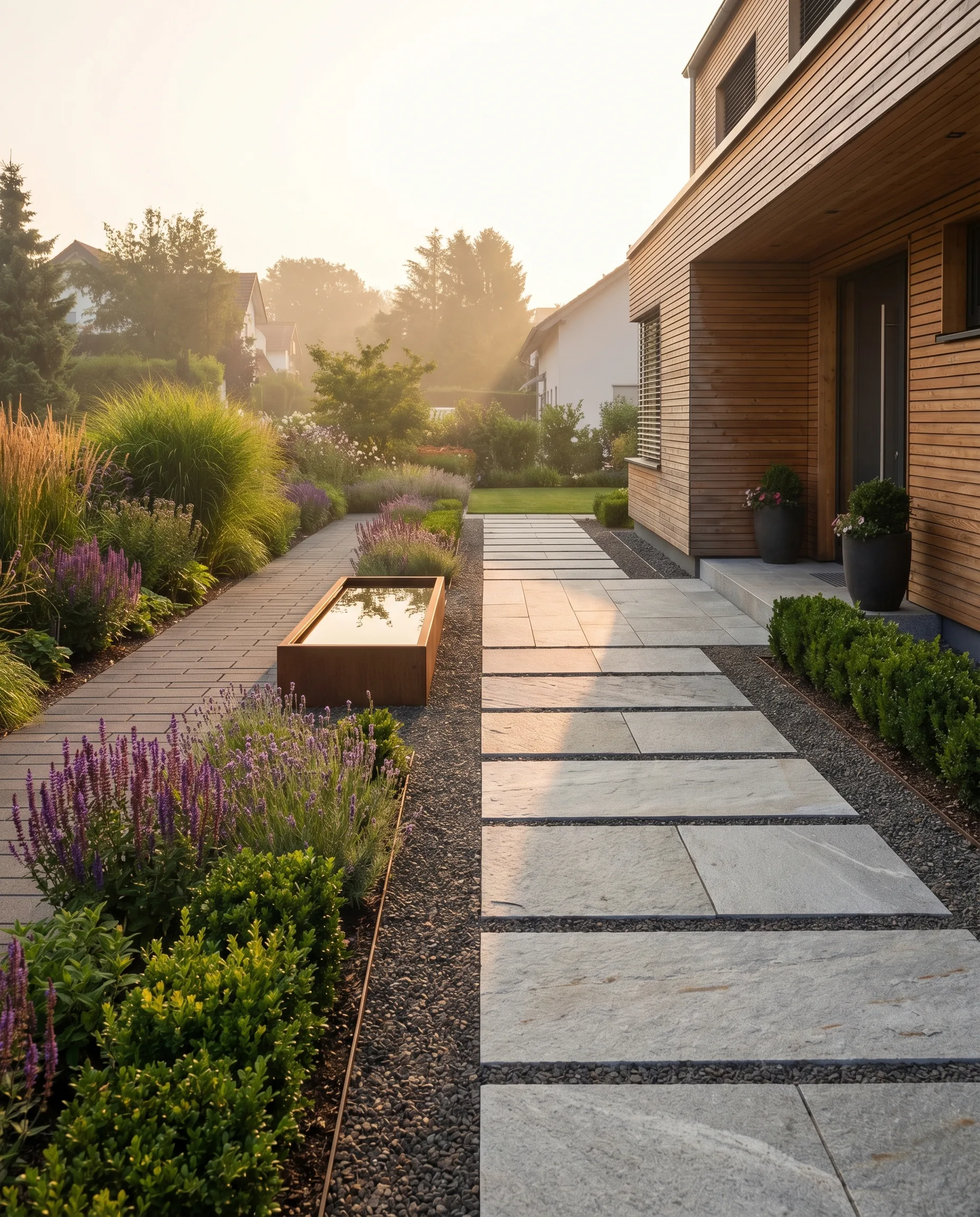
Slabs from 60 x 60 cm—better 80 x 80 cm or larger—create a calm surface with few joints. Concrete, granite, or basalt in uniform grey tones are the classic choice.
Quiet Joints
Narrow joints (3–5 mm) filled with permeable paving mortar or fine chippings reinforce the minimalist look. Wide, irregular joints would disrupt that calm character.
Clean Edges
Corten steel edging, concrete strips, or flush-laid kerbstones define the path precisely and separate it cleanly from adjacent planting beds. Corten steel is one of the most versatile materials in modern gardens—learn more in our article on Corten steel in the garden.
Strong Axes
Ideally, the path forms a central axis—symmetrical to the front door. Side elements (lighting, planters, groups of ornamental grasses) enhance this axial effect.
👉 More on the modern style: Designing a Modern Front Yard – Clean Lines, Structure, and Premium Materials
Natural Paths for Blooming, Soft Front Yards
In a naturalistic front yard, the path blends into the landscape instead of dominating it. It feels like a grown, organic part of the garden.
Natural Stone
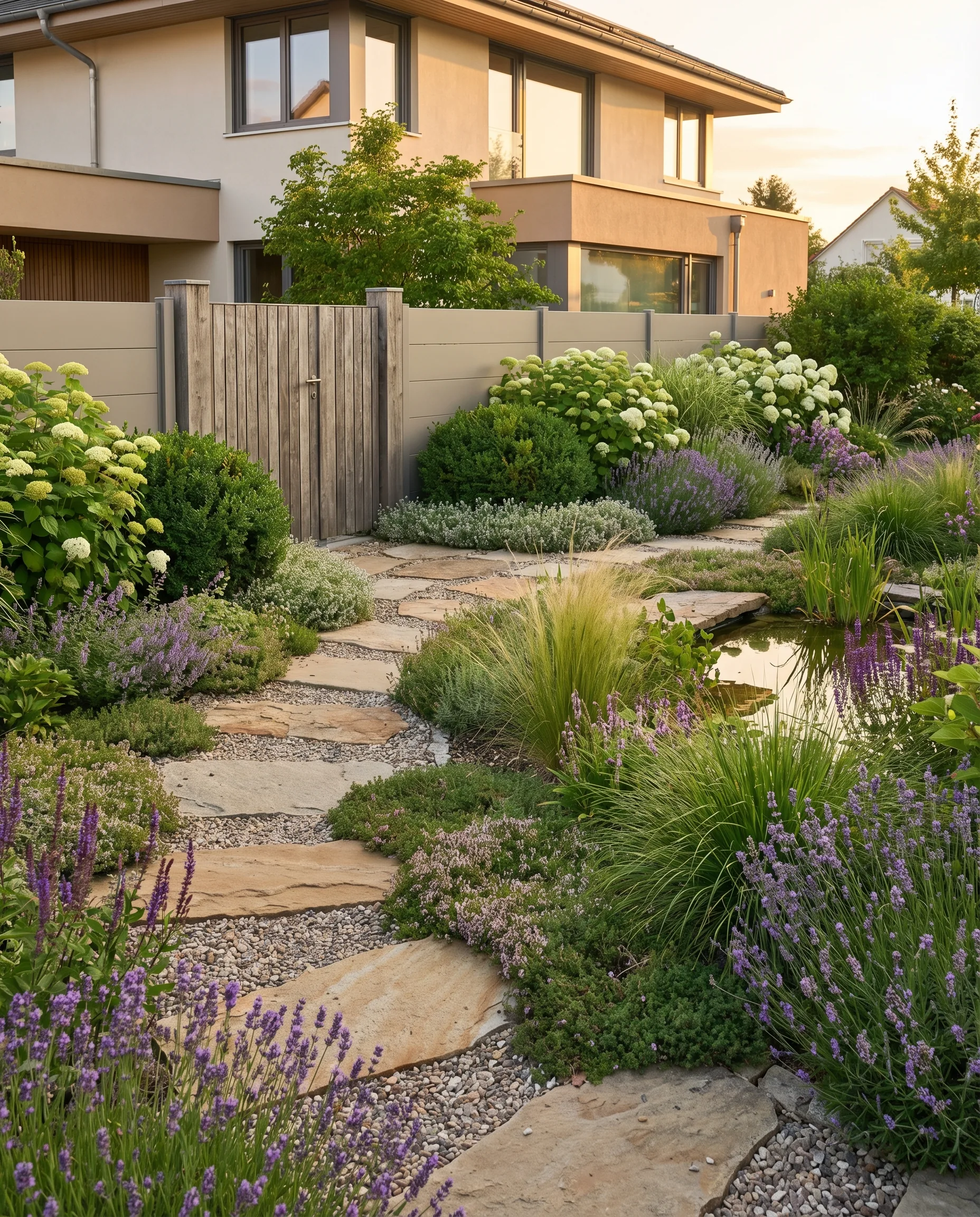
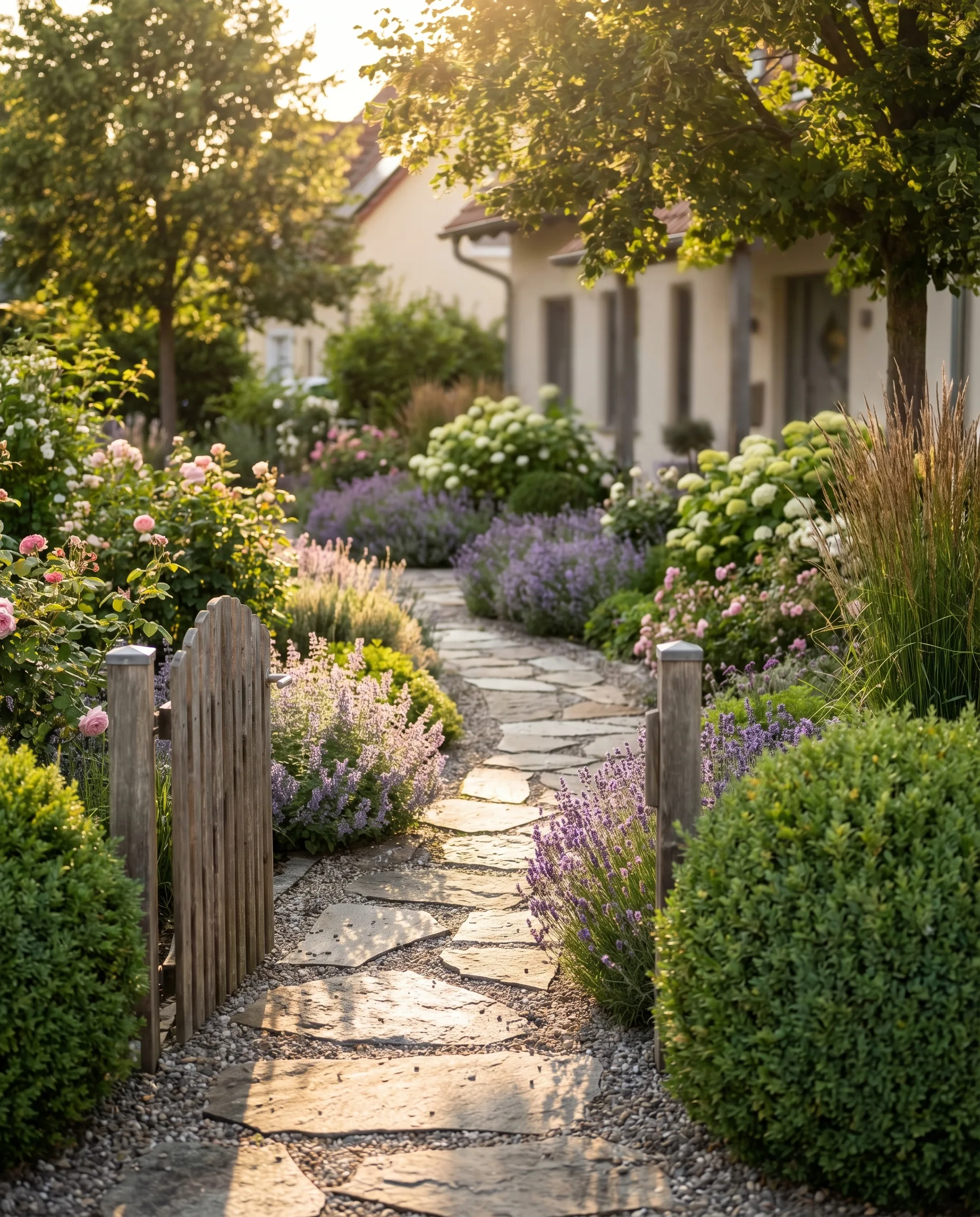
Irregular flagstones of sandstone, quartzite, or porphyry bring natural colors and uneven shapes. Every stone is unique—this makes the path feel alive.
Organic Lines
Gentle curves instead of straight axes. The path follows the planting—not the other way around. Even a slight bend creates a more natural, more inviting atmosphere.
Paths with More Atmosphere
Wide joints planted with thyme, moss, or low sedum make the path feel softer. The transition between path and bed becomes flowing rather than abrupt.
Planting Close to the Path
Perennials and grasses that lightly spill over the edge enhance the natural character. Lavender, cranesbill, or lady’s mantle are especially suitable—robust enough to handle the occasional step.
👉 More on the natural style: Naturalistic Front Yard – Blooming Ideas for a Lively Entrance Area
Which Paths Work in Small Spaces
Small front yards place special demands on path layout. Here, just a few centimeters can change the whole effect.
Narrow Paths
A width of 80 to 100 cm is enough for a small front yard. The path should take up no more than a third of the total area—otherwise it dominates the space.
Stepping Stones
Individual stepping stones set in gravel or lawn feel lighter in small spaces than a continuous surface. Important: even spacing (approx. 60 cm stride length) and consistent stone size.
Clear Sightline Guidance
In a small space, the path must provide a clear direction. No branches, no side effects—straight to the entrance.
No Fussy Patchwork
Mosaic, small-set paving, or too many different materials look busy in a small area. Better: one material, one format, one direction.
👉 More for small areas: Small Front Yard – Ideas for Narrow and Compact Entrance Areas
Materials for Front Yard Garden Paths
Material choice defines the character of the path—and with it, the entire front yard. Here are the key options:
Concrete Slabs
Look & feel: modern, calm, timeless Formats: 40x40 to 100x100 cm Benefits: even surface, many color tones, frost-resistant Best for: modern front yards with clean lines
Natural Stone
Look & feel: natural, warm, individual Types: granite, sandstone, quartzite, basalt, irregular flagstones Benefits: durable, every stone unique, ages beautifully Best for: naturalistic and classic front yards
Gravel
Look & feel: relaxed, permeable, low-maintenance Grain sizes: 8–16 mm or 16–32 mm Benefits: affordable, good drainage, easy to install Note: best as an accompanying surface or joint filler—used as the only surface, gravel quickly becomes uncomfortable
Wood
Look & feel: warm, natural, modern-organic Types: thermally modified ash, larch, Bangkirai Benefits: warm underfoot, visual contrast to stone Best for: accents, platforms, or transition zones—not as a continuous walking surface
Corten Steel as Edging Material
Corten steel is less a path surface than a definition material: it separates path from bed, gravel from planting, lawn from slab paving. Its rust-brown patina suits modern and natural styles alike.
Transitions, Steps, and Lighting
A good path doesn’t end at the slab edge. Three elements make the difference between “functional” and “premium”:
Changes in Level
Even small level differences (10–20 cm) create an opportunity for steps that structure the route and add spatial depth to the front yard. Wide, shallow steps feel more welcoming than steep, narrow ones.
Edging
Clean path edging—whether Corten steel, a concrete strip, or a natural stone border—isn’t a minor detail; it’s an essential design element. It keeps materials separate and creates crisp lines.
Indirect Light
Lighting along the path serves two functions: safety and atmosphere. In-ground spotlights, LED strips in steps, or low bollard lights stage the path in the evening without glare. You can learn how to highlight paths, plants, and seating areas with lighting in our garden lighting article.
Safety and Impact
Slip-resistant surfaces, sufficient width, and good lighting are not aesthetic choices—they are non-negotiable. A beautiful path that turns into a skid lane in the rain is not a good path.
Common Mistakes with Garden Paths
Most path mistakes aren’t about budget—they’re about planning:
Path Too Narrow
A path under 80 cm wide feels tight and temporary. For the main route to the entrance: at least 100 cm, ideally 120 cm.
Too Many Materials
Pavers + gravel + natural stone + wood = visual chaos. Along a single path: a maximum of two materials (surface + edging).
No Edges
Without a clear edging solution, path and bed “flow” into each other—unintentionally. Even in a natural style, the path needs a recognizable boundary.
Clashing with the House Style
Rustic cobblestones in front of a modern cube? Large-format concrete slabs in front of a half-timbered house? The path must match the architecture—that matters more than personal taste.
Conclusion
The path is the backbone of the front yard. It organizes the space, leads to the entrance, and defines the character of the entire entry area.
The three most important principles:
- Material matches style – modern = large slabs, natural = natural stone, small = stepping stones
- Clear guidance – the path sets the direction, not the planting
- Clean detailing – edges, joints, and lighting make the difference between good and truly premium
Plan the path correctly, and you’ve already made the most important decision for the front yard.
Next Step
If you’re unsure which route and material suit your home, you can use GardenPilot to test different options on your own photo.
Visualize your front yard now →
Further Reading
- Designing a Front Yard – An Overview of Modern and Naturalistic Ideas
- Designing a Modern Front Yard – Clean Lines, Structure, and Premium Materials
- Small Front Yard – Ideas for Narrow and Compact Entrance Areas
- Naturalistic Front Yard – Blooming Ideas for a Lively Entrance Area
Discover More Garden Elements
- Garden Reflecting Pool – Calm Water Surfaces as a Stylish Design Feature
- Corten Steel Garden – Using Warm Contrasts and Clean Edges the Modern Way
- Garden Pergola – Structure, Shade, and Atmosphere Outdoors
- Garden Lighting – Showcasing Paths, Planting, and Seating Areas with Atmosphere
Material, route, width—nothing clarifies it faster than a visualization of your own front yard, rather than any sample surface at a supplier. Upload a photo of your garden and use AI to see how it could look—complete with a rough cost range before you invest. That way, you avoid costly planning mistakes. Visualize your garden with GardenPilot (how it works).
Frequently Asked Questions
What material is best for a front yard garden path?
Natural stone, concrete slabs, and gravel are among the most popular materials for front yard paths—each with its strengths. Natural stone looks premium and lasts for decades, gravel is affordable and permeable, while concrete slabs are a budget-friendly, low-maintenance option. The best choice depends on your home’s style, your budget, and how much upkeep you want.
How wide should a path to the entrance be at minimum?
A comfortable entrance path should be at least 120 cm wide so two people can walk side by side with ease. For main paths leading directly to the front door, a width of 150 cm is often recommended—especially if bicycles or strollers need to pass.
How can I build a garden path without a solid foundation?
For light materials such as gravel or bark mulch, a carefully excavated and compacted base layer of crushed stone is sufficient. It’s important to lay a weed membrane underneath so weeds don’t grow up through the surface. Heavier materials like natural stone or concrete slabs, however, require a stable sand bed or a mortar foundation.
Which plants are suitable for planting along a garden path?
Low-growing, robust perennials such as lavender, cranesbill, or creeping phlox are ideal because they accent the edges without overgrowing the path. Grasses and groundcovers like blue cushion (aubrieta) or barrenwort (Epimedium) are also decorative and easy to care for. Make sure plants don’t extend too far into the path and restrict walkability.
Gallery
Plan your own garden
Upload a photo of your garden and get a professional AI concept in minutes.
Start for freeMore articles from Garden Elements
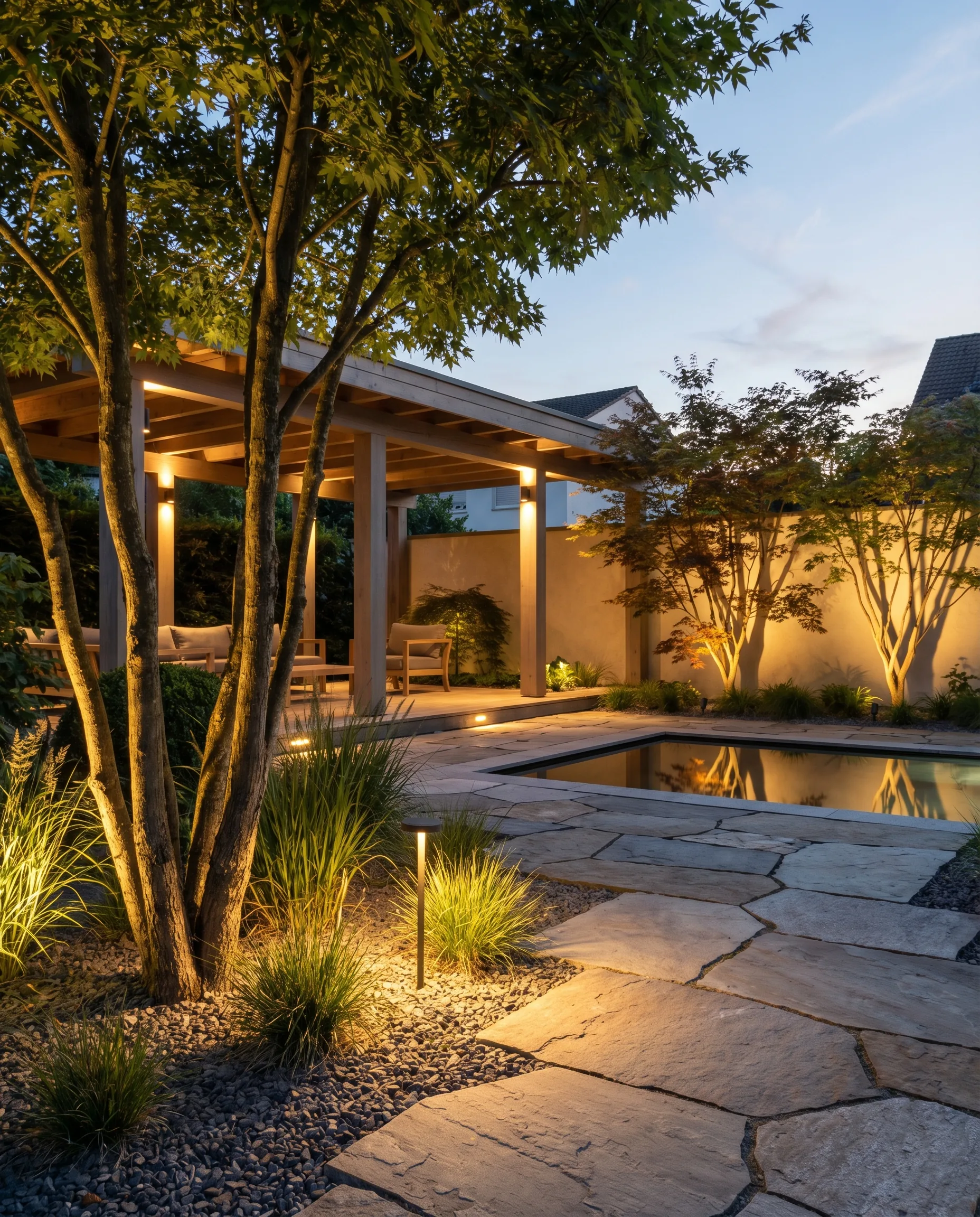
Garden Lighting: Create Atmosphere for Paths, Plants & Seating Areas
With the right garden lighting, paths, plants, water features and seating areas become the evening highlight. Here’s how to plan your lighting with atmosphere and intention.
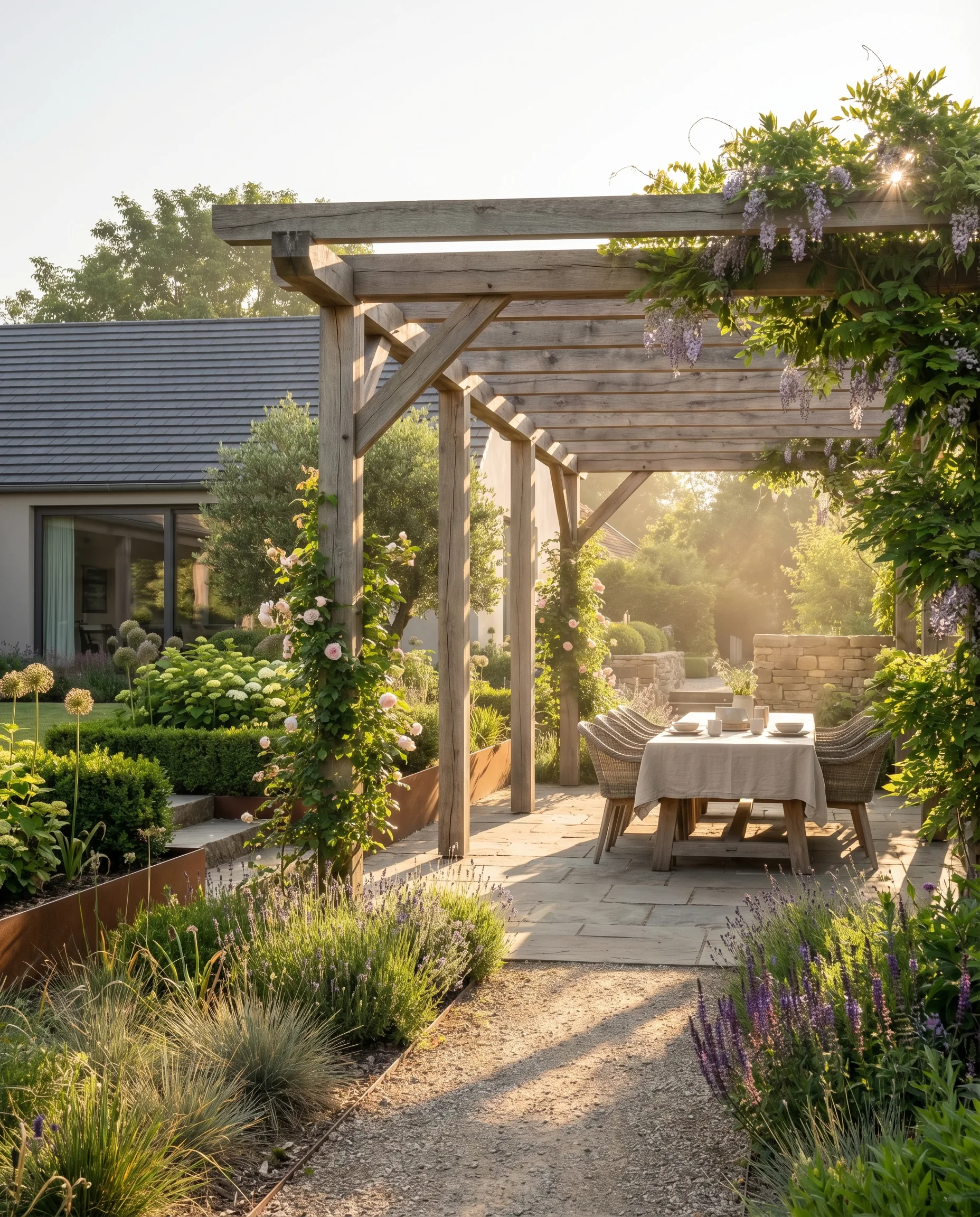
Garden Pergola: Structure, Shade and Atmosphere Outdoors
A pergola brings structure, shade and atmosphere to your garden. Here’s how to plan materials, planting and placement for a stylish outdoor space.
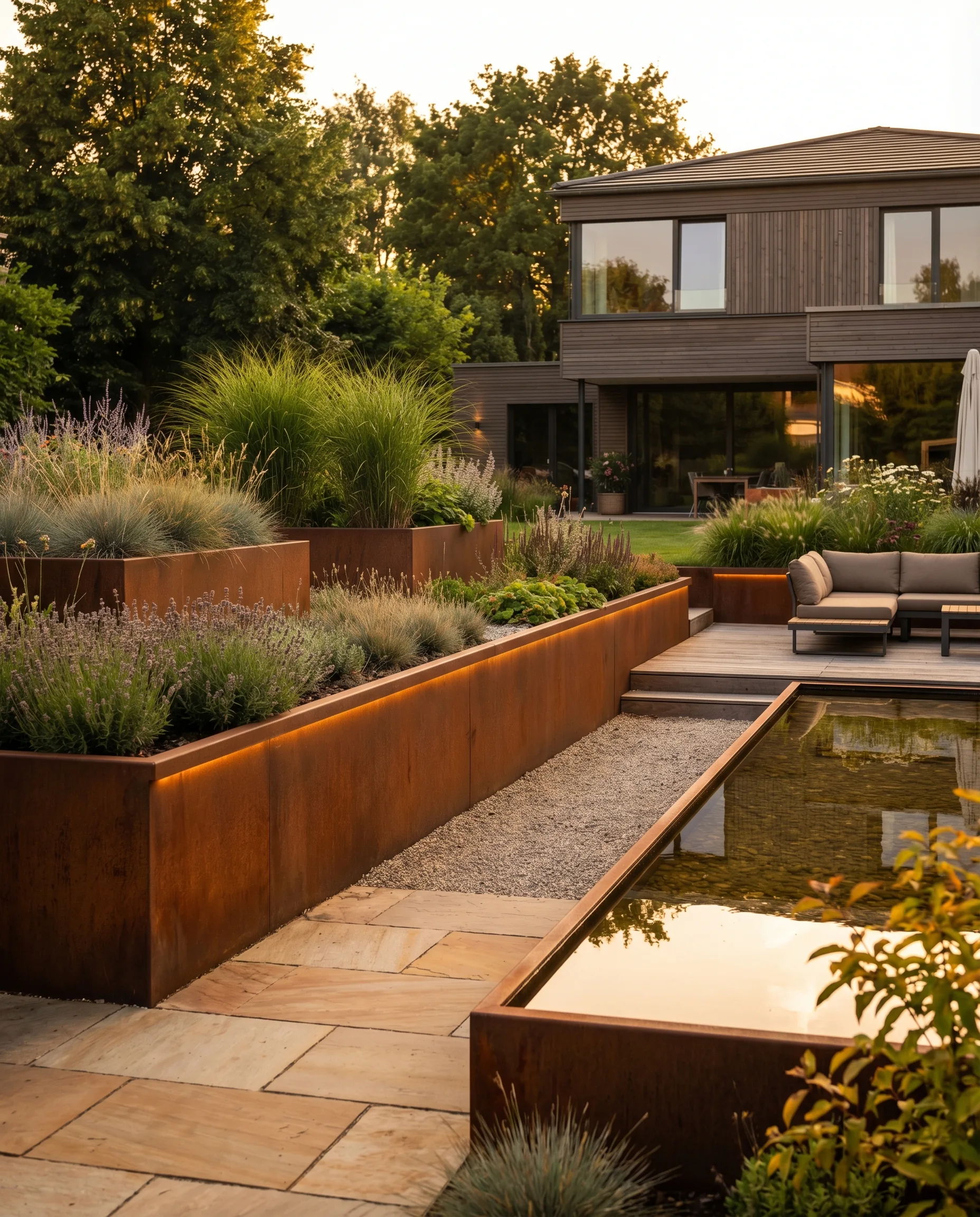
Corten Steel in the Garden: Using Warm Contrasts and Crisp Edges in a Modern Way
Corten steel brings warmth, texture, and crisp edges to the garden. Here’s how to use the material for bed edging, water basins, privacy screens, and accents.