Designing a Narrow Garden: How a Long Space Can Feel Calmer and Wider
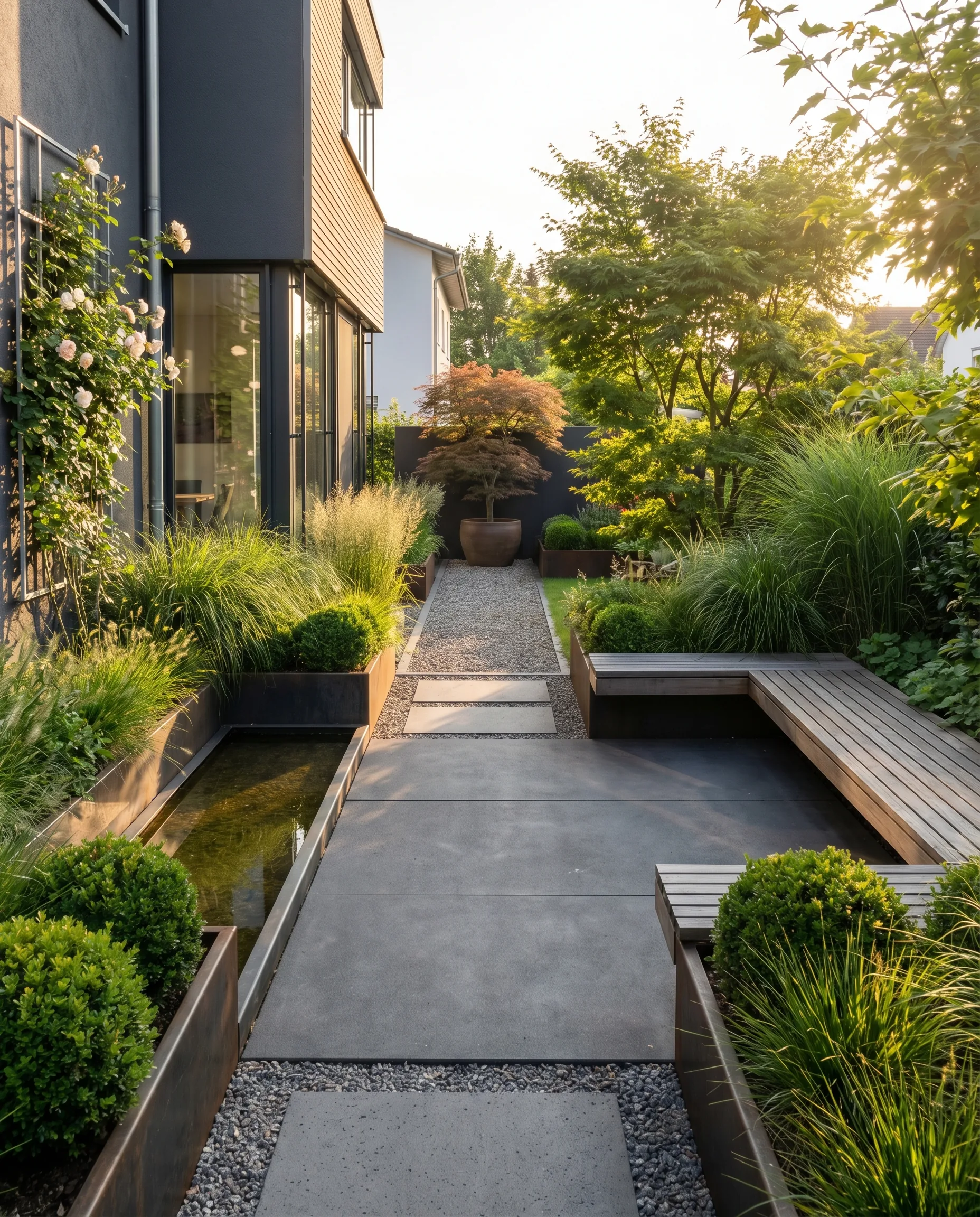
Narrow, elongated gardens are among the most common plot shapes—especially for terraced houses, urban gardens, and side-yard spaces. But that typical tunnel effect isn’t inevitable. With the right design, a narrow garden can feel calmer, wider, and noticeably more premium.
This article shows the principles that work for long, tight spaces—from path planning and planting to material choices.
Why Narrow Gardens Need a Special Approach
A narrow garden has one clear challenge: length dominates, while width is limited. That creates typical issues:
- Strong emphasis on length, pulling the eye straight to the end
- Little lateral calm, because there’s not much side-to-side space
- Tunnel effect, especially with parallel fences or hedges
- Tricky spatial layout, because zones can blur into each other
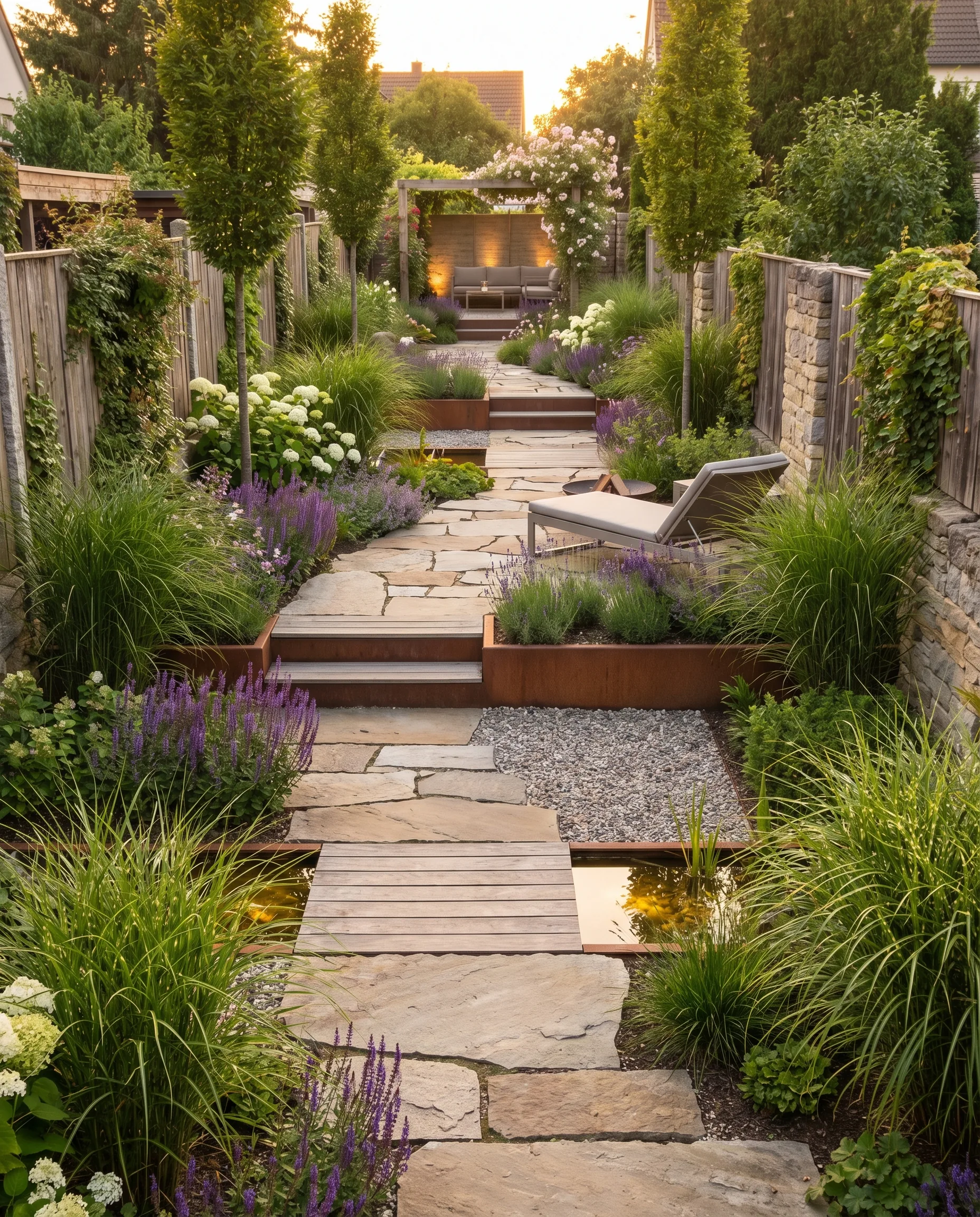
All of these effects can be softened—or even reversed—with thoughtful design. The key is interruption, rhythm, and intentional sightline control.
How Paths and Lines Change the Feel of a Narrow Garden
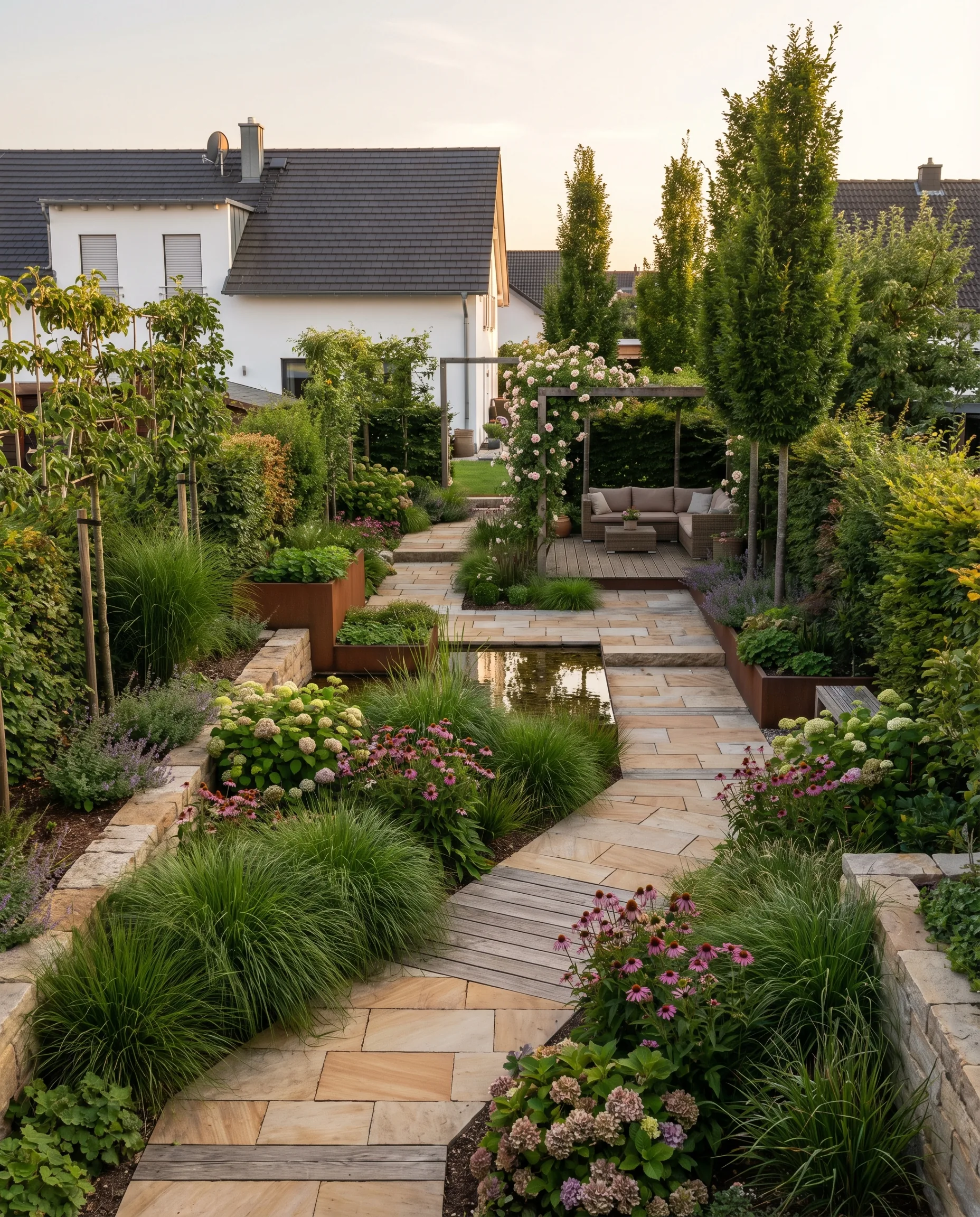
Path layout has the biggest impact on spatial perception in narrow gardens:
- Diagonal or slightly offset paths guide the eye and create visual width
- Crosswise elements like steps, edging, or planting bands break the long axis
- Changing surface materials across different zones structures the space
- Deliberately shorten sightlines instead of drawing the eye all the way to the end
A straight path from the house to the far end is the most common mistake. Instead, paths should be offset, broken up, or complemented with cross lines.
Planting That Makes Narrow Gardens Look Bigger
Planting can visually widen a narrow garden—or make it feel even tighter:
- Repeating plant groups at regular intervals creates rhythm
- Vertical structures such as grasses, columnar trees, or tall perennials add depth
- Greening the sides softens boundaries and makes fences disappear
- Avoid fussy clutter—use fewer species, repeated consistently
Especially effective: low planting in the foreground, higher planting toward the back. This layered depth reduces the sense of tightness.
Modern Solutions for Narrow Gardens
A modern design approach can be particularly effective in narrow gardens:
- Linear design uses the shape as a strength, not a problem
- Clean materials like large-format slabs or fair-faced concrete create calm
- Reduced elements prevent visual overload in a tight space
- Targeted focal points in strategic places guide the eye on purpose
If you don’t want to hide the narrowness but use it as a design principle, you’ll find fitting ideas in modern garden design for small spaces.
Do Water Features and Quiet Corners Work in Long Gardens?
Yes—and especially well when they’re placed as a destination point:
- A water basin at the end of an axis gives the garden a visual goal
- Small seating areas in the middle or at the far end act as anchors
- Rest zones interrupt movement and add livability
- Reflective water surfaces create a sense of openness in the smallest spaces
How water features work in small gardens and which shapes are suitable is explained in Small Garden with Water.
Narrow Garden vs. Small Garden
Not every small garden is narrow—and not every narrow garden is small. The challenges differ:
| Feature | Narrow garden | Small garden (general) |
|---|---|---|
| Main issue | Tunnel effect, dominant length | Limited overall space |
| Solution | Cross lines, zoning, rhythm | Multi-functional zones, reduction |
| Path layout | Diagonal, offset, broken up | Short, direct, space-saving |
| Planting | Side-focused, rhythmic, vertical | Compact, minimal, structured |
A narrow garden needs different solutions than a square small garden. If you’re looking for general ideas for small spaces, the article Designing a Small Garden offers a broader overview.
Conclusion
Narrow gardens need rhythm, breaks, and intentional spatial planning. If you use the length as a design feature rather than fighting it, you can turn a corridor-like plot into a surprisingly high-end outdoor space.
Do you have a long or narrow plot? With GardenPilot, you can test different layouts and see how your garden can look wider and calmer.
Further Reading
- Designing a Small Garden: Ideas for More Impact in Less Space
- Modern Small Garden: Clean Structure for Limited Space
- Small Garden with Water: How Basins and Calm Accents Work
Long, narrow spaces don’t forgive planning mistakes—a photorealistic preview of your plot shows you early on which ideas work visually and which don’t. Upload a photo of your garden and use AI to see how it could look—along with a rough cost range before you invest. That way, you avoid expensive missteps. Visualize your garden with GardenPilot (here’s how it works).
Frequently Asked Questions
How can I make my narrow garden look wider?
Crosswise elements like paving bands, beds, or hedge segments break up the long axis and pull the eye sideways. Broad-growing plants in the middle of the garden or a raised bed set across the space noticeably strengthen this effect.
Which plants are suitable for a narrow, long garden?
Columnar trees like hornbeam or Carpinus betulus 'Fastigiata' tend to emphasize the length, so broader shrubs and perennials that reach into the space work better. Grasses and flowering perennials in layered beds also add depth and a natural, relaxed irregularity.
How should I plan paths in a long, narrow garden?
A diagonal or gently curving path breaks the tunnel effect and makes the space feel wider than a straight central path. The offset also creates the impression of larger, usable zones.
How do I sensibly divide a narrow garden into zones?
Dividing it into at least two to three areas—such as a terrace, play or utility space, and a retreat zone—prevents the garden from feeling like one long corridor. Low hedges, raised beds, or pergolas can serve as natural room dividers without visually shrinking the space.
Gallery
Plan your own garden
Upload a photo of your garden and get a professional AI concept in minutes.
Start for freeMore articles from Small Gardens
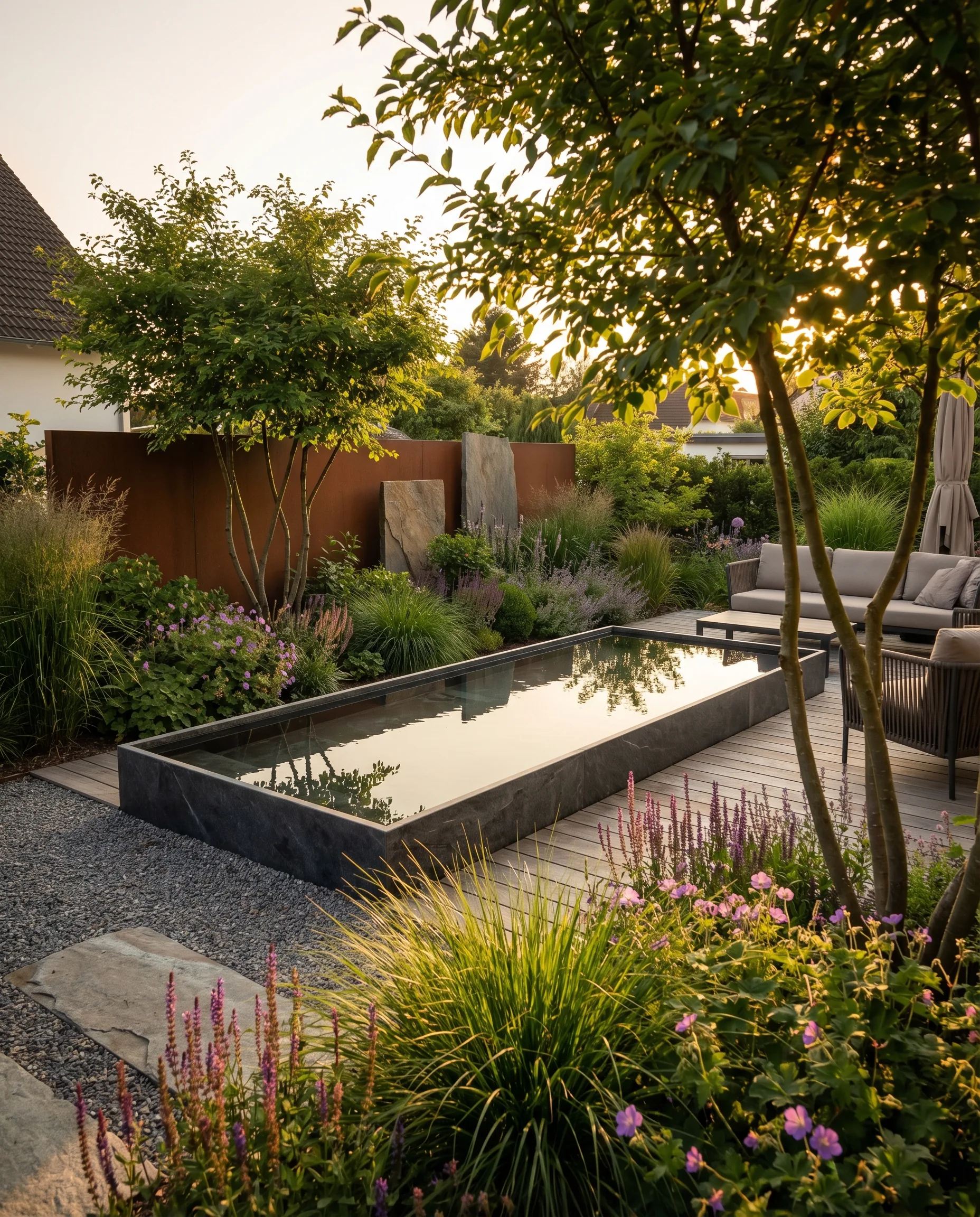
Small Garden with Water: How Reflecting Pools and Quiet Accents Work
Water can have a powerful effect even in small gardens—when it’s used calmly, sparingly, and with precision. Here’s how to plan reflecting pools and quiet accents in limited space.
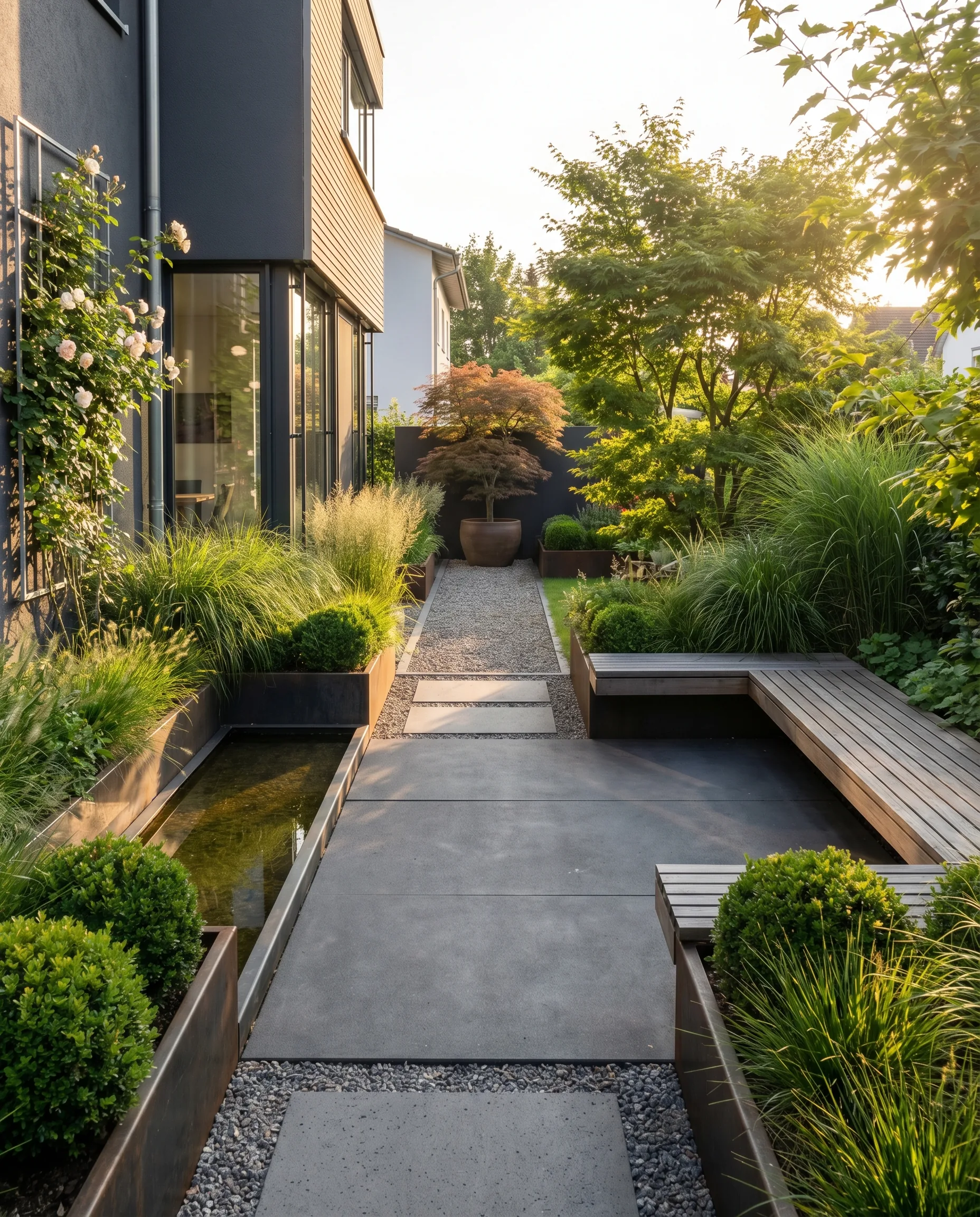
Designing a Small Garden: Ideas for Maximum Impact in Minimal Space
How to design a small garden with structure, atmosphere, and function—ideas for paths, planting, and making the most of limited space.
Small Modern Garden: Clean Structure for Limited Space
A small garden can feel modern, calm, and premium—with clean structure, restrained materials, and intentional planting.