Small Garden with Water: How to Plan Stylish Water Accents in Limited Space
Water is one of the most impactful design elements in a garden—and in a small space, it can feel especially powerful. A calm reflecting pool, a narrow runnel, or a mirror-like surface can completely transform a small garden.
This article shows which water solutions work in tight spaces, where to place them for the best effect, and which materials pair beautifully.
Why Water Has Such a Strong Effect in Small Gardens
Water brings qualities that are especially valuable in small gardens:
- Calm: A still water surface quiets the entire garden space
- Reflection: Water visually doubles light, sky, and planting
- Focal point: A single water feature gives the garden a clear center
- Atmosphere: Even a small pool noticeably elevates the overall feel
- Sense of depth: Reflections create a feeling of spaciousness in tight areas
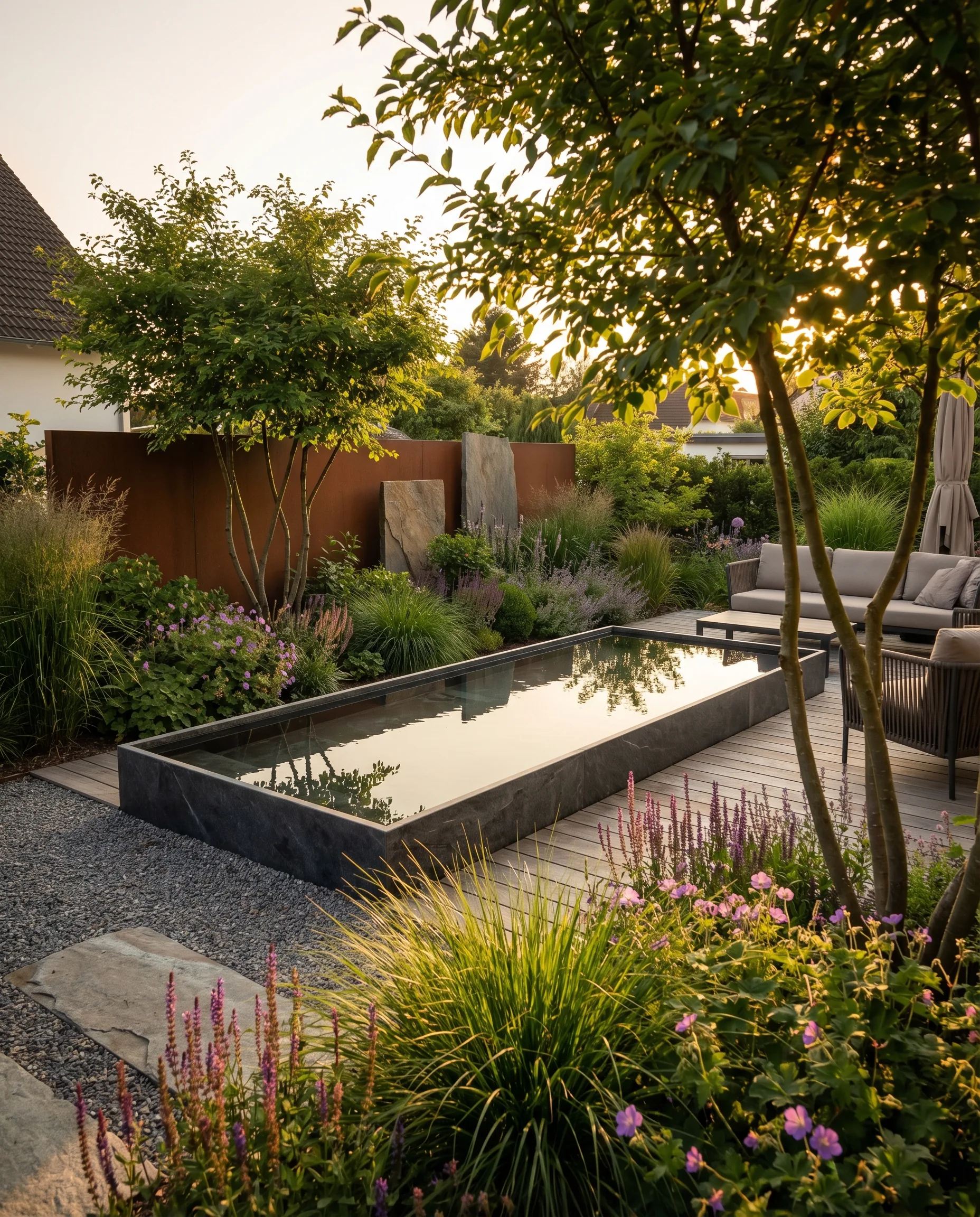
Few elements are as effective in small gardens as water—provided it’s used calmly and with precision.
Which Water Solutions Work in a Small Space
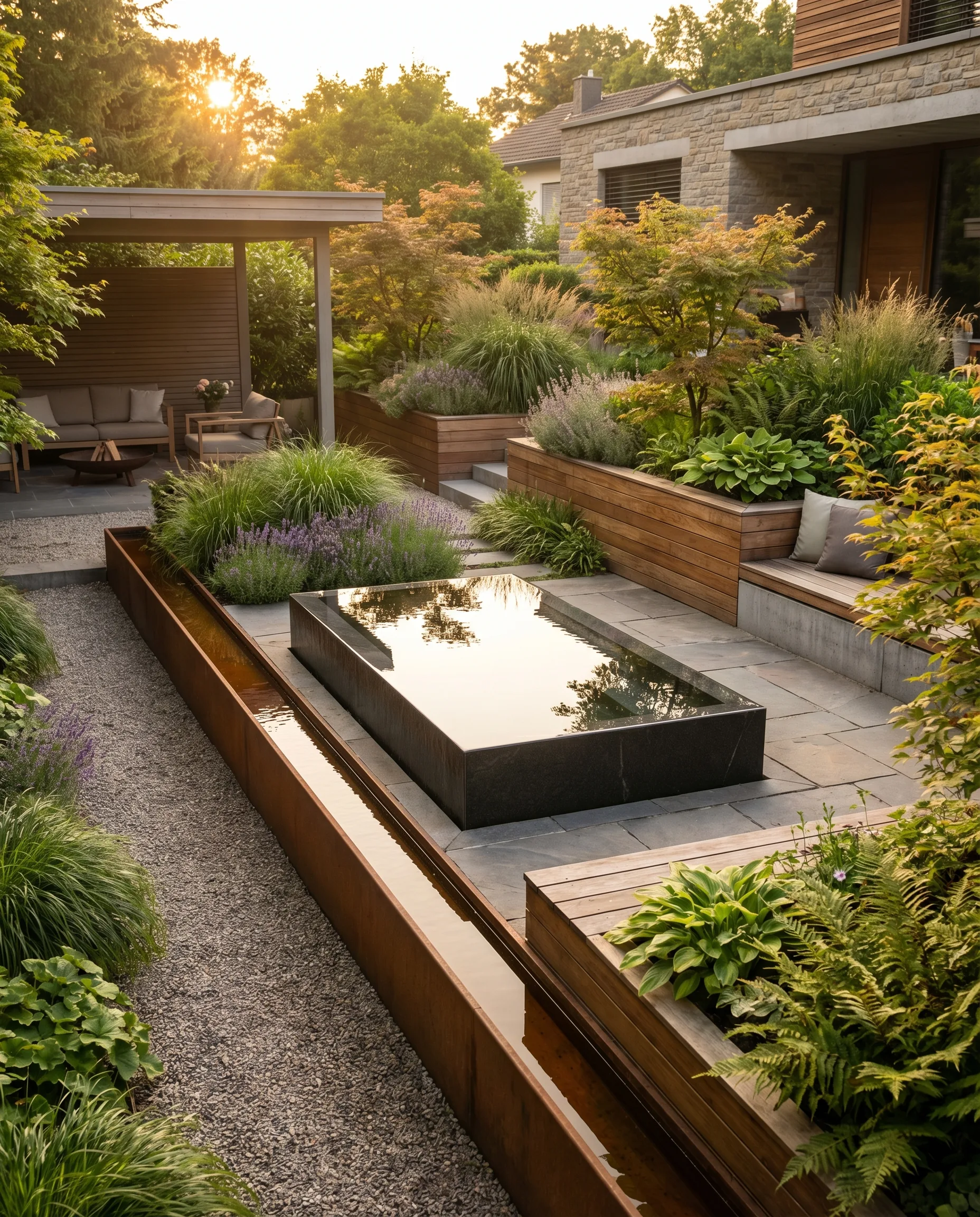
Not every water form suits small gardens. The following solutions work particularly well:
- Calm, rectangular pools – clean, geometric, space-efficient
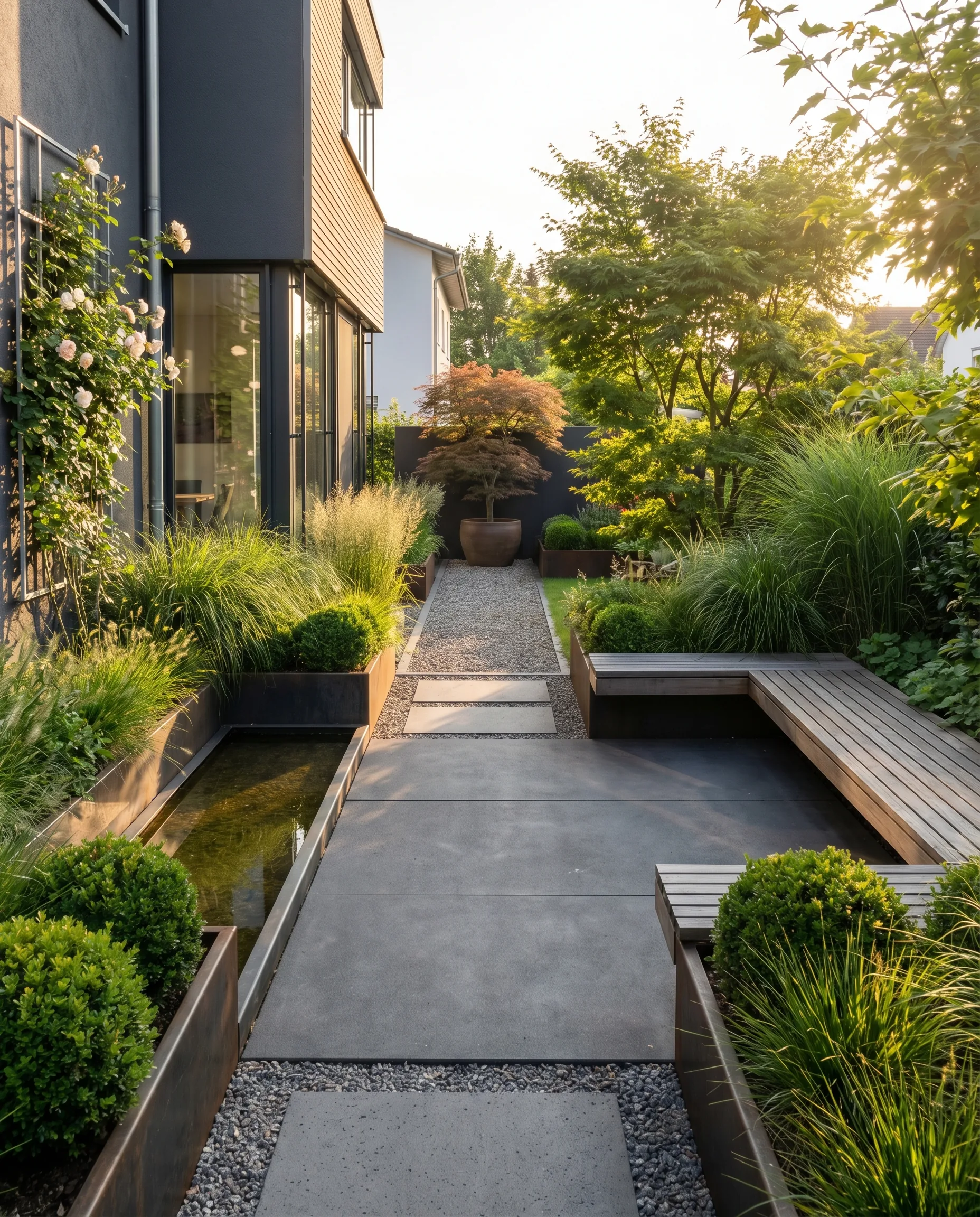
- Narrow water runnels – along a path or beside a terrace
- Shallow reflecting basins – only a few centimeters deep, maximum impact
- Single bubbling stones – understated, low-maintenance, atmospheric
What doesn’t work: overloaded pondscapes, large fountains, or naturalistic ponds with wide marginal zones. In small spaces, restraint always reads stronger than abundance.
Where Water Works Best in a Small Garden
Positioning determines the effect:
- At the end of a sightline – as a visual destination
- Near the terrace or seating area – for proximity and acoustic presence
- As a central focal element – to organize the garden around the water
- Integrated rather than isolated – water should be part of the overall design
A pool that sits freely with no relationship to its surroundings can feel lost. Integration with paving, planting, and views is what makes the difference.
Which Materials Pair Well with Water
The material choices around the water shape the overall impression:
- Natural stone – timeless, premium, suits almost any style
- Concrete – modern, pared-back, ideal for clean lines
- Timber decking – warm, welcoming, a great transition between terrace and water
- Gravel – natural, soft, ideal for edge zones
- Corten steel – as an accent or edging, especially in modern gardens
The rule: the fewer materials, the calmer the overall composition. Two to three materials are enough.
Water in a Modern Small Garden
In modern gardens, water is used with particular clarity:
- Reduced lines and clear geometry define the form
- Calm mirror effects are deliberately used as a design element
- No splashing, no excess – still surfaces instead of moving water
- Integration with the architecture of the house and terrace
If you’re looking for a modern approach for your small garden, you’ll find more design principles in the article Small Modern Garden.
Water in Long or Narrow Gardens
Water can play a strong role even in narrow gardens:
- Water as a destination point at the end of a long axis gives the garden direction
- Narrow runnels along the path emphasize the length in a positive way
- Breaking the tunnel effect with a pool set crosswise
- Enhancing narrow spaces through reflection and light
For more on making narrow gardens feel harmonious overall, see the article Narrow Garden Ideas.
Does Water Suit Every Small Garden?
Not always. Whether water makes sense depends on several factors:
- Style: In naturalistic or very playful gardens, a pool can feel out of place
- Budget: High-quality water solutions cost money—factor in planning and materials
- Maintenance preference: Even still pools need cleaning and technology
- Alternative: Sometimes a calm gravel court or a specimen plant can be just as impactful
If you’re unsure whether water is the right choice, the article Designing a Small Garden offers a broader overview of all design options.
Conclusion
Water works particularly well in small gardens when it’s used calmly, sparingly, and with precision. A single, well-placed water feature can transform the entire atmosphere of a small garden.
Want to see whether water suits your small garden? With GardenPilot, you can visualize different options directly on your property.
Further Reading
- Designing a Small Garden: Ideas for More Impact in Limited Space
- Small Modern Garden: Clear Structures for Limited Space
- Narrow Garden Ideas: How Long, Tight Spaces Can Feel Harmonious
A water feature can elevate a small garden—or overwhelm it. Using your own photo, see which solution gets the scale and atmosphere right. Upload a photo of your garden and use AI to see how it could look—along with a rough cost range before you invest. That way, you avoid expensive planning mistakes. Visualize your garden with GardenPilot (how it works).
Frequently Asked Questions
Which water basin is suitable for a small garden?
For small gardens, shallow, geometric basins made of concrete, corten steel, or natural stone are especially suitable because they take up little space while creating a strong visual impact. Prefabricated molded ponds made of fiberglass-reinforced plastic are also a space-saving, low-maintenance option.
How deep does a garden water basin have to be at minimum?
A purely ornamental water feature without fish can be kept very shallow—just a few centimeters of water depth are enough for a reflective surface. If the basin needs to overwinter without freezing completely, a depth of at least 80 cm is recommended in the coldest zone of the basin.
How can I prevent algae in a small water basin without technology?
In small, still basins, algae can be reduced through shaded placement, dark basin interiors, and targeted planting such as water hyacinths or water lilies, which draw nutrients away from algae growth. Feeding and keeping fish should be avoided in tiny basins without technology.
Can I create a water basin in a small garden on a terrace?
Yes—on terraces, freestanding basins made of corten steel, zinc, or coated wood work very well because they require no excavation and can be positioned flexibly. It’s important to check the load-bearing capacity of the surface in advance, because water weighs one kilogram per liter.
Gallery
Plan your own garden
Upload a photo of your garden and get a professional AI concept in minutes.
Start for freeMore articles from Small Gardens
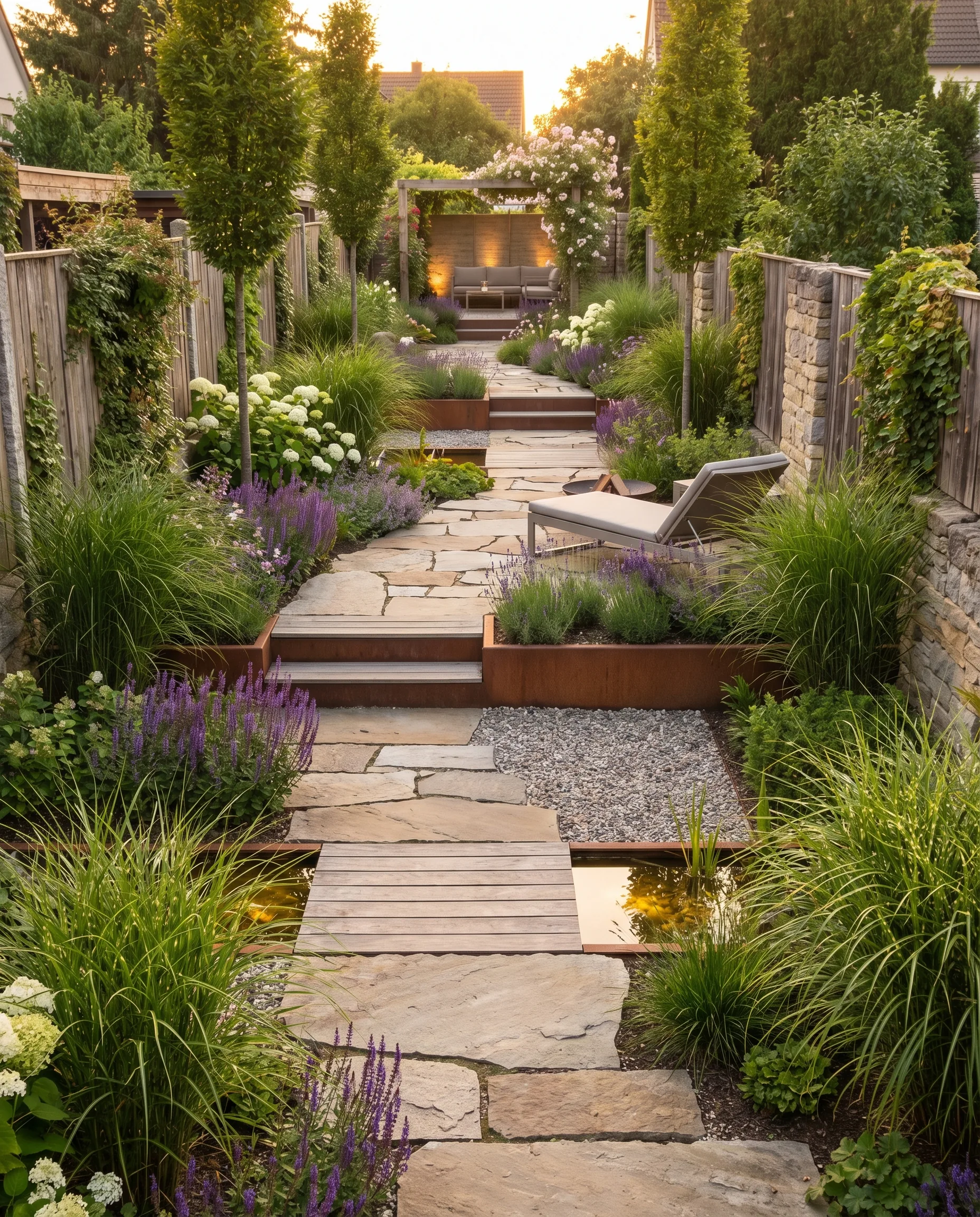
Narrow Garden Ideas: How to Make Long, Slim Spaces Feel Harmonious
A narrow garden can quickly feel cramped and restless. With the right zoning, path layout, and planting, even a long space can be designed to feel harmonious and high-end.
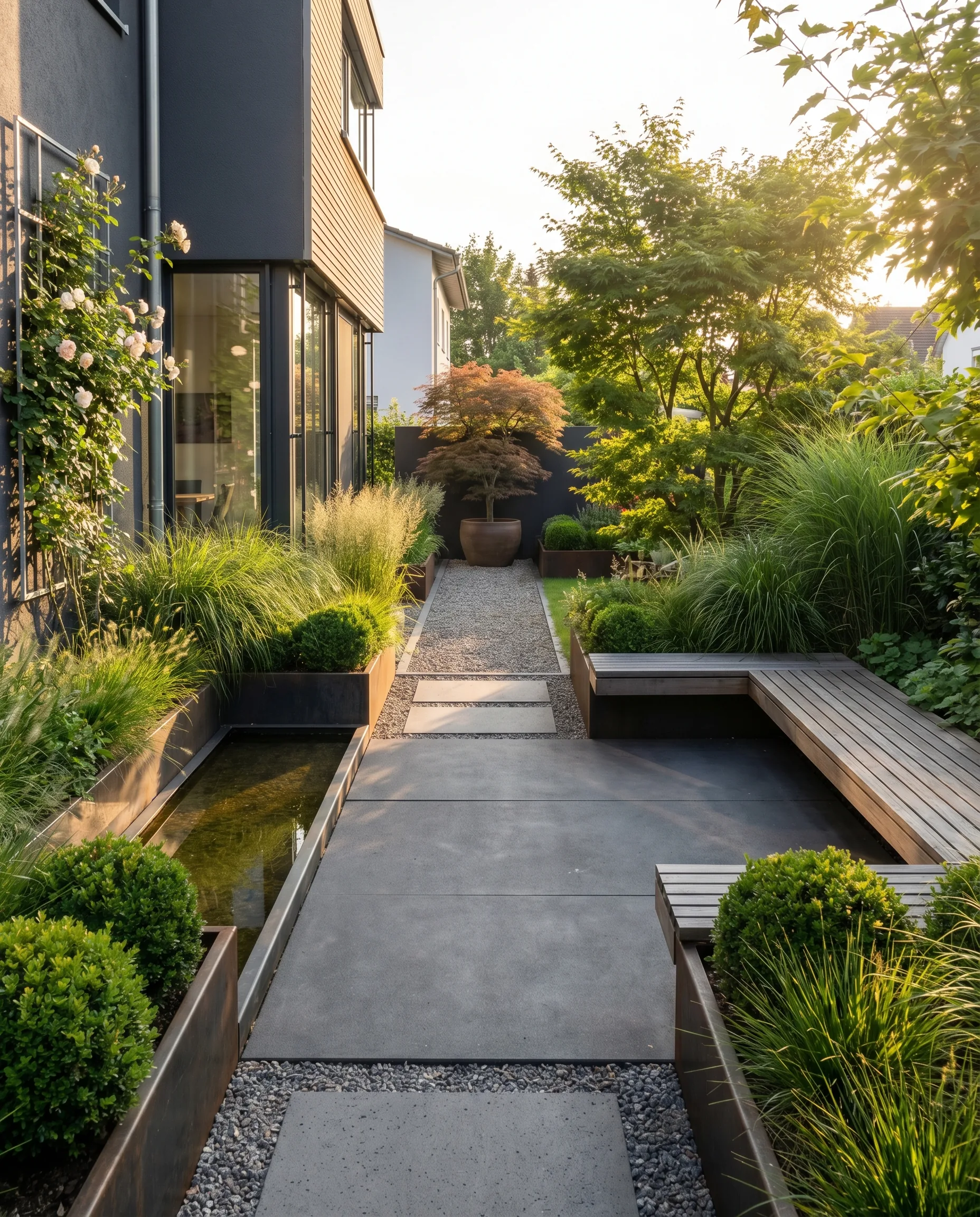
Designing a Small Garden: Ideas for Maximum Impact in Minimal Space
How to design a small garden with structure, atmosphere, and function—ideas for paths, planting, and making the most of limited space.
Small Modern Garden: Clean Structure for Limited Space
A small garden can feel modern, calm, and premium—with clean structure, restrained materials, and intentional planting.