Garden Water Basins: How to Bring Calm, Reflection and Depth to Your Outdoor Space
Why water basins make such a powerful impact in the garden
Water is the most impactful element in garden design—and at the same time, the one most often used incorrectly. Too often it ends up as a decorative fountain, a colourful jet, or an overloaded pond. Yet water reveals its strongest effect when it is still.
A quiet water basin brings three things into the garden that no other element can deliver:
- Reflection – sky, plants and architecture are doubled in the water. This creates depth and a sense of spaciousness, even in small areas.
- Calm – a smooth surface rests the eye. It provides a counterpoint to lively planting and textured materials.
- Focus – a water basin naturally draws the gaze. It becomes a central design element without feeling overpowering.
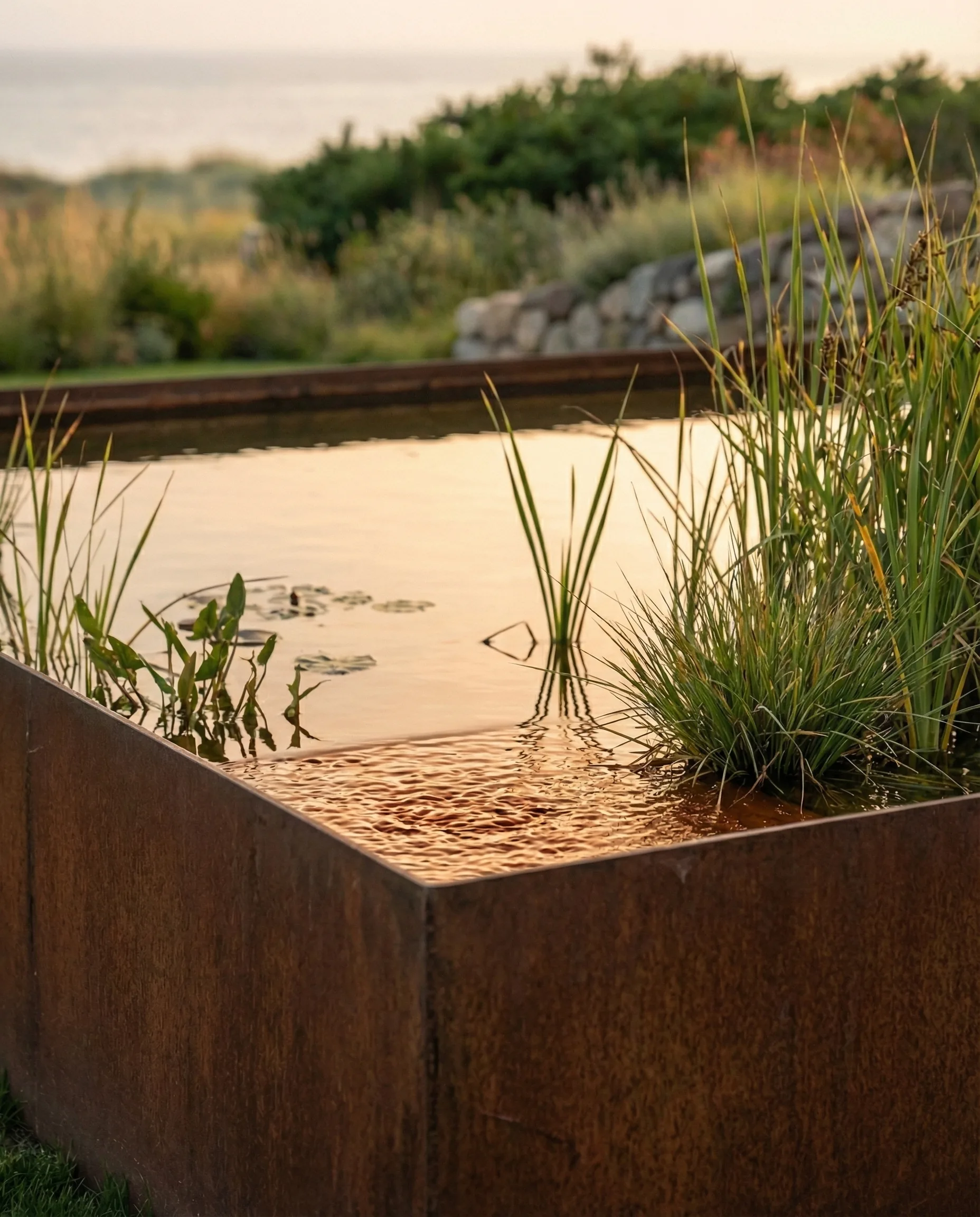
So if you’re planning a water basin in the garden, don’t start with the technology—start with the question of what kind of effect the water should create.
Which shapes work best for garden water basins
The basin’s shape defines the character of the entire water feature. There are three basic types that work especially well in gardens:
Rectangular basins
The classic choice for modern gardens. A rectangular water basin feels clean, calm and architectural. It integrates beautifully into linear garden concepts and emphasises axes and symmetry.
Especially good for: modern patios, courtyards, symmetrical garden layouts
Narrow water channels
Long and slim—water channels are an elegant solution for gardens with limited width. They can be used as a visual guide, leading the eye from the house into the garden. Especially in narrow gardens, they create a sense of depth.
Especially good for: edging paths, creating axes, narrow plots
Round or organic shapes
Round basins or free-form water surfaces suit naturalistic gardens. They feel softer and more landscape-like, blend into flowing planting schemes, and evoke natural springs.
Especially good for: naturalistic gardens, cottage style, informal design
What doesn’t work
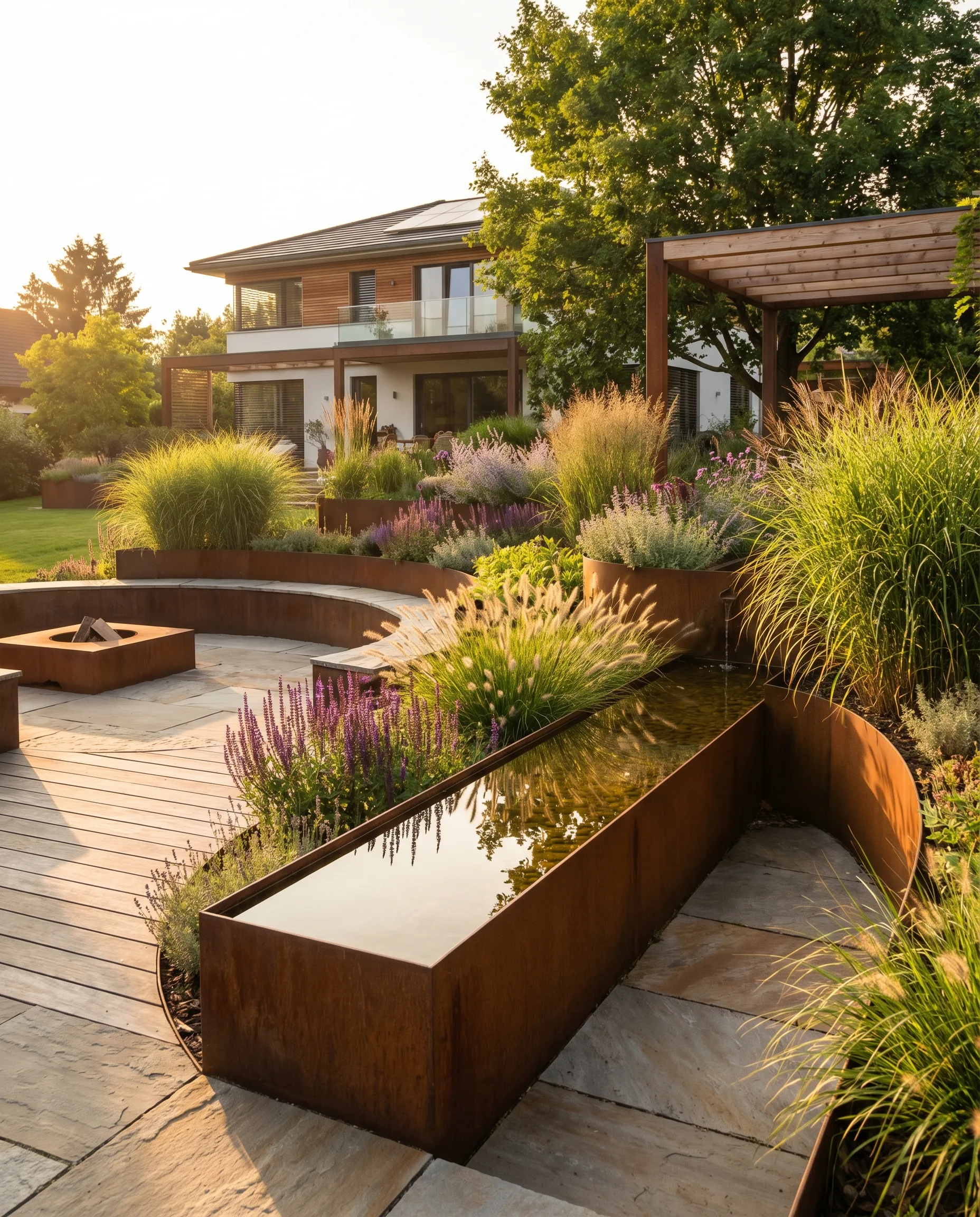
Basins that are too small (under 80 cm in diameter) lose their reflective power. Basins that are too shallow (under 20 cm water depth) warm up quickly and are prone to algae. And too many shapes within the same garden create restlessness instead of impact.
Materials for water basins: What works in harmony with the garden?
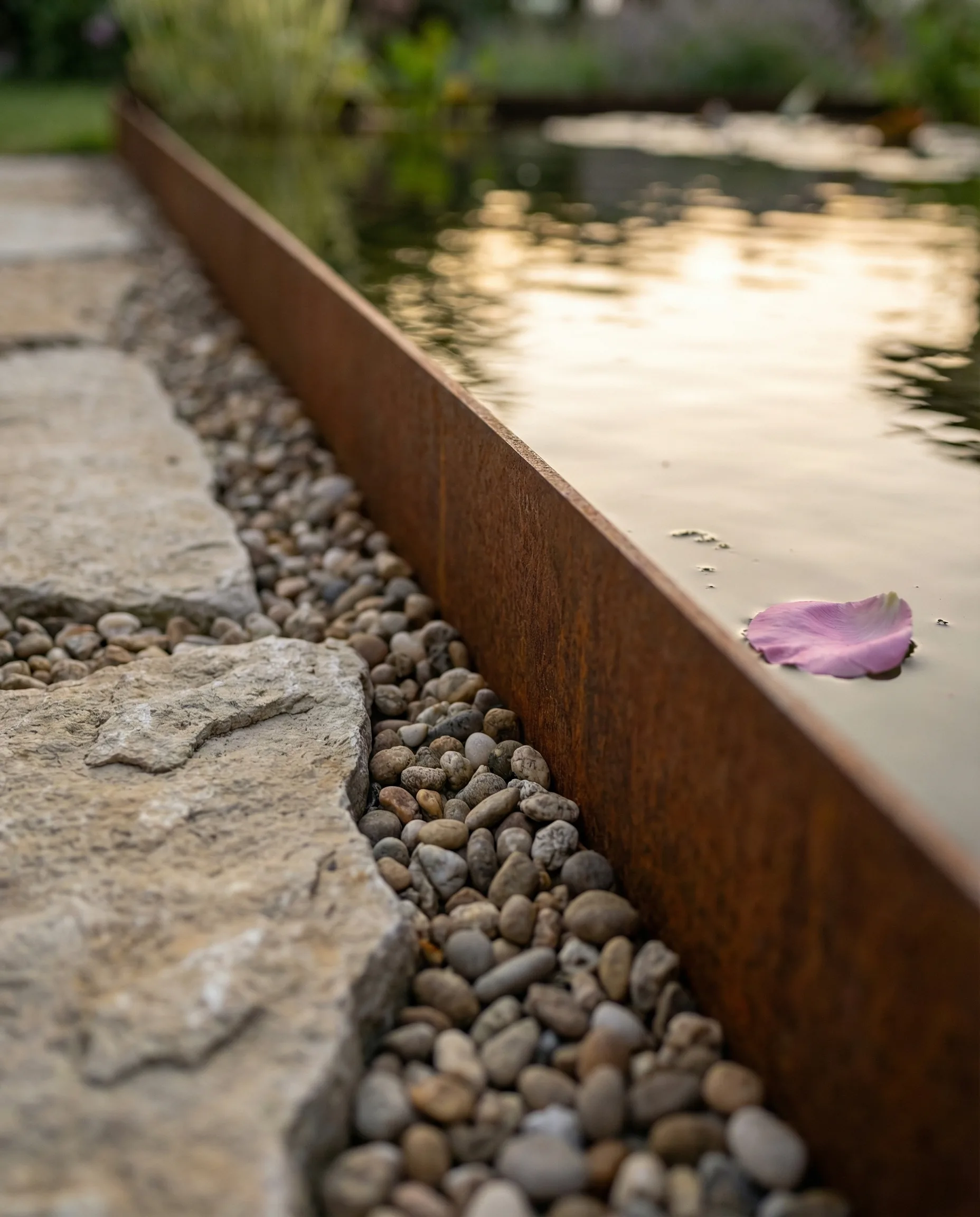
The material determines how the basin interacts with its surroundings—visually and to the touch.
Concrete
Effect: modern, clean, monolithic Surface: polished, bush-hammered or smooth formwork finish Advantage: freely formable, any size possible Best for: architectural gardens, patios with exposed-concrete elements
Natural stone
Effect: warm, natural, timeless Types: granite, basalt, limestone Advantage: every basin is unique, ages beautifully Best for: classic and naturalistic gardens
Corten steel
Effect: warm-rusty, modern, high-contrast Advantage: strong visual contrast with greenery and water, low maintenance once patinated Best for: modern gardens with accent materials – more about corten steel in the garden
GRP (glass-reinforced plastic)
Effect: neutral, understated Advantage: lightweight, cost-effective, quick to install Best for: basins intended to be clad in natural stone or wood
What doesn’t go together
High-gloss ceramic in a naturalistic garden. Rustic fieldstone in front of a minimalist house. The basin material must match the overall style—not a passing preference.
Where to place a water basin in the garden
Placement determines whether the basin becomes a true centre point or disappears within the design.
Near the patio
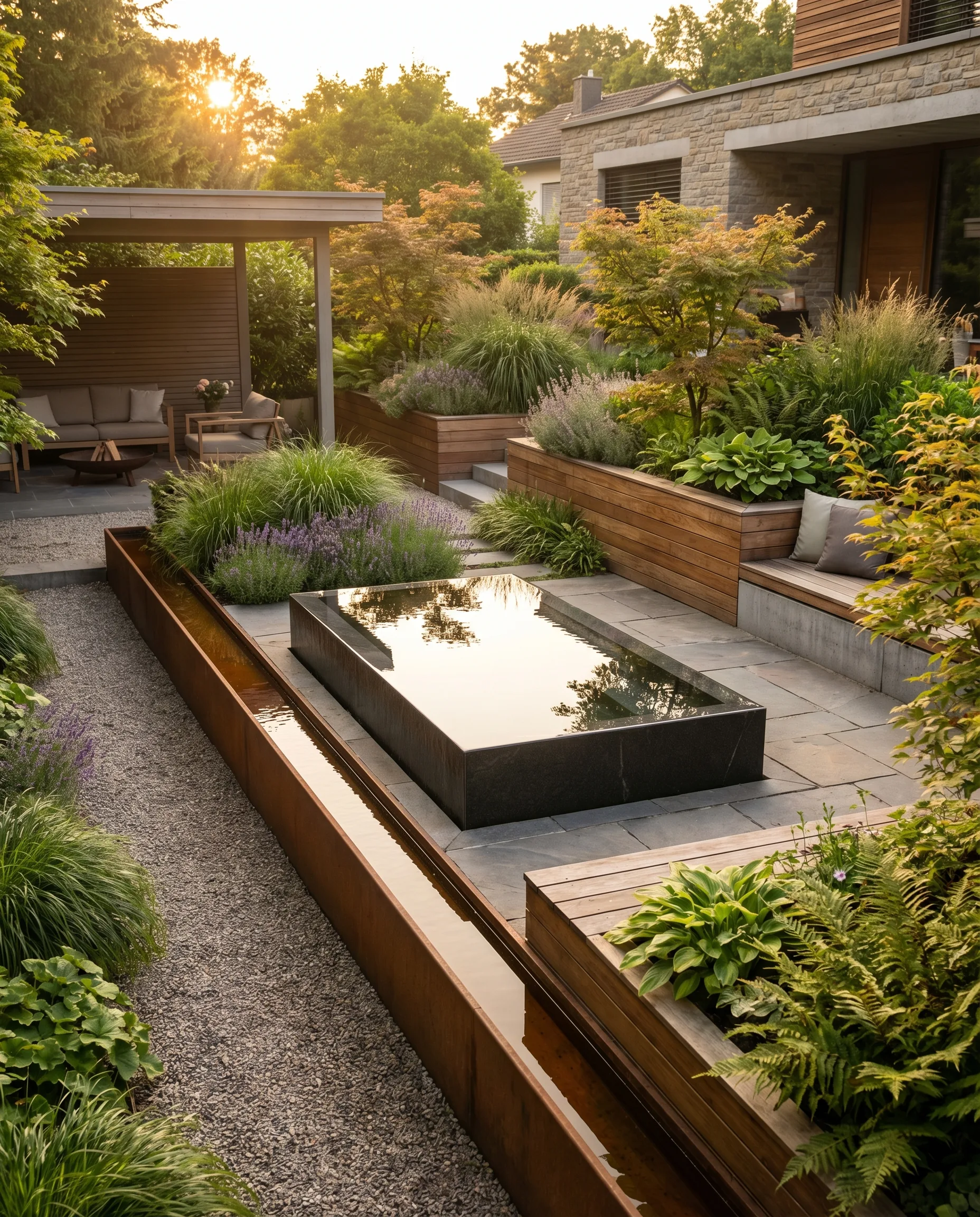
This is where you experience the water most intensely—reflection, sound, atmosphere. A basin directly adjacent to, or integrated into, the patio connects the living space with the garden.
At the end of a sightline
A water basin as the destination of an axis—at the end of a path or a lawn, for example—creates strong spatial tension. This works particularly well in gardens with clear path layouts.
As the centre of a garden room
Placed in the middle of an area, the basin becomes an anchor element around which planting, paths and seating are organised. This only works, however, if the garden room is large enough.
Set into planting
A basin partly surrounded by grasses, perennials or low shrubs feels more natural and calmer than a free-standing basin in the middle of a lawn.
What to avoid
Too close to the boundary. Too small in a large space. With no connection to other elements. A water basin needs context—it must be integrated into the overall composition.
Water basins and lighting
Water and light amplify each other—but only when lighting is used sparingly and with intention.
Underwater lighting
Warm-white LED spots set into the basin floor make the water glow in the evening without ruining the reflection. Less is clearly more here—one or two points of light are enough in most cases.
Indirect lighting
Light along the basin edge, from surrounding planting, or as recessed uplights next to the basin creates atmosphere without glare. You’ll find more on this in our garden lighting article.
What to avoid
Coloured LEDs, changing colours, too many light sources. Water is at its most powerful in warm, calm light—not in a light show.
Water basins in small gardens
Water basins work even in limited space—often especially well. That’s because the reflective surface creates visual depth and makes the space feel larger.
Compact basins
From around 80 x 80 cm footprint, a basin can begin to show its effect. What matters isn’t size, but the proportion to the space and the quality of the material.
Table basins and raised basins
On a plinth or integrated into a raised bed, a raised basin brings the water closer to eye level—and saves ground space.
Integrating into the patio
A flush, ground-level basin set into the patio connects indoor and outdoor space. This works especially well in small modern gardens.
Care and technology: What a water basin needs
A calm water basin is technically much simpler than a pond or stream. Still, there are a few points you should consider during planning:
Circulation pump
A small circulation pump keeps the water moving and prevents mosquitoes and stagnation. Output: 500–1,500 l/h is sufficient for most basins.
Filtration
For small basins, a simple pre-filter on the pump is often enough. For larger basins or strong sunlight, a UV-C clarifier is recommended to reduce algae.
Water level
An automatic top-up (float valve) compensates for evaporation and ensures the basin always stays filled to the brim—crucial for strong reflections.
Winterising
Most basins can remain filled during winter if the material is frost-resistant. However, pumps and equipment should be removed or protected before the first frost.
Does a water basin suit every garden?
In principle, yes—but not in every shape and not in every position.
Especially well suited
- Modern gardens with clear structure
- Patios and courtyards
- Gardens with strong axial design
- Small gardens that need visual depth
Less suited
- Very shady locations (little reflection, more algae)
- Gardens with lots of playing children (consider safety)
- If the budget only allows for a very small basin—then it’s better to choose a different accent element
Alternative: pergola or a corten steel feature
If you don’t want water as a focal point, a pergola or a corten steel element can be an equally effective design accent.
Conclusion
A water basin is one of the most powerful elements in garden design—provided it’s used in a calm, precise and context-driven way. It’s not the size that matters, but the quality of placement, material and proportion.
Plan it well, and you gain calm, depth and a clear focal point—in any garden style.
Next step
Want to see how a water basin would look in your garden? With GardenPilot, you can visualise different options directly based on your property.
Discover more garden elements
- Garden path ideas – Design front garden paths in style
- Corten steel in the garden – Use warm contrasts and clean edges in a modern way
- Pergola in the garden – Structure, shade and atmosphere outdoors
- Garden lighting – Set the scene for paths, plants and seating areas
Whether a water basin will bring calm to your garden or feel out of place is easiest to judge with a realistic preview—before any concrete is poured. Upload a photo of your garden and use AI to see how it could look — including a rough cost range before you invest. That way you avoid expensive planning mistakes. Visualise your garden with GardenPilot (here’s how it works).
Frequently asked questions
What shape should a water basin have in the garden?
The basin shape should match the garden style: rectangular or square basins feel modern and clearly structured, while organic, flowing shapes suit naturalistic gardens better. What matters is that the form creates calm, enclosed surfaces so the reflective effect can really shine.
Which material is best for a garden water basin?
Concrete and natural stone are especially durable and give the basin a premium look, while GRP basins (glass-reinforced plastic) are easier to install. Dark interior linings noticeably enhance reflections because they make the water look deeper and more mirror-like.
How deep does a garden water basin need to be to prevent algae straight away?
A depth of at least 40 to 60 centimetres helps keep water temperature more stable and reduces severe algae blooms caused by overheating. In addition, avoid placing the basin in full midday sun and, if needed, use a planted filter or a circulation pump.
Which plants pair well with a modern water basin?
For a stylish, calm water surface, water lilies work particularly well because their leaves structure the surface without overloading it. A few sculptural accent plants—such as reeds, sedges or ornamental grasses—at the basin edge add crisp definition without destroying the water’s reflective effect.
Gallery
Plan your own garden
Upload a photo of your garden and get a professional AI concept in minutes.
Start for freeMore articles from Garden Elements

Garden Lighting: Create Atmosphere for Paths, Plants & Seating Areas
With the right garden lighting, paths, plants, water features and seating areas become the evening highlight. Here’s how to plan your lighting with atmosphere and intention.
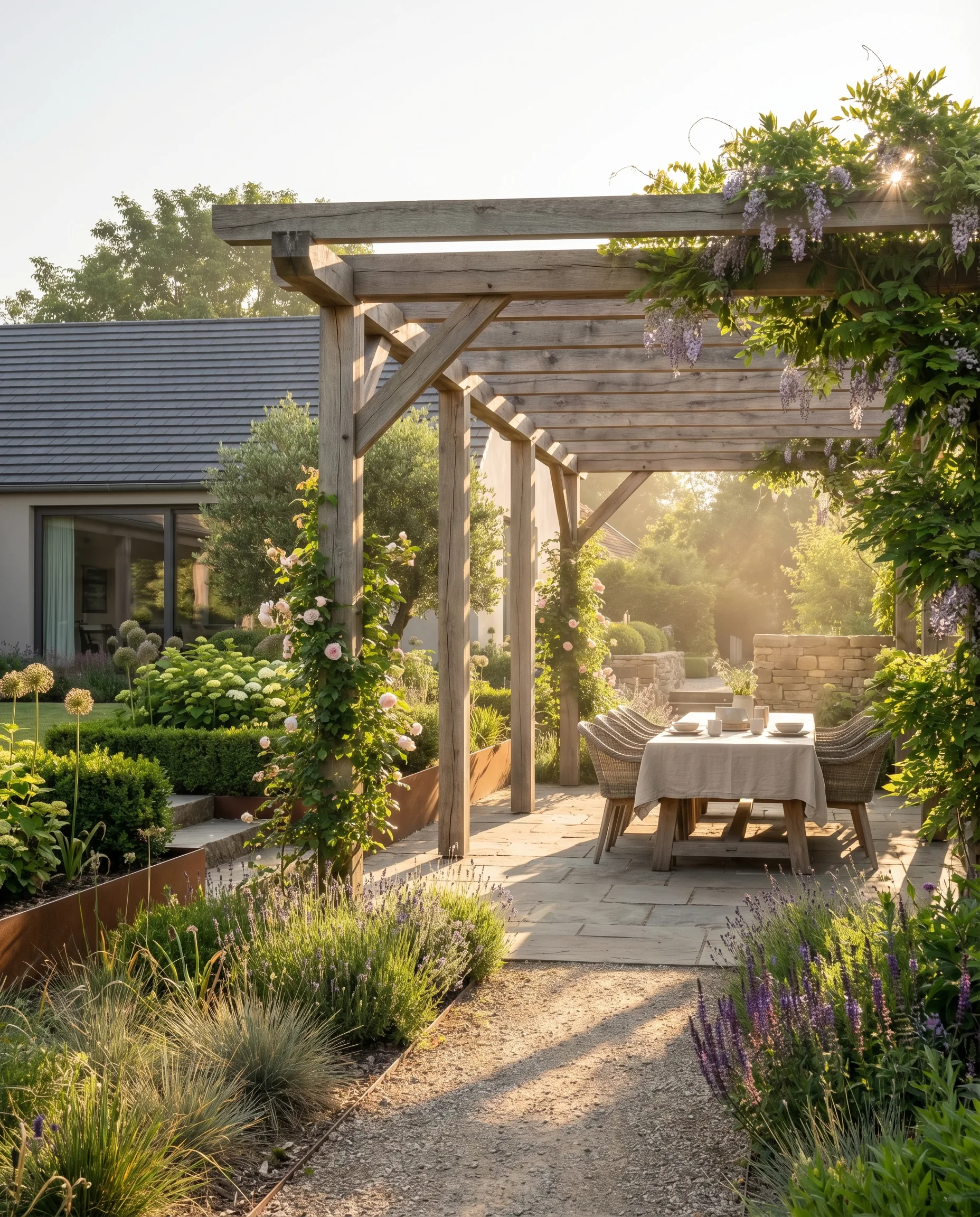
Garden Pergola: Structure, Shade and Atmosphere Outdoors
A pergola brings structure, shade and atmosphere to your garden. Here’s how to plan materials, planting and placement for a stylish outdoor space.
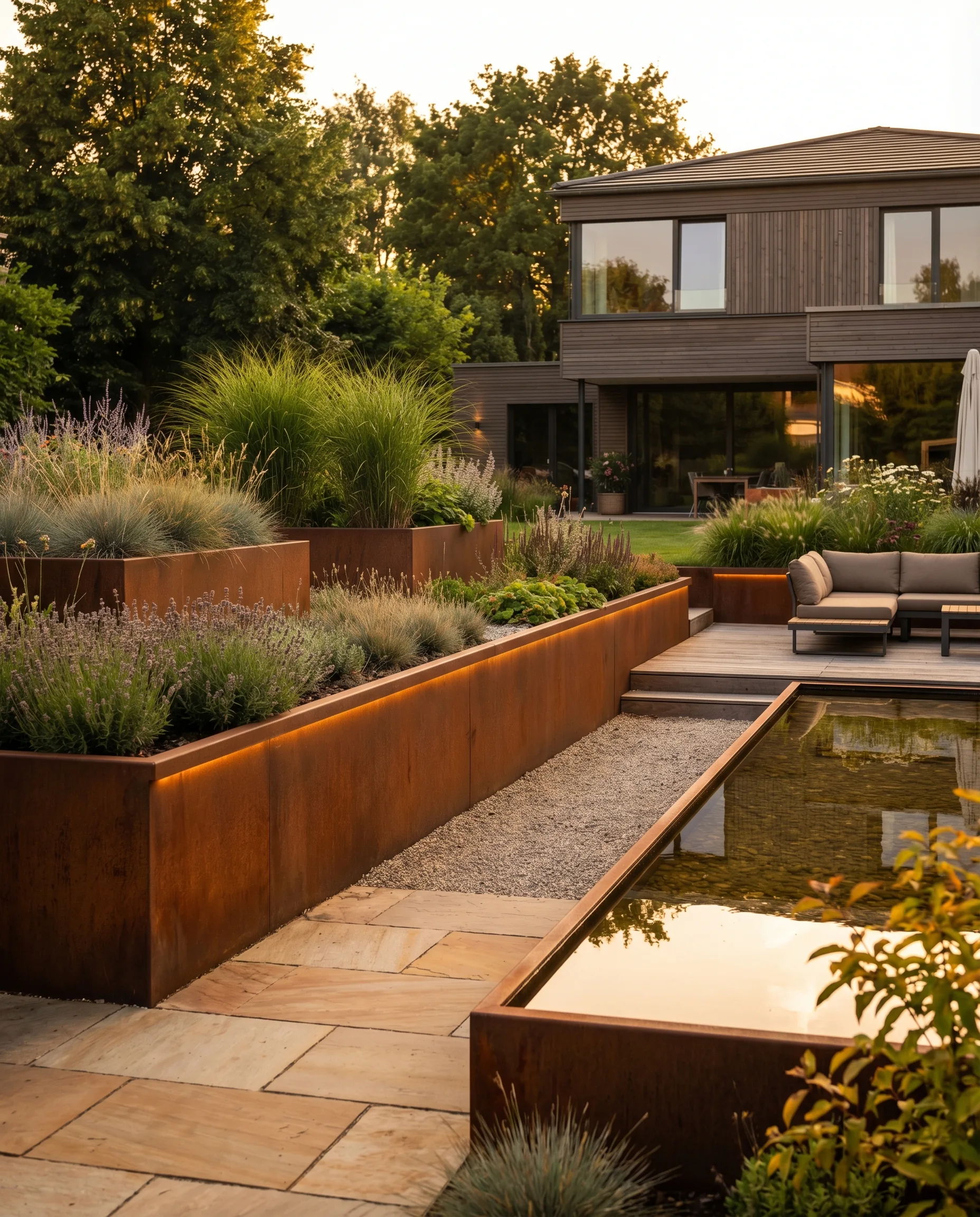
Corten Steel in the Garden: Using Warm Contrasts and Crisp Edges in a Modern Way
Corten steel brings warmth, texture, and crisp edges to the garden. Here’s how to use the material for bed edging, water basins, privacy screens, and accents.