Designing a Modern Garden: Ideas for Clean, Stylish Outdoor Spaces
A modern garden isn’t a trend—it’s an attitude. Choosing contemporary garden design means choosing clarity over chaos, restraint over overload, and premium materials over random decor. In this article, we’ll show you what defines a modern garden—and how to find the right design for your home.
What defines a modern garden
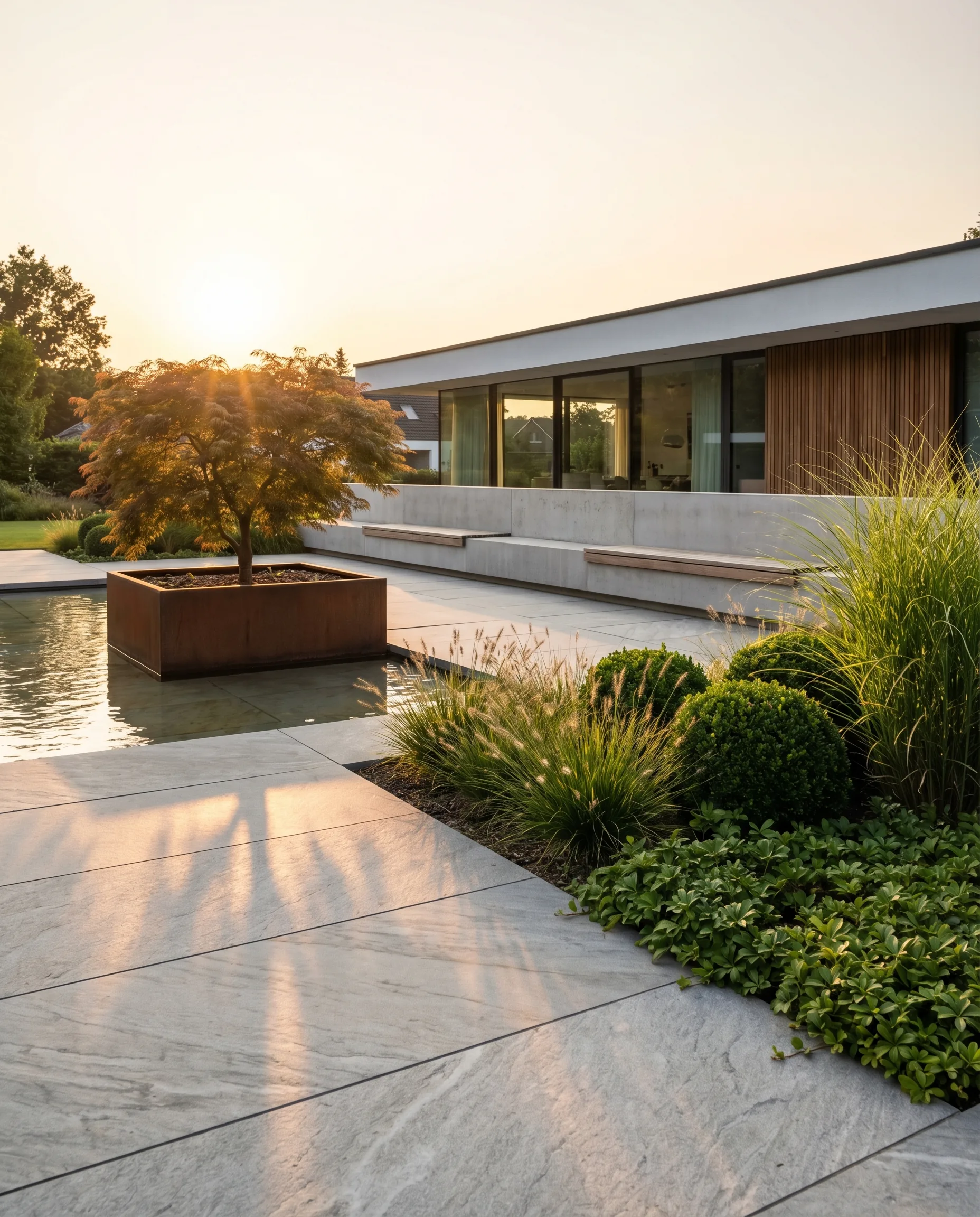
You recognize modern gardens instantly—even if you can’t quite put your finger on why. It’s the combination of several design principles that together create a calm, high-end feel:
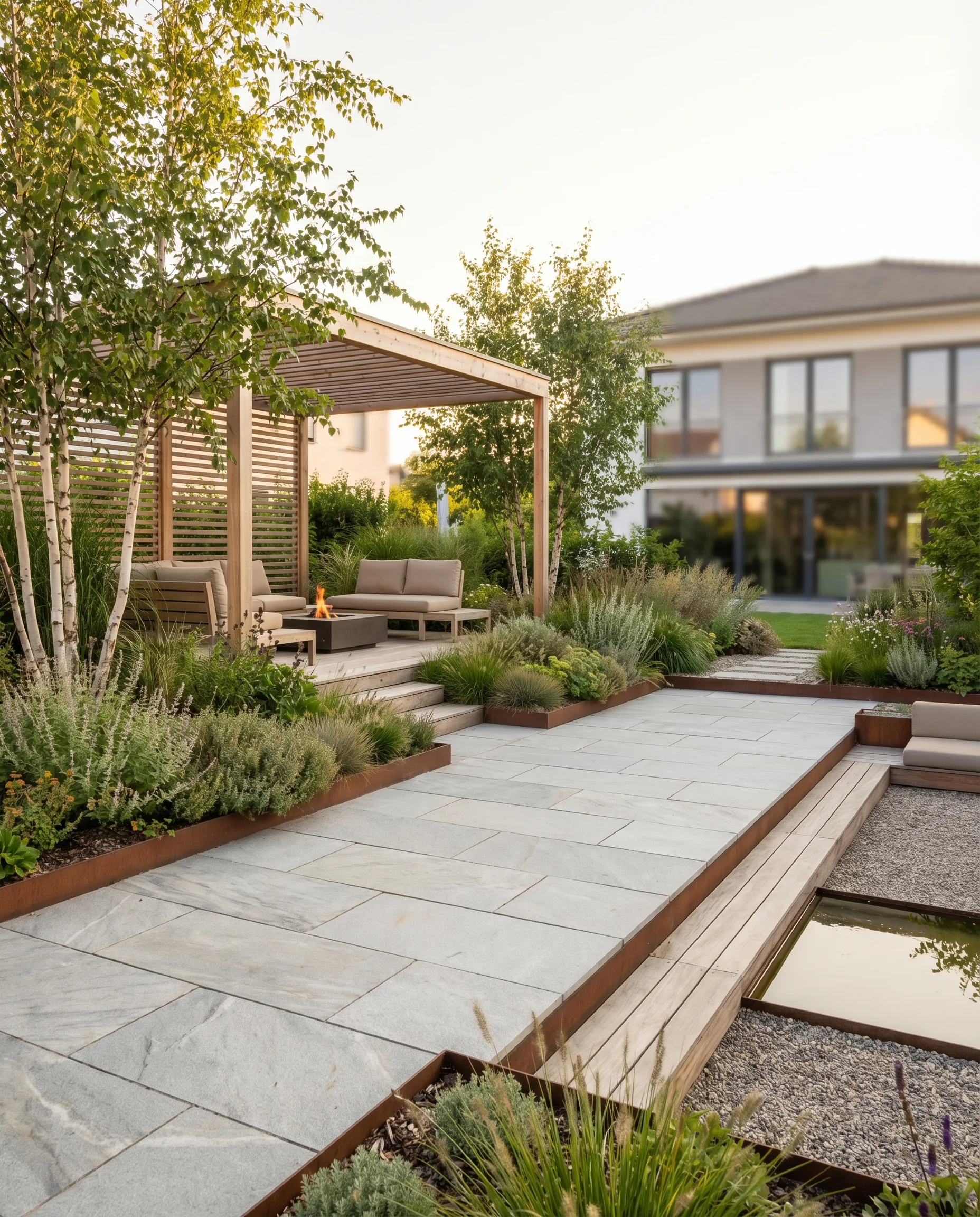
- Clean lines: Paths, beds, and terraces follow geometric shapes. No winding paths, no arbitrary curves.
- Calm surfaces: Large, uniform material surfaces dominate—whether it’s a concrete terrace, a rectangular lawn, or a gravel field.
- Intentional reduction: Fewer plant varieties, fewer materials, less decoration. Everything that’s there has a clear function or visual impact.
- Premium materials: Large-format natural stone slabs, corten steel, exposed concrete, high-quality timber. Material choices define the character.
- Controlled planting: Instead of wild, mixed flower borders, modern gardens rely on structure-giving plants such as ornamental grasses, clipped shrubs, or evergreen hedges arranged in crisp lines.
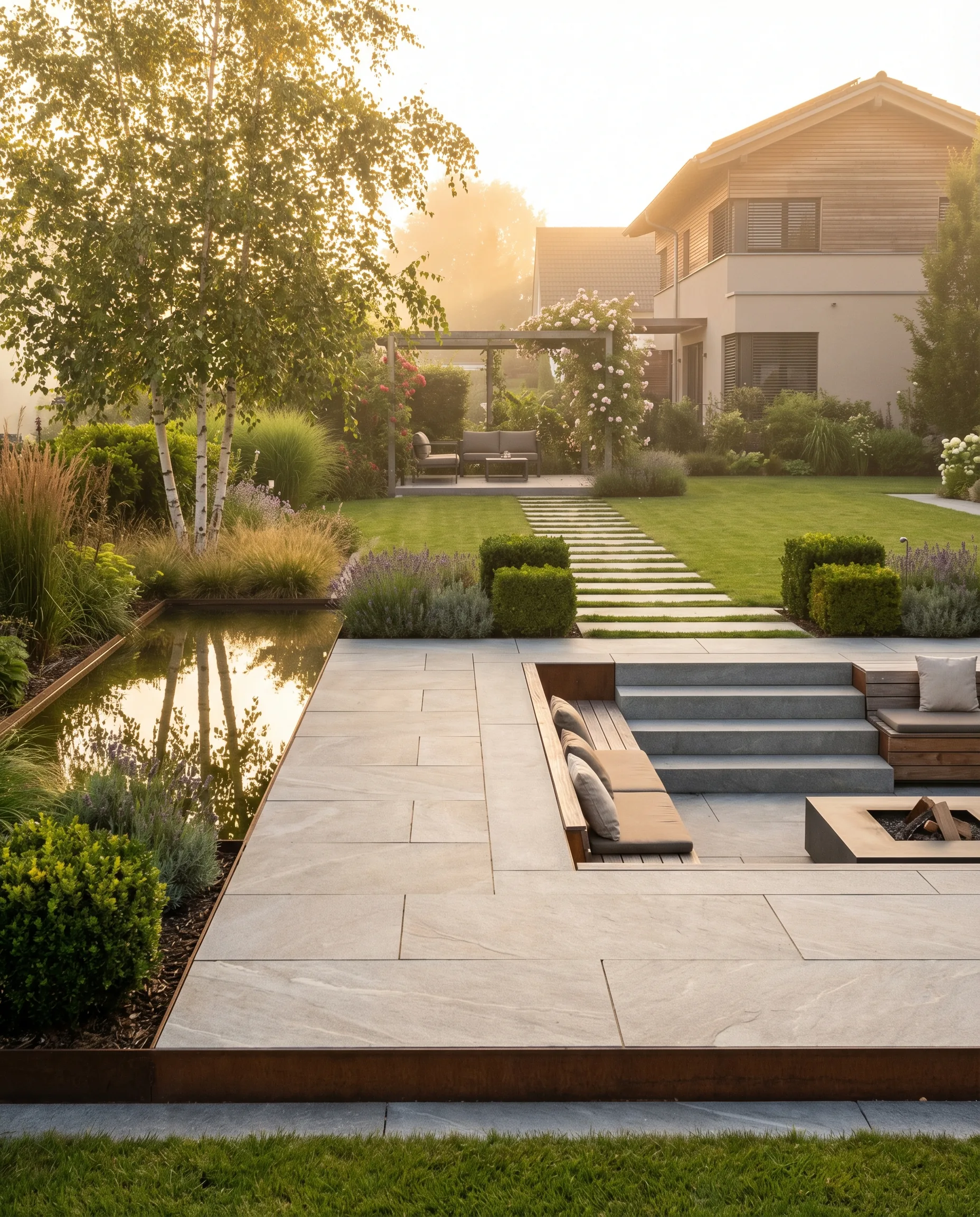
The result: a garden that doesn’t look like work, but like a deliberate composition.
Which homes pair especially well with modern gardens
Not every garden style suits every home. Contemporary garden design works particularly well with:
- Modern architecture: Flat roofs, large glass fronts, clean cubic forms—here, a modern garden is the logical extension of the architecture into the outdoors.
- Streamlined new builds: Even gable-roof homes with a clear design language, restrained colors, and modern facade materials harmonize beautifully with a geometric garden.
- Renovated existing homes: If you’ve modernized an older house—new windows, a crisp facade, contemporary materials—a modern garden continues that transformation outdoors.
- Modern family homes: Especially for families, a modern garden brings structure. Clear zones for play, seating, and planting create order without feeling sterile.
Important: If your home is more rural, rustic, or historic, an overly strict modern garden can feel like a style clash. In those cases, a softly modern approach using natural materials is often the better choice.
Water as a design element in a modern garden
Water is one of the most impactful elements in modern gardens. This isn’t about babbling fountains, but calm, architectural water features:
- Pools with crisp geometry: Rectangular pools with an overflow edge, integrated into the terrace level. The water becomes part of the architecture.
- Shallow reflecting basins: Even without a swimming function, water basins create reflections, light effects, and a soothing atmosphere.
- Reflections: Still water surfaces mirror the sky and surroundings—an intentional design tool for depth and openness.
- Stillness: No splashing, no jets. The silence of the water surface amplifies the calm of the entire garden.
In a modern garden, water doesn’t need a large footprint—even a narrow basin along a wall can make a powerful statement.
👉 Read more: Modern Garden with Pool – Water, Architecture and Outdoor Living
Less, but better—why minimalism works so well in the garden
In many gardens, there’s simply too much: too many plant varieties, too many materials, too many decorative elements. The result feels restless and random. Modern garden minimalism flips that principle:
- No overload: Every element must earn its place. Anything that doesn’t contribute is left out.
- Focus and sightlines: Reduction creates clear visual axes. The eye is guided rather than distracted.
- Intentional material choices: Better one material in outstanding quality than three different ones in average quality.
Minimalism in the garden doesn’t mean emptiness—it means clarity. A single specimen tree on a gravel surface can have more impact than an overcrowded perennial bed.
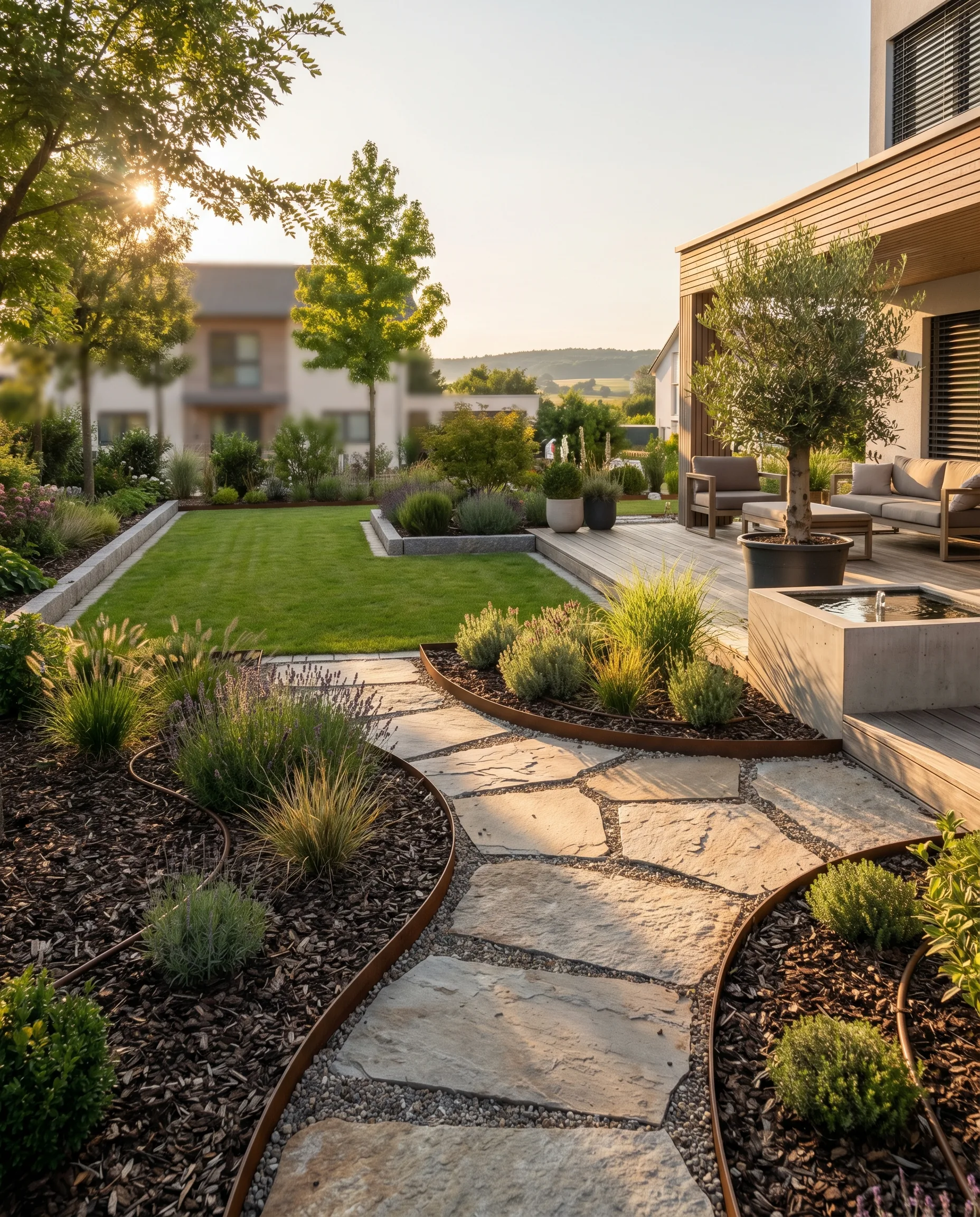
This principle works at any garden size—and especially in small gardens, reduction can make the space feel larger.
👉 Read more: Minimalist Garden – Fewer Elements, Greater Impact
Can a modern garden also be low-maintenance?
Yes—and exceptionally so. Modern gardens are naturally easier to maintain than many other styles because they prioritize structure over variety:
- Fewer plant varieties: If you use only 5–8 species, you’ll have fewer different care requirements.
- Crisp edges: Lawn edges with metal edging or stone borders reduce the maintenance needed at transitions.
- Hard-wearing materials: Large-format concrete slabs, sealed timber decking, and corten steel are durable and low-maintenance.
- Evergreen structural plants: Clipped hedges, grasses, and groundcovers are easy to care for and attractive year-round.
The key is planning: if you think through in advance which plant goes where and which surface gets which material, you’ll save yourself years of work afterward.
👉 Read more: Low-Maintenance Modern Garden – Stylish Design with Minimal Effort
Terrace, seating areas and outdoor living in the modern garden
In a modern garden, the terrace isn’t an add-on—it’s the center of the outdoor living space. The transition between indoors and outdoors is designed to feel seamless:
- Flow from inside to outside: Level thresholds, continuous materials, and large sliding doors connect the living area and terrace without interruption.
- The terrace as a living room: Outdoor kitchen, lounge area, dining table—the terrace takes over the functions of the living room.
- Zoning and comfort: Different areas are defined through changes in level, material, or planting—without being separated by walls.
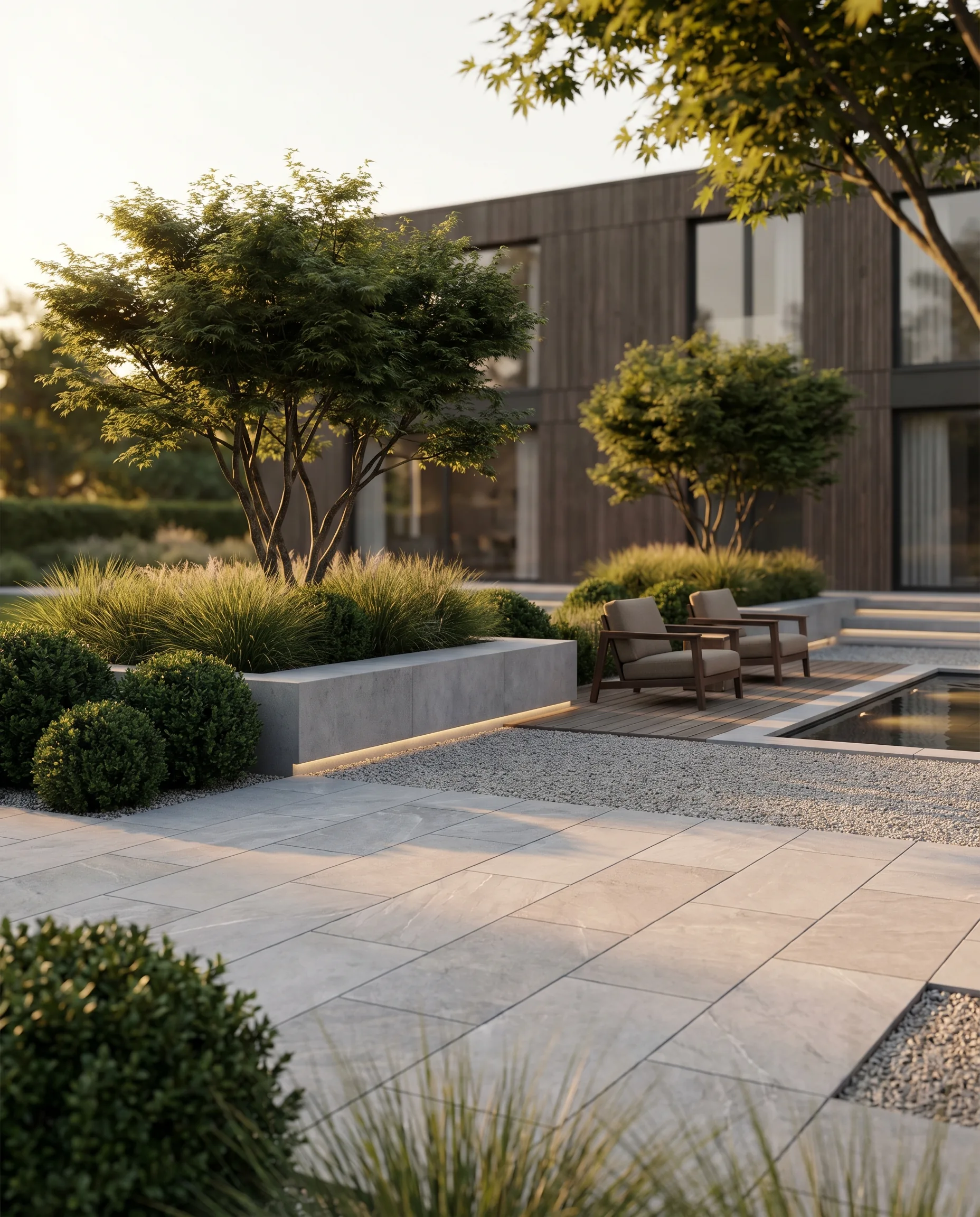
Modern outdoor-living concepts rely on high-quality outdoor furniture, integrated lighting, and weather-resistant materials. The terrace should feel like a room—just without a roof.
👉 Read more: Modern Garden with Terrace – How to Create a Cohesive Outdoor Living Space
Conclusion
A modern garden isn’t a style for decoration—it’s a style of clarity and composition. If you want to design your garden in a contemporary way, you’re choosing intentional reduction, premium materials, and a well-considered layout.
The good news: the modern garden style can be realized in many variations—with a pool, minimalist, low-maintenance, or as an extended living space with a terrace. What matters is that home and garden speak the same language.
Want to see how a modern garden would look with your own home? With GardenPilot, you can visualize different contemporary concepts directly from a photo.
Further reading
- Modern Garden with Pool – Water, Architecture and Outdoor Living
- Minimalist Garden – Fewer Elements, Greater Impact
- Low-Maintenance Modern Garden – Stylish Design with Minimal Effort
- Modern Garden with Terrace – How to Create a Cohesive Outdoor Living Space
Premium materials and clean lines cost money—a realistic preview of your garden helps you invest only where it will make a visible impact. Upload a photo of your garden and use AI to see how it could look—complete with a rough cost range before you invest. This helps you avoid expensive planning mistakes. Visualize your garden with GardenPilot (here’s how it works).
Frequently asked questions
Which plants work best in a modern garden?
For modern gardens, plants with a clear structure and a calm presence work especially well—for example grasses such as Pennisetum or Miscanthus, hedge plants like hornbeam or yew, as well as perennials with geometric growth such as Agapanthus or lavender. What matters is planting a few species in groups instead of mixing many different varieties randomly.
Which materials are suitable for a modern garden?
Typical materials in modern gardens include concrete, corten steel, natural stone (for example granite or basalt), and untreated or oiled hardwood. These surfaces feel timeless, age beautifully, and work perfectly with the clean design language of contemporary garden design.
How much does it cost to have a modern garden installed?
Costs depend heavily on size, material selection, and soil conditions—giving flat figures here would be misleading. As a guideline: premium materials such as natural stone or corten steel can significantly increase the budget, but they pay off over the long term through durability and low maintenance.
Can I create a modern garden myself on a small budget?
Yes—an understated modern look is achievable even with a limited budget, for example through crisp bed edging, a reduced plant palette, and uniform pots or raised beds made of timber. More important than the material is consistent restraint: in a modern garden, less is almost always more.
Gallery
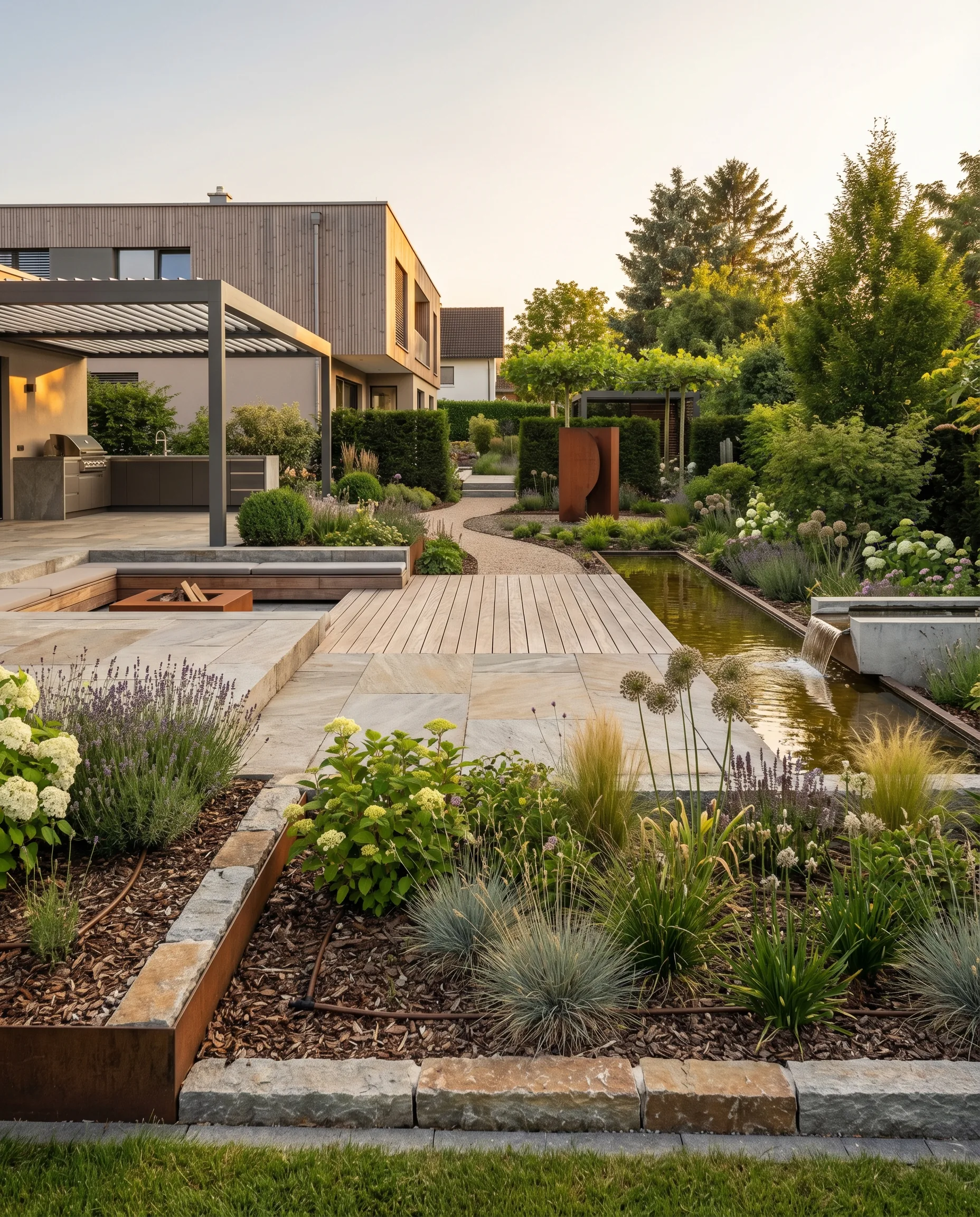
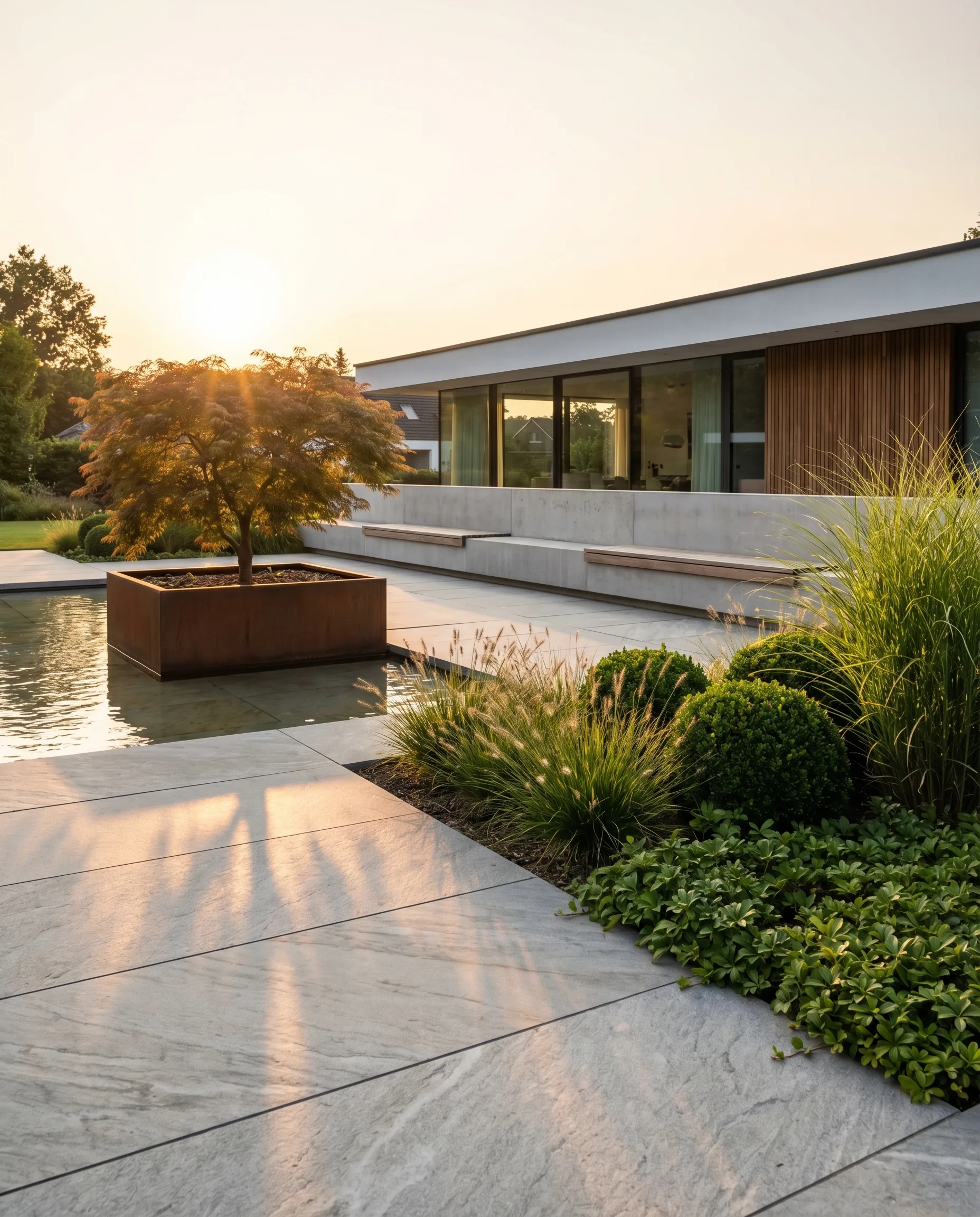
Plan your own garden
Upload a photo of your garden and get a professional AI concept in minutes.
Start for freeMore articles from Modern Gardens
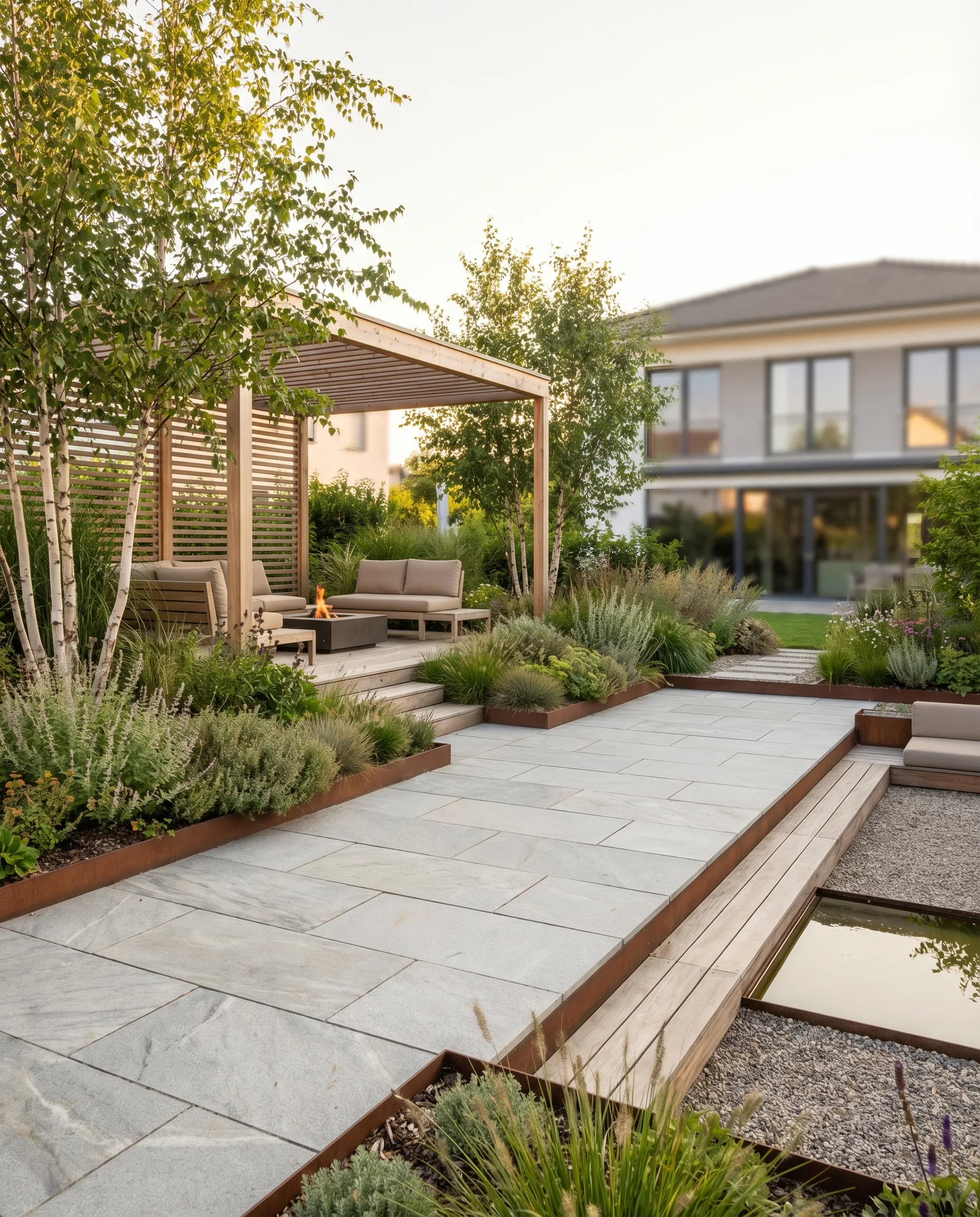
Modern Garden with Terrace: How to Create a Cohesive Outdoor Living Space
Terraces are the heart of modern gardens. Discover how materials, levels, furniture, and sightlines come together to create a cohesive outdoor living space.
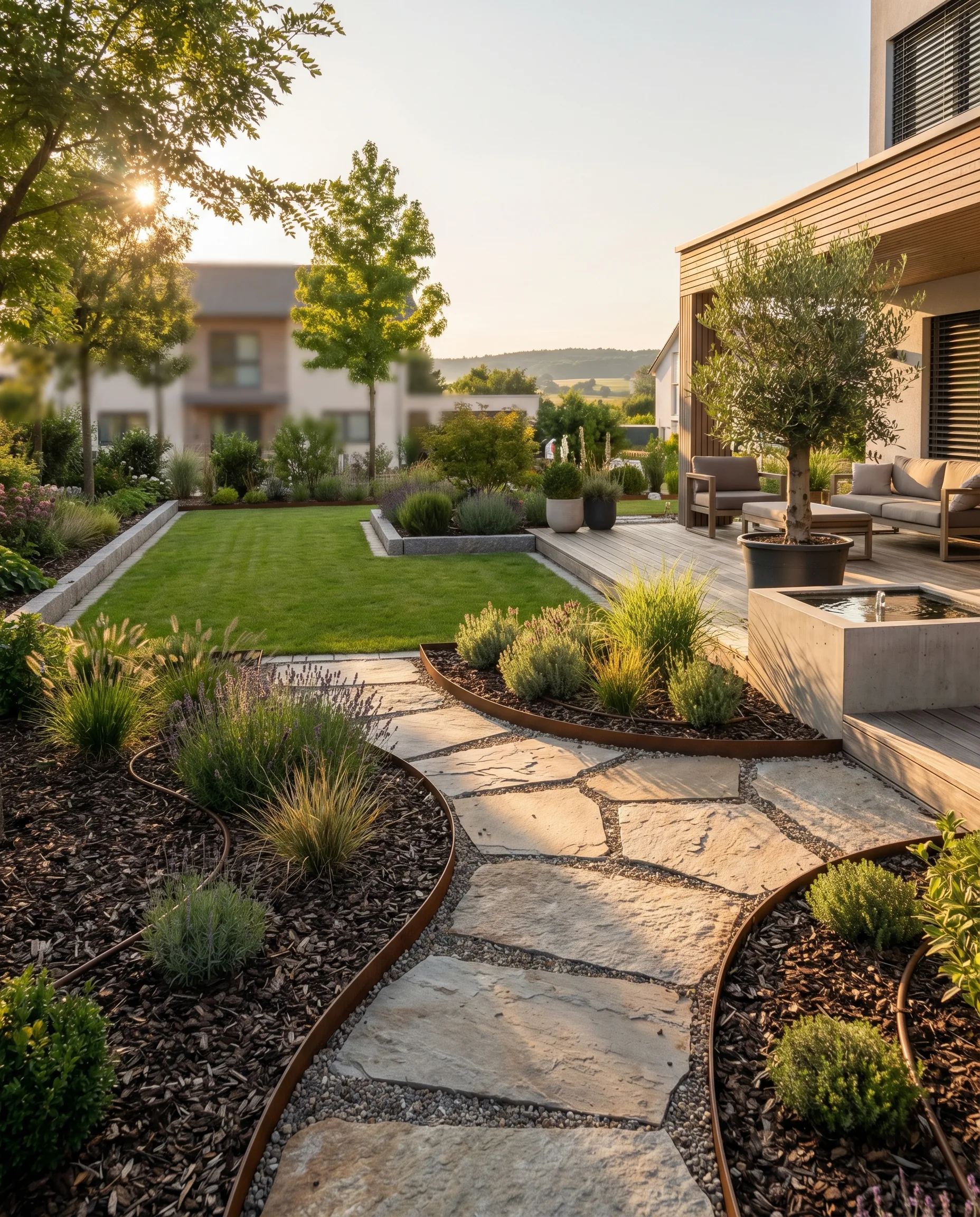
Low-Maintenance Modern Garden: Stylish Design with Minimal Effort
A modern garden can be both stylish and low-maintenance. With fewer plants, clean materials, and a well-planned structure, the workload drops significantly.
Minimalist Garden: Fewer Elements, Greater Impact
A minimalist garden thrives on reduction, crisp edges, and intentional planting—creating modern garden design with maximum calm and impact.