Modern Garden with Terrace: How to Plan a Stylish Outdoor Living Area
A terrace is more than a paved area next to the house. In a modern garden, it becomes the link between architecture and nature—an outdoor place for living, dining, and relaxing. If you want a modern garden design with a terrace, you’re not adding an extension—you’re creating a true outdoor living space.
Why the Terrace Is the Center of Modern Gardens
In modern garden design, the terrace plays a key role. It’s the transition from indoors to outdoors—and often the most frequently used area in the entire garden.
What makes a terrace feel modern:
- Connection to the house – floor-to-ceiling windows, sliding doors, or frameless glazing create a seamless transition
- Outdoor living – the terrace is treated like a room, with zones, furniture, and lighting
- Use over decoration – every area has a purpose; nothing is purely ornamental
- Sense of space – a modern terrace feels expansive thanks to clarity and strong proportions
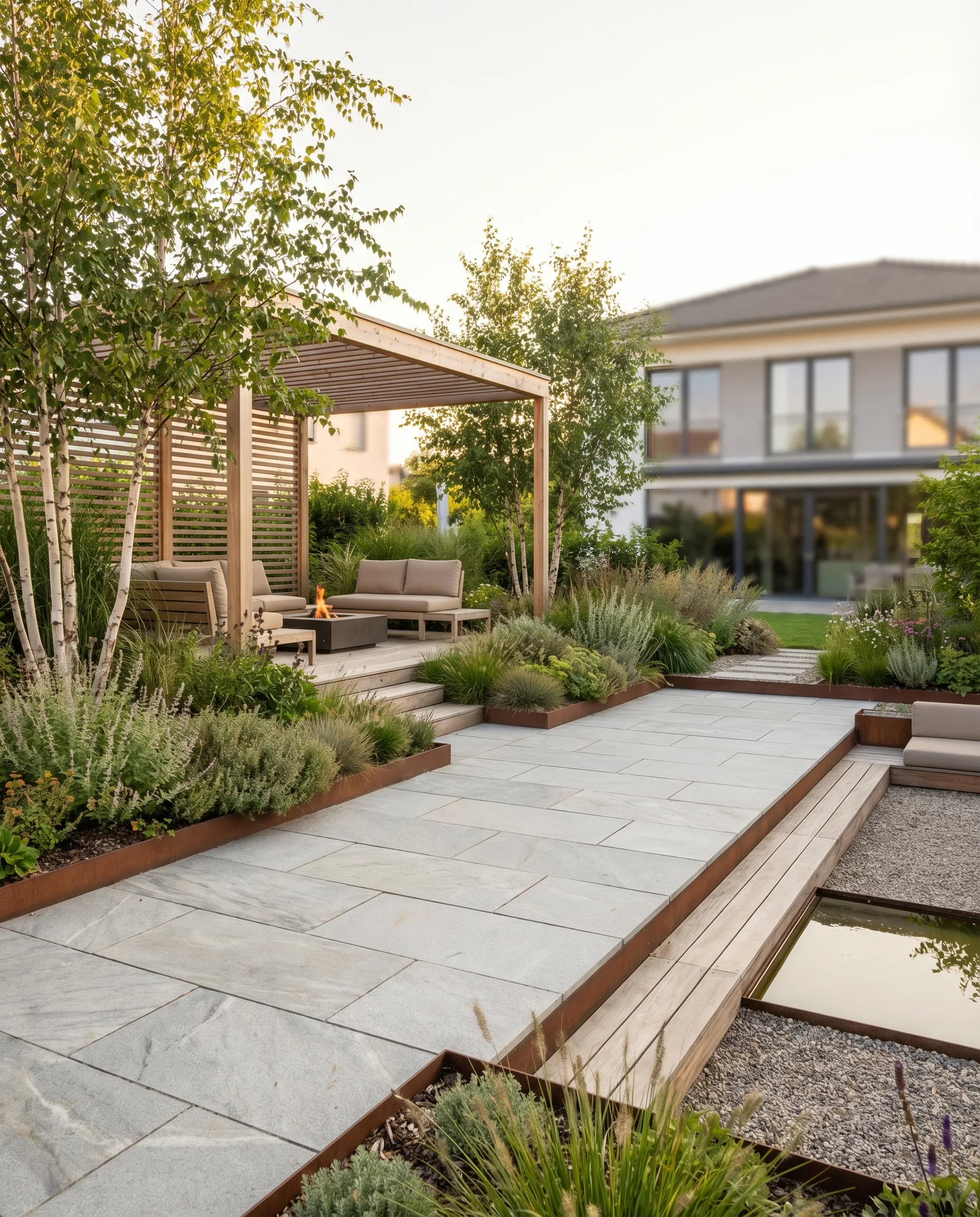
The terrace defines how the garden is experienced. It’s the first impression, the main gathering place, and often the design anchor of the entire outdoor area.
Terrace Shapes That Look Modern
Not every terrace looks modern. The shape, proportions, and relationship to the house determine whether a terrace feels contemporary or generic.
Design principles for modern terraces:
- Clear basic forms – rectangular or L-shaped instead of curved outlines
- Calm surfaces – one consistent material without fussy patterns
- Linear edges – clean transitions to lawn, beds, or gravel
- Generous areas – one continuous space rather than several small islands
- Levels and steps – subtle height changes add dynamics and zoning
A modern terrace thrives on simplicity. A few materials, clean lines, and deliberate proportions are enough to create a strong impact.
Materials for Modern Terraces
Material choice shapes not only the look, but also the feel underfoot, the maintenance, and the terrace’s longevity. Modern gardens favor materials that feel premium while staying highly functional.
Proven materials:
- Natural stone – granite, basalt, or travertine in large formats for a calm, elegant surface
- Exposed concrete – poured or as slabs, for an industrial-modern look
- Wood – thermally modified ash, larch, or Accoya for warmth and a natural feel
- WPC (Wood-Plastic Composite) – a low-maintenance alternative to real wood with a modern appearance
- Porcelain tiles – in natural-stone or concrete looks, frost-resistant and easy to care for
The transition from terrace to garden is crucial: clean edges between terrace paving and lawn, gravel, or beds define zones and give the space structure.
Seating Areas, Fire Features, and Outdoor Living
A modern terrace comes alive through how it’s used. Different zones make the outdoor area versatile and inviting—by day and in the evening.
Zones that define a modern outdoor living space:
- Lounge zone – deep seating with weather-resistant cushions for relaxed get-togethers
- Dining area – a large table with chairs or benches for meals outdoors
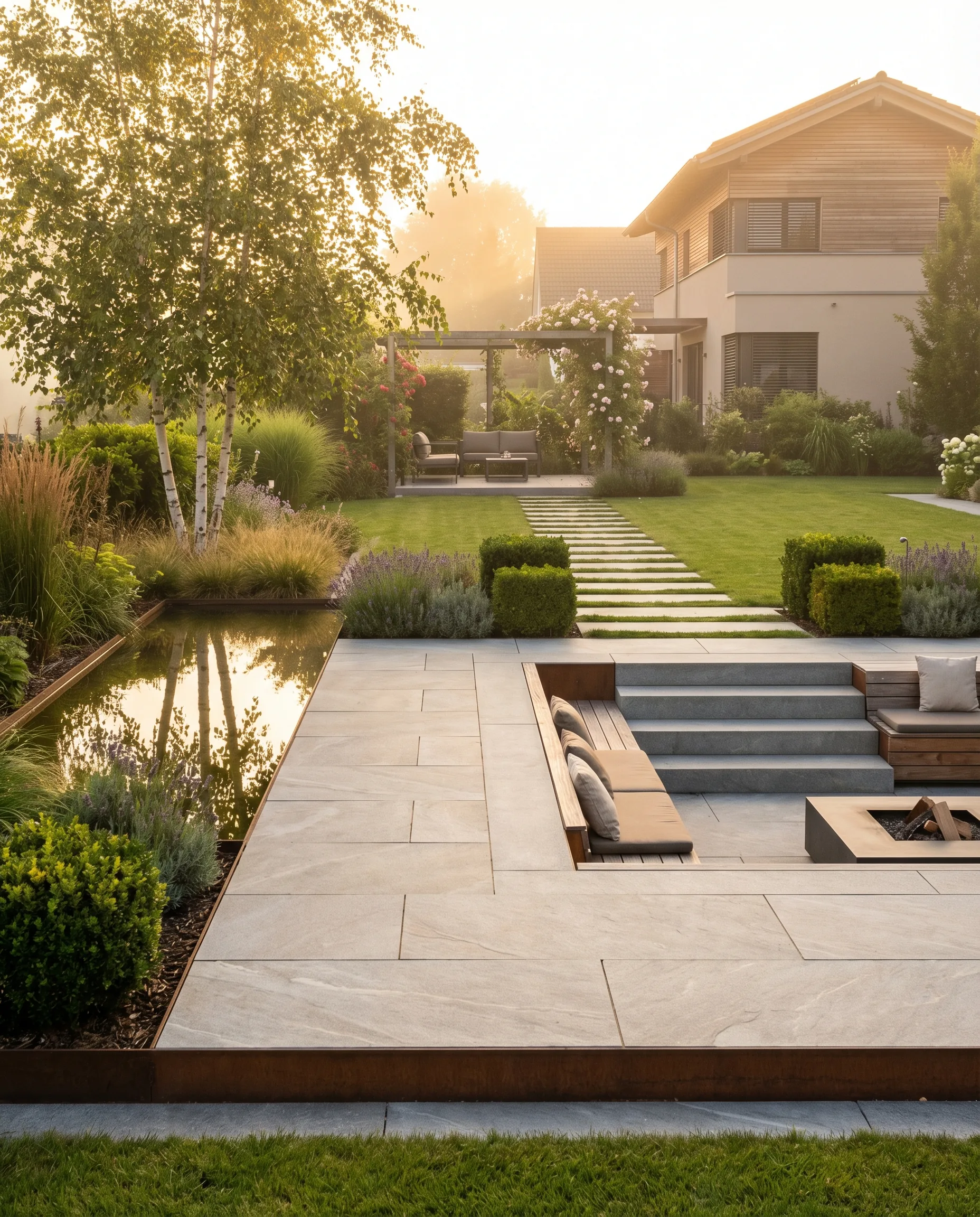
- Fire feature – as a recessed fire bowl, gas fire table, or built-in fire pit as the visual focal point at night
- Outdoor kitchen – grill, prep surface, and sink for ambitious open-air cooking
Evening atmosphere is especially important in modern gardens. A thoughtful lighting plan—with in-ground spots, indirect lighting, and candles—turns the terrace into an atmospheric retreat after sunset.
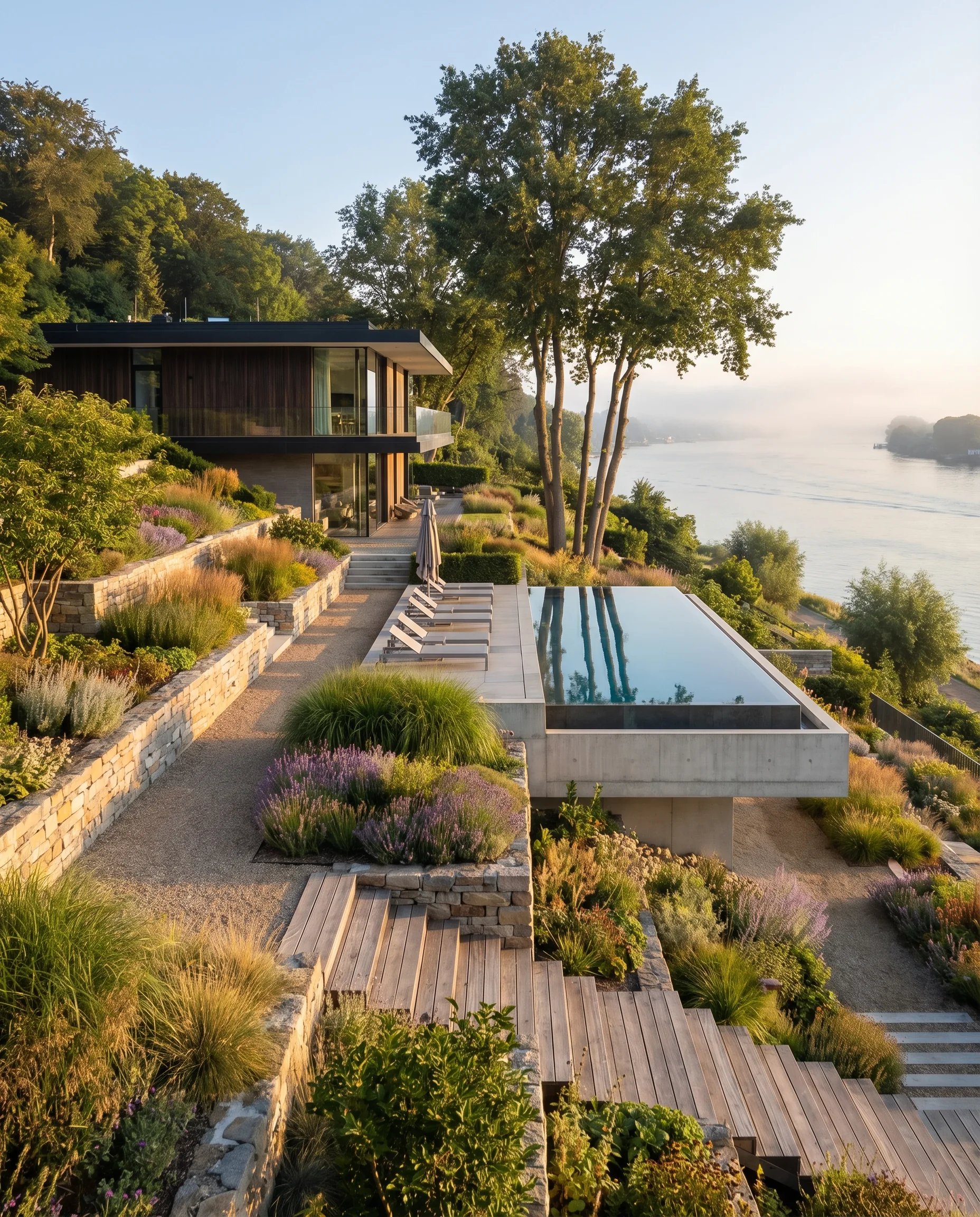
How Terrace and Pool Work Together
Terrace and pool are a powerful duo in modern gardens. The challenge: both elements need to work together visually without competing for attention.
Principles for a cohesive combination:
- Sightlines – the terrace should offer a clear view of the water surface
- Connecting paths – a consistent surface leads from the terrace to the pool
- Zoning – lounging, seating, and pool areas are clearly separated but read as one unit
- Water as an extension – the pool visually prolongs the terrace and adds a sense of openness
When you plan terrace and pool together, you get an outdoor space that feels seamlessly designed. Learn more in our article on the modern garden with pool.
Does a Modern Terrace Also Work in Low-Maintenance Gardens?
Yes—and especially well. A terrace is naturally a low-maintenance surface. With the right choices in materials and planting, the whole area stays easy to care for.
Tips for low-maintenance terraces:
- Large-format slabs – fewer joints mean less weeds and easier cleaning
- Durable furniture – aluminum, stainless steel, or all-weather wicker instead of wooden furniture that needs yearly treatment
- Container plants instead of beds – flexible, easy to maintain, and protected in winter
- Reduced-care zones – the terrace itself needs little, and adjacent areas can be designed with gravel or groundcovers
If you want to dive deeper into upkeep, our article on the low-maintenance modern garden offers practical ideas for the entire outdoor space.
Terrace or Minimalism—Does a Modern Garden Even Need Many Use Zones?
Not every garden needs a large terrace with a lounge, fire feature, and outdoor kitchen. Sometimes a more restrained approach is more effective—especially on smaller plots or when calm matters more than features.
When less is the better fit:
- Small plots – one well-proportioned seating area feels stronger than several cramped zones
- Focus on atmosphere – if the garden is primarily meant to be enjoyed visually rather than actively used
- Architecturally introverted homes – where the garden serves as a quiet backdrop
When an expanded terrace is the better choice:
- Families – different zones for kids, guests, and everyday life
- Active use – frequent grilling, dining, and gathering outdoors
- Large plots – where there’s enough room for a terrace and open space
If you choose the pared-back route, you’ll find the right inspiration in the minimalist garden.
Conclusion
The terrace turns modern garden design into a true living space. It connects architecture and nature, creates comfort, and defines how the garden is used day to day. With a pool, a fire feature, or in pure, minimalist restraint—a well-planned terrace is the heart of every modern garden.
Want to see how the terrace, seating area, and overall garden design will work with your home? With GardenPilot, you can visualize different layouts directly—based on a photo of your house.
Related Articles
- Modern Garden Ideas: Clean Lines, Calm, and Premium Materials
- Modern Garden with Pool: Water, Architecture, and Outdoor Living
- Minimalist Garden: Fewer Elements, More Impact
- Low-Maintenance Modern Garden: Stylish Design with Minimal Effort
Whether terrace and garden form a visual unit depends on material choices and transitions—and the best way to judge that is on your own outdoor space in advance. Upload a photo of your garden and use AI to see how it could look—along with a rough cost range before you invest. That way, you avoid expensive planning mistakes. Visualize your garden with GardenPilot (how it works).
Frequently Asked Questions
Which materials are best for a modern terrace in the garden?
Large-format concrete slabs, porcelain tiles, and untreated or oiled hardwoods such as Bangkirai or thermally modified ash are especially popular. These materials feel minimalist, are durable, and pair beautifully with the clear design language of modern gardens.
How do I plan a terrace that visually matches the house?
Echo materials or color tones from the house façade in your terrace design and prioritize seamless transitions between indoor and outdoor spaces. A matching or similar floor height and floor-to-ceiling doors further strengthen the visual connection between living space and terrace.
How large should a terrace be at minimum in a modern garden?
The minimum size depends on how you plan to use it, but a lounge set or dining table typically needs at least around 20 square meters to allow comfortable movement. As a rule of thumb: the terrace should feel proportional to the size of the house and the overall garden area.
Which plants suit a modern terrace with clean lines?
Ornamental grasses such as fountain grass, evergreen shrubs shaped into spheres, and bamboo as a privacy screen work well because they emphasize the straight-lined aesthetic of modern terraces. Structural plants with a clear silhouette tend to look more elegant than lush, wild perennials planted directly along the terrace edge.
Gallery
Plan your own garden
Upload a photo of your garden and get a professional AI concept in minutes.
Start for freeMore articles from Modern Gardens
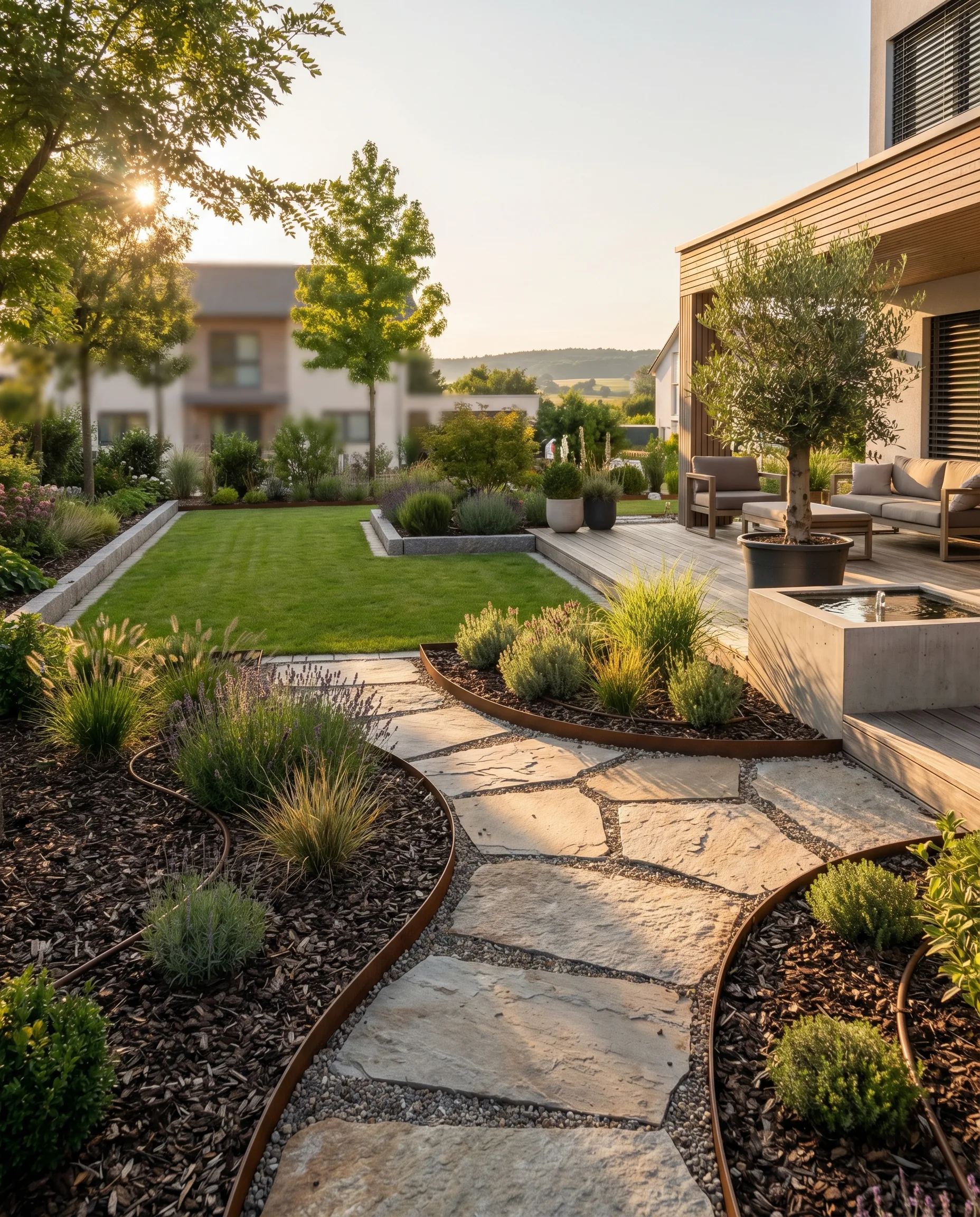
Low-Maintenance Modern Garden: Stylish Design with Minimal Effort
A modern garden can be both stylish and low-maintenance. With fewer plants, clean materials, and a well-planned structure, the workload drops significantly.
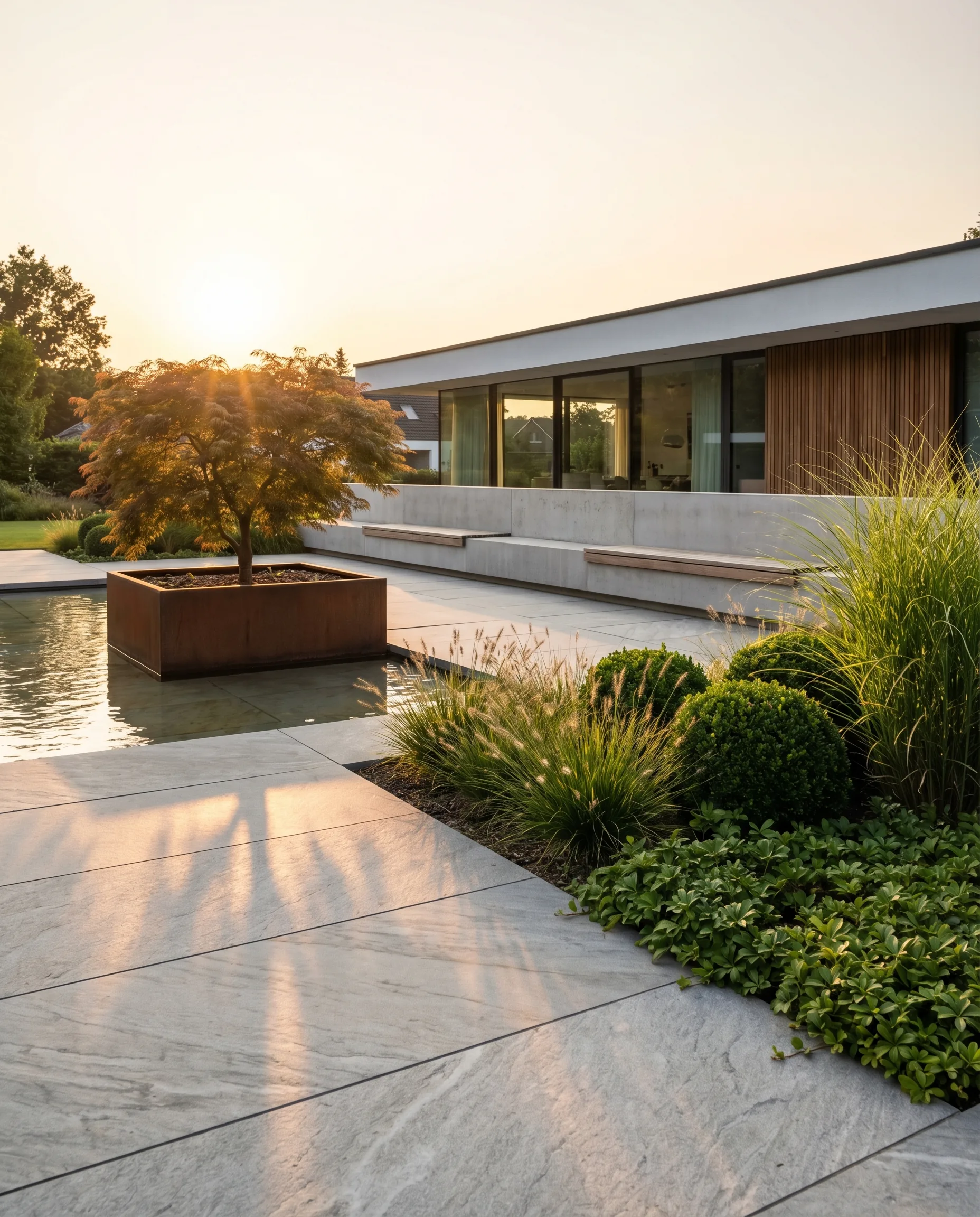
Minimalist Garden: Fewer Elements, Greater Impact
A minimalist garden thrives on reduction, crisp edges, and intentional planting—creating modern garden design with maximum calm and impact.
Modern Garden with Pool: Water, Architecture & Outdoor Living
A modern garden with a pool feels calm, premium, and architectural. Discover how water, materials, and the terrace work together perfectly.