Pergola in the Garden: How to Add Structure, Shade and Atmosphere to Your Outdoor Space
Why a Pergola Fundamentally Changes a Garden
A pergola is more than a source of shade—it’s a space-defining feature that adds a third dimension to your garden. While beds, paths and lawns shape the ground plane, a pergola works with height, depth and overhead structure.
That transforms how the garden feels:
- Spatial definition – a pergola marks out an area without enclosing it. It creates an “outdoor room” with a clear boundary, yet open to the sky.
- Play of light and shadow –
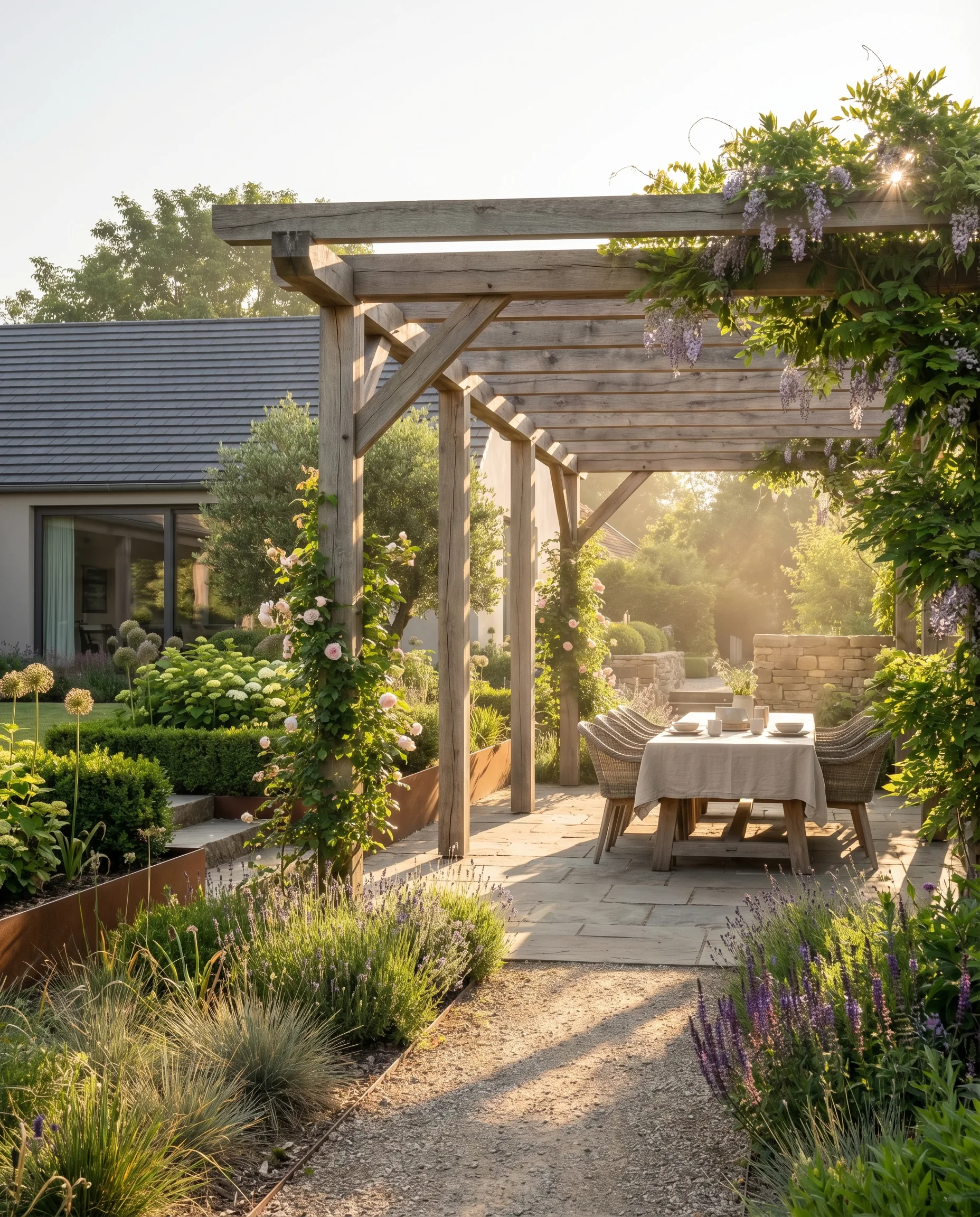
Pergola in the garden with dappled shade and a seating area
the crossbeams cast a rhythmic pattern of light and shade that shifts throughout the day. Few other elements create such a dynamic lighting effect.
- Vertical structure – in gardens that feel flat and uniform, a pergola introduces a strong vertical accent.
- Elevating seating areas – a table under open sky can feel temporary. The same table beneath a pergola feels intentional, furnished and designed.
Pergola Types That Work in the Garden
Not every pergola suits every garden. The right choice depends on your style, your space, and the function you want it to serve.
Freestanding Pergola
The classic form: four or more posts support an open roof structure. Freestanding pergolas work beautifully as central features in the garden—over a seating area, at the end of an axis, or as a transition between two garden zones.
Especially good for: large gardens, central seating areas, focal points
Wall-Mounted Pergola (Lean-To)
One side is fixed to the house or garage wall. Wall-mounted pergolas extend your living space outdoors and create a sheltered zone right by the house.
Especially good for: patios, entrances, transitional areas
Pergola Walkways (Arbors)
Long, narrow pergolas over a path create a pergola walkway—a covered passage that looks particularly striking in larger gardens or along property boundaries. In narrow gardens, a pergola walkway can elegantly break up the sense of length.
Especially good for: guiding circulation, connecting garden rooms, shaping boundaries
Mini Pergola
Two posts with a single crossbeam—used as a gateway, frame or accent. Mini pergolas work on a small footprint and define transitions without taking up much space.
Especially good for: small gardens, entrances to garden areas, climbing supports
Materials for Garden Pergolas
The material sets the pergola’s character—and how harmoniously it integrates with the rest of the garden.
Wood
Effect: warm, natural, welcoming Types: larch, Douglas fir, oak (untreated or oiled), thermowood, Accoya Benefits: versatile, easy to work with, pleasant feel Maintenance: oil or stain every 2–3 years (depending on wood species) Best for: naturalistic and classic gardens, cottage style
Steel (Powder-Coated)
Effect: modern, slender, precise Benefits: slimmer profiles possible, extremely durable, low-maintenance Colors: anthracite, black, dark grey (RAL 7016 is the classic) Best for: contemporary gardens, architectural concepts
Corten Steel
Effect: warm rust tones, sculptural, high-contrast Benefits: combines modernity with a natural surface, ages beautifully Best for: gardens already using Corten steel elements—it creates a consistent material language throughout
Aluminum
Effect: light, modern, maintenance-free Benefits: no rusting, no painting, many color options Best for: lean-to pergolas on modern homes
What Doesn’t Work
Pressure-treated pine (greenish tone, weathers unevenly), plastic profiles (look cheap), or too many material mixes in one structure. A pergola works best with one dominant material.
Where to Place a Pergola in the Garden
Placement determines whether your pergola becomes a centerpiece or feels out of place.
Over the Patio
The most common—and often the most sensible—location. A pergola extends the living area outdoors, provides shade and defines the dining zone. A wall-mounted pergola is the logical choice here.
At the End of an Axis
A freestanding pergola as a destination point—at the end of a path, a lawn, or a sightline. This creates powerful spatial tension. Pair it with a reflecting pool in front of or beneath it to intensify the effect.
As a Room Divider
Placed between two garden areas, a pergola separates without walls. It marks the transition between patio and garden, between utility and ornamental areas, or between private and semi-public zones.
Over a Path
A pergola walkway over the main route creates a special spatial experience and links different parts of the garden.
What to Avoid
Too close to the property boundary (check local setback rules). Too small for the space (a pergola needs presence). No connection to other elements (an isolated pergola in the middle of a lawn can look lost).
Pergolas and Planting
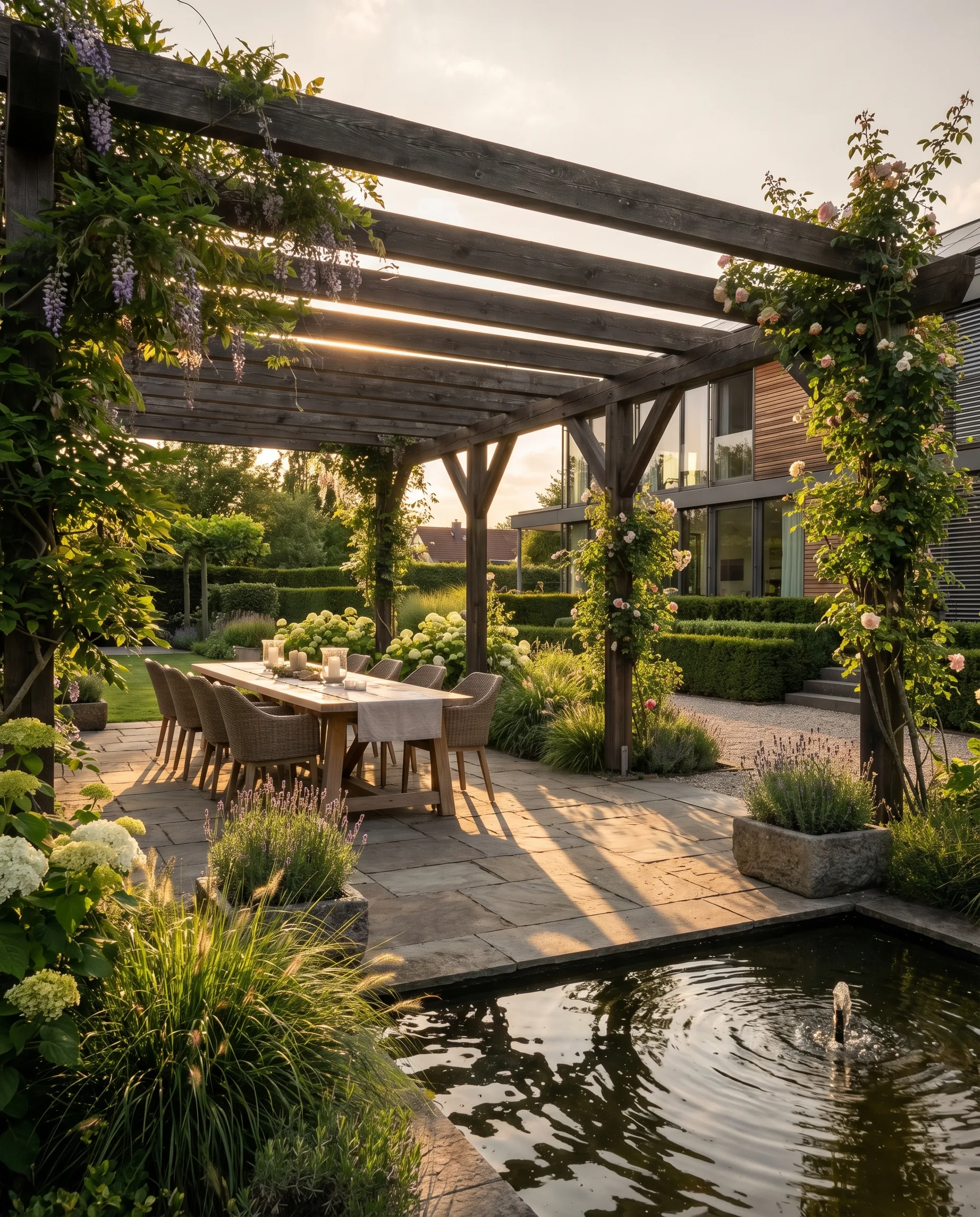
A pergola often reaches its full impact only with the right planting—shifting from a built structure to a living feature.
Climbing Plants
- Wisteria – spectacular bloom, vigorous growth, needs a stable structure
- Climbing rose – romantic and fragrant, but needs care
- Grapevine – shade in summer, airy in winter, edible harvest
- Clematis – many varieties, lighter growth, good for slimmer structures
- Virginia creeper – easy, strong autumn color, fast coverage
Partially Covered vs. Fully Covered
- Partially covered: plants on 1–2 posts, the rest stays open → the structure remains visible and the dappled light effect stays intact
- Fully covered: a green roof, maximum shade → the pergola becomes a leafy walkway or a green room
Planters at the Pergola
Large planters at the base of the posts—planted with grasses, hydrangeas or boxwood—frame the pergola and visually connect it to the surrounding planting.
Pergolas and Lighting
In the evening, a pergola becomes a light feature—if the lighting is done right.
String Lights
The simplest, most atmospheric approach: warm-white LED string lights stretched between the crossbeams. They create an intimate, welcoming ambiance.
Recessed Spotlights
Downlights integrated into the crossbeams illuminate the seating area evenly—functional and discreet.
Indirect Lighting
LED strips mounted beneath the crossbeams or along the posts create linear light that highlights the structure without glare. More on purposeful lighting design in the garden: Garden Lighting – How to Stage Paths, Plants and Seating Areas with Atmosphere.
Lanterns and Candles
For special occasions: hurricane lamps on the table, lanterns on the posts. Real candlelight adds a warmth no LED fixture can truly replicate.
Pergolas in Small Gardens
In a compact space, a pergola doesn’t feel overpowering—it feels space-making. It adds vertical dimension and defines zones.
Wall-Mounted Pergola as a Patio Extension
A slim wall-mounted pergola (depth 200–250 cm) is enough to define a seating area and provide shade. It needs little footprint and uses the existing house wall.
Mini Pergola as an Entry Frame
A simple frame—two posts and a crossbeam—marks the transition from the house into the small garden and instantly adds depth.
Mind the Proportions
In small gardens, the pergola should not be higher than 250 cm and should span no more than one third of the footprint. Otherwise, the balance between covered and open space can feel off.
Permits and Construction
Building Permit
In most German federal states, open pergolas are permit-free as long as they don’t exceed certain dimensions (often max. 30 m² footprint, max. 3 m height). Enclosed roofs (e.g., with a glass roof) often require approval. Your local building regulations are always the definitive source.
Foundations
Each post needs a point foundation (at least 60 cm deep, below the frost line). Post anchors set in concrete are the most secure solution. On existing patios, bolt-down post bases can be used.
Sizing
- Posts: at least 10 x 10 cm (wood) or 6 x 6 cm (steel)
- Crossbeams: at least 6 x 12 cm (wood), spacing 40–60 cm
- Height: 220–280 cm clear height (beneath the crossbeams)
Conclusion
A pergola is one of the most effective design elements in the garden. It creates space, shade and atmosphere—and turns an outdoor seating area into a deliberately designed outdoor living space.
The key lies in three decisions:
- Match material to style – wood for warmth, steel for precision, Corten for contrast
- Place it with purpose – over the patio, at the end of an axis, or as a room divider
- Complete it with planting – climbers bring the pergola to life
Plan these three points well, and you’ll gain an element that will shape your garden for years to come.
Next Step
Want to see how a pergola would look in your garden? With GardenPilot, you can visualize different options directly based on your property.
Explore More Garden Elements
- Garden Path Ideas – How to Style Paths in the Front Garden
- Reflecting Pool in the Garden – Calm Water Surfaces as a Stylish Design Feature
- Corten Steel in the Garden – Use Warm Contrasts and Crisp Edges the Modern Way
- Garden Lighting – How to Stage Paths, Plants and Seating Areas with Atmosphere
A pergola transforms the entire outdoor space: see in advance whether the position, size and material will feel right in your garden before you build. Upload a photo of your garden and use AI to see how it could look—complete with a rough cost range before you invest. That way you avoid costly planning mistakes. Visualize your garden with GardenPilot (how it works).
Frequently Asked Questions
Which plants are best for greening a pergola?
Proven climbing plants for pergolas include grapevine, wisteria, climbing roses and clematis. They reliably climb up the supports and quickly form a dense, shade-giving canopy of leaves.
How deep do pergola posts need to be set into the ground?
A common rule of thumb is that posts should be anchored about one third of their total length into the ground. In soft or wet soil, an additional concrete foundation is recommended to ensure long-term stability.
Which wood is most durable for an outdoor pergola?
Particularly weather-resistant woods for outdoor use include larch, Douglas fir and black locust (robinia), as they naturally have high resin content and density. If you want to avoid tropical hardwoods, native black locust is an excellent choice—and can even eliminate the need for pressure treatment.
Do you need a building permit for a pergola in the garden?
Whether a permit is required depends on the pergola’s size and the applicable regional building regulations. In many German federal states, smaller, open pergolas are permit-free—still, you should confirm requirements with your local building authority before construction.
Gallery
Plan your own garden
Upload a photo of your garden and get a professional AI concept in minutes.
Start for freeMore articles from Garden Elements
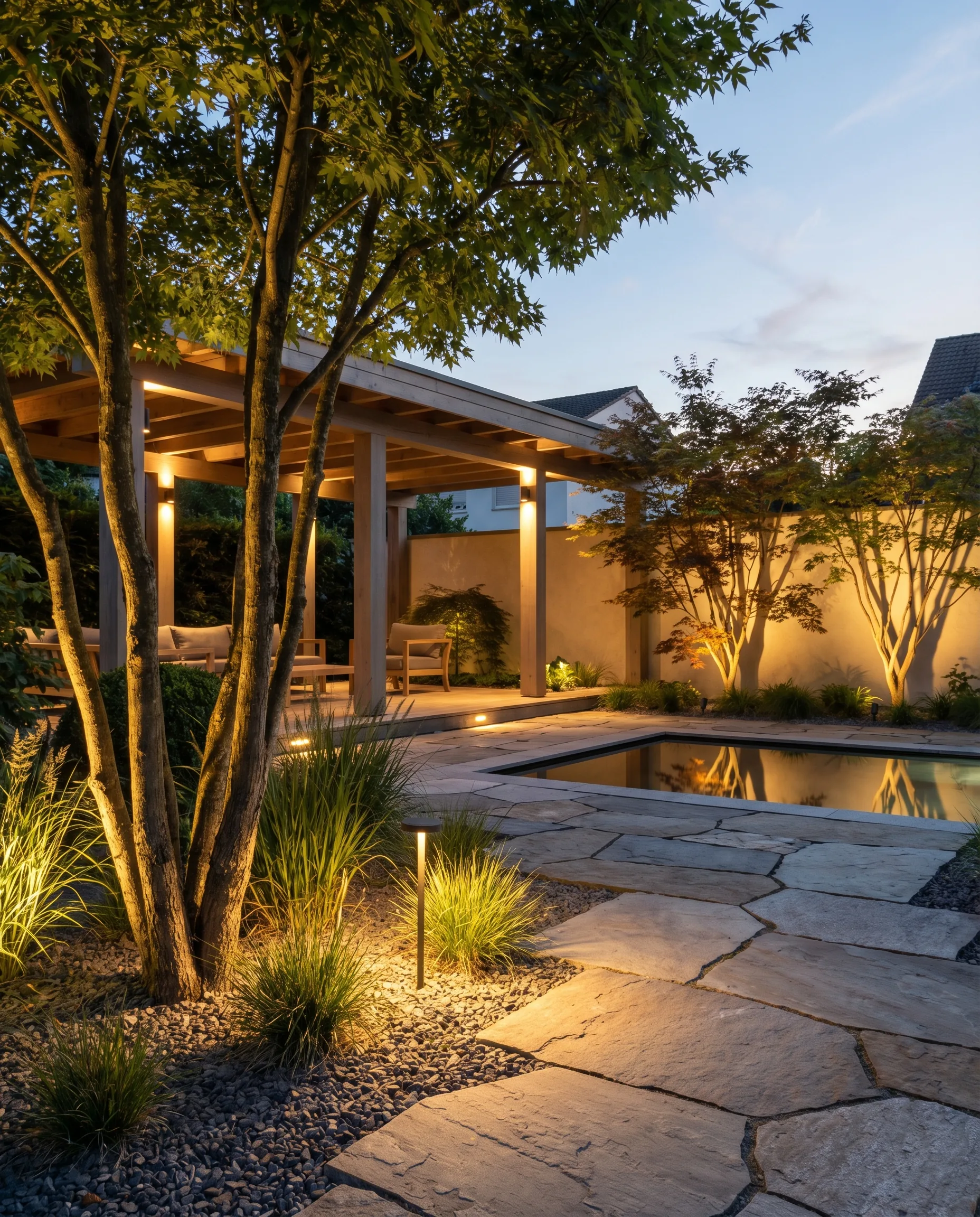
Garden Lighting: Create Atmosphere for Paths, Plants & Seating Areas
With the right garden lighting, paths, plants, water features and seating areas become the evening highlight. Here’s how to plan your lighting with atmosphere and intention.
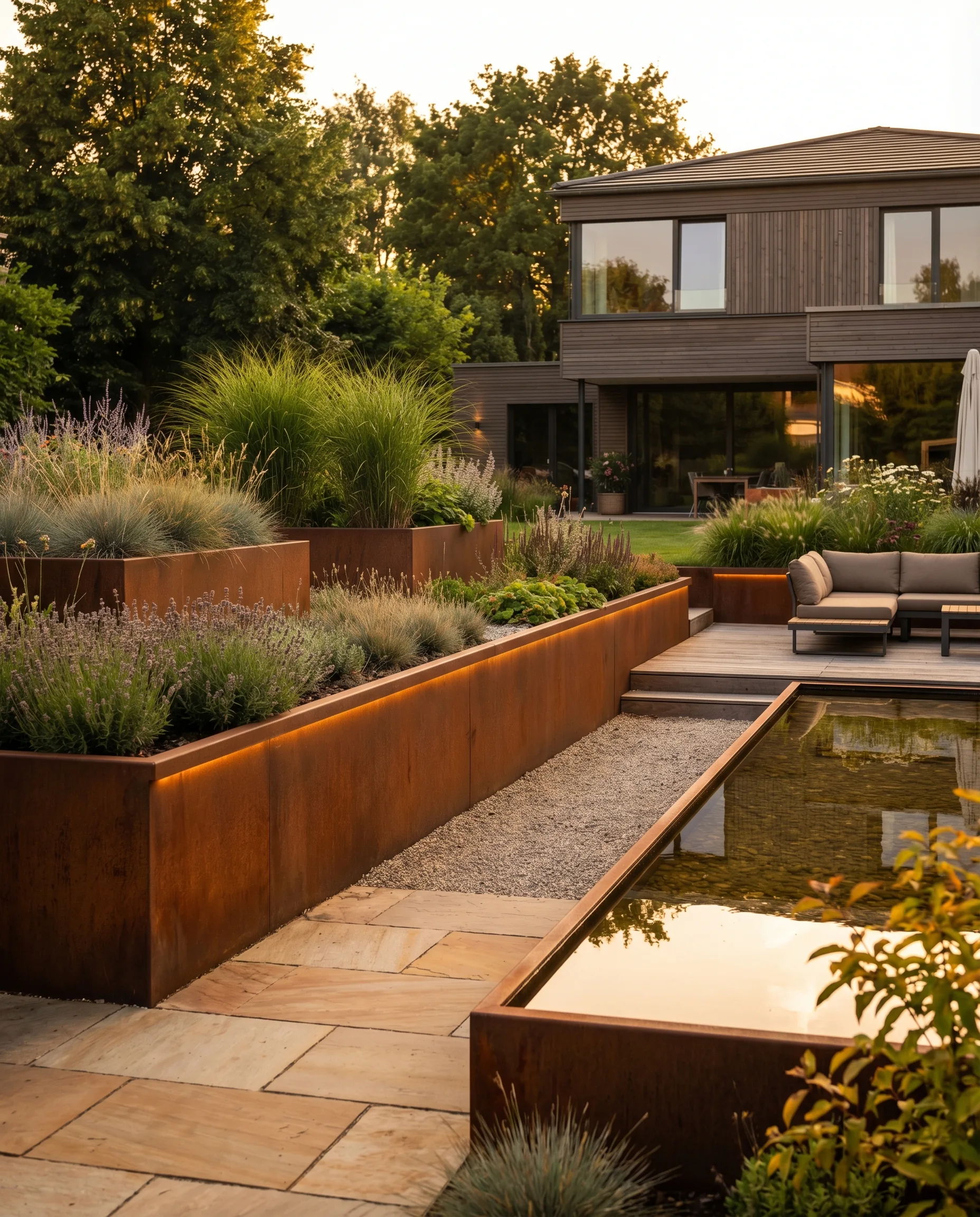
Corten Steel in the Garden: Using Warm Contrasts and Crisp Edges in a Modern Way
Corten steel brings warmth, texture, and crisp edges to the garden. Here’s how to use the material for bed edging, water basins, privacy screens, and accents.
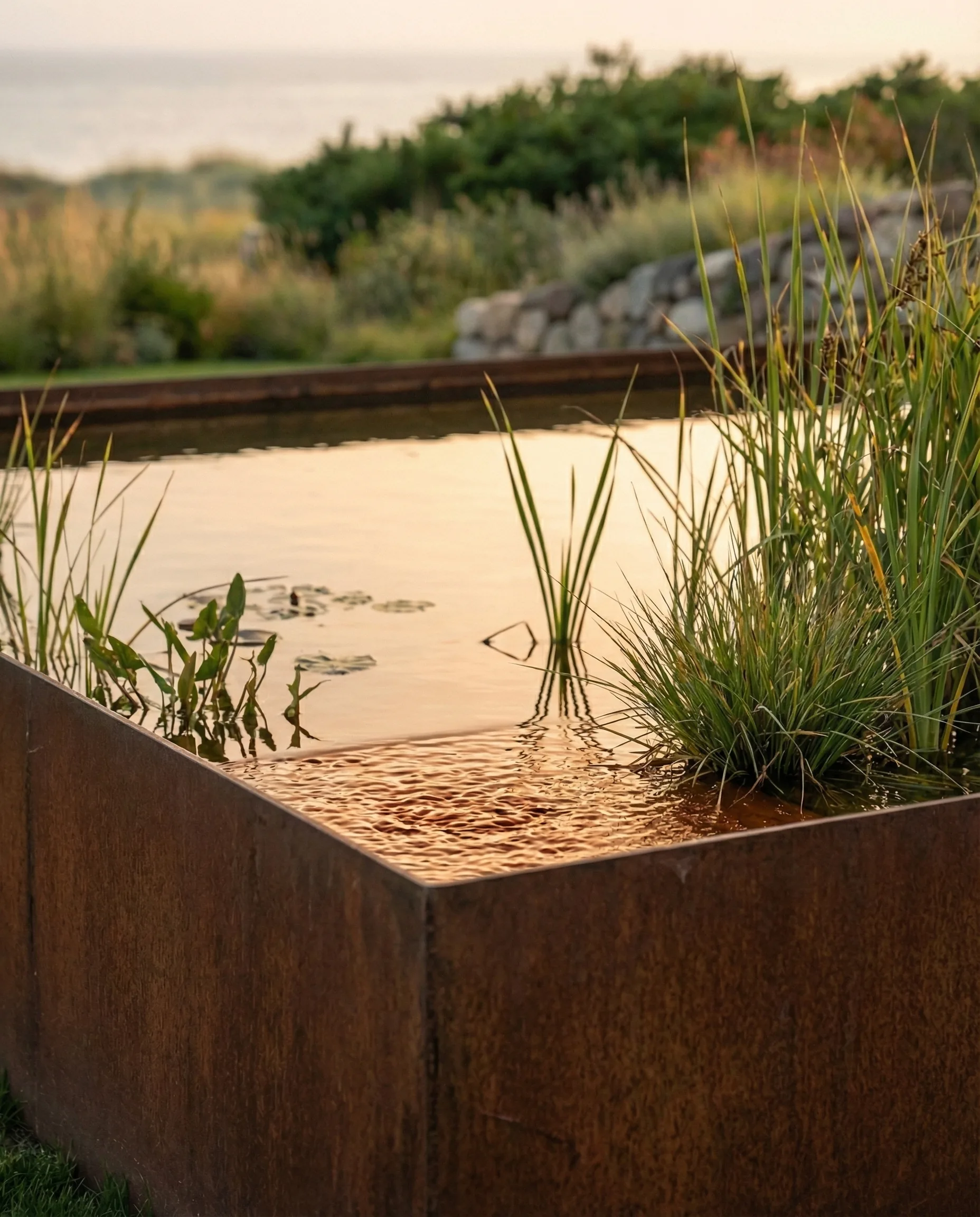
Garden Water Basins: Calm Surfaces as a Stylish Design Feature
Water basins bring calm, reflection and visual depth to the garden. Here’s how to plan shape, material and placement for a water feature that looks effortlessly refined.