Corten Steel in the Garden: How to Use Warm Contrasts and Crisp Edges with Style
Why Corten Steel Is So Popular in the Garden
Corten steel—also known as weathering steel or “rusted steel”—has evolved in recent years from a niche product into a go-to material in modern garden design. And for good reason:
- Warm color – the rust-brown patina creates a rich, earthy tone that suits almost any planting
- Crisp edges – Corten steel can be formed into slim, precise profiles that deliver clean transitions
- Natural aging – the material changes over time, becoming more characterful and unique
- Low maintenance – after the initial patina phase (approx. 6–12 months), the surface stabilizes and requires virtually no upkeep
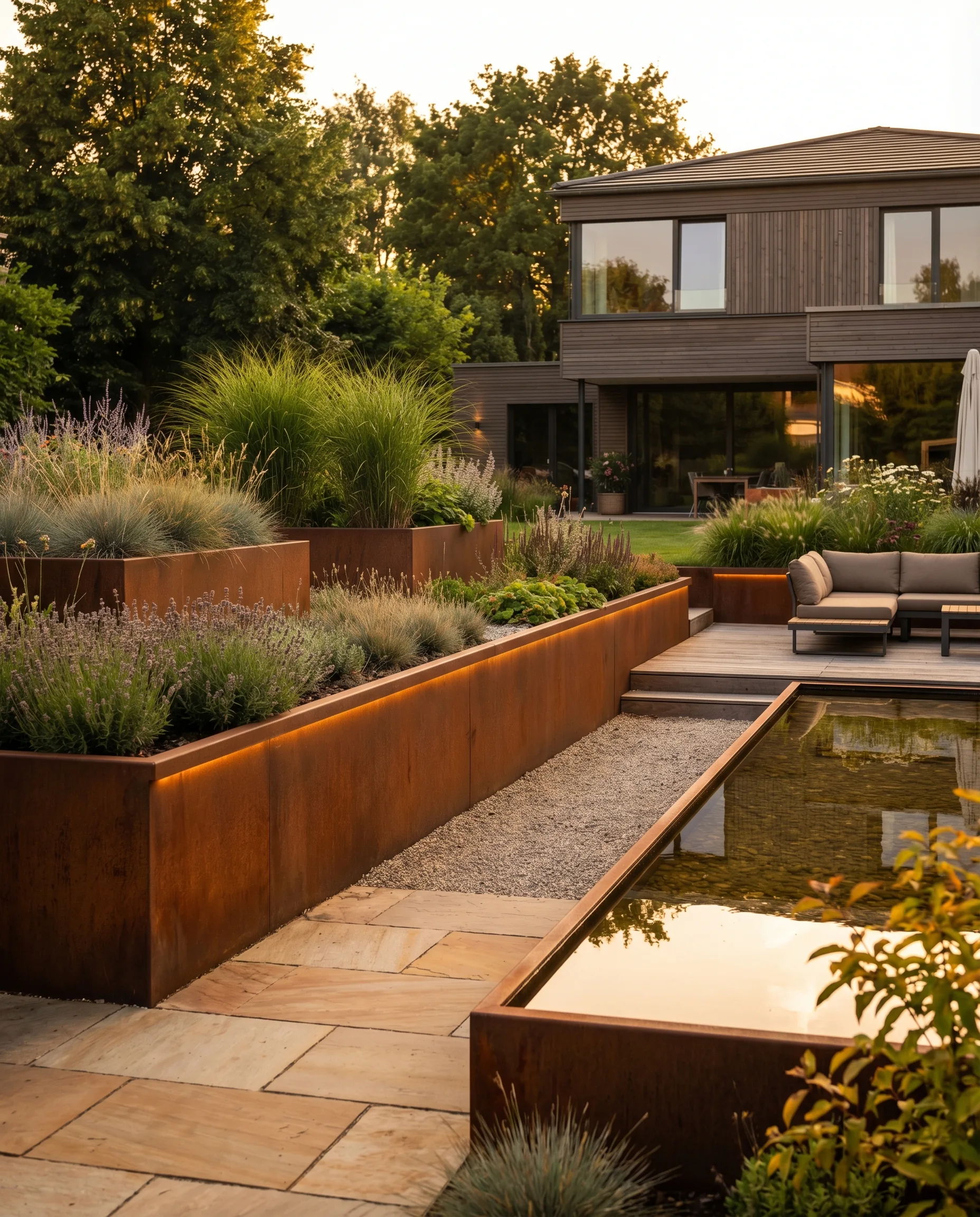
Corten steel brings together the best of both worlds: the precision of modern materials and the warmth of natural surfaces.
Corten Steel as Bed Edging
The most common—and arguably most effective—use: Corten steel as a boundary between planting beds and paths, lawn, or gravel areas.
Why It Works So Well
A Corten edge separates materials cleanly—gravel stays gravel, soil stays in the bed, and lawns get a sharp border. That reduces maintenance and looks noticeably more premium than plastic or concrete edging.
Typical Dimensions
- Height: 15–25 cm (visible above ground)
- Material thickness: 2–3 mm for bed edging, 3–5 mm for raised beds
- Lengths: usually sold by the meter or in 2-meter elements
Design Tips
- Corten steel edging in flowing curves looks especially good in naturalistic gardens
- In straight lines and axes, it emphasizes the architectural structure of a modern garden
- Combined with clear path design, it creates a consistently high-end feel
What to Avoid
Profiles that are too thin (under 2 mm) will bend over time. Messy joints are particularly noticeable with Corten steel—installation must be precise.
Corten Steel Raised Beds
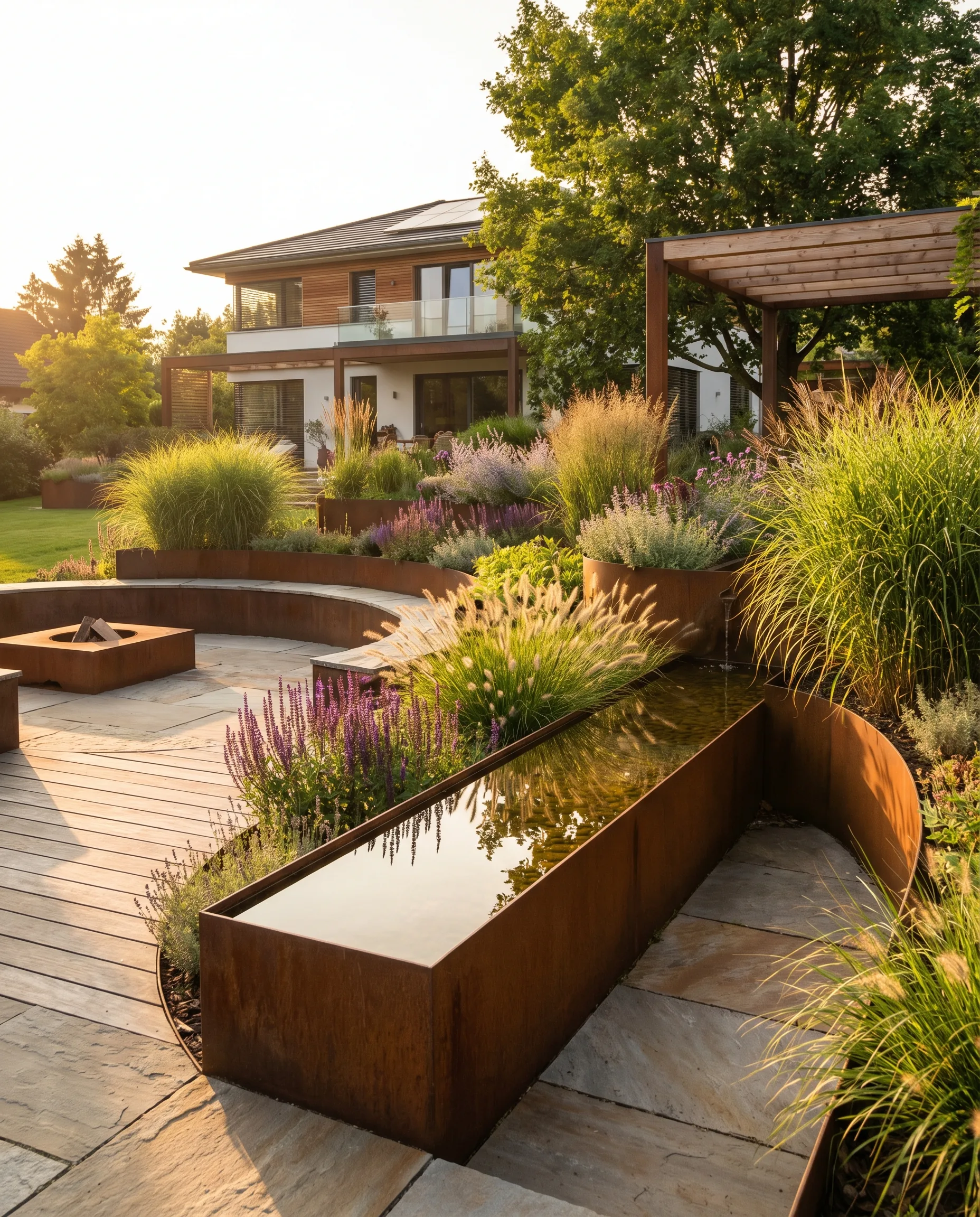
Corten steel raised beds are an elegant alternative to wood, stone, or gabions. They look sleeker, more modern, and built to last.
Benefits Over Wood
- No rotting, no repainting, no wood preservatives
- Thinner walls (3–5 mm instead of 4–8 cm with timber) → more usable interior volume
- Even patina instead of patchy weathering
Typical Shapes
- Rectangular: classic, fits modern gardens
- L-shaped or U-shaped: ideal for terrace corners and zoning
- Round or organic: a focal point for naturalistic gardens
Pairing with Planting
Corten steel pairs beautifully with ornamental grasses, silver-leaved perennials, and deep green foliage. The warm rust tone creates a natural contrast to cooler greens.
Corten Steel as a Privacy Screen and Wall Feature
Corten steel walls and panels offer a contemporary alternative to hedges, timber fencing, or masonry walls.
Solid Panels
Full-surface Corten steel walls (height 150–200 cm) provide complete privacy while feeling lighter than solid masonry. They work especially well as a backdrop for planting beds or water features.
Perforated Panels
Laser-cut patterns—geometric or organic—let light through and create shadow play on the ground and surrounding surfaces. Perforated Corten elements are privacy screens and art pieces at once.
Integrating Lighting
Backlit Corten panels come into their own in the evening. LED strips or spots placed behind the panel make the perforations glow—more on garden lighting here.
Corten Steel and Water
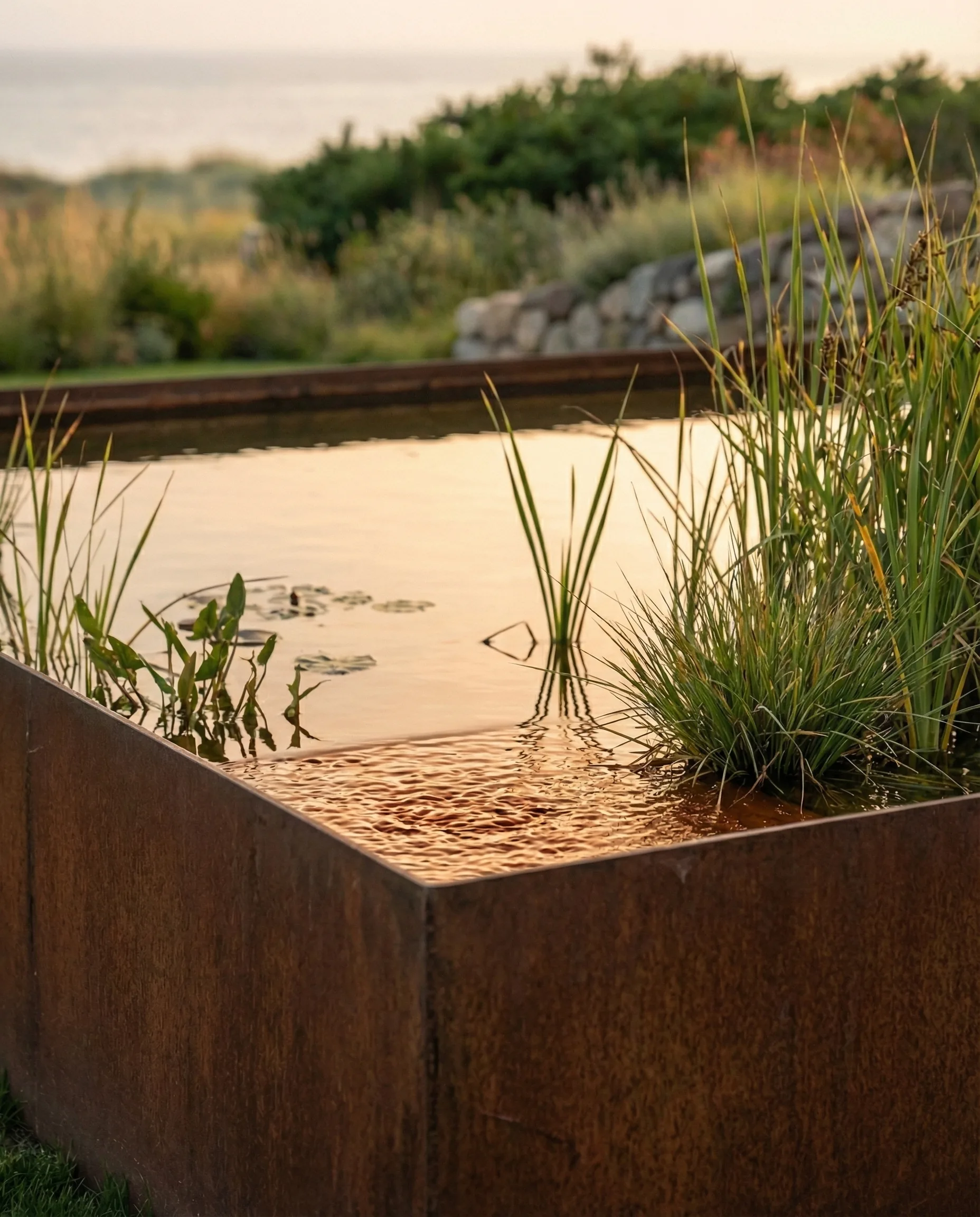
The combination of Corten steel and water is one of the most striking material pairings in garden design.
Water Basins in Corten Steel
A water basin with a Corten steel surround—or made entirely from Corten—brings two contrasts together: warm rust and cool water. Reflections intensify the color effect even further.
More on shape, placement, and materials for water basins: Garden Water Basins – Calm Water Surfaces as a Stylish Design Element
Water Walls and Waterfall Elements
Water flowing over a Corten steel wall creates a soothing sound and a captivating color effect—the rust tone becomes even richer under the thin film of water.
Technical Note
Corten steel is water-resistant, but rust particles can stain light-colored surrounding surfaces. For ground-level basins or channels, the splash zone should be edged with dark materials (gravel, basalt).
Corten Steel in Modern Gardens
In contemporary garden design, Corten steel is one of the defining materials. It brings warmth to minimalist concepts without breaking the clean lines.
Typical Applications
- Steps and walls: Corten cladding on concrete steps or retaining walls
- Planters: freestanding or built-in planters as accents
- House numbers and signage: small details that carry the material language from garden to facade
- Terrace edges: a clean separation between decking or paving and adjacent planting
Combining with Other Materials
Corten steel looks best in contrast:
- With concrete → modern and monolithic
- With wood → warm and inviting
- With natural stone → natural and premium
- With gravel → minimalist and low-maintenance
Corten Steel in Naturalistic Gardens
Even though Corten steel is often associated with modern design, it fits just as well in naturalistic gardens—when applied thoughtfully.
Why It Works
The rust patina is a natural-looking surface. It evokes earth tones, weathered iron, and autumn foliage. In a naturalistic garden, Corten blends in rather than shouting for attention.
Flowing Edges
In naturalistic gardens, Corten steel edging is laid not in straight lines, but in gentle curves. This creates smooth transitions between planting areas and paths.
Pairing with Wild Perennials
Corten steel beside yarrow, coneflower, sage, or grasses—the harmony between rust-brown and warm flower tones feels effortless and convincing.
Care and Patina Development
Corten steel is low maintenance—but the first few months require a bit of attention.
The Patina Phase
In the first 6–12 months, the protective rust layer forms. During this time, rust runoff can occur and stain adjacent surfaces. Light-colored natural stone, white walls, or timber decks should be protected during this phase.
After Patina Has Formed
The surface becomes stable, virtually maintenance-free, and self-healing—minor scratches will patina over on their own. Cleaning is usually unnecessary.
What Can Damage Corten Steel
- De-icing salt attacks the patina
- Permanent contact with soil without drainage can lead to corrosion through
- Chlorinated water (e.g., pool water) can affect the surface
Protective Construction Details
Corten elements should always sit on a drainage layer (gravel, chippings), not directly on compacted soil. Drainage slots at the bottom edge prevent standing water.
Does Corten Steel Suit Every Garden?
Especially Well Suited For
- Modern gardens with clean lines
- Naturalistic gardens with a warm color palette
- Gardens that need structure without feeling heavy
- As a complement to a pergola or as a frame for seating areas
Less Suitable For
- Strongly coastal or Mediterranean gardens (salt accelerates corrosion)
- Directly adjacent to light facades (rust marks during the patina phase)
- If a very cool, silvery tone is desired → aluminum or galvanized steel is a better choice
Conclusion
Corten steel is more than a trend—it’s a timeless design material that combines warmth, precision, and natural aging. Whether as bed edging, raised beds, privacy screens, or water basins: Corten steel adds structure to the garden without making it feel cold.
The key is the right balance: use Corten as an accent, not as the main material. That’s when it delivers its full impact.
Next Step
Want to see how Corten steel elements would look in your garden? With GardenPilot, you can visualize different materials and design options directly based on your property.
Discover More Garden Elements
- Garden Path Ideas – Styling Paths in the Front Garden with Elegance
- Garden Water Basins – Calm Water Surfaces as a Stylish Design Element
- Pergola in the Garden – Structure, Shade, and Atmosphere Outdoors
- Garden Lighting – Showcasing Paths, Plants, and Seating Areas with Ambience
See how Corten steel beds and privacy walls would look in your garden before the first spade goes into the ground—and whether the budget fits your plans. Upload a photo of your garden and use AI to see how it could look—complete with a rough cost range before you invest. This helps you avoid expensive planning mistakes. Visualize your garden with GardenPilot (how it works).
Frequently Asked Questions
Will Corten steel rust through and damage the soil or nearby plants?
Corten steel forms a protective oxidation layer called a patina and—unlike standard steel—does not rust through. Early on, rust particles can wash off and slightly discolor nearby soil, but damage to plants is not expected.
How long does it take for Corten steel to develop its typical rust patina?
The characteristic rust-brown surface develops within a few weeks to several months, depending on weather and moisture. Alternating wet and dry periods speed up the process, while consistently dry conditions slow patina formation.
What thickness should Corten steel have for garden bed edging?
For bed edging, profiles with a thickness of at least 3 mm are recommended, as thinner material can bend or ripple over time. For freestanding elements such as raised beds or water basins, thicknesses from 5 mm are significantly more stable and durable.
Can Corten steel be installed directly next to a house wall or a terrace made of light stone?
You should allow a small gap or use a separation layer, as rust runoff can permanently stain light natural stone or concrete surfaces a yellow-brown hue. Once rust stains set into porous materials, they are very difficult to remove.
Gallery
Plan your own garden
Upload a photo of your garden and get a professional AI concept in minutes.
Start for freeMore articles from Garden Elements
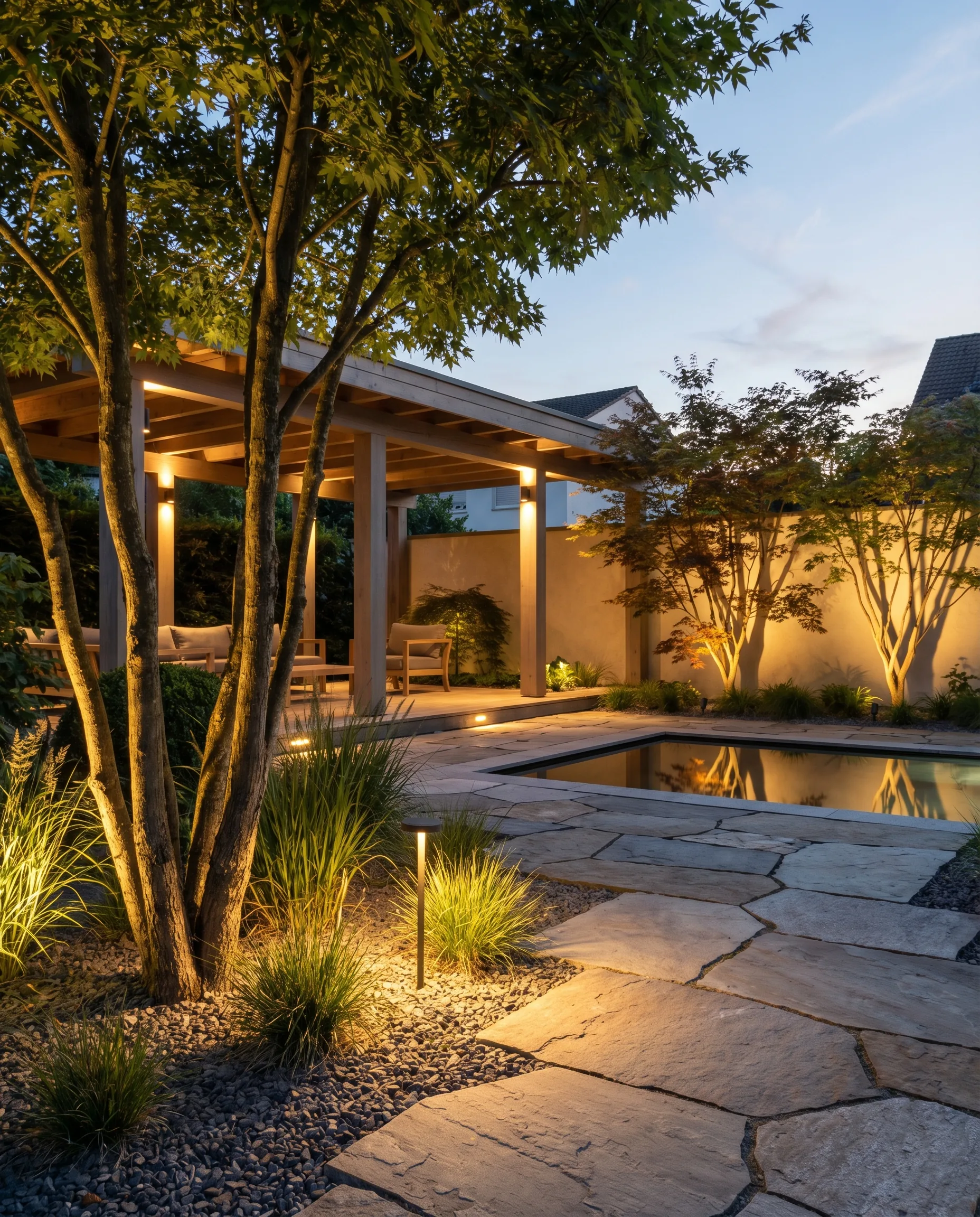
Garden Lighting: Create Atmosphere for Paths, Plants & Seating Areas
With the right garden lighting, paths, plants, water features and seating areas become the evening highlight. Here’s how to plan your lighting with atmosphere and intention.
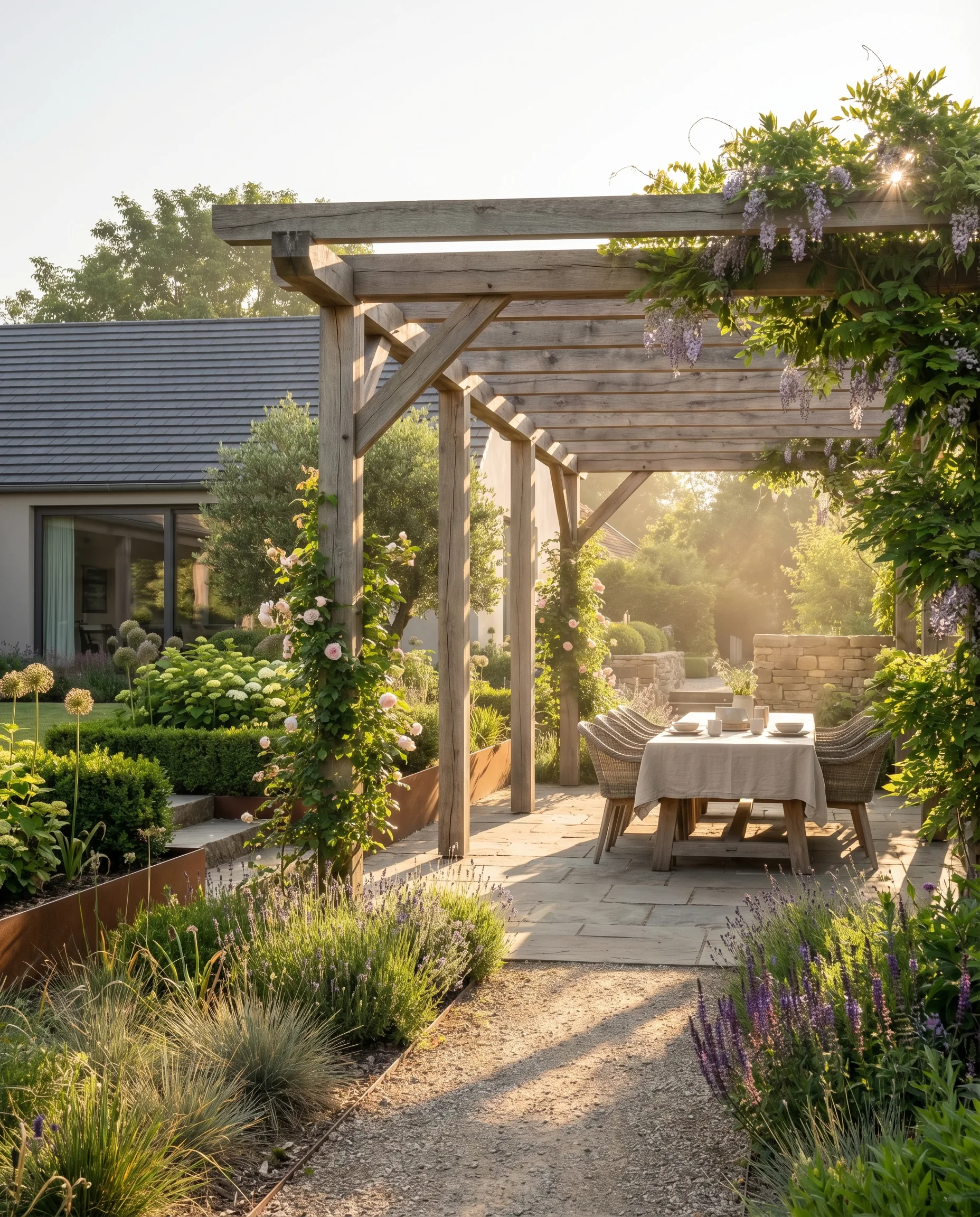
Garden Pergola: Structure, Shade and Atmosphere Outdoors
A pergola brings structure, shade and atmosphere to your garden. Here’s how to plan materials, planting and placement for a stylish outdoor space.
Garden Water Basins: Calm Surfaces as a Stylish Design Feature
Water basins bring calm, reflection and visual depth to the garden. Here’s how to plan shape, material and placement for a water feature that looks effortlessly refined.