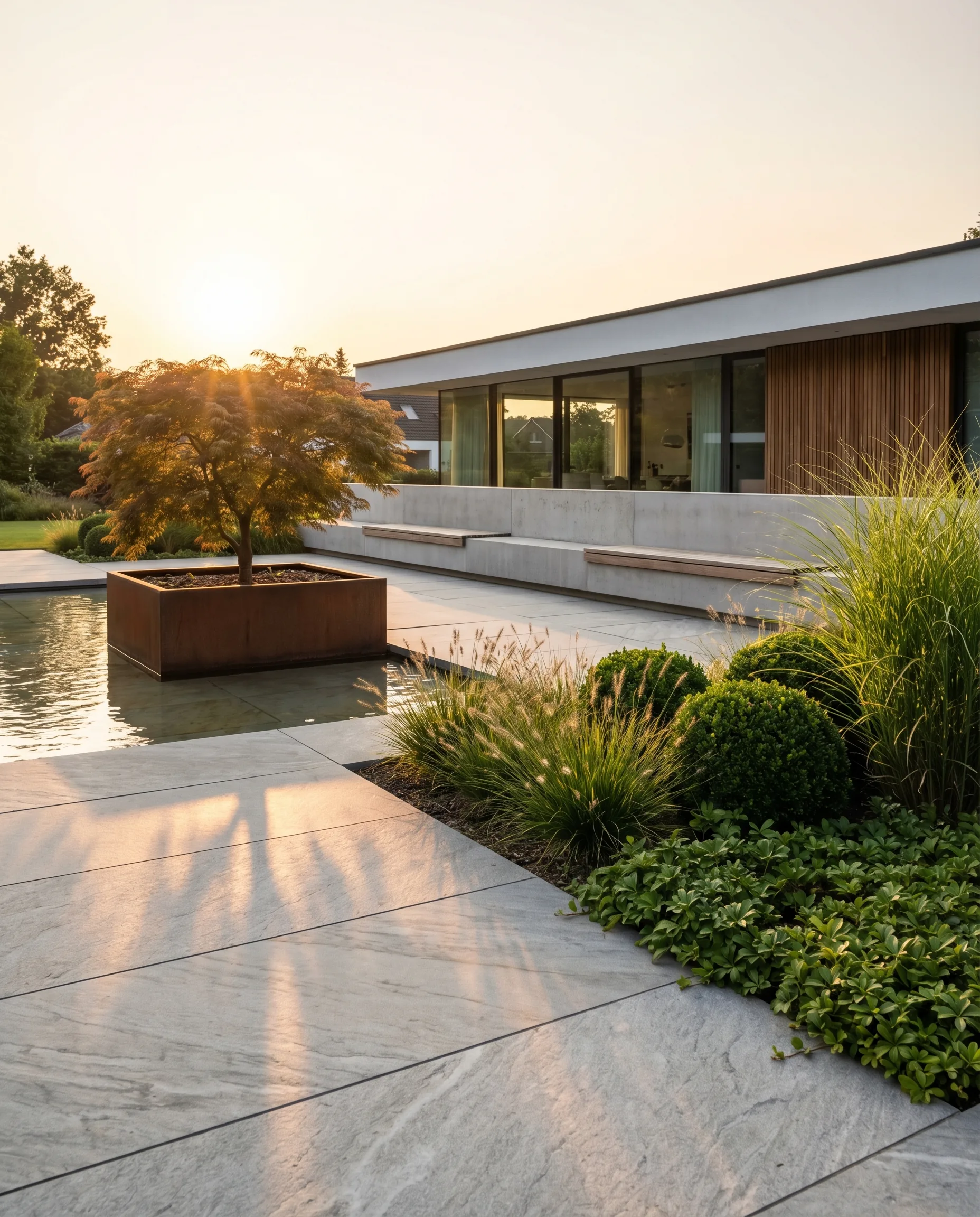
Designing a minimalist garden: Why less instantly feels more premium
A minimalist garden isn’t an empty garden. It’s a garden where every element is placed with intention—and where leaving things out has just as much design power as adding them. If you want to design your garden in a minimalist style, you’re choosing clarity, calm, and a consistent focus on what truly matters.
What minimalism in the garden really means
Minimalism in the garden doesn’t mean having as little as possible. It means using only what serves a design purpose. The result is an outdoor space that feels calmer right away—without looking bare or lifeless.
The core principles of a minimalist garden:
- Focus instead of abundance – fewer elements that make a stronger statement
- Intentional selection – every plant, every surface, every material has a role
- Calm, open areas – negative space creates a sense of width and order
- Clear structure – nothing is random; everything follows an internal logic
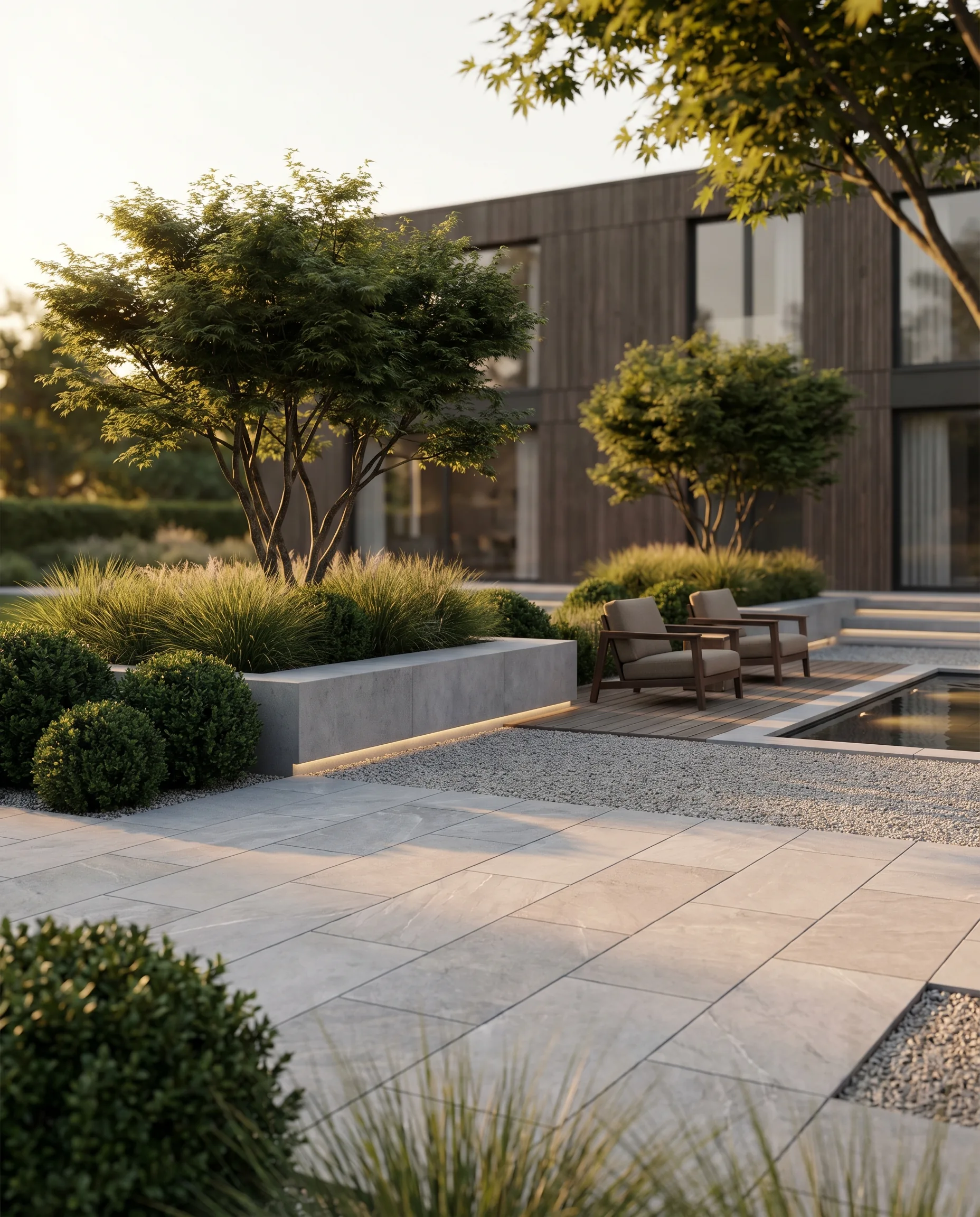
A minimalist garden is defined by the discipline to deliberately leave things out—and that’s exactly what makes it so powerful.
Shapes, axes, and crisp edges
The design language is the heart of every minimalist garden concept. While naturalistic gardens work with soft, organic transitions, a minimalist garden is all about precision.
Typical design elements:
- Straight lines – paths, bed edging, and walls run clean and linear
- Reduced geometry – a few basic shapes like rectangles, squares, or circles define the space
- Symmetry or asymmetrical balance – both work, as long as they’re intentional
- Guiding the eye – clear axes direct the view and create depth
The edges between materials—such as lawn and stone, or gravel and planting beds—are especially important in minimalist gardens. They define zones and give the space its structure.
Which plants work in minimalist gardens
A minimalist garden isn’t about giving up plants—it’s about using them with purpose. Fewer species, but in larger drifts, or a single bold specimen as a statement.
Plants that work particularly well:
- Ornamental grasses – Miscanthus, Calamagrostis, or Stipa add movement and lightness
- Evergreen structural plants – yew, box spheres, or Ilex provide year-round form
- Statement specimens – a distinctive tree or sculptural plant as a focal point
- Groundcovers in large areas – instead of colorful variety, a calm, uniform base planting
What’s typically avoided in minimalist gardens: too many different species, wild color mixes, and uncontrolled growth. Planting follows the same principle as the architecture—reduction and control.
Materials with a calm presence
In minimalist gardens, the choice of materials is just as important as planting. Quiet, high-quality materials play a major role in the overall effect.
Materials that fit especially well:
- Large-format natural stone – slabs in a consistent size create calm, expansive surfaces
- Exposed concrete – crisp, modern, industrial—ideal for walls, seating, or edging
- Wood as a warm counterpoint – thermowood or larch adds warmth against cooler surfaces
- Fine gravel areas – mineral surfaces in a uniform grain feel structured and serene
The principle: a maximum of two to three materials throughout the entire garden. Each material gets its own zone, and transitions are clean and clearly defined.
Minimalist or low-maintenance—is it the same thing?
A common question: Is a minimalist garden automatically low-maintenance? The answer: There’s overlap, but it’s not the same.
Similarities:
- Fewer plant species usually mean less routine care
- Crisp edges and durable materials reduce ongoing repairs
- Gravel areas and groundcovers often need less attention than traditional planting beds
Differences:
- Minimalism demands precision—neglected edges stand out immediately
- Exposed concrete and natural stone need care to stay looking premium
- Topiary and shaped shrubs require regular trimming
A minimalist garden can be low-maintenance, but it doesn’t have to be. If your goal is specifically a low-maintenance modern garden, you should prioritize low-effort plants and materials from the very start.
When a minimalist garden suits you better than a garden with a pool or terrace
Not every modern garden needs a pool or a large terrace. Sometimes less really is more—especially in these situations:
- Small to medium spaces – in limited areas, reduction often has more impact than adding features
- Atmosphere first – when calm and aesthetics matter more than usable surface area
- Introverted gardens – courtyards, front gardens, or side areas that should stand on their own
- Calm as the main goal – a retreat that visually relieves rather than overwhelms
If, on the other hand, outdoor living and active use are the priority, a modern garden with a pool or a modern garden with a terrace is often the better solution. Both can still be combined with minimalist elements.
Conclusion
Minimalism is the most consistent form of modern garden design. A minimalist garden doesn’t rely on decoration or variety, but on precision, material quality, and the courage to reduce. Fewer elements don’t mean less impact—just more clarity, more calm, and more design strength.
Want to find out how much reduction your garden can handle? With GardenPilot, you can compare minimalist and more fully equipped versions side by side—based on a photo of your home.
Further reading
- Modern Garden Ideas: Clean Lines, Calm, and High-Quality Materials
- Modern Garden with Pool: Water, Architecture, and Outdoor Living
- Low-Maintenance Modern Garden: Clear Structure, Minimal Effort
- Modern Garden with Terrace: Extending Living Space Outdoors
In a minimalist garden, every wrong decision is immediately visible—which makes it even more important to test the effect of materials and planting in your own space beforehand. Upload a photo of your garden and use AI to see how it could look—complete with a rough cost range before you invest. This helps you avoid expensive planning mistakes. Visualize your garden with GardenPilot (here’s how it works).
Frequently asked questions
Which plants are especially suitable for a minimalist garden?
Minimalist gardens benefit from plants with a clear form and long-lasting presence—such as grasses like Pennisetum, structural trees like hornbeam, or low-maintenance perennials like lavender and yarrow. The key is to repeat a small number of species consistently to create a calm, cohesive look.
How do you design a minimalist garden in a small space?
In small spaces, minimalism is especially effective because clean lines, a uniform hardscape, and a few strategically placed plants make the area feel larger. Avoid too many different materials and keep the color palette of plants and surfaces intentionally tight.
How much maintenance does a minimalist garden really need?
Over time, a minimalist garden can be lower-maintenance than a densely planted one, but it requires precise care at the beginning to keep edges, surfaces, and pruning crisp. Weeds stand out much more in a reduced design, so good ground coverage or high-quality mulch is a smart choice.
Which materials suit a modern minimalist garden?
Proven materials include corten steel for bed edging, grey or anthracite concrete for paths and paving, and natural hardwood for terraces. What matters most is combining as few materials as possible—and carrying them consistently throughout the entire garden.
Gallery
Plan your own garden
Upload a photo of your garden and get a professional AI concept in minutes.
Start for freeMore articles from Modern Gardens
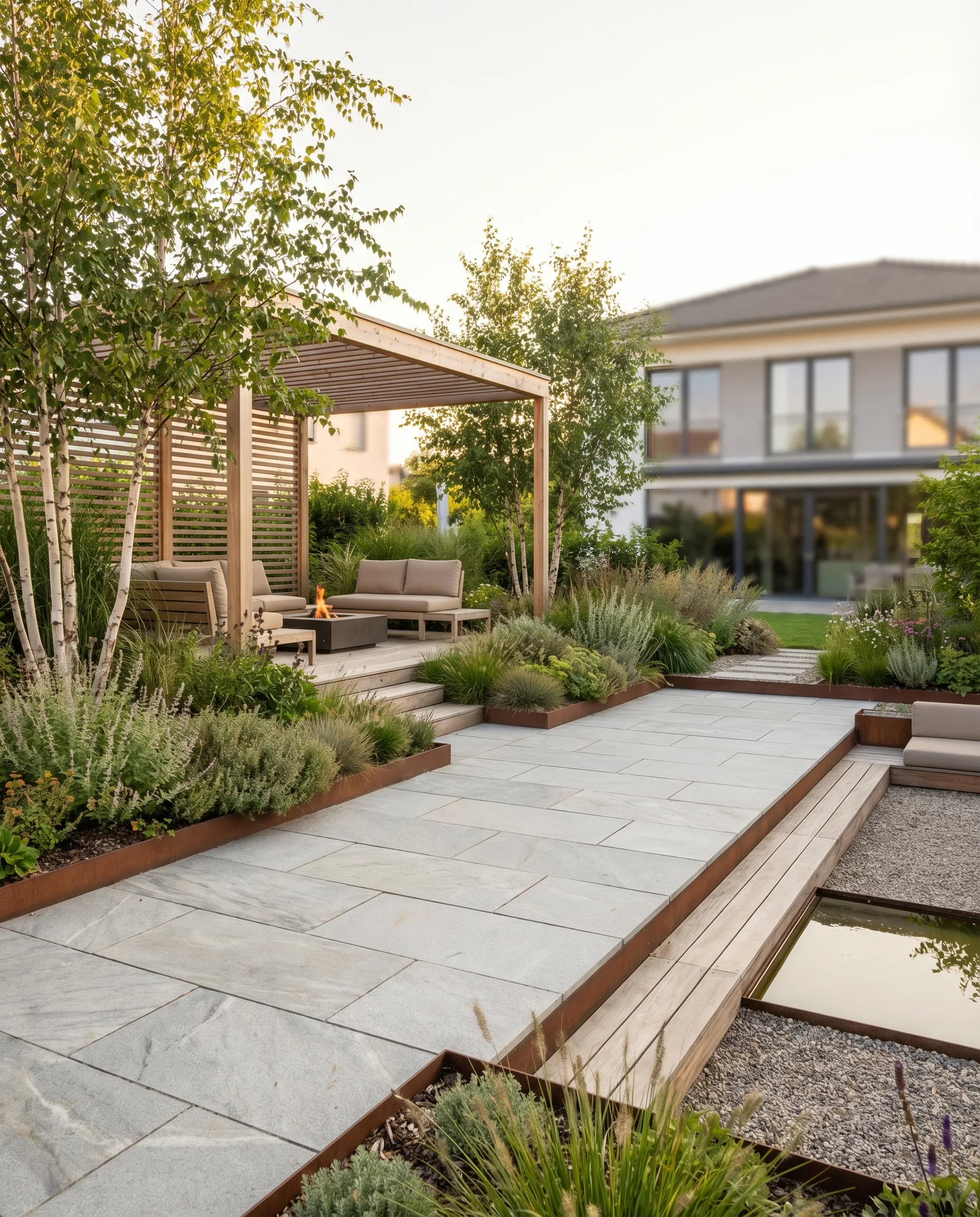
Modern Garden with Terrace: How to Create a Cohesive Outdoor Living Space
Terraces are the heart of modern gardens. Discover how materials, levels, furniture, and sightlines come together to create a cohesive outdoor living space.
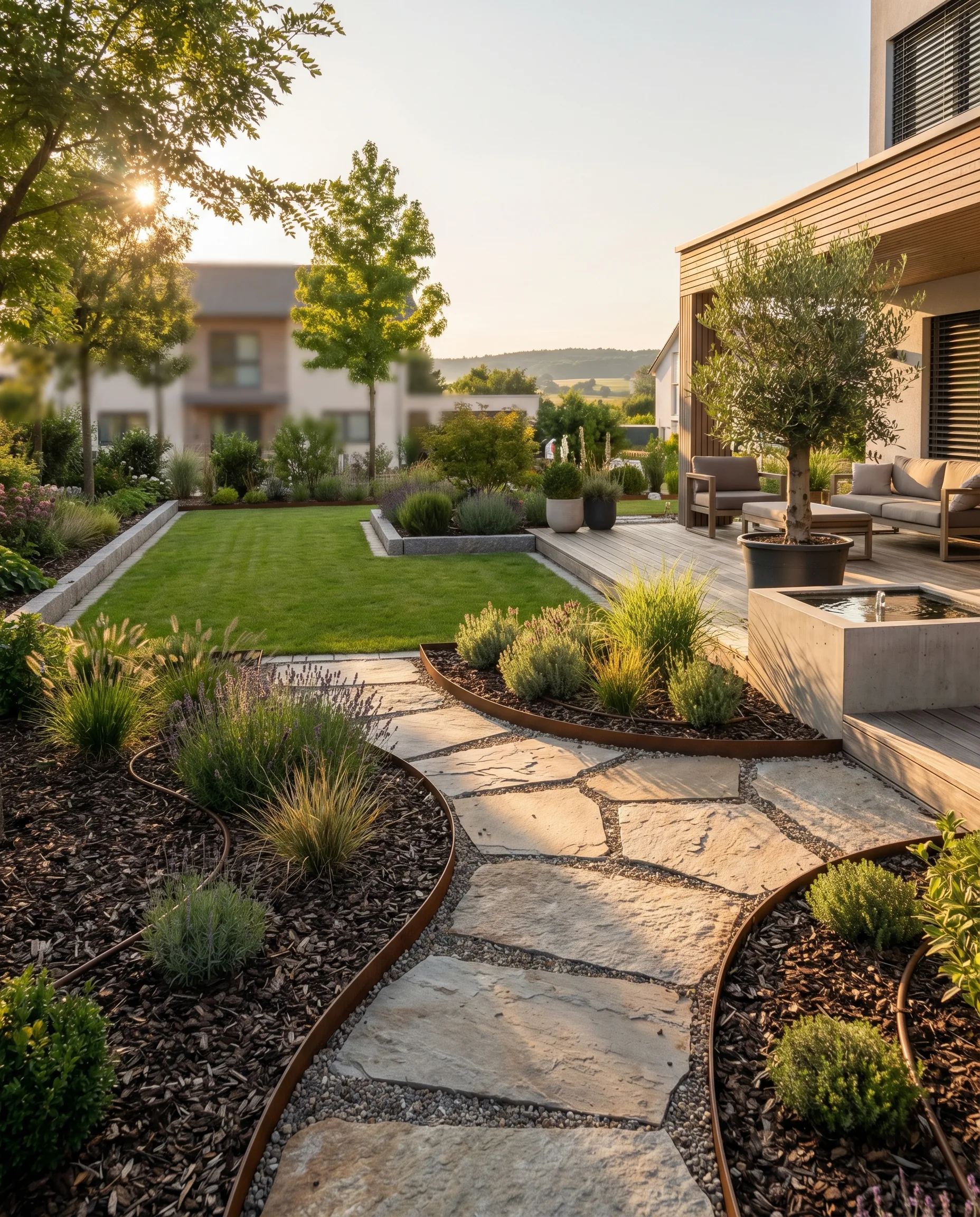
Low-Maintenance Modern Garden: Stylish Design with Minimal Effort
A modern garden can be both stylish and low-maintenance. With fewer plants, clean materials, and a well-planned structure, the workload drops significantly.
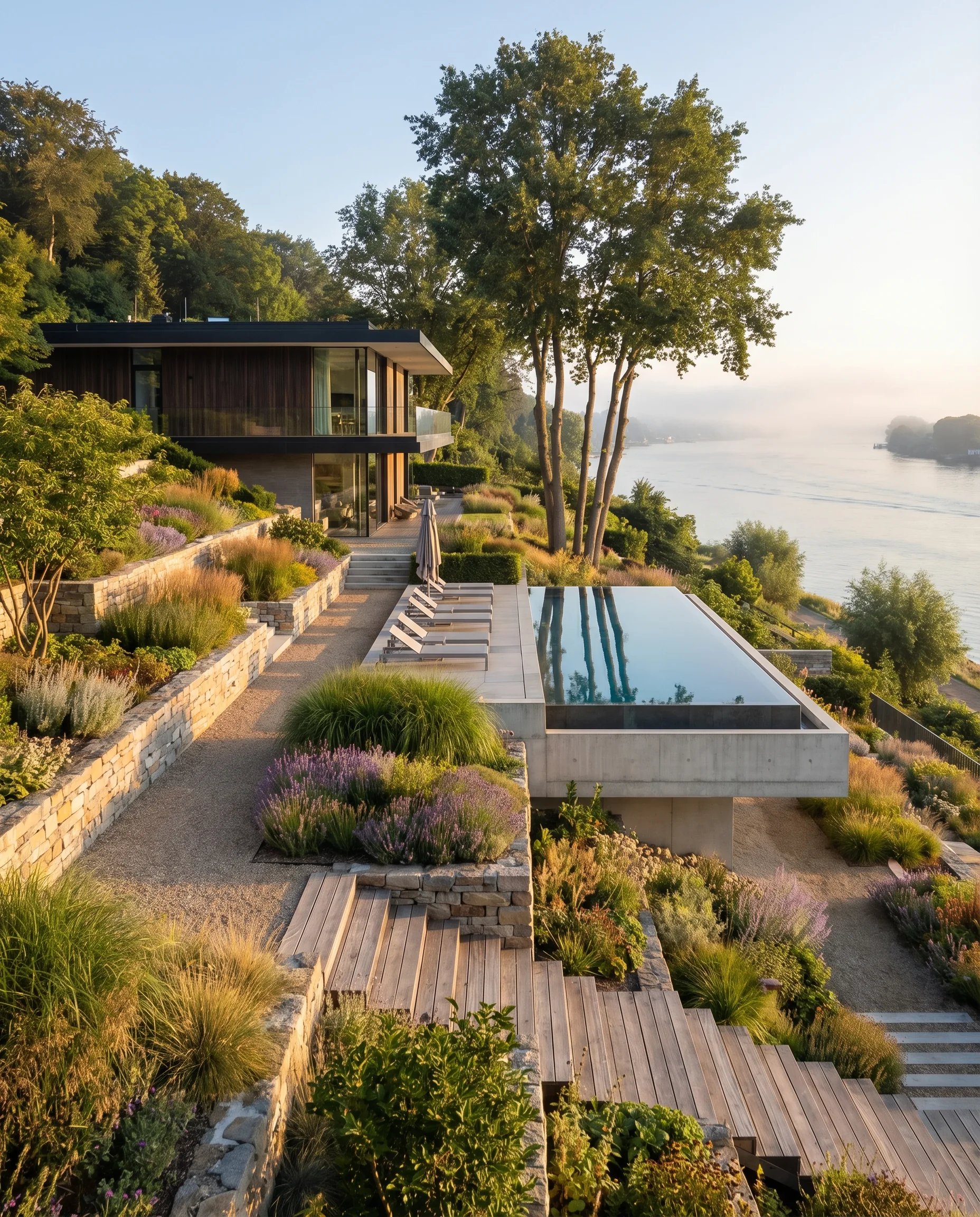
Modern Garden with Pool: Water, Architecture & Outdoor Living
A modern garden with a pool feels calm, premium, and architectural. Discover how water, materials, and the terrace work together perfectly.