Designing a Small Garden: How to Get the Most Out of Minimal Space
A small garden isn’t a compromise—it’s a design challenge with its own unique appeal. If you want to design a small garden, you need to think differently than you would with large plots: every element matters, every decision has a bigger impact, and smart planning makes the difference between a cramped backyard and a place with character, atmosphere, and purpose.
What Makes Small Gardens Special
Small gardens have qualities that large gardens simply can’t offer. Once you understand them, you can use them to your advantage.
The unique strengths of small gardens:
- Intimacy – small gardens naturally create a sense of closeness and comfort
- Clarity – every detail is noticed; nothing gets lost
- Instant impact – changes are immediately visible and tangible
- Less effort – less area means less maintenance, fewer materials, and lower costs
- Stronger design effect – a single tree, one beautiful material, or a well-placed focal point can be enough
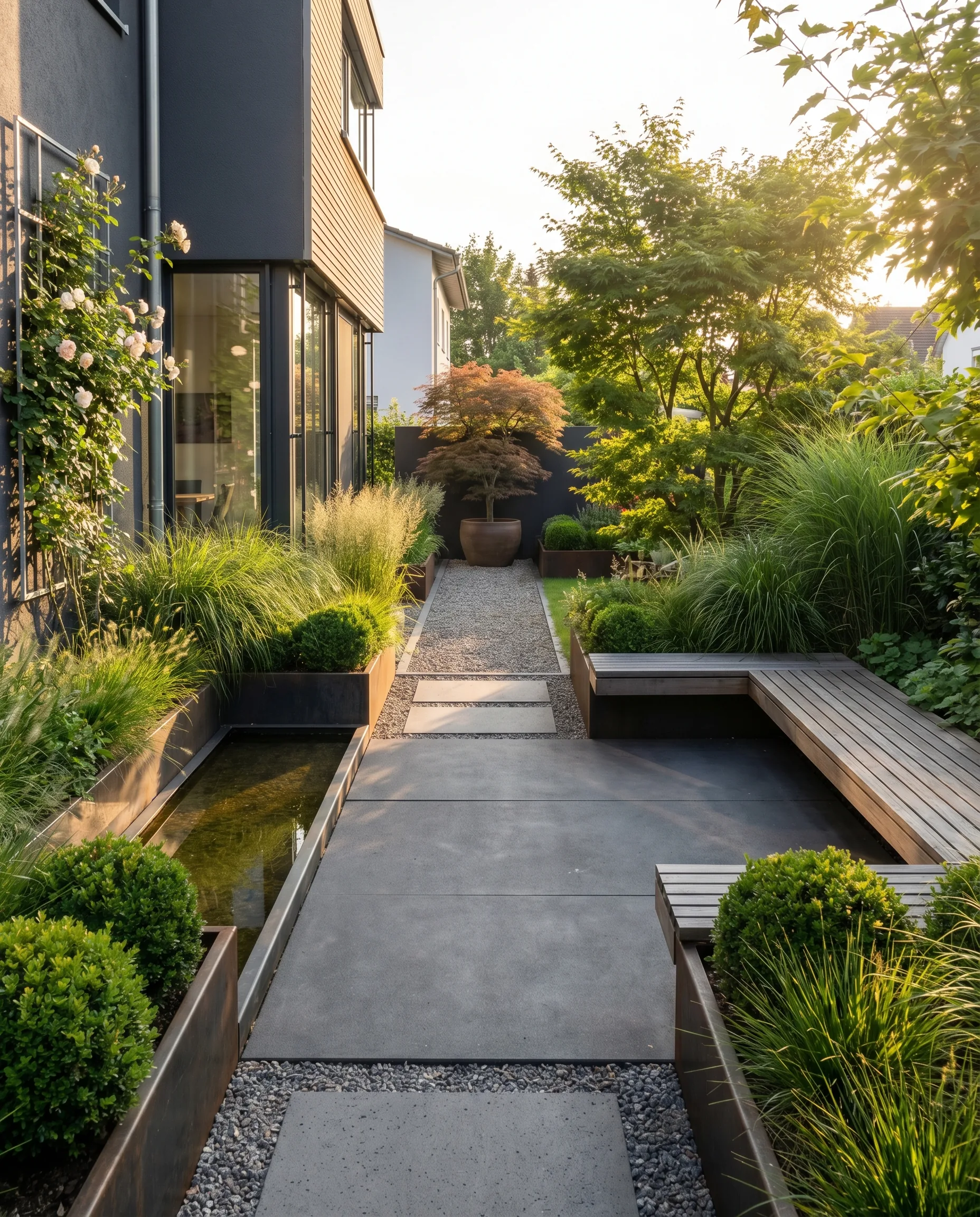
The challenge: small gardens don’t forgive mistakes. Too many elements, too many materials, or an unclear structure quickly looks cluttered.
Structure and Zoning in a Small Space
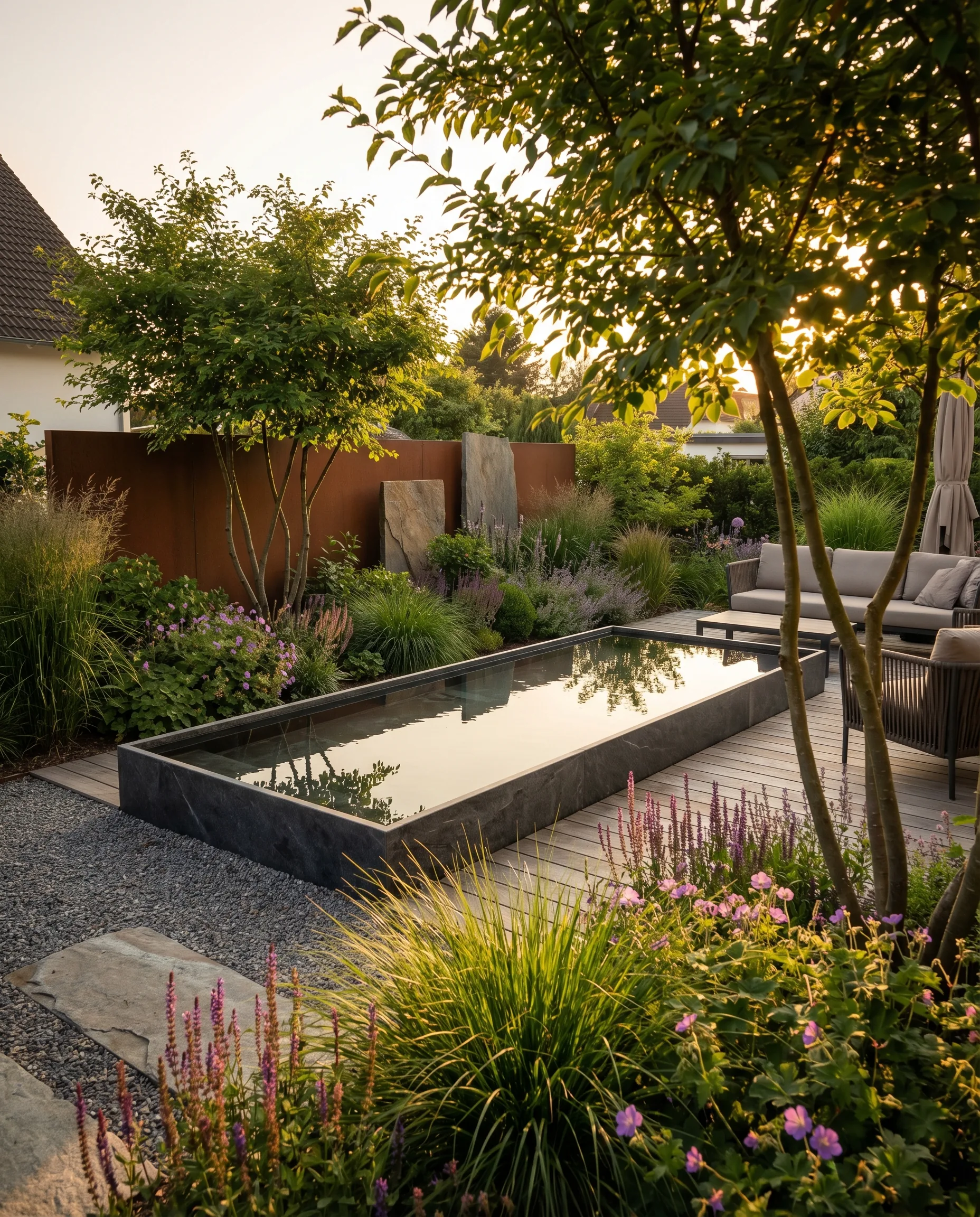
Even a small garden needs structure. Without clear zones, it feels like an undifferentiated area—with zoning, it becomes a thoughtfully designed outdoor room.
Zoning ideas for small gardens:
- Seating area – even on 20 m² you can create a comfortable spot to sit
- Green zone – a bed, a planting island, or a vertical garden as a green accent
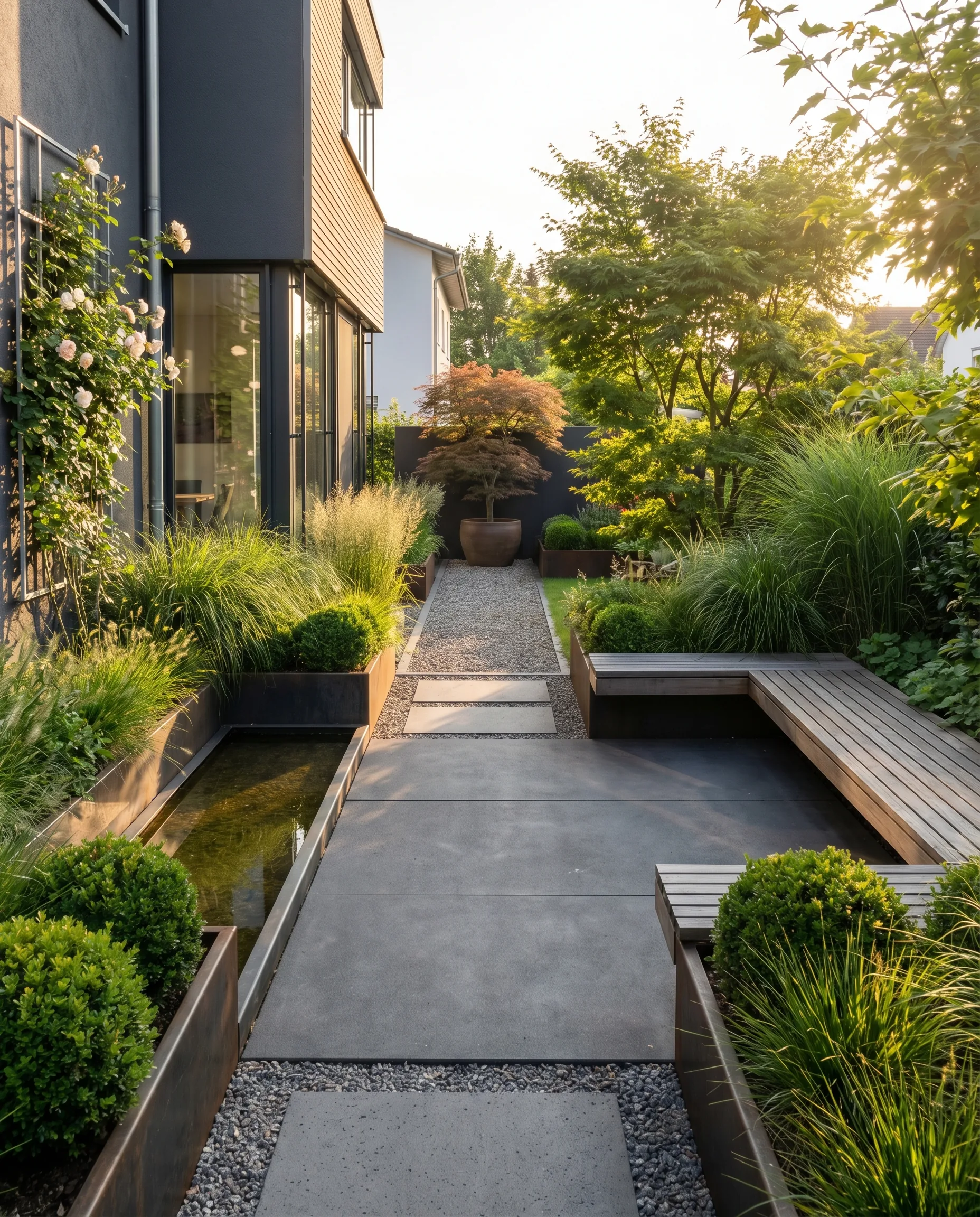
- Path or axis – a clear line that structures the garden and visually elongates it
- Focal point – a single element at the end of the garden that guides the eye
Zones don’t need to be large—they need to be clearly defined. Even a hint of separation (a different surface, low planting, a step) is enough.
Paths and Sightlines
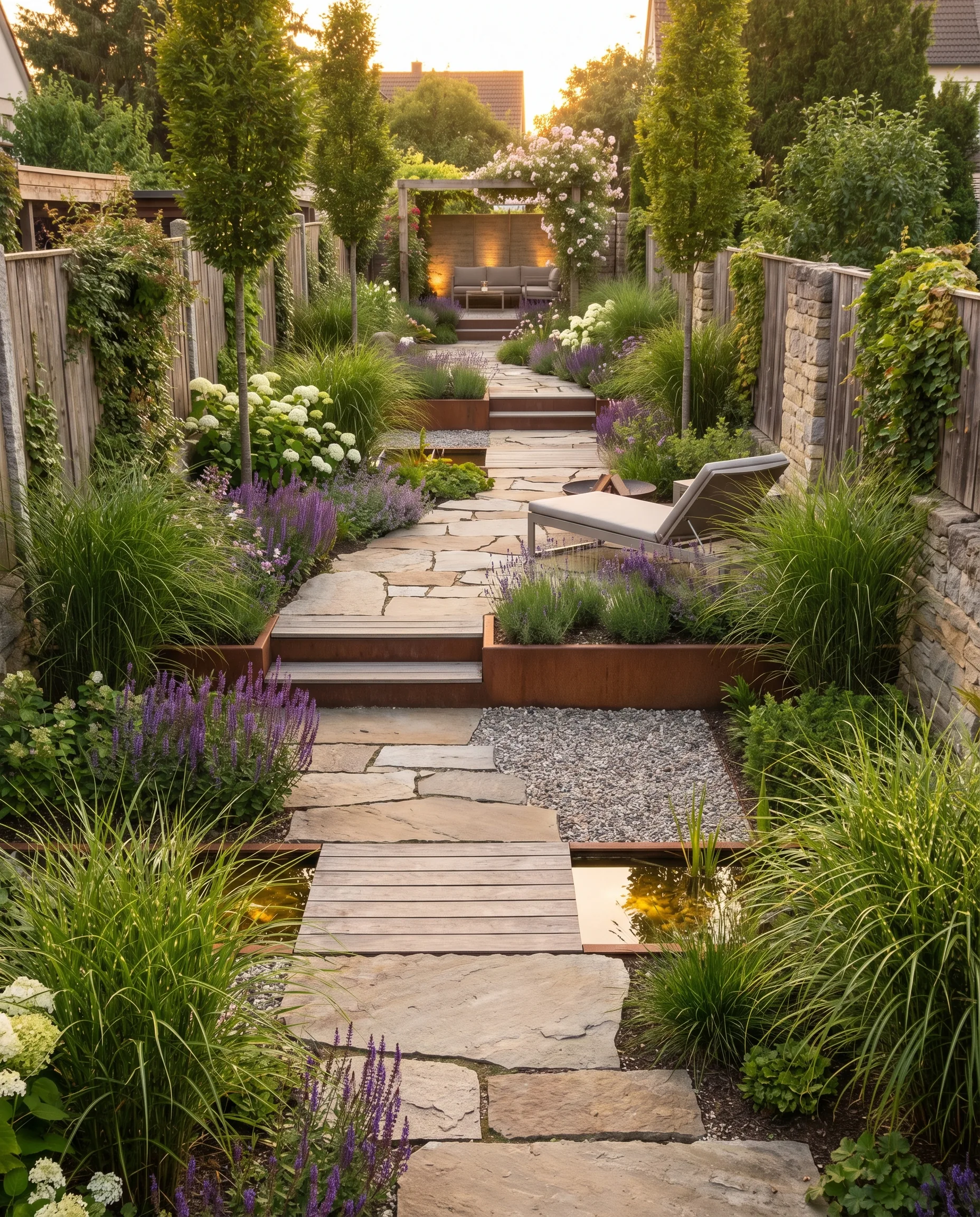
In small gardens, paths are the most important design element. They determine how the space is perceived—and whether it feels spacious or tight.
Principles for paths in small gardens:
- Diagonal rather than straight – a diagonal path uses the longest distance in the garden
- Perspective tricks – a path that narrows slightly creates visual depth
- A focal point at the end – an object, a plant, or a seating spot as the path’s destination
- Material changes – switching from slabs to gravel or stepping stones creates rhythm without taking up space
If you have an especially narrow garden, you’ll find dedicated strategies for long, tight spaces in our article on narrow gardens.
Plants for Small Gardens
In small gardens, every plant needs a job. There’s no room for filler—each species should contribute something.
Planting principles for small gardens:
- Multi-stem trees – feel lighter than standard trees and let more light through
- Vertical plants – climbers, espalier fruit, or tall grasses use height instead of floor space
- Evergreen structure – at least one evergreen provides year-round presence
- Seasonal highlights – bulbs in spring, flowering perennials in summer
- Groundcovers instead of lawn – in very small areas, lawn is often impractical; groundcovers are easier to maintain
Rule of thumb: fewer species, greater impact. 5–7 plant species are more than enough for a small garden.
Materials and Surfaces
In small gardens, material choices have an outsized influence on the overall look and feel. A few high-quality materials work better than many different ones.
Material recommendations:
- No more than 2–3 different ground surfaces – too many materials chop up the space
- Large-format slabs – feel more generous than small-scale paving
- Light colors – reflect light and make the garden appear larger
- Consistent edging – uniform borders and edges create visual calm
Materials should suit the home’s architecture. A modern house calls for different materials than a period property.
Modern vs. Naturalistic Approach
Small gardens work in many styles—but your style choice significantly affects the overall impression.
Modern approach:
- Clean lines, restrained planting, geometric forms
- Feels tidy, premium, and calm
- Ideal for contemporary architecture and very small spaces
- More in our article on the small modern garden
Naturalistic approach:
- Softer shapes, fuller planting, organic materials
- Feels cozier, more vibrant, and more emotional
- Works well with older homes and gardens with character
Combined approach:
- Clear structure with naturalistic planting
- Often the best solution for small gardens that need both order and liveliness
Water as a Design Element
Water works even in the smallest spaces—and on a compact plot it can be especially impactful.
Water ideas for small gardens:
- Shallow reflecting pool – adds reflection and calm without needing much space
- Bubbling stone – a single stone with a water feature as a focal point
- Narrow water rill – as a linear element alongside a path
- Wall fountain – uses vertical space instead of the ground
If you want to explore the topic further, our article on the small garden with water offers concrete ideas and practical implementation tips.
Conclusion
Designing a small garden means working with precision and intention. Every element matters, every decision counts—and that’s exactly what makes small gardens so appealing. With the right structure, suitable materials, and well-planned planting, a limited footprint becomes a place with maximum impact.
Want to see which style suits your small garden best? With GardenPilot, you can visualize different design options directly from a photo.
Further Reading
- Small Modern Garden: Clean Structures for Limited Space
- Narrow Garden Ideas: How Long, Tight Spaces Can Feel Harmonious
- Small Garden with Water: How Pools and Calm Accents Work
Especially when space is limited, details decide whether a garden feels spacious or cramped: a visualization of your garden shows you which ideas truly create more room. Upload a photo of your garden and see—with AI—how it could look, including a rough cost range before you invest. That way, you avoid expensive planning mistakes. Visualize your garden with GardenPilot (here’s how it works).
Frequently Asked Questions
Which plants are suitable for a small garden with very limited space?
Slim, column-shaped trees and shrubs such as columnar hornbeam, or climbing plants like clematis, use height instead of floor space and therefore make the garden feel more expansive. Compact perennials and container plants can also be rearranged easily and adapted to how you use the space.
How can I make a small garden look larger?
Curved paths, mirrors on walls, and deliberate layering with plants of different heights trick the eye into perceiving more space. Light-colored paving and a restrained color palette for plants and furniture further enhance this effect.
How much space do I need for a seating area in a small garden?
A functional seating nook for two people can fit into an area of around two by two meters if you use space-saving furniture such as folding chairs or a corner bench. The key is to clearly separate the seating area from the rest of the garden so it reads as its own zone.
Which ground surface works best for a small garden?
Large-format slabs make a small garden feel calmer and more open than lots of small elements because they visually divide the space less. Light-toned natural stone or minimally jointed concrete also reflects light and brightens the area.
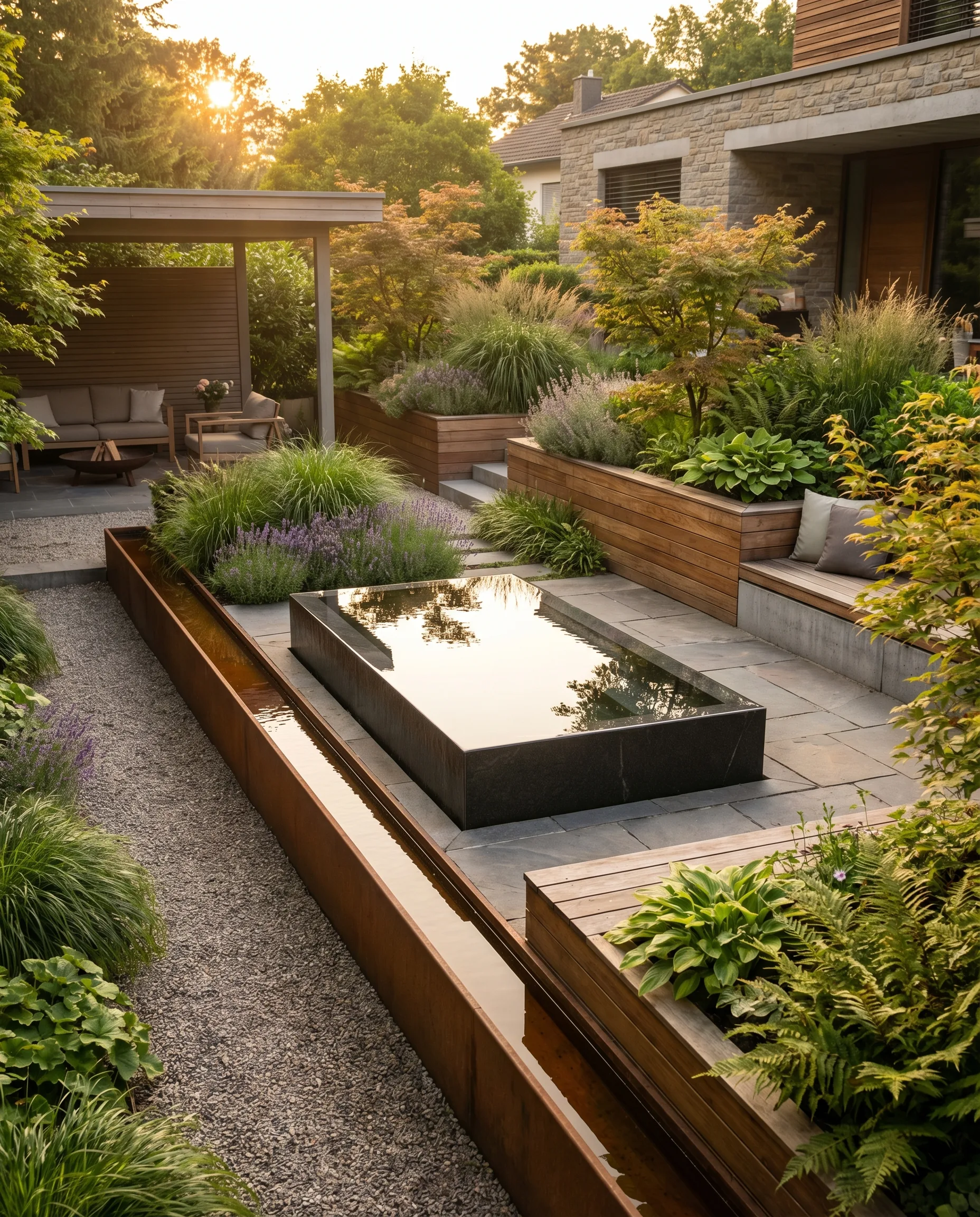
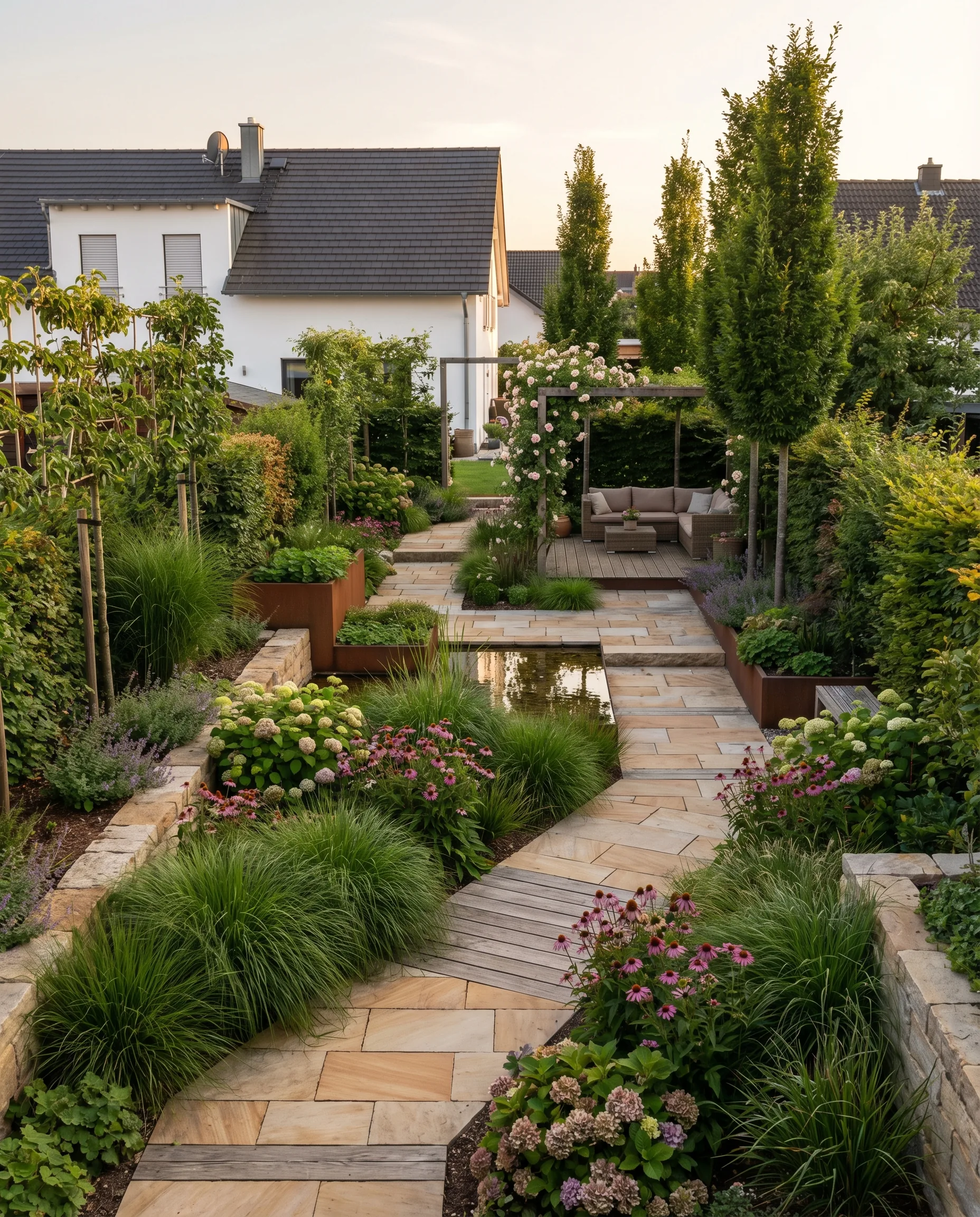
Gallery
Plan your own garden
Upload a photo of your garden and get a professional AI concept in minutes.
Start for freeMore articles from Small Gardens
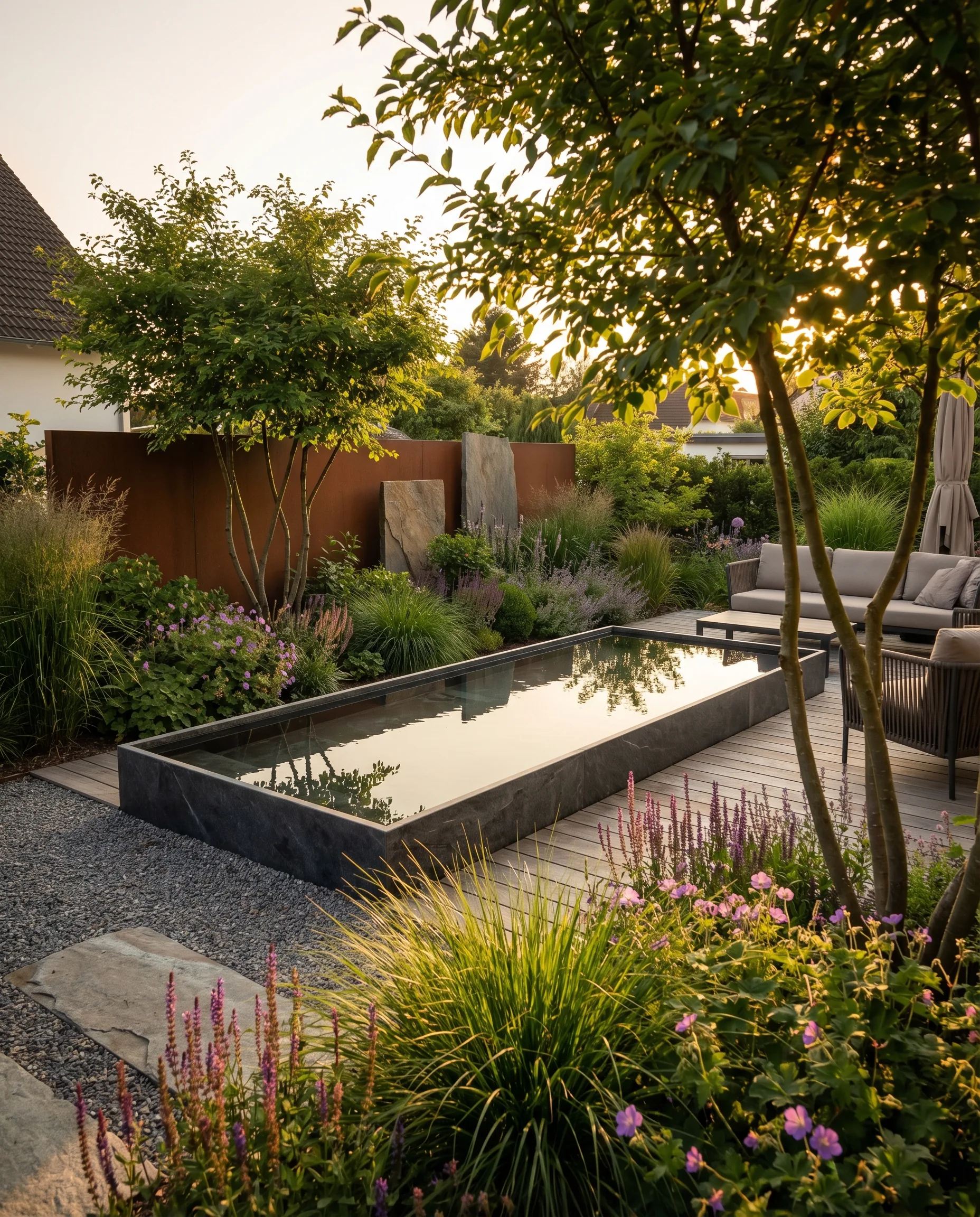
Small Garden with Water: How Reflecting Pools and Quiet Accents Work
Water can have a powerful effect even in small gardens—when it’s used calmly, sparingly, and with precision. Here’s how to plan reflecting pools and quiet accents in limited space.
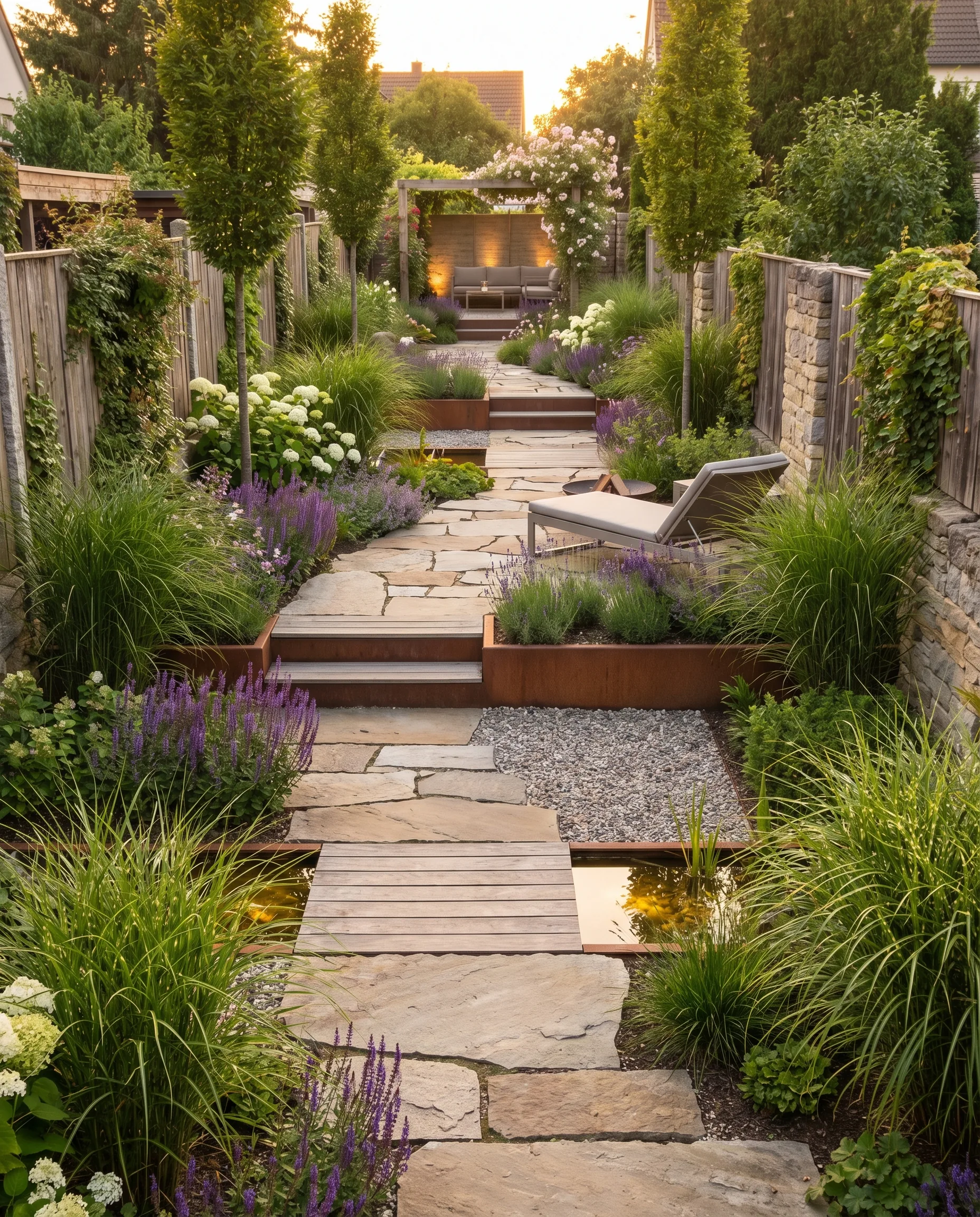
Narrow Garden Ideas: How to Make Long, Slim Spaces Feel Harmonious
A narrow garden can quickly feel cramped and restless. With the right zoning, path layout, and planting, even a long space can be designed to feel harmonious and high-end.
Small Modern Garden: Clean Structure for Limited Space
A small garden can feel modern, calm, and premium—with clean structure, restrained materials, and intentional planting.