Designing a Small Garden in a Modern Style: How to Make Limited Space Feel Instantly More Premium
A small garden isn’t a disadvantage—it’s an opportunity. Modern garden design works especially well in compact spaces because it relies on restraint, clean lines, and high-quality materials. If you want to design your small garden in a modern style, you’re choosing order, calm, and a design language that makes an impact in every square metre.
Why Modern Design Works Especially Well in Small Gardens
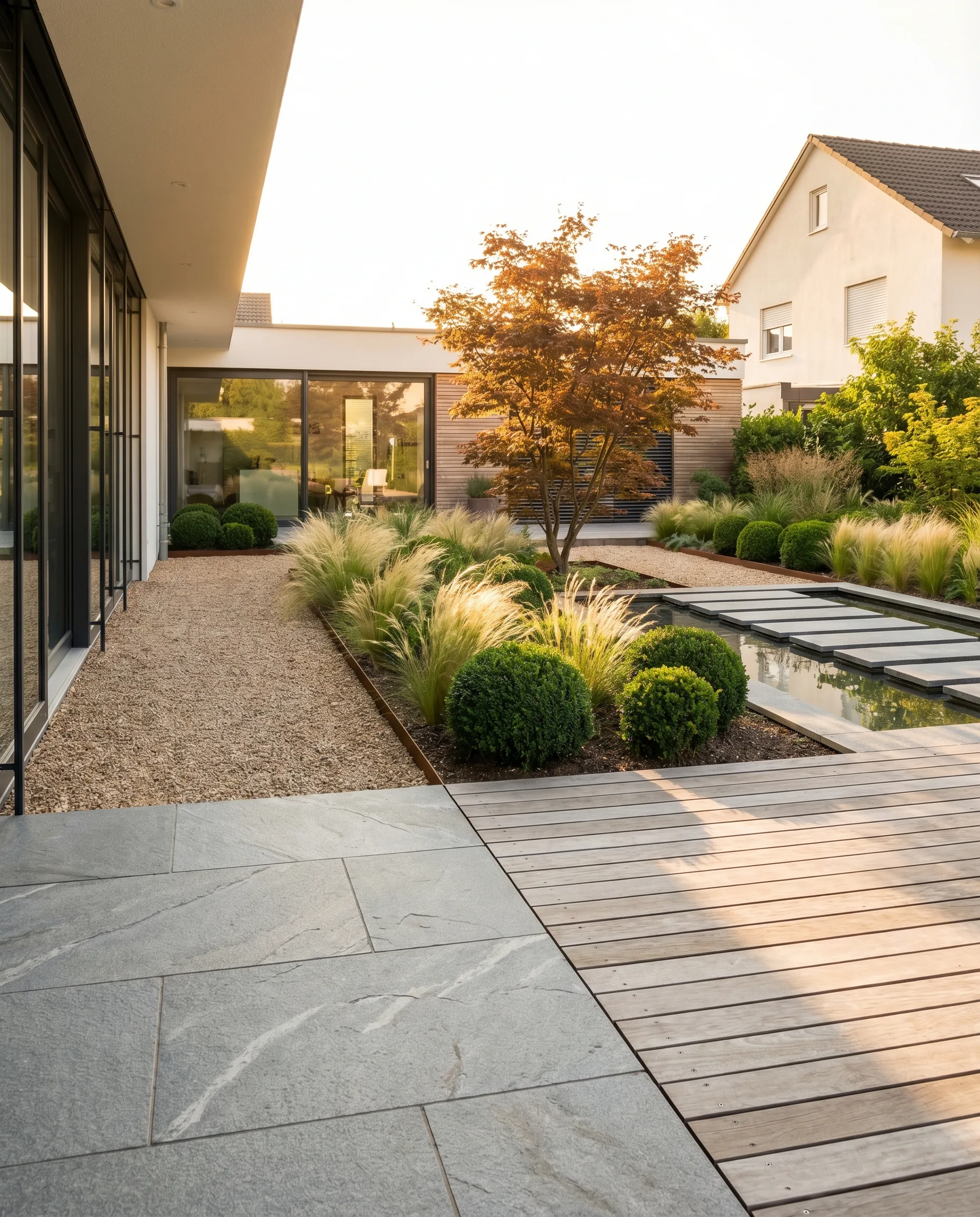
Small spaces don’t forgive mistakes. Too many materials, too many plants, too many ideas—and the garden feels cluttered. That’s exactly where modern design shines.
Why a modern style is the better choice for a small space:
- Clear order instead of visual overload – fewer elements create more impact
- Calm, cohesive materials – uniform surfaces make small spaces feel larger
- Restraint as an advantage – what might feel boring on 500 m² becomes elegance on 50 m²
- Big impact in little space – every element matters, every detail is noticed
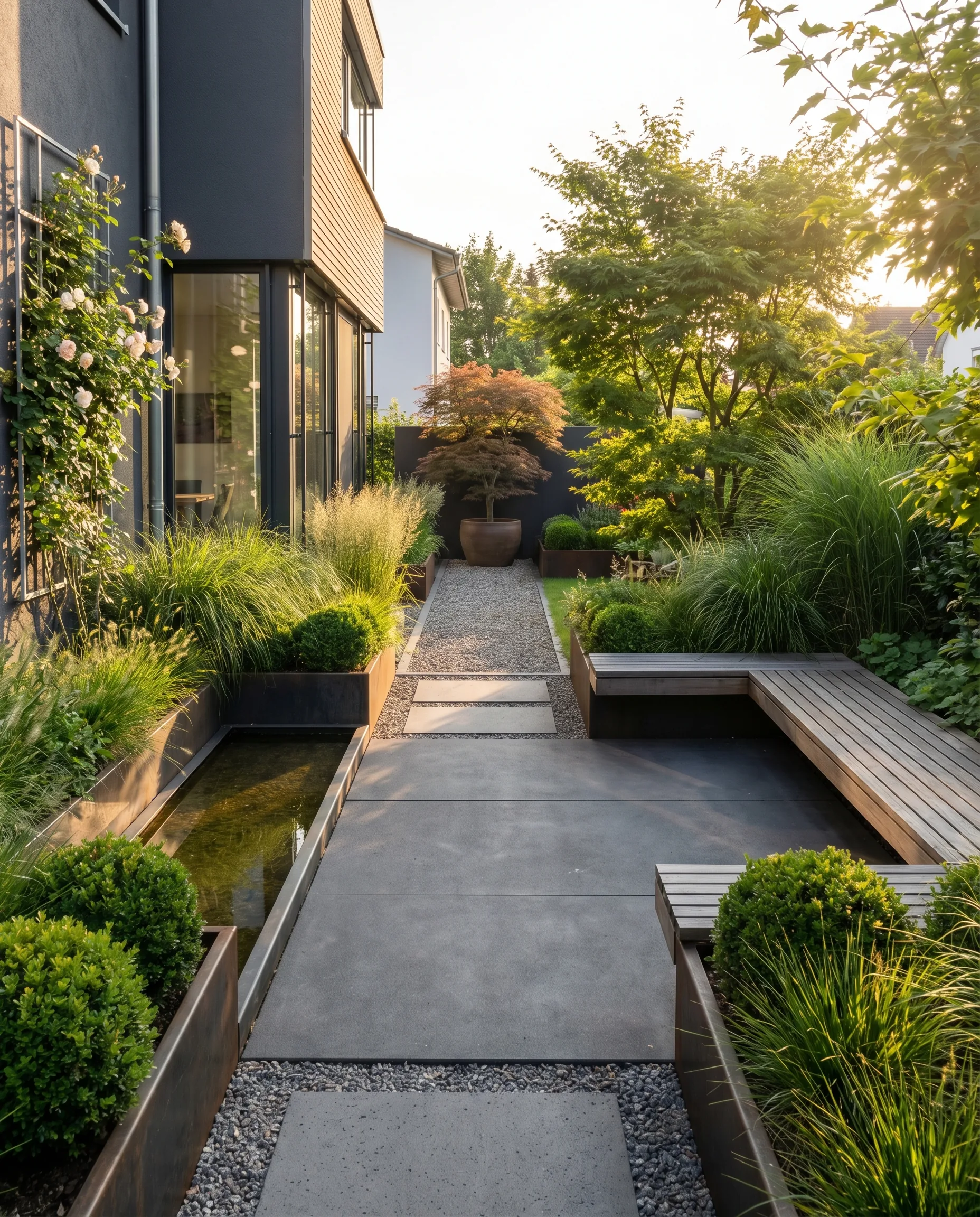
Modern garden design and small spaces aren’t a compromise—they’re an ideal match.
The Key Elements of a Small Modern Garden
A small modern garden doesn’t need lots of features. It needs the right elements in the right arrangement.
The most important design elements:
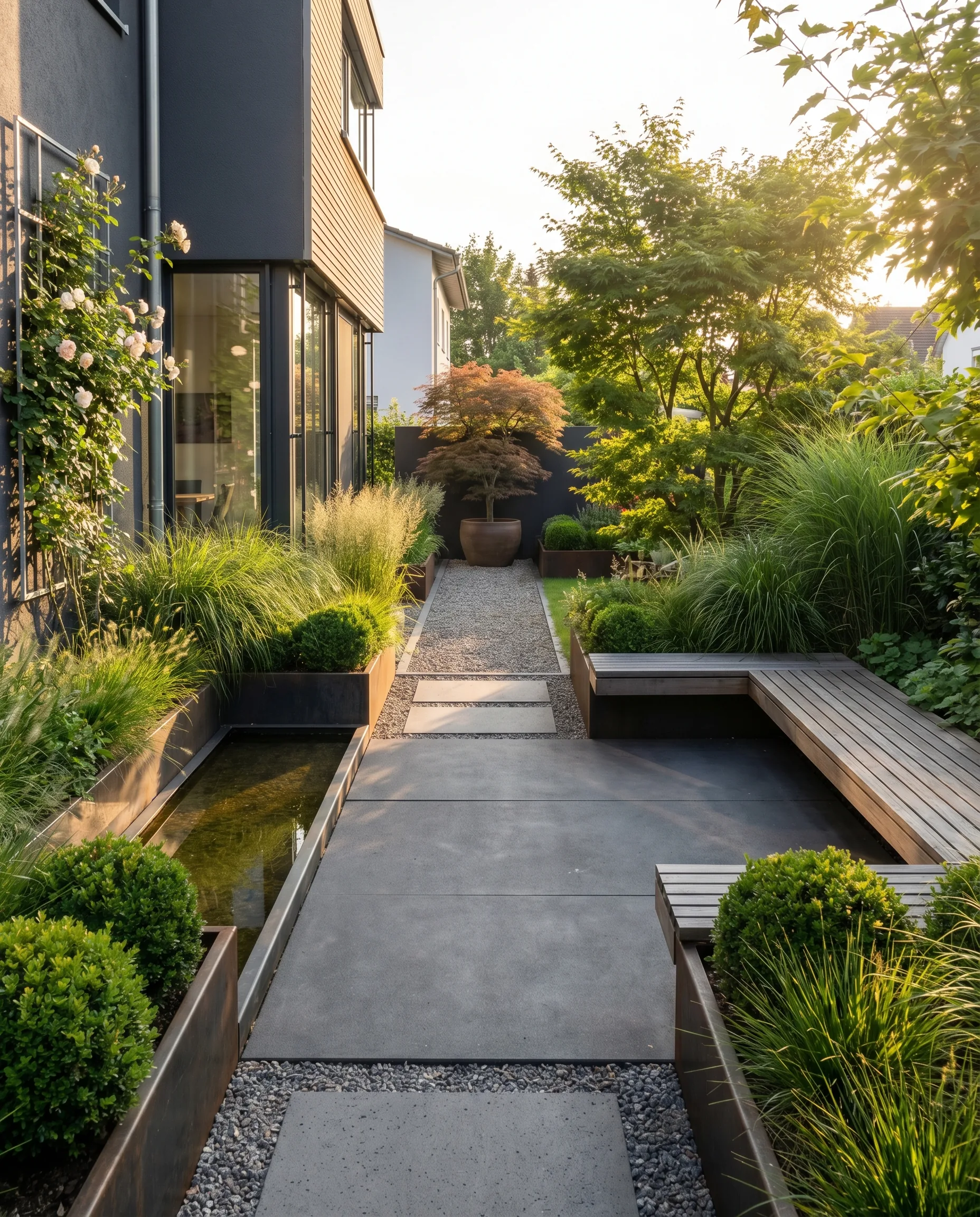
- Clean lines – straight edges, rectangular beds, linear paths
- Few materials – no more than 2–3 different surfaces for paving, walls, and edging
- Restrained planting – fewer plants, placed intentionally for maximum impact
- Purposeful sightlines – one focal point, one axis, one clear visual anchor
- Structured zones – even in a small space you can define areas: sit, walk, enjoy
The principle: don’t show everything—select and stage with intention.
Paths, Sightlines, and Geometry in a Small Space
In small gardens, paths are more than connections—they’re design tools that structure the space and visually stretch it.
Design principles for paths in compact gardens:
- Linear paths – straight lines create depth and make the garden feel longer
- Crisp edges – clean transitions between path, planting bed, and lawn
- Large-format paving – bigger slabs feel more generous than small, busy pavers
- Visually elongate small spaces – a path leading to a focal point lengthens the space to the eye
If you need to design a narrow garden, you’ll find dedicated ideas for long, tight spaces in our article on narrow gardens.
Which Plants Work in Small Modern Gardens
In small gardens, every plant counts. The selection needs to be precise—each species should have a purpose.
Plants that look especially strong in small modern gardens:
- Ornamental grasses – Calamagrostis or Stipa for height, movement, and lightness
- Compact structural shrubs/trees – globe maple, Japanese maple, or clipped boxwood as architectural elements
- Single specimen plants – one striking tree or shrub as the central focal point
- Fewer species, clear repetition – 3–5 plant types are enough when combined well
Planting in small modern gardens is like a still life: every element is intentionally placed and there for a reason.
How Water and Calm Accents Elevate a Small Garden
Water is one of the most effective elements in small gardens. It brings calm, reflection, and an extra dimension—without needing much space.
Water features for small modern gardens:
- A water basin instead of a large pond – a shallow, rectangular basin delivers maximum impact
- Minimalist water elements – a bubbling stone, water table, or slim rill
- Reflection and calm – a still water surface visually doubles the space
Water doesn’t need to be big in a small garden—it needs to be precise. Learn more in our article on a small garden with water.
A Small Modern Garden vs. a Small Garden in General
Not every small garden has to be modern. A modern style is one of several options—but it’s an especially powerful one.
When a modern style is ideal:
- With clean, contemporary architecture
- When you want restraint and calm
- When the area is very small and every element matters
When a more natural feel can make sense:
- With homes that have warm, traditional architecture
- When the garden should feel more playful and emotional
- When blooms and seasonal dynamics matter more than structure
For a broader overview of all design options for small gardens, see our article on designing a small garden.
Conclusion
Small modern gardens thrive on order, restraint, and consistent design. They prove that limited space isn’t a drawback—it’s an invitation to design with precision and clarity. Every material, every plant, every element is chosen deliberately and feels even more impactful in a compact setting.
Want to see how a modern small garden would look at your home? With GardenPilot, you can visualize different modern options directly from a photo.
Further Reading
- Designing a Small Garden: Ideas for More Impact in Less Space
- Narrow Garden Ideas: How to Make Long, Tight Spaces Feel Balanced
- Small Garden with Water: How Basins and Calm Accents Work
Clean structure in a small space only works when proportions and materials are right—and the most reliable way to check is on your own layout. Upload a photo of your garden and use AI to see how it could look—plus a rough cost range before you invest. This helps you avoid expensive planning mistakes. Visualize your garden with GardenPilot (how it works).
Frequently Asked Questions
Which plants are suitable for a small modern garden?
For a small modern garden, ornamental grasses such as fountain grass, compact hedging plants like boxwood or hornbeam, and individually placed structural plants such as grasses or ferns work particularly well. The key is to use only a few species intentionally and repeat them to create calm and order in a compact space.
How can I make a small garden look bigger?
Long, continuous lines—such as a straight paved path or a narrow strip of lawn—draw the eye into the distance and make the garden feel larger. Light materials, a consistent colour palette, and avoiding too many different elements further enhance this effect.
Which materials suit a modern small garden?
High-quality, pared-back materials such as large-format concrete slabs, corten steel for bed edging, or natural wood for seating integrate beautifully into a modern garden concept. What matters most is combining as few materials as possible and using them consistently throughout the entire garden.
How do I design a small garden in a modern style without lawn?
Without a lawn, you can design a small modern garden using a combination of gravel beds, paved surfaces, and intentionally placed planting islands. This solution is low-maintenance, looks neat, and still provides space for structure and vibrant planting.
Gallery
Plan your own garden
Upload a photo of your garden and get a professional AI concept in minutes.
Start for freeMore articles from Small Gardens
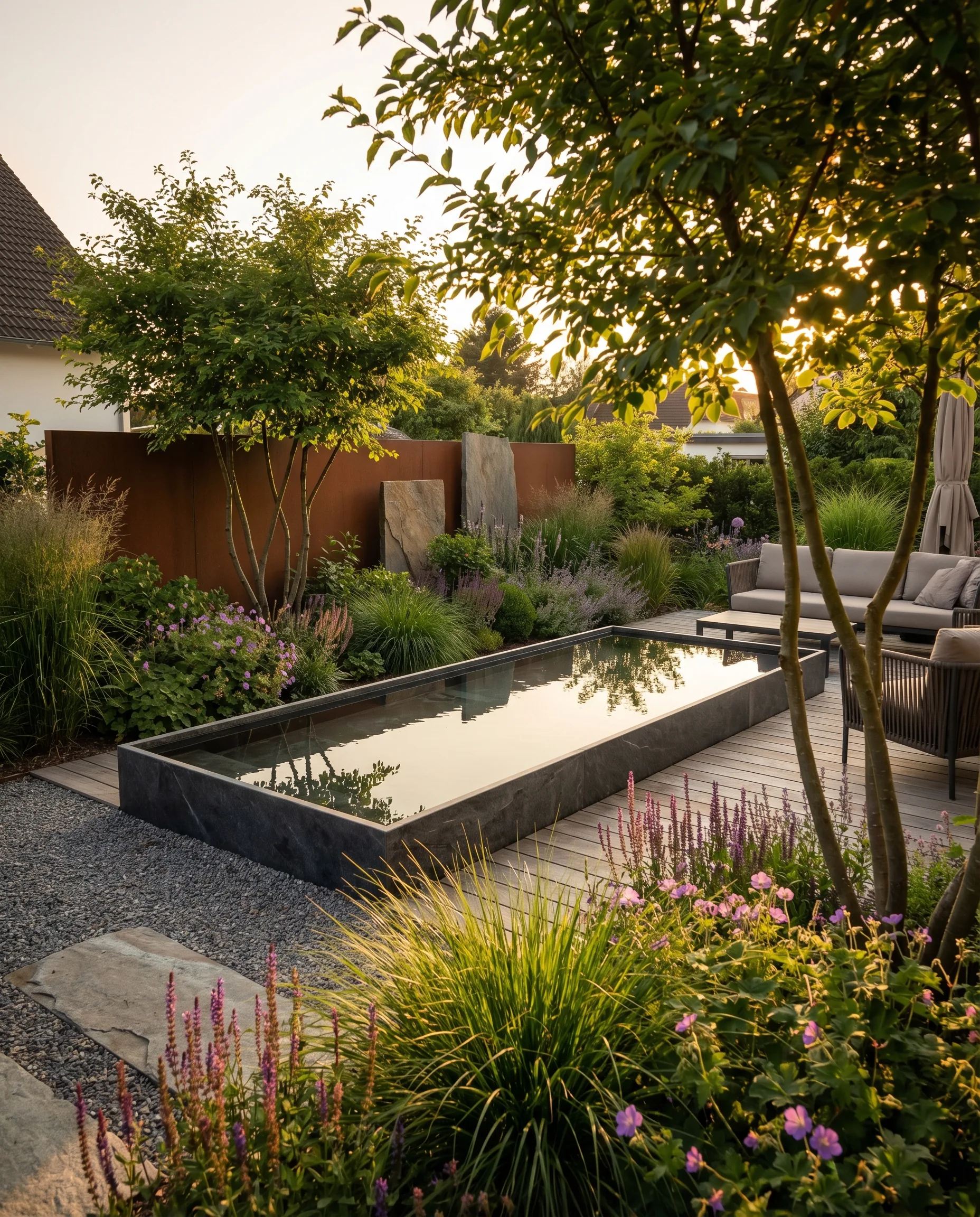
Small Garden with Water: How Reflecting Pools and Quiet Accents Work
Water can have a powerful effect even in small gardens—when it’s used calmly, sparingly, and with precision. Here’s how to plan reflecting pools and quiet accents in limited space.
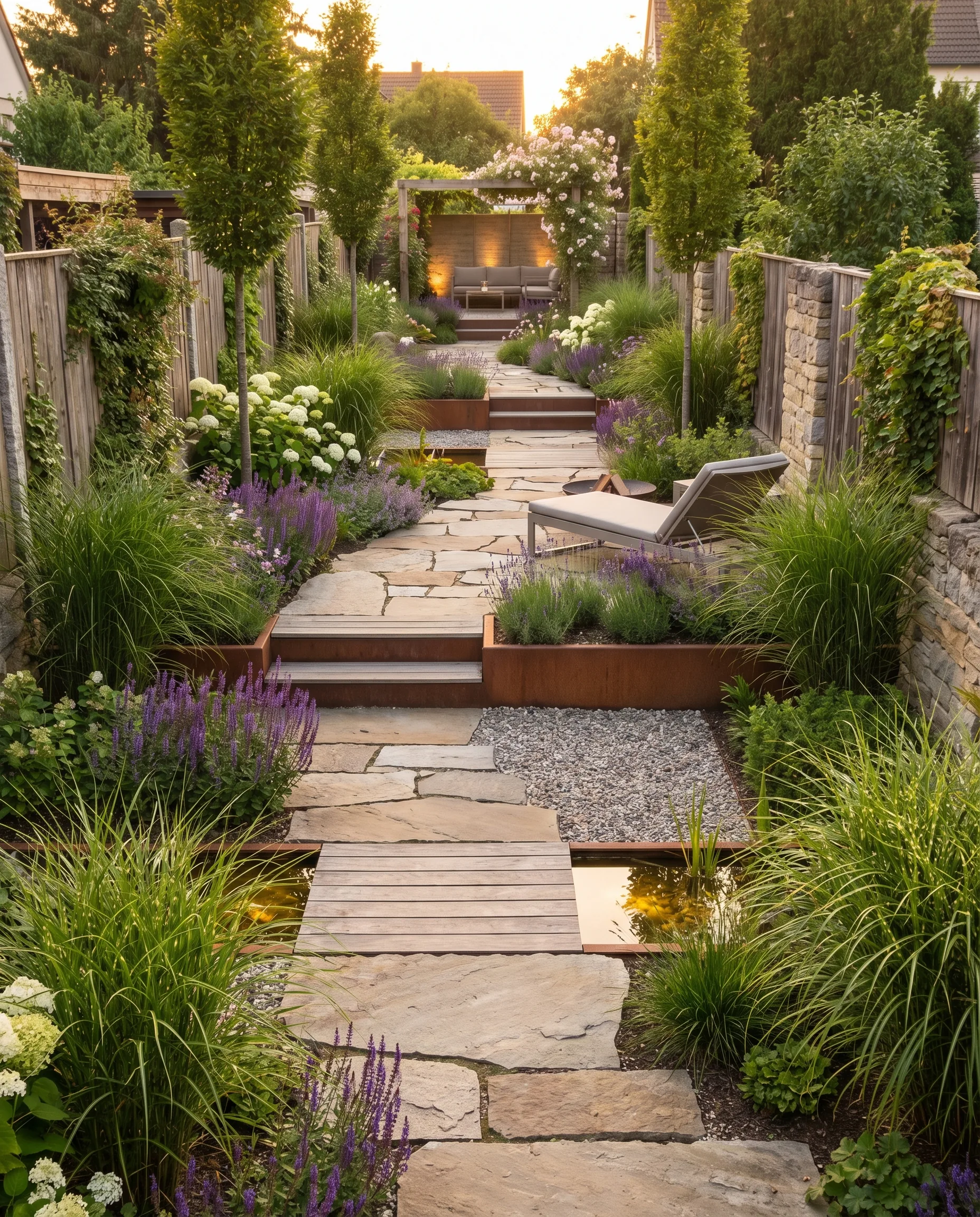
Narrow Garden Ideas: How to Make Long, Slim Spaces Feel Harmonious
A narrow garden can quickly feel cramped and restless. With the right zoning, path layout, and planting, even a long space can be designed to feel harmonious and high-end.
Designing a Small Garden: Ideas for Maximum Impact in Minimal Space
How to design a small garden with structure, atmosphere, and function—ideas for paths, planting, and making the most of limited space.