Designing Your Front Garden: The Best Ideas for Modern and Natural Entrance Areas
Why the Front Garden Matters So Much for First Impressions
The front garden is the first thing visitors see of your home—and the last thing they remember. Yet it’s often treated like leftover space: a strip of lawn, a few randomly placed shrubs, maybe a band of gravel with no clear direction.
And still, it’s exactly this area that determines whether your house feels calm and high-end—or busy and accidental.
The relationship between your home’s architecture and the entrance area is crucial: a modern house needs a different front garden than a period property. And a narrow plot calls for different solutions than a wide driveway.
The most common mistakes in unplanned front gardens:
- styles get mixed without intention (modern paths + wild planting)
- too many different materials in a small space
- no clear route leading to the front door
- planting without structure or a clear height hierarchy
In this article, we’ll show you the two most important design directions—and help you find the approach that suits your home.
Modern Front Garden – Clean, Calm, and Architectural


What Defines Modern Front Gardens
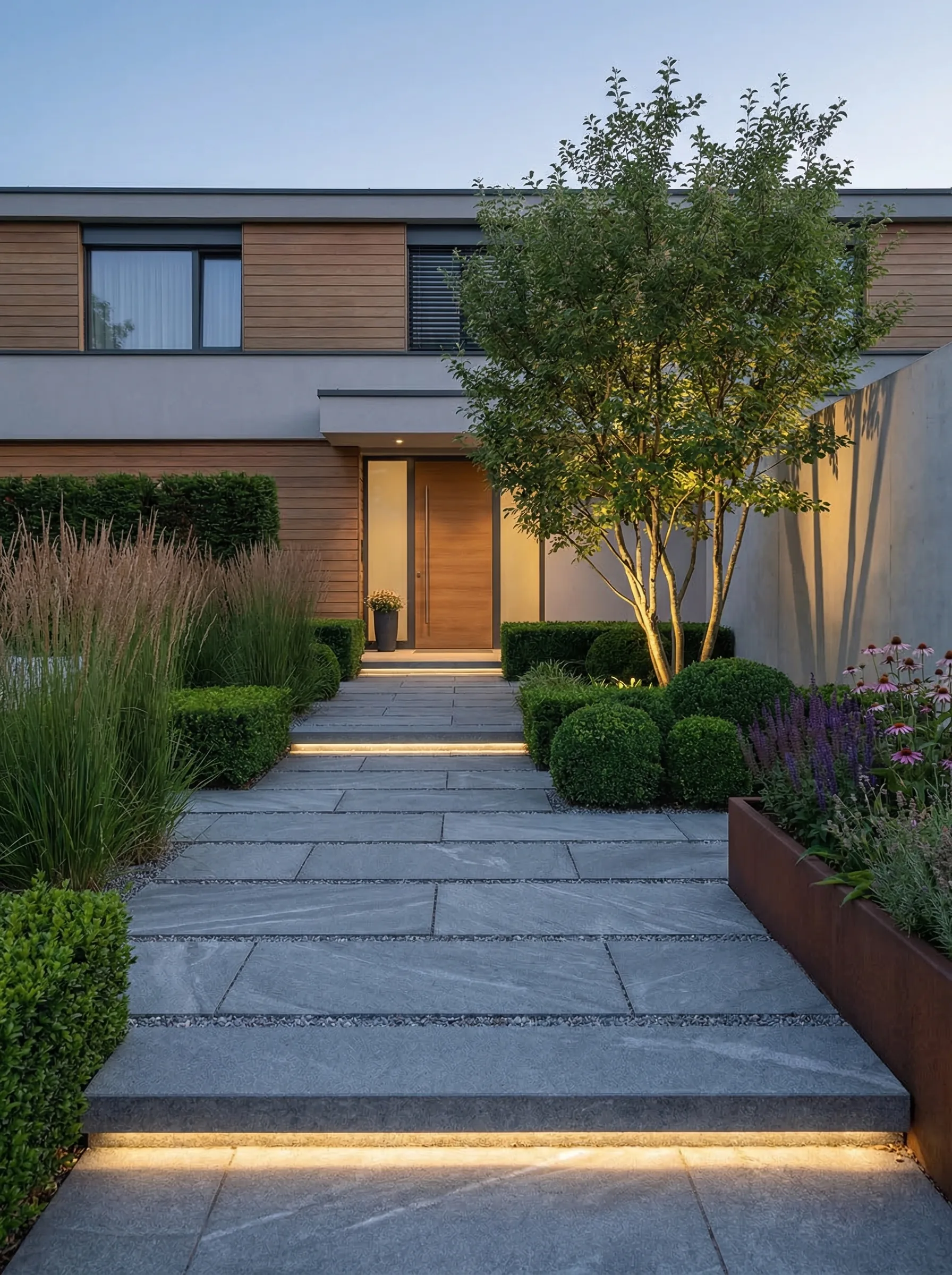
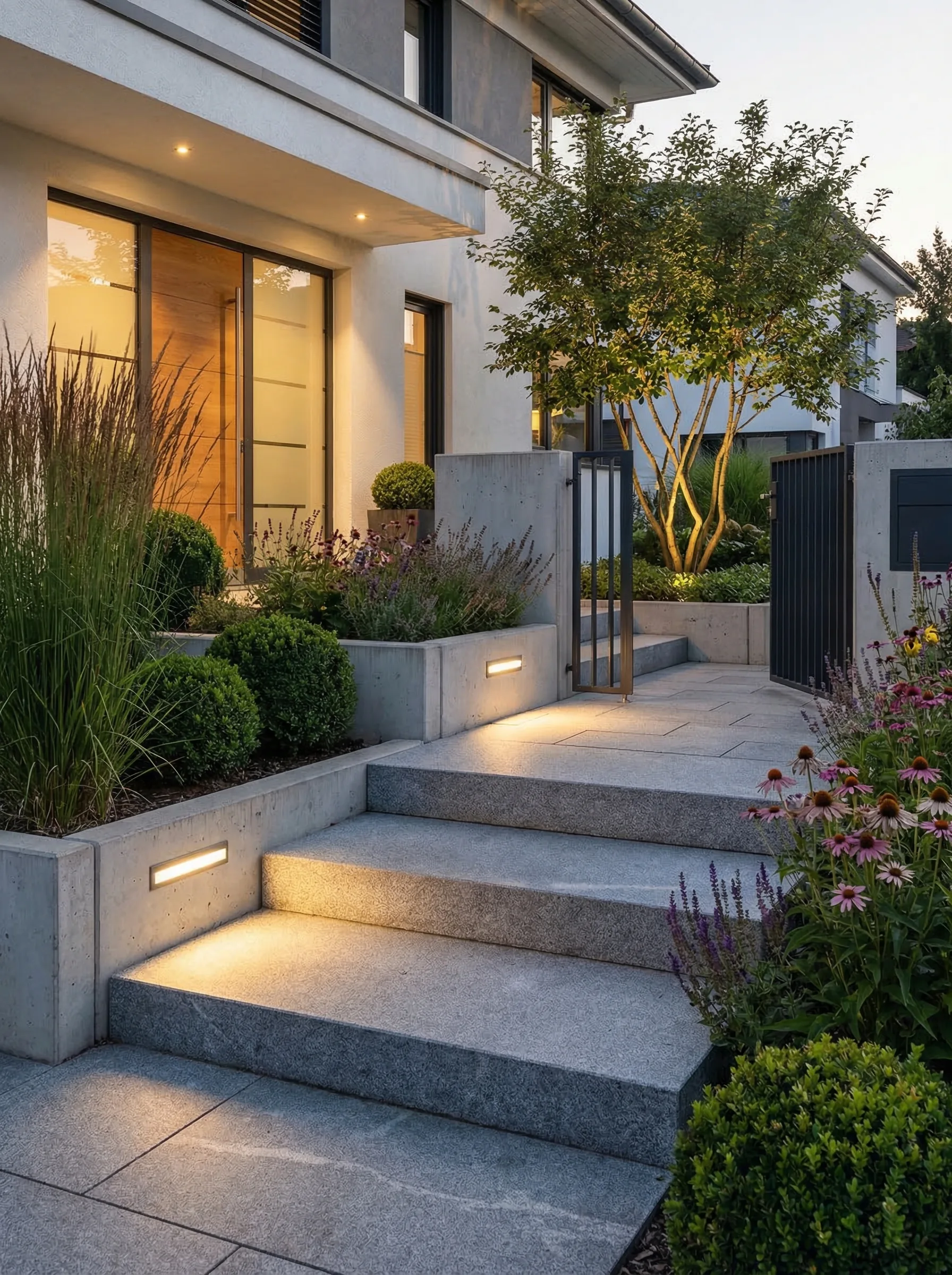
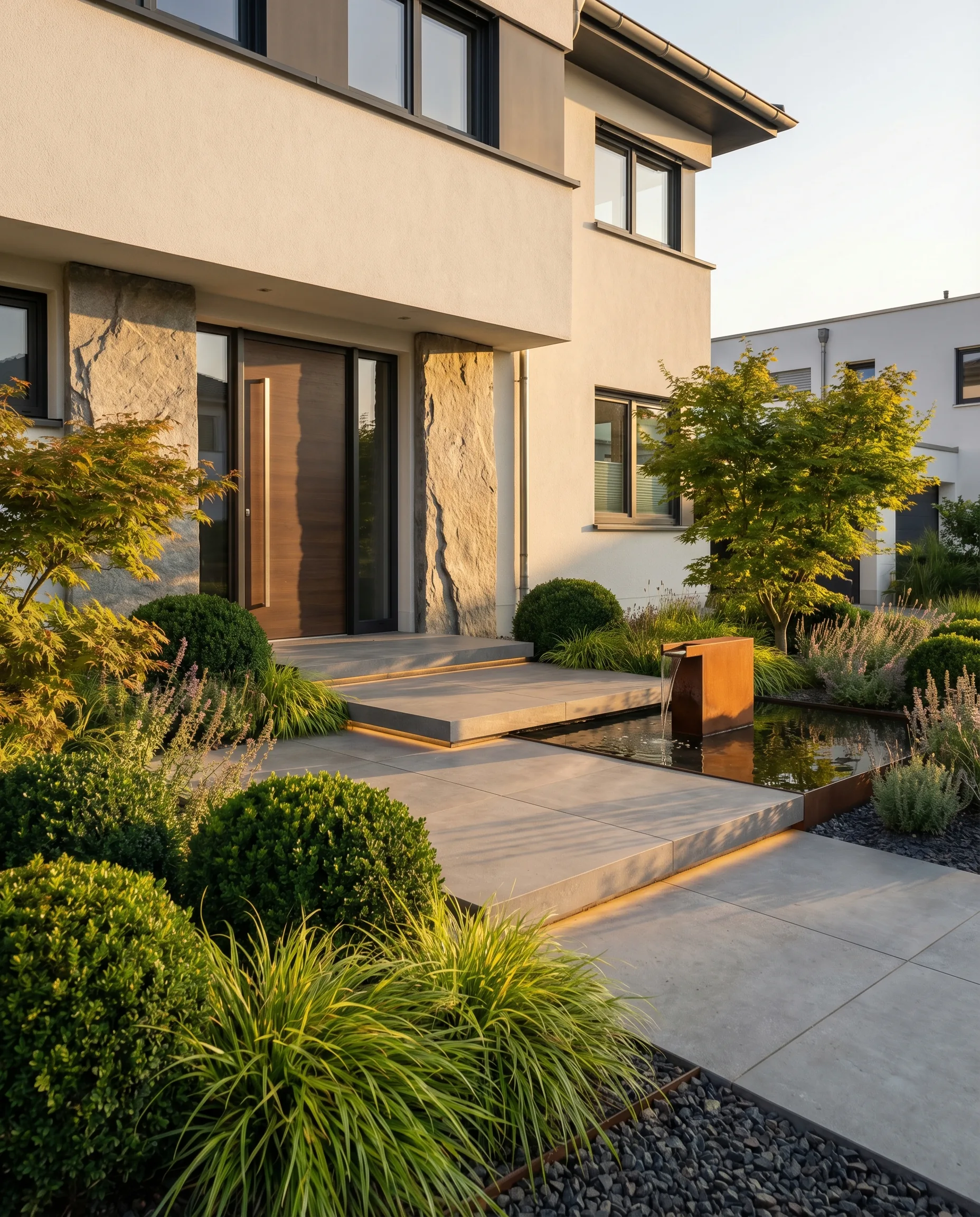
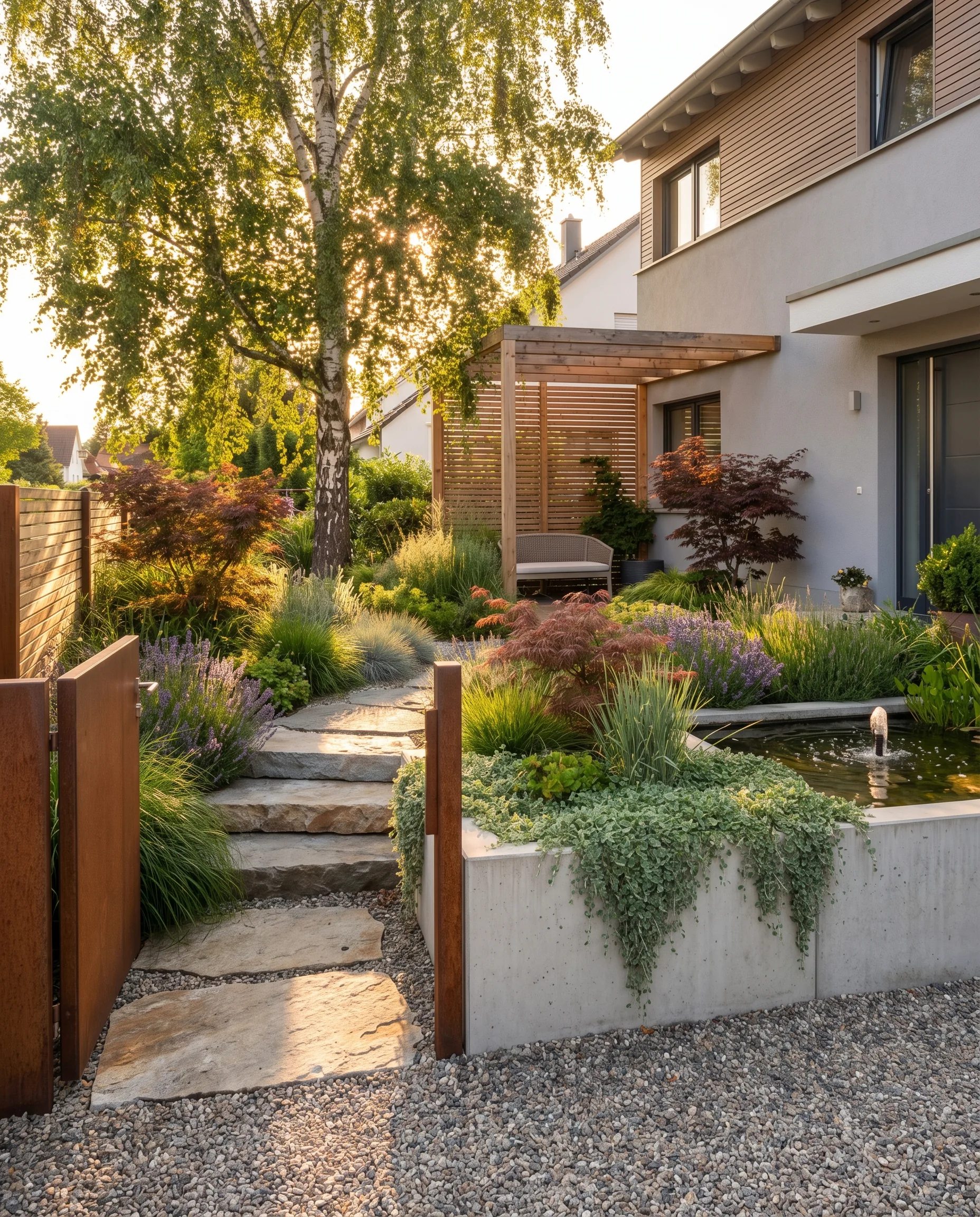
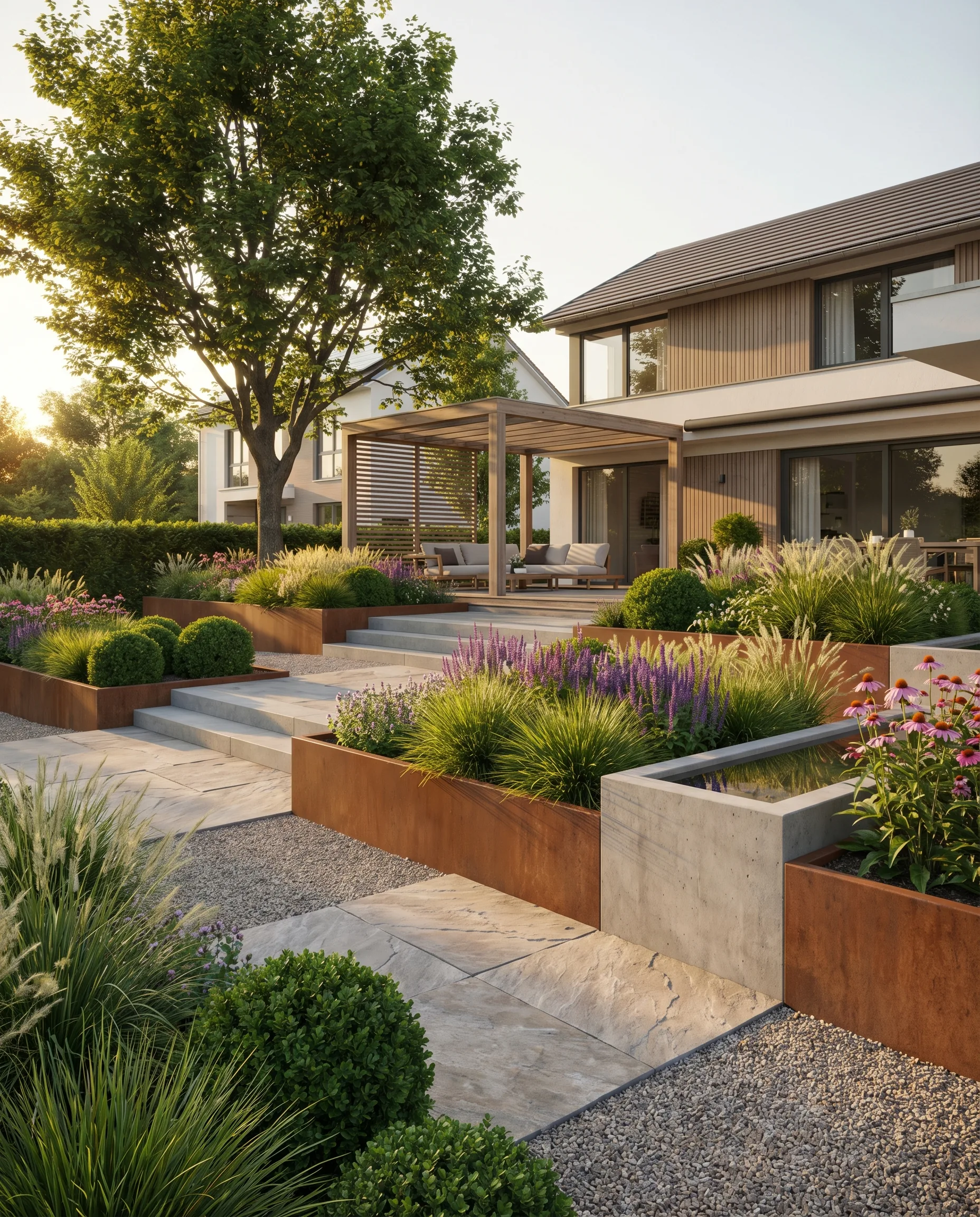
These examples highlight the essential characteristics of modern front gardens:
- large, calm surfaces instead of fussy, small-scale design
- clear, straight paths as a guiding line to the entrance
- restrained planting with just a few, high-impact species
- integrated lighting in steps, walls, or in-ground fixtures
- premium materials such as concrete, Corten steel, or large-format natural stone slabs
The garden feels calm, controlled, and architectural—a deliberate extension of the house.
Why It Works
Modern front gardens rely on reduction rather than variety. Repeated shapes (spherical shrubs, grasses), crisp edges, and visual order give the eye immediate orientation. Here, less truly is more.
How to Implement It
If you want to create this look:
- work with large slabs instead of small pavers
- use a maximum of 3–5 plant species
- choose structural plants (e.g., clipped spheres, ornamental grasses)
- integrate lighting into steps or wall edges
- keep edges clean and clearly defined
👉 Learn more: Design a Modern Front Garden – Clean Lines, Structure, and Premium Materials
Natural-Style Front Garden – Lively, Soft, and Welcoming


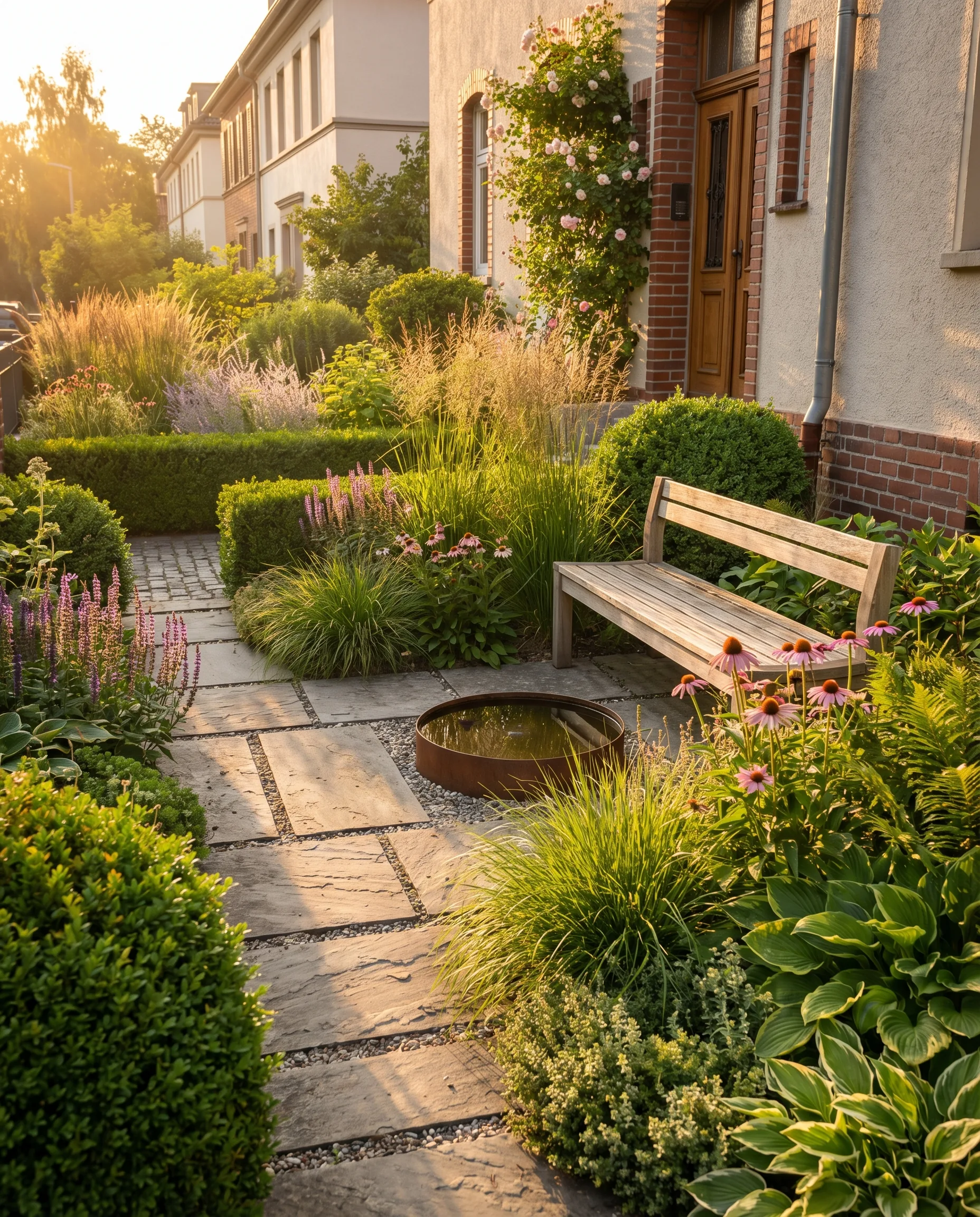
What Defines Natural-Style Front Gardens
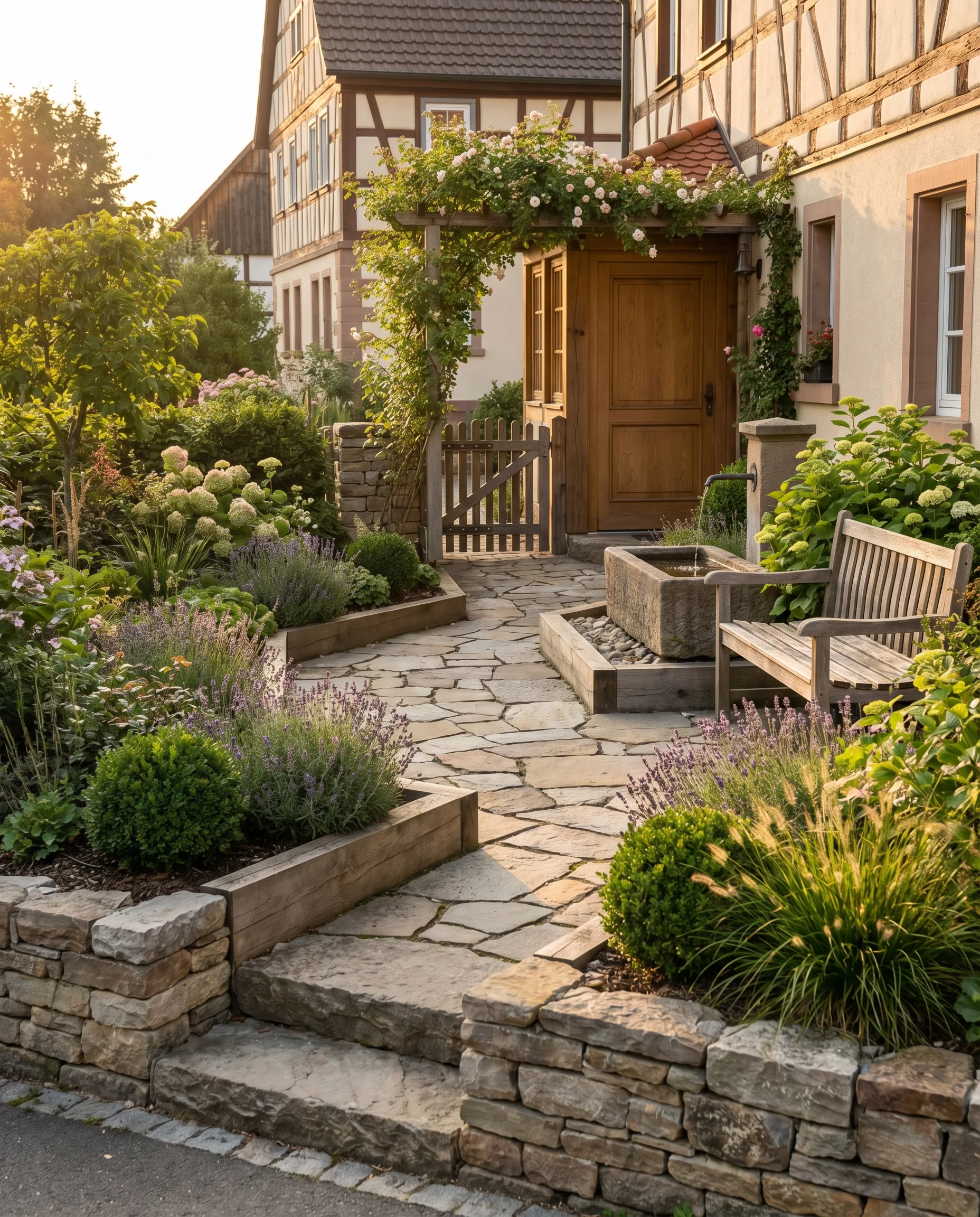
In contrast to the modern approach, these examples reflect a completely different design philosophy:
- curving paths instead of straight lines
- many different plants arranged in a natural-looking way
- varied heights and textures to create depth
- soft transitions between beds, paths, and lawn
The garden feels vibrant, natural, and emotionally inviting.
Why It Works
This isn’t about strict order—it’s about atmosphere. Plants look as if they’ve grown into place, paths flow organically through the space, and flowers and grasses bring gentle movement. The front garden feels “alive”—a warm welcome that radiates comfort.
How to Implement It
If you prefer this style:
- use natural stone instead of smooth slabs
- combine perennials, grasses, and flowering plants
- work with different heights (low in front, taller at the back)
- avoid hard, straight lines
- deliberately leave gaps for natural self-seeding
👉 Learn more: Natural-Style Front Garden – Blooming Ideas for a Lively Entrance Area
Small Front Garden – What Truly Works in Limited Space
Many homes have just a few square meters between the street and the front door. Especially here, intentional design is essential—because on a small area, every detail stands out.
Small front gardens need special rules:
- fewer elements, but each chosen with purpose
- clear sightlines leading to the entrance
- focus on the essentials—no room for experiments
- use vertical design (climbers, raised beds, green walls)
The key is structure and visual guidance—not the size itself.
👉 Learn more: Small Front Garden – Ideas for Narrow and Compact Entrance Areas
Paths, Materials, and Edges – The Underrated Foundation
The path to the entrance is the most important design element in a front garden. It sets direction, organizes the space, and defines the character of the entire area.
Path layout works as a principle of order:
- straight paths feel modern and lead directly to the goal
- curving paths create intrigue and a more natural feel
- material choice defines the style: concrete = modern, natural stone = natural, gravel = relaxed
The edge solution is just as decisive:
- Corten steel edging for precise definition
- natural stone borders for softer transitions
- lawn edging for low-maintenance finishes
👉 Learn more: Garden Path Ideas – Designing Stylish Front-Garden Walkways
Which Front-Garden Style Suits Which Home?
Choosing the right style isn’t just about personal taste—it’s primarily about the architecture of your home:
Modern Home (flat roof, clean façade)
→ A modern front garden with reduced elements, large slabs, Corten steel, and grasses. The garden becomes an architectural extension.
Classic Single-Family Home (gable roof, rendered façade)
→ Both styles can work—what matters is consistent execution. Modern elements can be just as successful here as naturalistic planting.
Period Property, Country House, or Timber-Framed Home
→ A natural-style design is usually the best fit. Soft forms, flowering beds, and natural stone paths enhance the home’s character.
Narrow Plots or Small Areas
→ Less is more. Clean lines, few materials, and thoughtful sightlines matter more than the specific style you choose.
Conclusion
There is no single “best” front-garden style. Whether modern or natural—what matters is the consistency with which you carry out your approach.
A modern front garden feels calm, clear, and architectural. A natural-style front garden feels lively, soft, and emotional.
Both work—when they’re designed intentionally and cohesively. The most common mistake isn’t choosing the wrong style, but mixing styles without realizing it.
Next Step
Want to see which front-garden style suits your home? With GardenPilot, you can compare different ideas directly based on a photo—modern, natural, or something in between.
Visualize your front garden now →
Further Reading
- Design a Modern Front Garden – Clean Lines, Structure, and Premium Materials
- Small Front Garden – Ideas for Narrow and Compact Entrance Areas
- Natural-Style Front Garden – Blooming Ideas for a Lively Entrance Area
- Garden Path Ideas – Designing Stylish Front-Garden Walkways
Whether modern or natural—what truly works in front of your home only becomes clear when you see the ideas on your own front garden, not in generic examples. Upload a photo of your garden and use AI to see how it could look—along with a rough cost range before you invest. That’s how you avoid expensive planning mistakes. Visualize your garden with GardenPilot (how it works).
Frequently Asked Questions
Which plants work for a modern front garden with minimal maintenance?
For a modern, low-maintenance front garden, grasses such as blue fescue or Miscanthus work well, along with perennials like lavender and stonecrop, plus evergreen shrubs such as boxwood alternatives (e.g., Ilex crenata). They look structured, need little water, and keep their attractive appearance year-round.
How do I create a natural-style front garden that still looks tidy?
A natural-style front garden looks well cared for when you use clear bed edging in Corten steel or natural stone and plant native wild perennials in groups rather than scattering them randomly. Deliberately chosen shapes and a calm color palette help keep wildness and order in balance.
Designing a front garden without lawn—what are the best alternatives?
Popular alternatives to lawn in the front garden include gravel or chippings with embedded stepping stones, groundcover perennials such as hardy geranium or barrenwort, and planted raised beds. The key is to keep sealed surfaces as low as possible so rainwater can still soak into the ground.
Roughly how much does it cost to redesign a front garden?
The cost of a professional front-garden redesign depends heavily on size, material choices, and local labor rates—quoting fixed numbers would be misleading. As a guideline, it’s worth getting at least three quotes from local landscaping companies and asking for separate line items for planning, materials, and labor.
Gallery
Plan your own garden
Upload a photo of your garden and get a professional AI concept in minutes.
Start for freeMore articles from Front Gardens
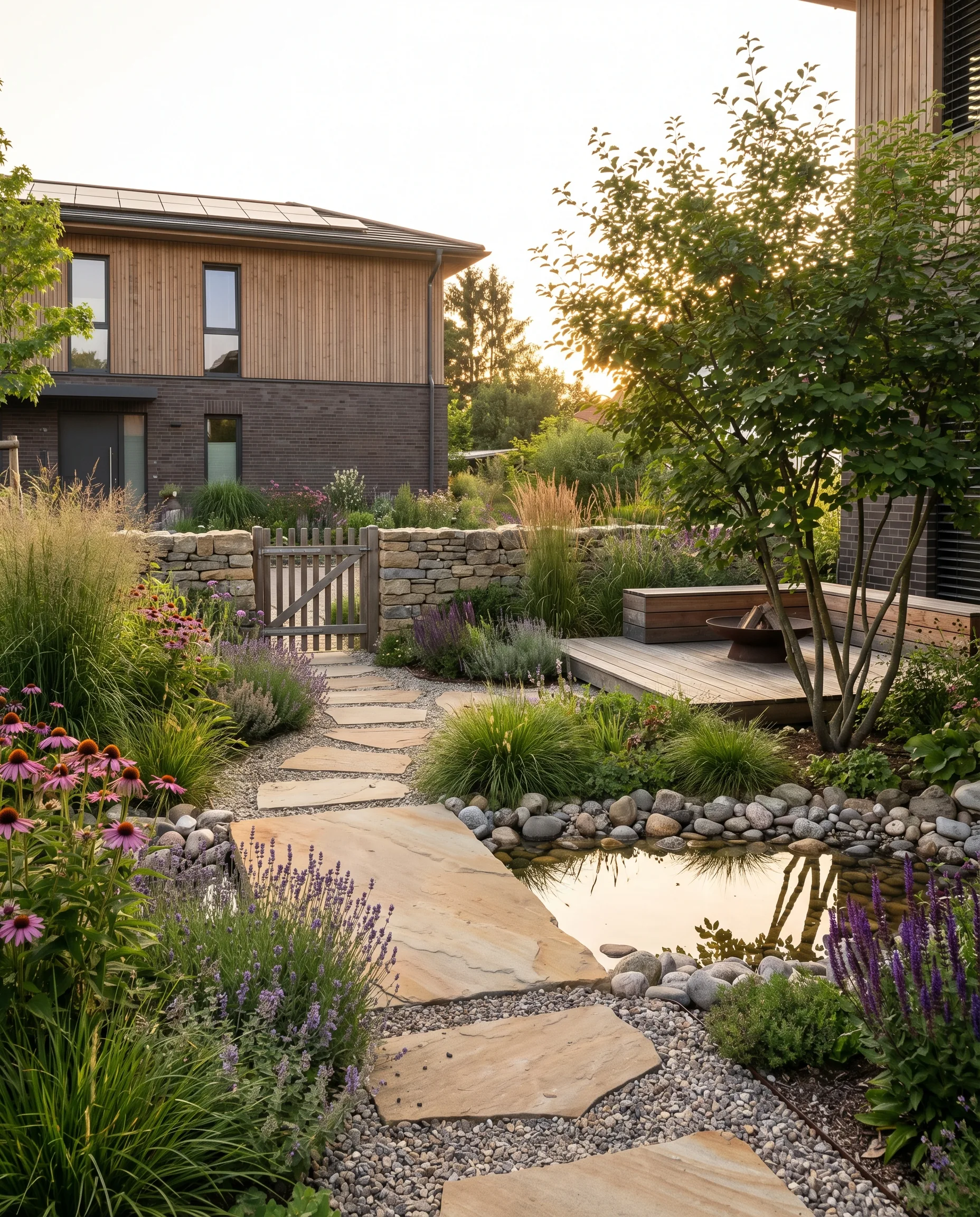
Nature-Inspired Front Garden: Blooming Ideas for a Lively Entrance
Nature-inspired front gardens with perennials, grasses, and wildflowers—lively, pollinator-friendly, and welcoming.
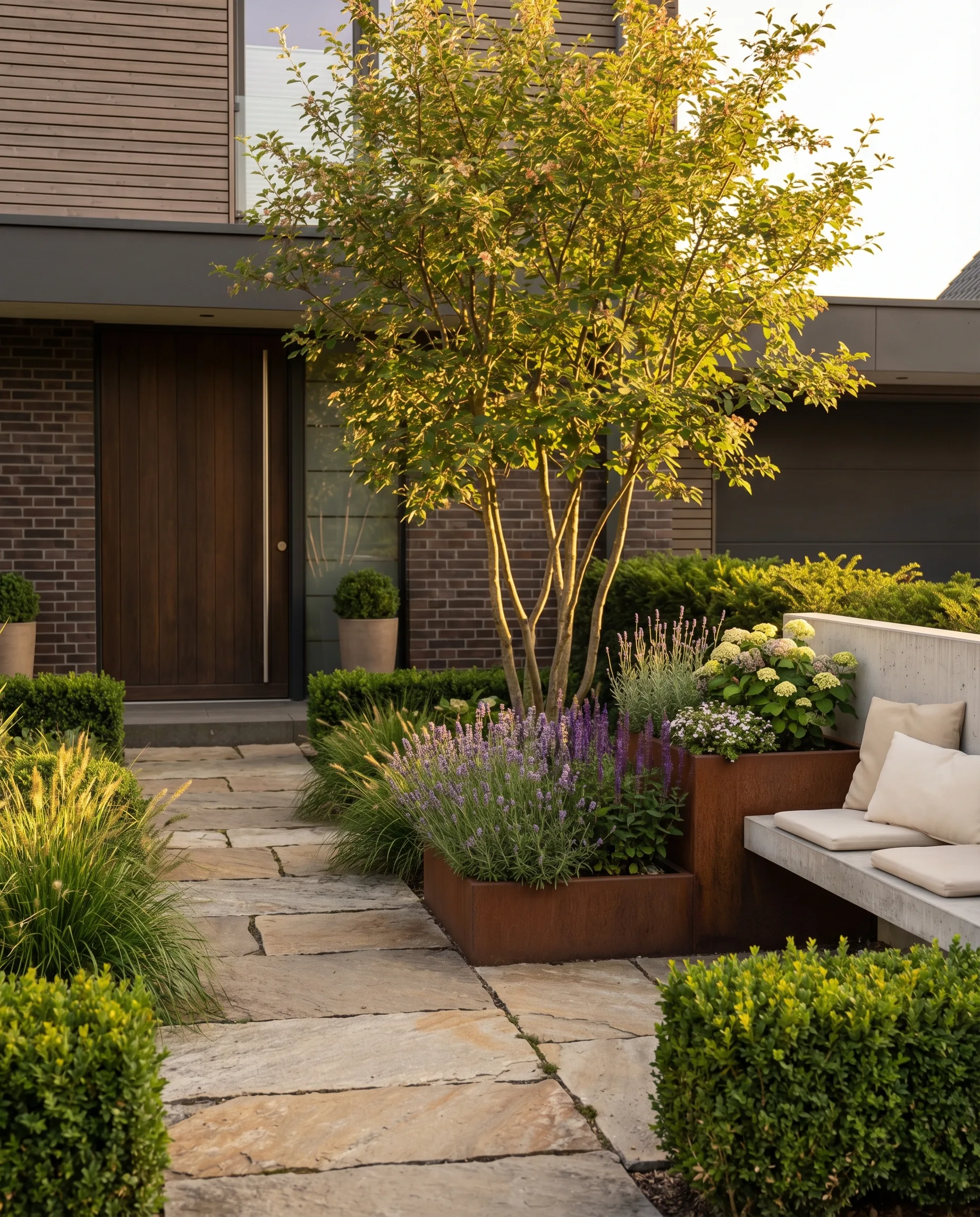
Small Front Garden: Ideas for Narrow and Compact Entryways
Design small front gardens smartly—ideas and tips for entryways with limited space.
Designing a Modern Front Garden: Clean Lines, Structure and Premium Materials
Modern front gardens with clean lines, concrete, Corten steel and minimalist planting—how to create a contemporary entrance area.