Designing a Modern Front Garden: Creating a Clean, High-End Entrance
What Defines a Modern Front Garden
A modern front garden doesn’t thrive on variety—it thrives on clarity. It’s the design opposite of a wild cottage garden: calm, controlled, and reduced to what truly matters.
Key characteristics:
- Clean lines – straight paths, defined edges, geometric shapes
- Reduction – fewer plant varieties, fewer materials, fewer colors
- Repetition – the same shapes and elements are intentionally repeated
- Calm material surfaces – large-format slabs, smooth finishes, consistent tones
The result: the front garden feels like an architectural extension of the house—not a separate garden placed in front of it.

Path Layout and Geometry – the Foundation of Modern Front Gardens
The path to the front door is the central design element. In a modern front garden, it doesn’t just point the way—it defines the entire space.
Straight Paths as a Guiding Line
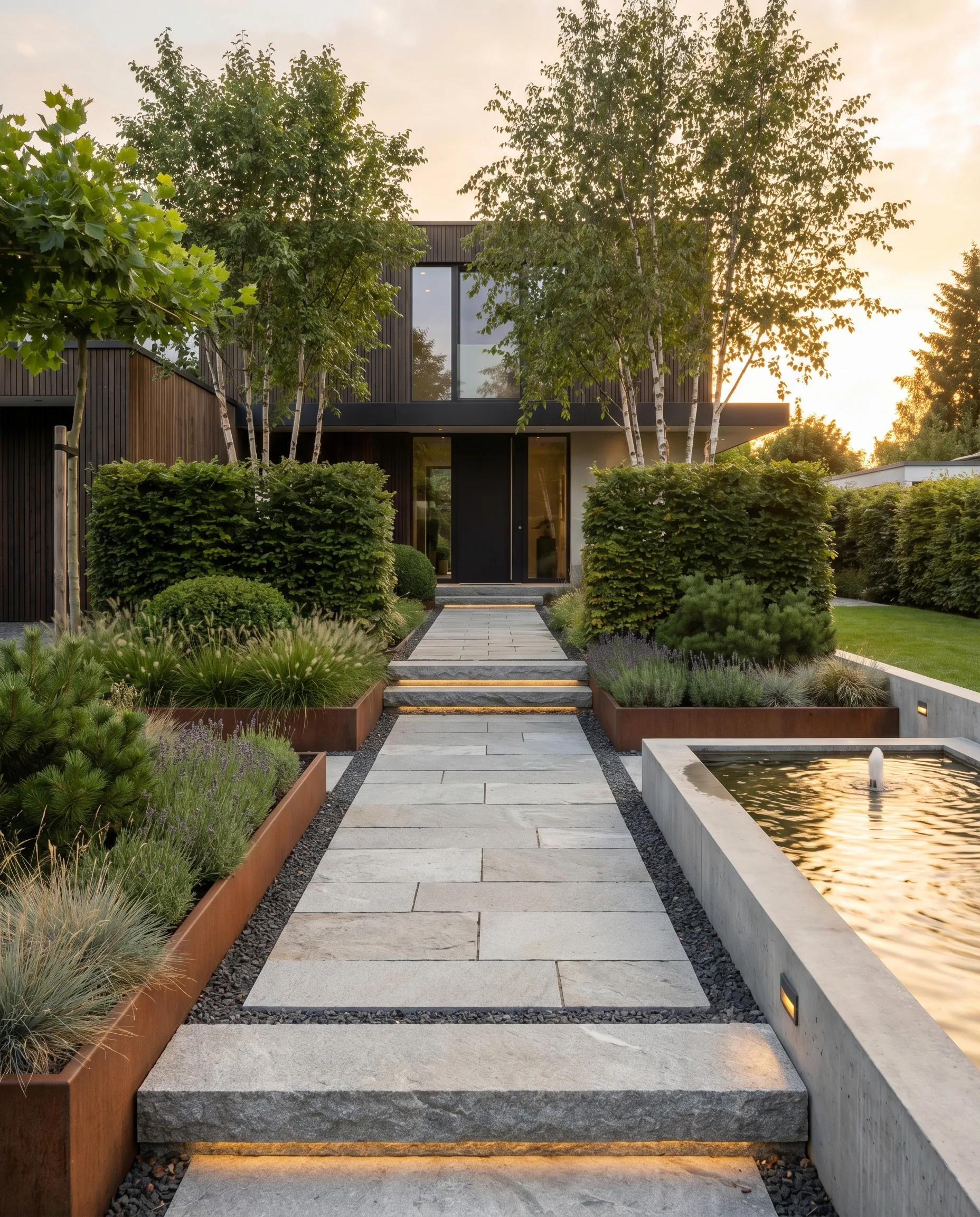
Modern front gardens almost always rely on straight, axial paths. They lead directly to the entrance and create visual clarity. Curves and winding routes tend to feel out of place here.
Large-Format Slabs
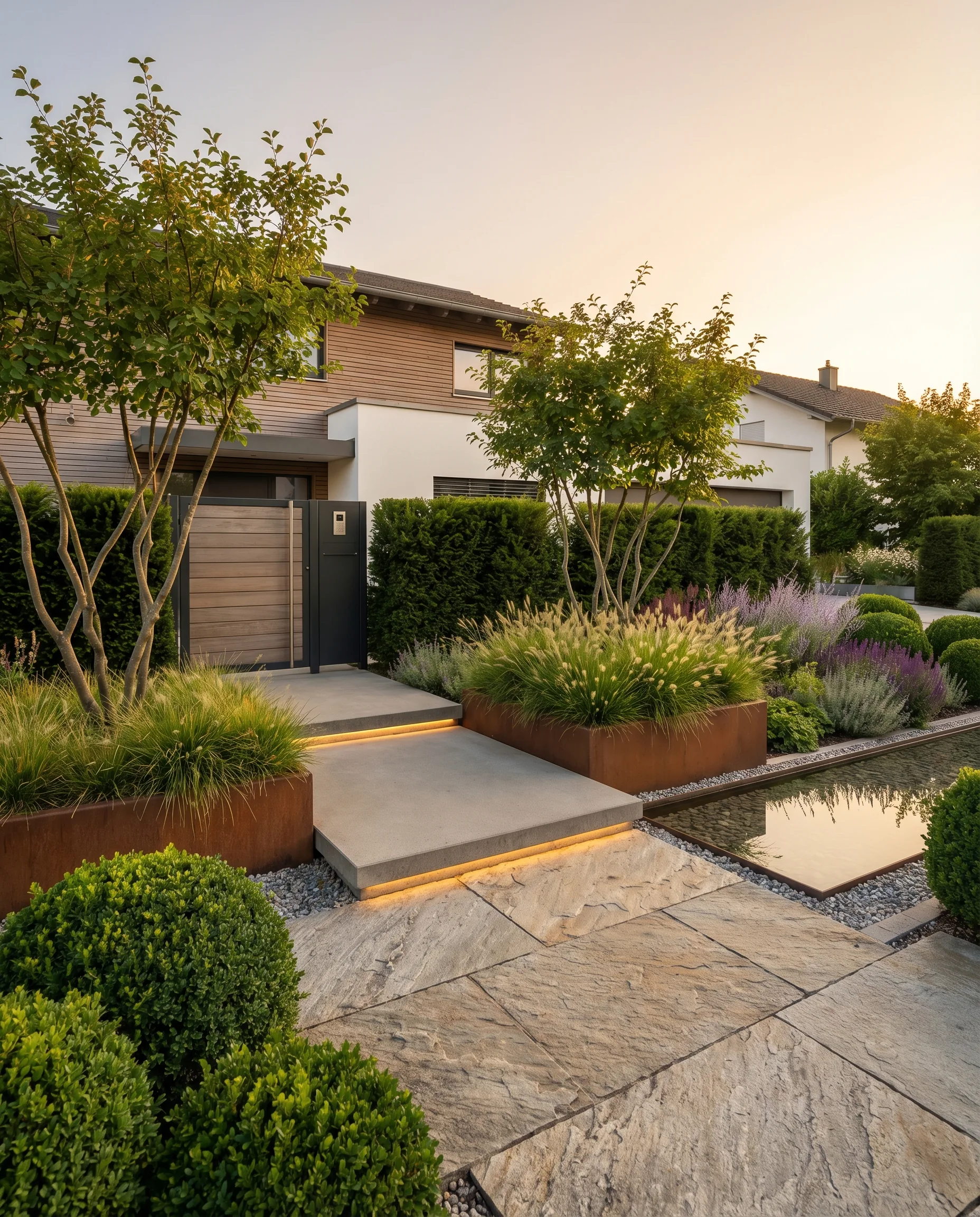
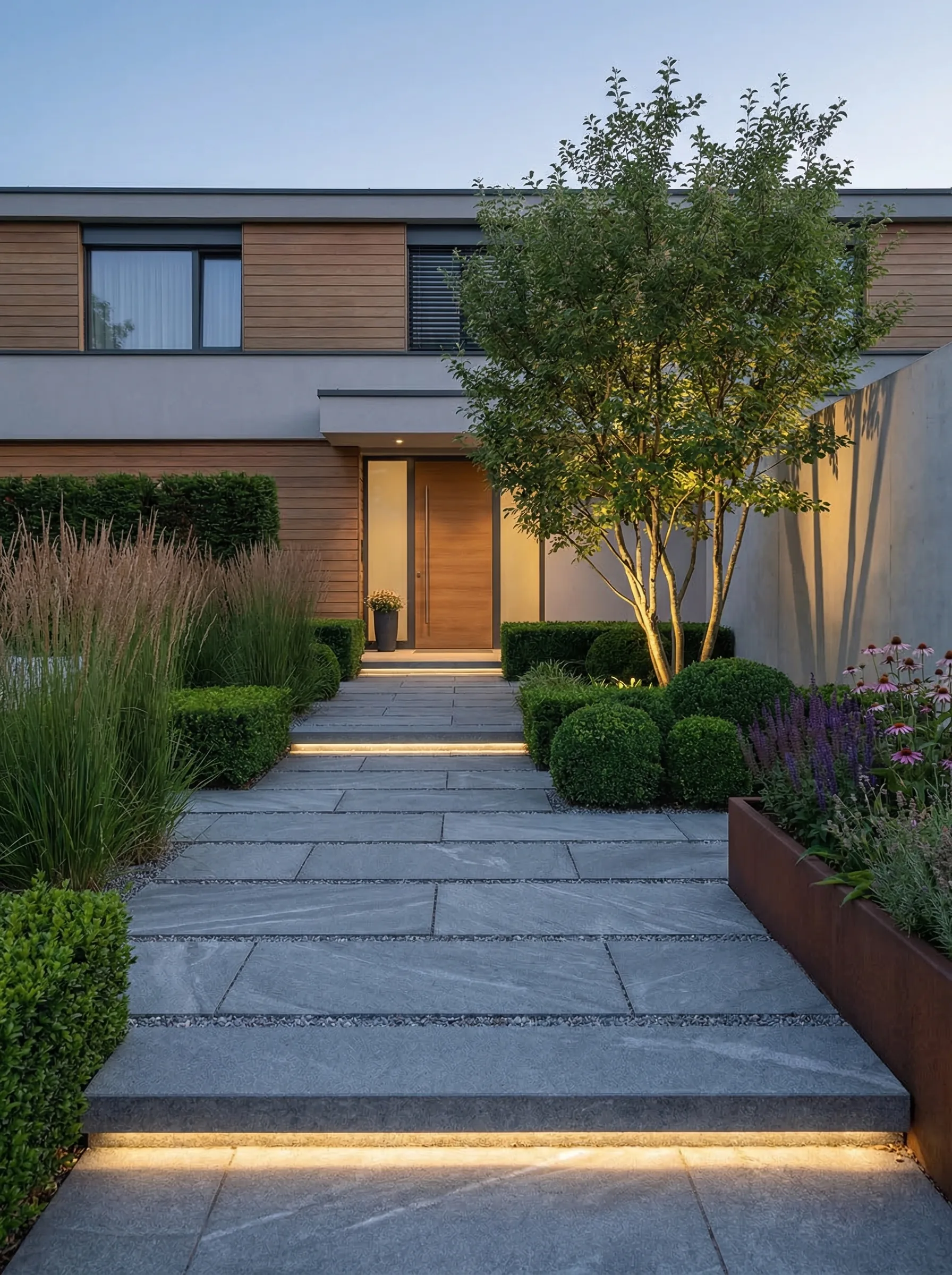
Instead of small paving, use large-format concrete or natural stone slabs—at least 60 x 60 cm, ideally 80 x 80 cm or larger. Fewer joints reinforce the calm overall look.
Axes and Sightlines
The path should form a clear axis—ideally symmetrical to the front door. Side elements (plants, lights, walls) strengthen this axis.
Steps and Platforms
Where there are changes in level, wide, shallow steps or platforms add horizontal surfaces that enhance the architectural character.

👉 More on pathways: Garden Path Ideas – Designing Stylish Front-Garden Paths
The Right Planting for a Modern Front Garden
Less is more—especially when it comes to plant choice in a modern front garden. Instead of colorful flower beds, focus on structure, texture, and repetition.
Grasses
Ornamental grasses such as fountain grass, Miscanthus, or blue fescue add movement and lightness without breaking the clean lines. They look especially effective in rows or as companion planting along pathways.
Ball-Shaped Shrubs
Boxwood spheres, Ilex balls, or clipped yews create geometric accents that suit the modern style. Planted individually or in groups, they form calm visual anchors.
Specimen Trees and Shrubs
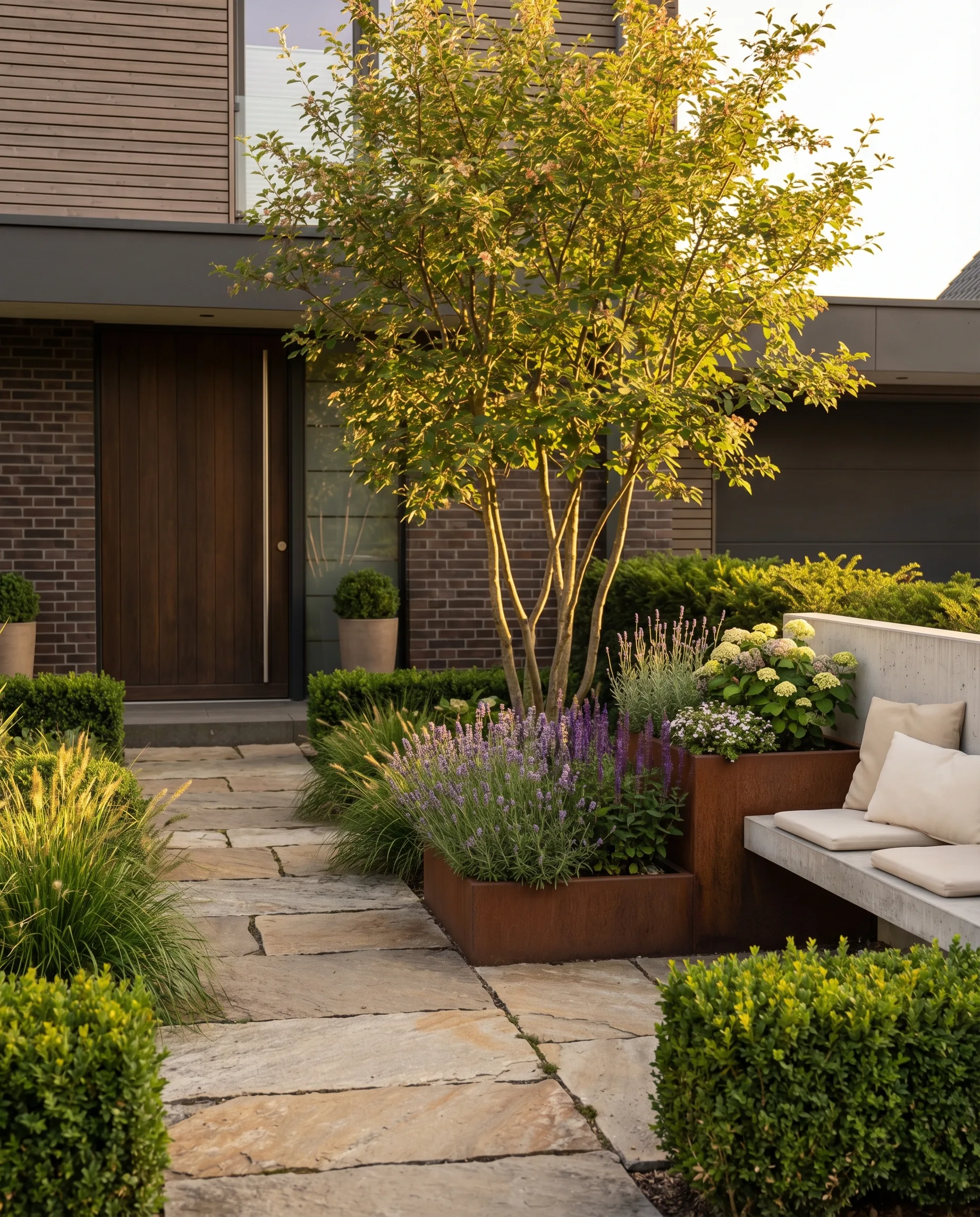
A single, deliberately chosen tree—such as a globe maple, serviceberry, or a multi-stem maple—can become a focal point without overcrowding the space.
A Restrained Color Palette
Modern planting works with greens, greys, and white. Strong flower colors are used sparingly—if at all. The impact comes from leaf structure, not blooms.
Materials for Modern Entrance Areas
Material choice largely determines the overall effect. Modern front gardens rely on a small selection of premium materials:
Concrete
Exposed concrete, concrete slabs, or concrete walls are the staple of modern garden design. Smooth surfaces, crisp edges, consistent tones.
Natural Stone in Large Formats
Granite, basalt, or slate in large-format slabs combine natural authenticity with a modern aesthetic. Key: consistent color and minimal joints.
Corten Steel
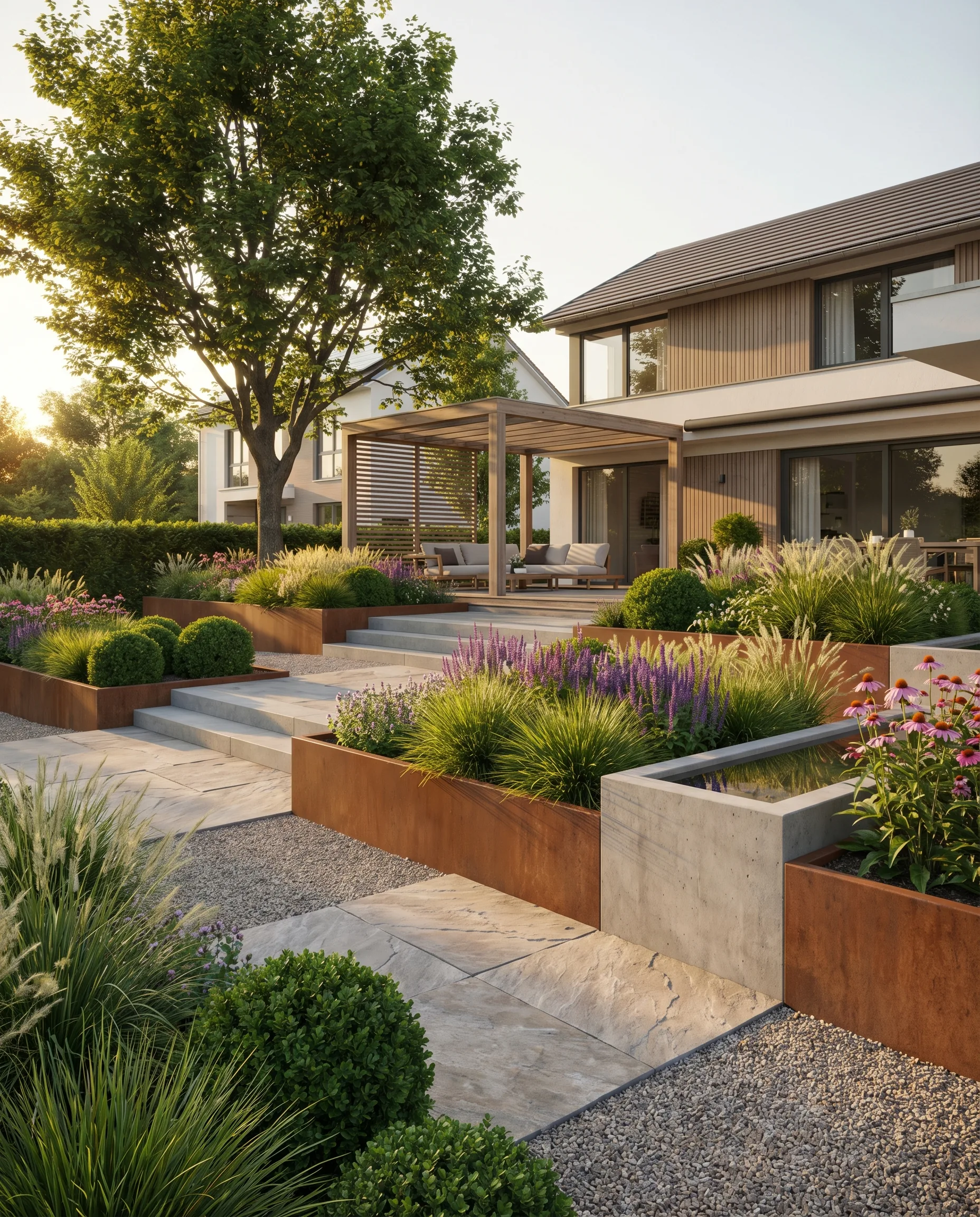
Corten steel edging and borders add warm, rust-toned accents and define beds, paths, and transitions with precise lines—modernity paired with a natural patina.
Wood as a Warm Contrast
Thermowood or larch used for privacy screens, platforms, or accent elements softens the cool strictness and brings warmth to the overall impression.

Using Lighting Correctly in a Modern Front Garden
In a modern front garden, lighting isn’t an accessory—it’s an integral part of the design. Used well, it reinforces clean lines and creates a completely new evening atmosphere.
Step Lighting
LED strips integrated into steps or platforms emphasize horizontal lines and improve safety without drawing attention.
Recessed Wall Lights
Small lights built into walls or edging create targeted accents and graze surfaces with light—elegant and understated.
Indirect Light Instead of Decorative Lamps
Modern front gardens avoid classic garden lanterns or decorative fixtures. Instead, use indirect lighting: in-ground spotlights that uplight plants, or light lines running along pathways.
Does a Modern Style Work in Small Front Gardens?
Yes—and especially well. In a limited space, clear structures often feel even stronger than in large gardens. Because:
- reduction is necessary in small areas anyway
- clean lines create a sense of spaciousness
- fewer materials make the space feel calmer
- geometric shapes use the area more efficiently
A narrow, straight path with large slabs, flanked by two groups of grasses and a single globe light—often that’s all a small modern front garden needs.
👉 More on this: Small Front Garden – Ideas for Narrow and Compact Entrance Areas
Modern vs. Nature-Inspired Front Gardens
Not everyone feels at home with a modern front garden. The key differences at a glance:
| Modern front garden | Nature-inspired front garden |
|---|---|
| clean lines, geometric forms | curved paths, organic shapes |
| few plant species | many different plants |
| calm, uniform surfaces | lively, varied beds |
| concrete, Corten steel, large slabs | natural stone, gravel, wood |
| controlled and architectural | natural and emotional |
When modern is the better fit:
- with contemporary house architecture (flat roof, cubic forms)
- if you want low maintenance
- if you prefer a clean, calm aesthetic
When the style can feel too cool:
- with historic buildings or country houses
- if the front garden is very large and could feel “empty”
- if you want vibrant blooms and more insect diversity
👉 For comparison: Nature-Inspired Front Garden – Blooming Ideas for a Lively Entrance
Conclusion
A modern front garden doesn’t impress through effort—it impresses through discipline in form, materials, and plant selection. A few elements, implemented consistently, create an impact no colorful flower garden can match.
The key is consistency:
- one material for the path
- no more than three plant species
- crisp edges and clearly defined areas
- lighting as a design element, not decoration
Follow these principles and you’ll create an entrance that feels calm, premium, and timeless.
Next Step
If you want to see how a modern front garden could look at your own home, you can use GardenPilot to visualize different options directly—based on a photo of your entrance area.
Visualize your front garden now →
Related Articles
- Designing a Front Garden – Overview of Modern and Nature-Inspired Ideas
- Small Front Garden – Ideas for Narrow and Compact Entrance Areas
- Garden Path Ideas – Designing Stylish Front-Garden Paths
- Nature-Inspired Front Garden – Blooming Ideas for a Lively Entrance
Clean lines and premium materials in the front garden only work when they suit your home’s architecture—and the safest way to check that is by visualizing your own entrance. Upload a photo of your garden and use AI to see how it could look—complete with a rough cost range before you invest. That way, you avoid costly planning mistakes. Visualize your garden with GardenPilot (how it works).
Frequently Asked Questions
Which plants are suitable for a modern front garden with clean lines?
For modern front gardens, choose plants with a strong, defined growth habit—for example grasses such as fountain grass, evergreen topiary shrubs like boxwood or yew, and large-leaved perennials such as Bergenia. The key is to repeat a few species in groups or rows, rather than mixing many different varieties.
Roughly how much does it cost to design a small front garden in a modern style?
Costs depend heavily on the materials chosen and the size of the area—high-quality concrete stone, Corten steel, or natural stone are significantly more expensive than simple concrete pavers. You should also budget for professional planning and installation by a landscape contractor if you want a crisp result with precise edges and transitions.
How do I properly maintain Corten steel elements in the front garden?
Corten steel is largely low-maintenance because its distinctive rust patina protects it naturally—you don’t need to paint or seal it. Just make sure, through thoughtful planning, that rust runoff doesn’t stain adjacent light-colored paving or façade surfaces.
Can I design a modern front garden without a lawn?
Yes—and in many modern concepts, lawns are intentionally left out. Instead, gravel, chippings, Corten steel planting beds, or concrete slabs are used. This option is often lower-maintenance and, when executed consistently, looks very premium and contemporary.
Gallery
Plan your own garden
Upload a photo of your garden and get a professional AI concept in minutes.
Start for freeMore articles from Front Gardens
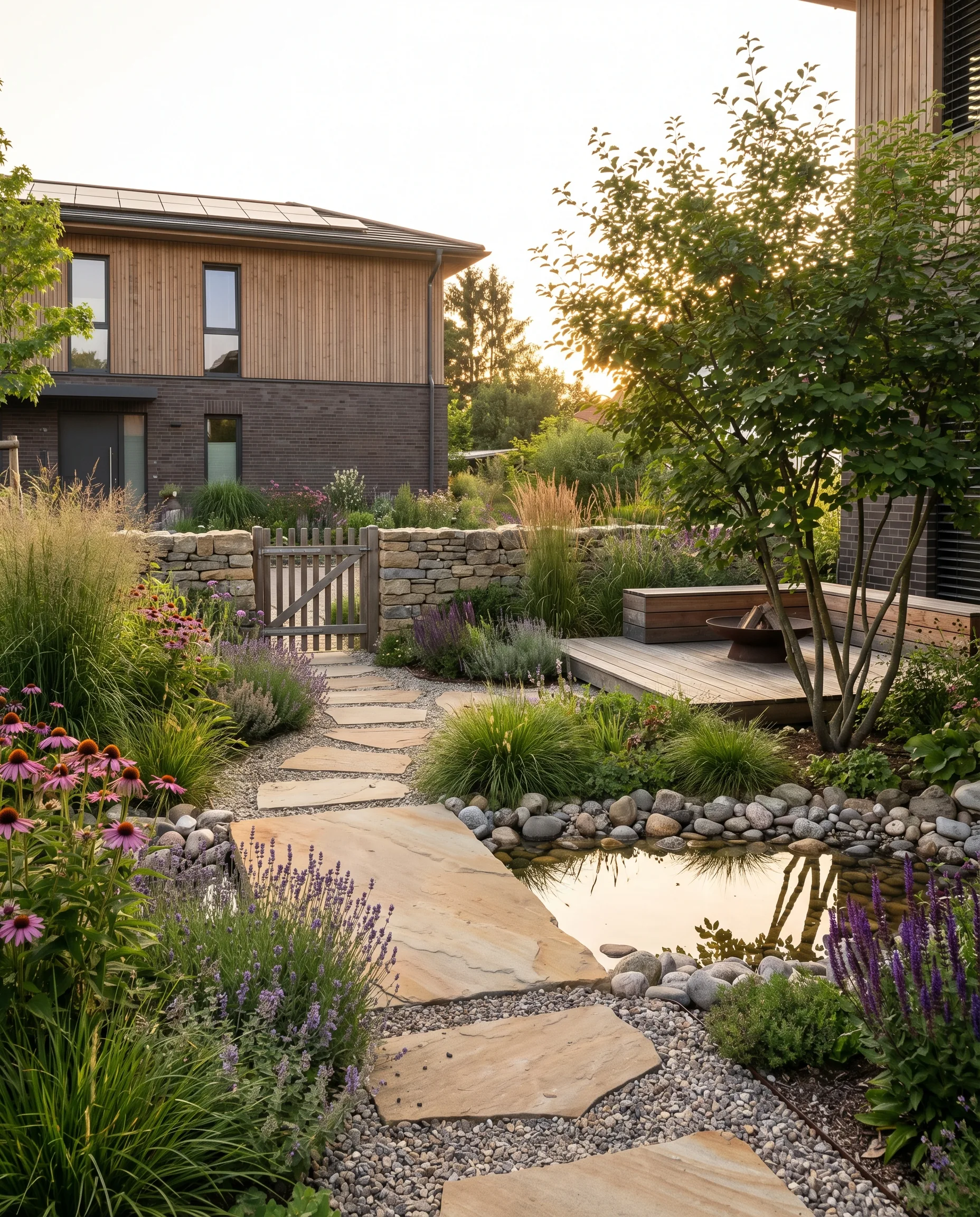
Nature-Inspired Front Garden: Blooming Ideas for a Lively Entrance
Nature-inspired front gardens with perennials, grasses, and wildflowers—lively, pollinator-friendly, and welcoming.
Small Front Garden: Ideas for Narrow and Compact Entryways
Design small front gardens smartly—ideas and tips for entryways with limited space.
Designing Your Front Garden: Modern & Natural Ideas for Stylish Entrance Areas
Your front garden is the first impression of your home. Discover modern and natural ideas for stylish entrance areas—with practical tips you can put into action.