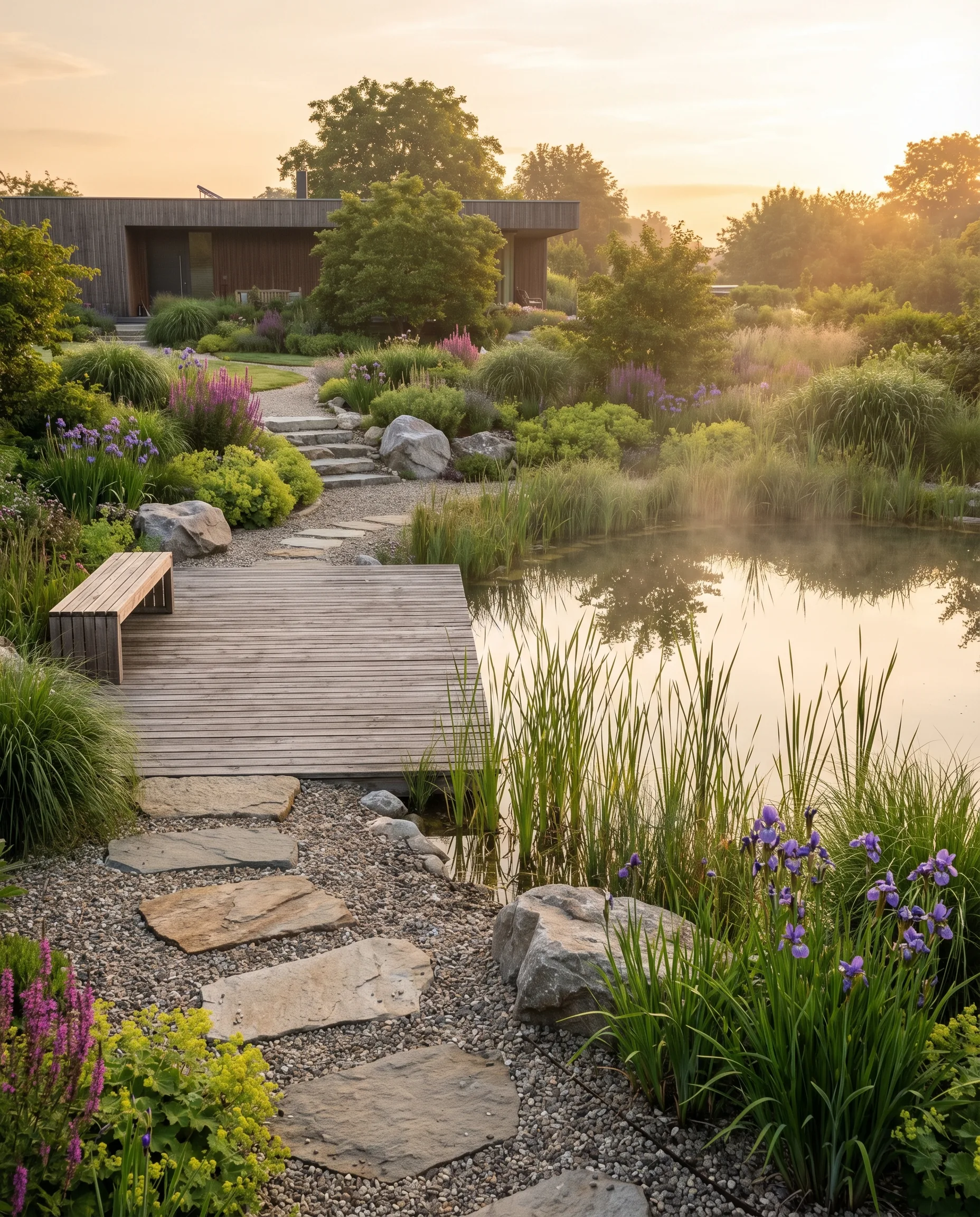
Designing a Garden by the Water: How Banks, Paths, and Materials Feel Natural and Serene
Water is one of the most powerful design elements in the garden. It brings calm, reflection, and an emotional depth that no other material can create. Anyone looking to design a garden by the water—whether with a pond, stream, or water basin—soon faces the question: How can banks, paths, and materials look natural without feeling artificial or staged?
Why Water Has Such a Powerful Effect in Naturalistic Gardens
Water fundamentally changes a garden. It adds a dimension that plants and materials alone can’t achieve.
What water brings to a garden:
- Calm and reflection – a still surface mirrors sky, plants, and light, doubling the visual depth
- Connection to the landscape – water links the garden to nature; it feels like a window into the surroundings
- Emotional depth – the sound of water, the movement of the surface, the reflections create a mood that resonates
- A bridge between garden and setting – water softens boundaries, blurring the line between designed space and natural landscape
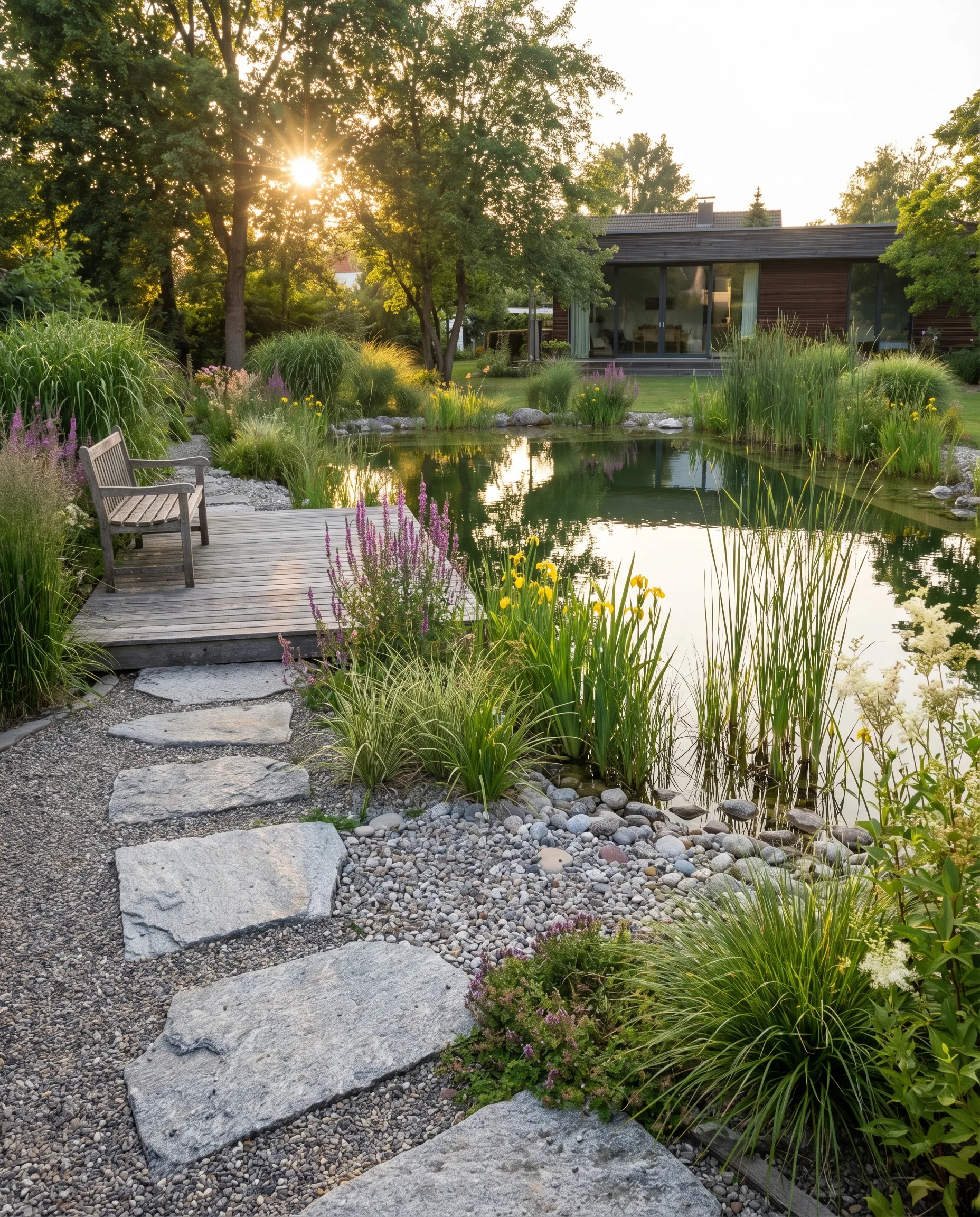
In naturalistic gardens, water is most impactful when it isn’t treated as an isolated feature, but as part of the overall composition.
Designing Natural Banks
The bank zone determines whether a pond or water basin feels natural or artificial. In naturalistic gardens, the rule is: the softer the transition, the more believable the result.
Design principles for natural-looking banks:
- Soft transitions – no hard edge between water and land; aim for flowing boundaries
- Gravel as a transition zone – varied grain sizes create a natural gradient from water to shore
- Natural stone as structure – individual stones and boulders look organically placed and give the bank stability
- Grasses and perennials at the edge – sedges, rushes, purple loosestrife, and irises create lively, natural shorelines
- No harsh, artificial finishes – concrete edges, plastic liners, or visible borders disrupt the natural effect
The goal: the bank should look as if nature shaped it—even when it’s been carefully planned.
Paths and Places to Linger by the Water
Water is meant to be experienced—not just seen. Paths and seating by the water turn a pond or stream into a place you can truly inhabit.
Design ideas for paths and waterside areas:
- Stepping stones in gravel – individual natural stone slabs leading through gravel toward the water
- Natural stone paths along the bank – laid irregularly, with grasses and groundcovers growing in the joints
- Small seating spots – a wooden bench on the shore, a natural boulder as a seat, a small terrace with a view of the water
- Quiet viewpoints – places where you naturally pause and let the water work its magic
Materials should match the bank: natural stone, wood, and gravel feel harmonious. Concrete, metal, or polished surfaces can break the natural mood.
Which Plants Work Especially Well at the Water’s Edge
Planting at the water’s edge follows its own rules. Not every plant tolerates moisture—and not every plant looks right along a naturalistic shore.
Plants that perform beautifully at the water’s edge:
- Grasses – sedges (Carex), cattails, and Chinese silver grass add height and movement along the bank
- Structured perennials – Iris sibirica, purple loosestrife, and meadowsweet create bold accents
- Soft edge plants – lady’s mantle, forget-me-nots, and marsh marigold fill the transition zones
- Naturally convincing species – anything that could also grow at a wild body of water will always look most authentic
Think in zones: moisture-loving plants right at the water, resilient perennials in the transition area, and classic garden plants in the drier zone.
Garden by the Water vs. Classic Romantic Garden
A waterside garden and a romantic garden share many qualities—but their focus differs.
What they have in common:
- Both thrive on atmosphere and mood
- Both rely on natural materials and soft shapes
- Both create emotional, inviting spaces
How a garden by the water is different:
- Water is the central element, not the planting
- The design is more strongly inspired by landscape imagery
- The effect is less ornamental and more defined by calm and depth
If you’d like to emphasize the romantic side even more, you’ll find further inspiration in our article on the romantic garden.
Water Features in Cottage and Naturalistic Gardens
Water works in many garden styles—but it looks different in each.
Where the styles overlap:
- In naturalistic and cottage gardens, water is treated as a natural element
- Both styles work with soft banks and lively planting
- Both use water to create mood, not as an architectural statement
How water can feel romantic or pared-back:
- In the cottage garden, water is often framed by lush planting—roses at the pond’s edge, hydrangeas along a stream
- In more reduced naturalistic gardens, water feels calmer and more open—fewer plants, more reflection
Can a Garden by the Water Still Be Low-Maintenance?
Yes—if banks, materials, and planting are planned with resilience in mind.
What defines a low-maintenance waterside garden:
- Robust bank plants – sedges, irises, and purple loosestrife need little care and largely regulate themselves
- Limit maintenance zones – don’t plant the entire shoreline; set clear focal areas instead
- Keep surfaces and edges controlled – gravel and natural stone at the water’s edge help prevent uncontrolled spread
- Minimize technology – a natural pond with biological balance often needs less equipment than an ornamental pond with pump and filter
More on low-maintenance garden planning in our article on the low-maintenance naturalistic garden.
Conclusion
In naturalistic gardens, water is most compelling when transitions are calm and believable. Soft banks, natural materials, and planting that suits the surroundings make the difference between an artificial basin and a place that feels like nature.
Want to see how water, banks, and planting would look in your own garden? With GardenPilot, you can visualize different naturalistic concepts directly based on your property.
Further Reading
- Naturalistic Garden Ideas: Blooms, grasses, natural stone, and soft forms
- Cottage Garden: Romantic garden design with structure and lightness
- Romantic Garden: Creating atmosphere with paths, plants, and light
- Low-Maintenance Naturalistic Garden: Create a vibrant space with minimal effort
Transitions between bank, path, and planting look different in photo books than they do on your own property—visualization closes that gap. Upload a photo of your garden and use AI to see how it could look—complete with a rough cost range before you invest. This helps you avoid expensive planning mistakes. Visualize your garden with GardenPilot (here’s how it works).
Frequently Asked Questions
Which plants are suitable for a naturalistic bank at a garden pond?
Native shoreline plants such as yellow flag iris, purple loosestrife, reed, and water iris create soft, natural-looking transitions between water and land. They also provide habitat for insects and amphibians and stabilize the bank naturally.
Which natural stone is best for paths by the water?
Flat, slip-resistant natural stones such as limestone, sandstone, or granite are ideal for paths right at the water’s edge, as they handle moisture well and look visually harmonious. Irregular shapes and natural joints allow the path to blend organically into its surroundings.
How do I create a calm transition from lawn to pond?
A gently sloping earth berm, a narrow gravel strip, or stones that extend shallowly into the water create a flowing transition that looks natural and avoids hard edges. Companion perennials such as cranesbill or grasses further enhance this soft transition.
How do I prevent gravel on the pond bank from sliding into the water?
A stable base of compacted soil and the bedding-in of larger edge stones prevent gravel from migrating into the water. Alternatively, a water-permeable fleece layer secures the gravel without compromising the natural look.
Gallery
Plan your own garden
Upload a photo of your garden and get a professional AI concept in minutes.
Start for freeMore articles from Nature-Inspired Gardens
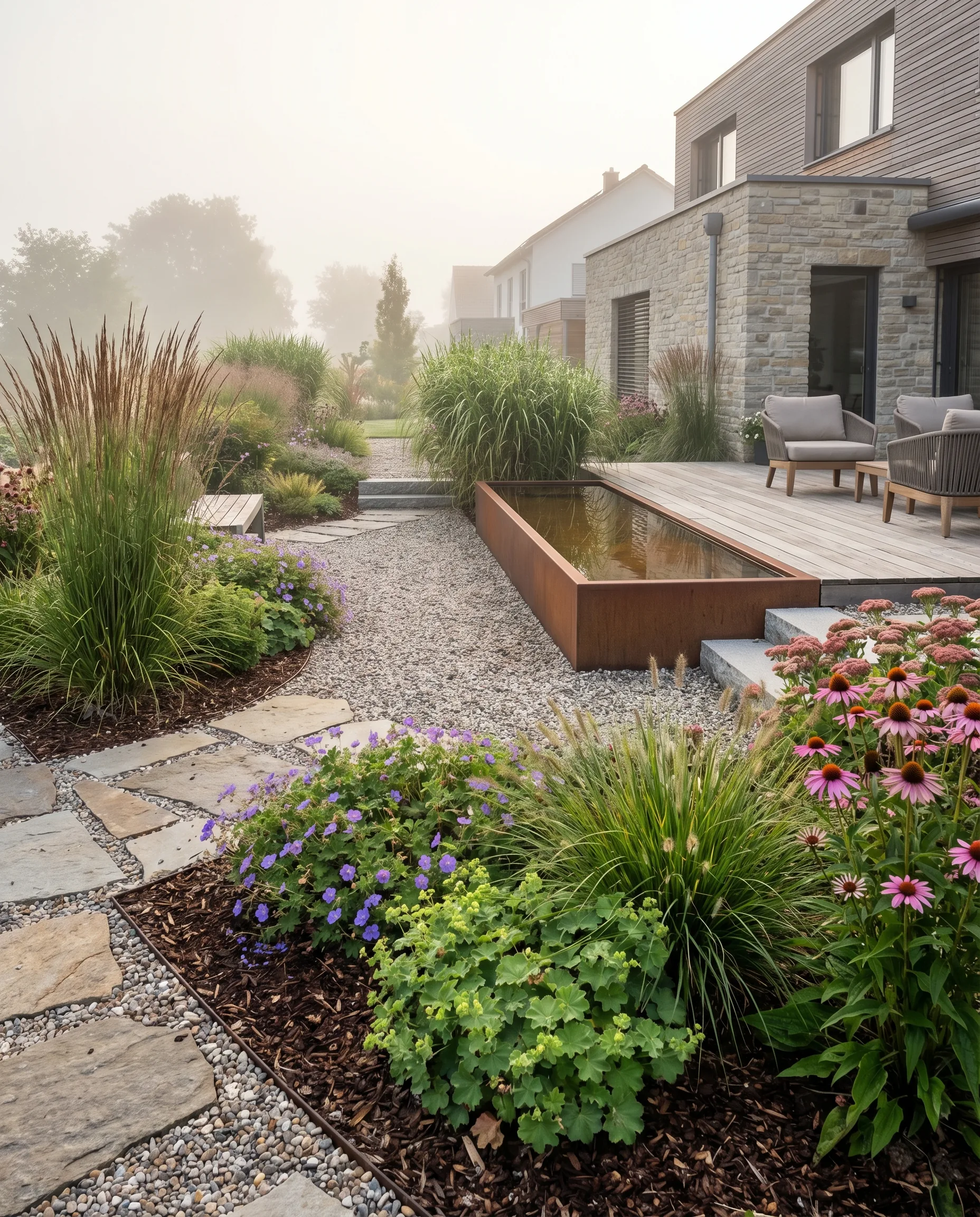
Low-Maintenance Natural Garden: Lush, Living Design with Minimal Effort
A natural garden can be vibrant and still low-maintenance—with the right plant choices, repetition, and clear care zones.
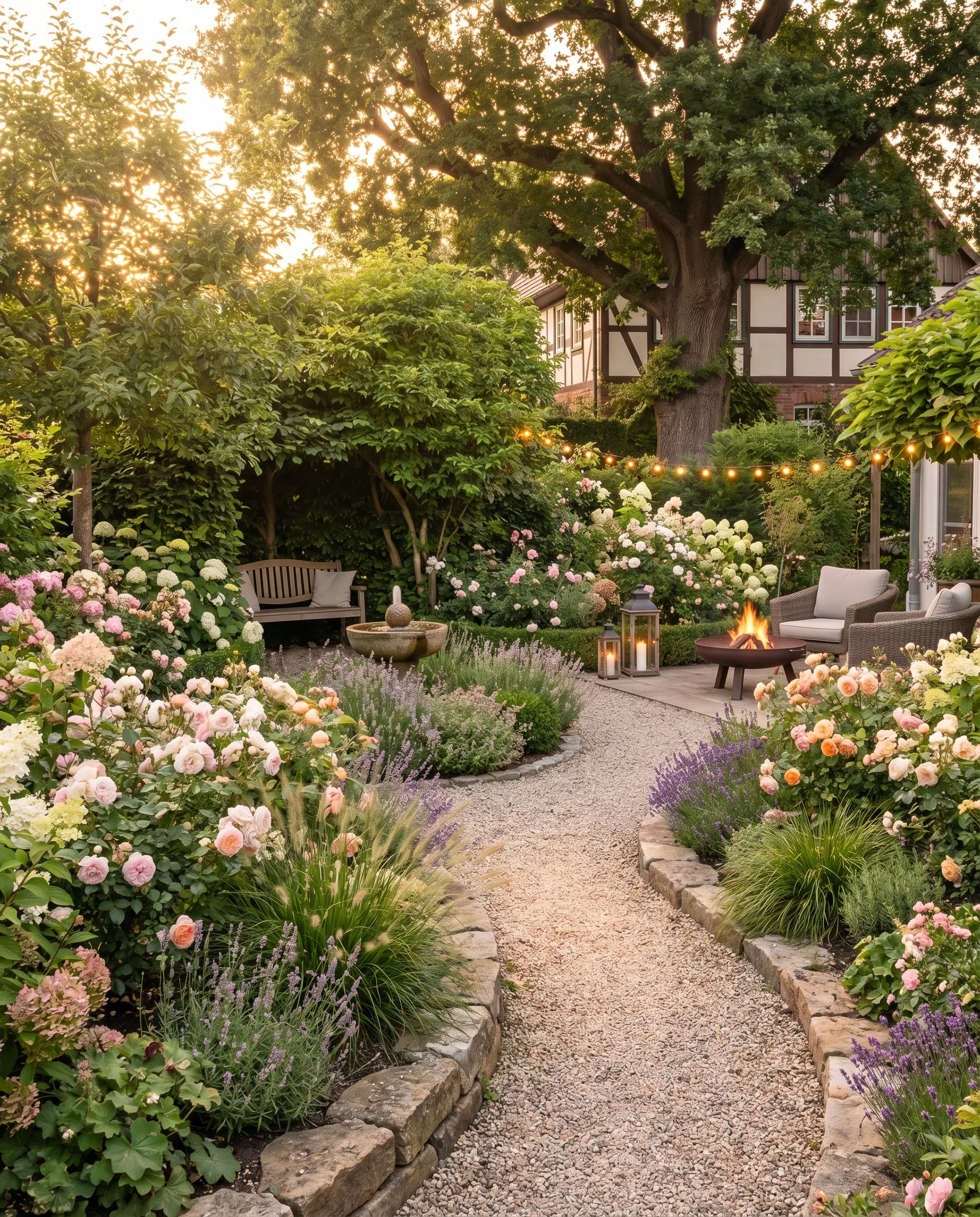
Romantic Garden: How to Create Atmosphere with Paths, Planting and Lighting
A romantic garden thrives on atmosphere, soft paths, blooms and warm light—for an evocative garden design with true presence and charm.
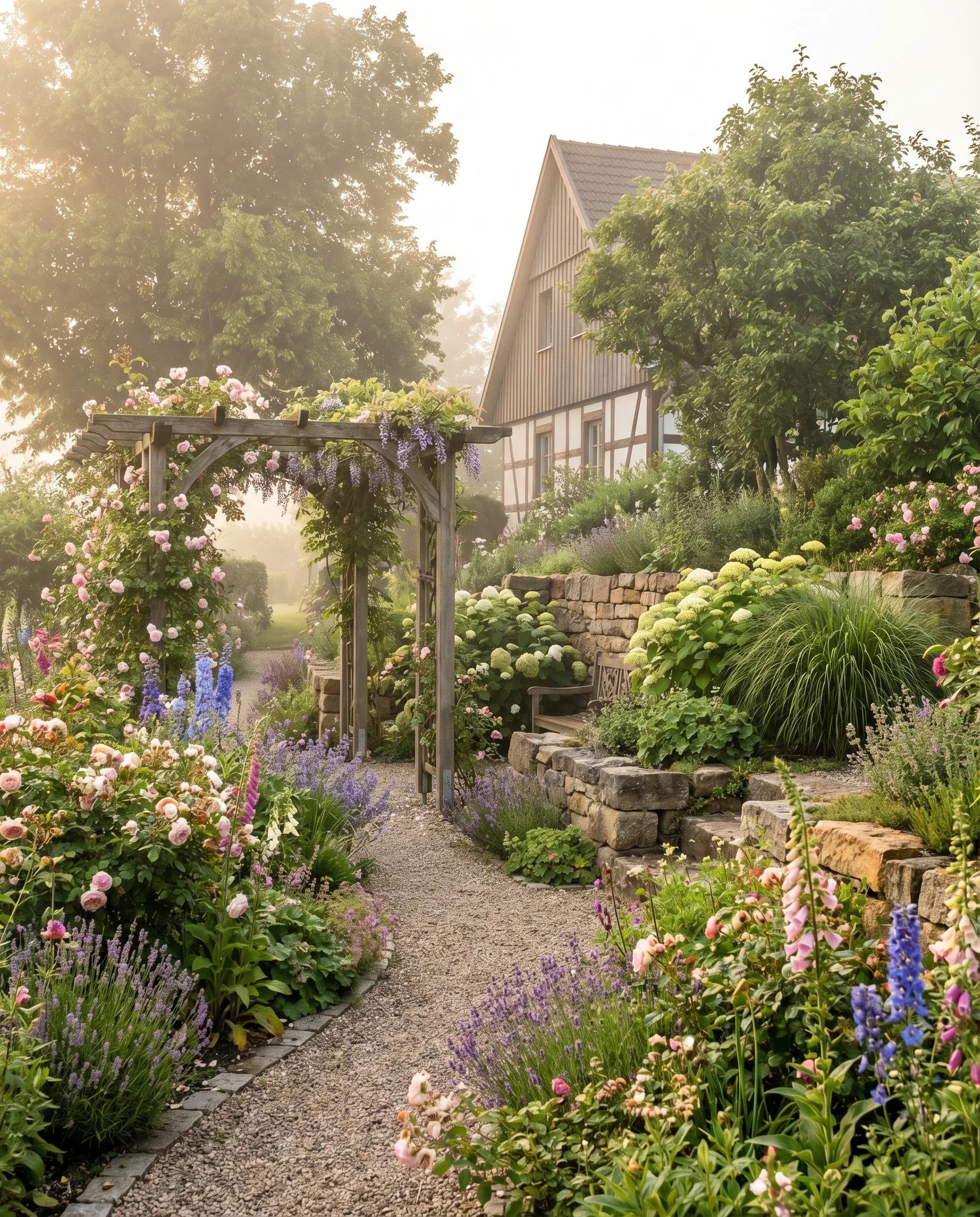
Cottage Garden: Romantic Garden Design with Structure and Effortless Charm
A cottage garden combines a profusion of flowers, natural stone, pathways and relaxed planting into a romantic garden design with real structure.