Designing a Romantic Garden: How Paths, Plants and Light Create a Truly Atmospheric Effect
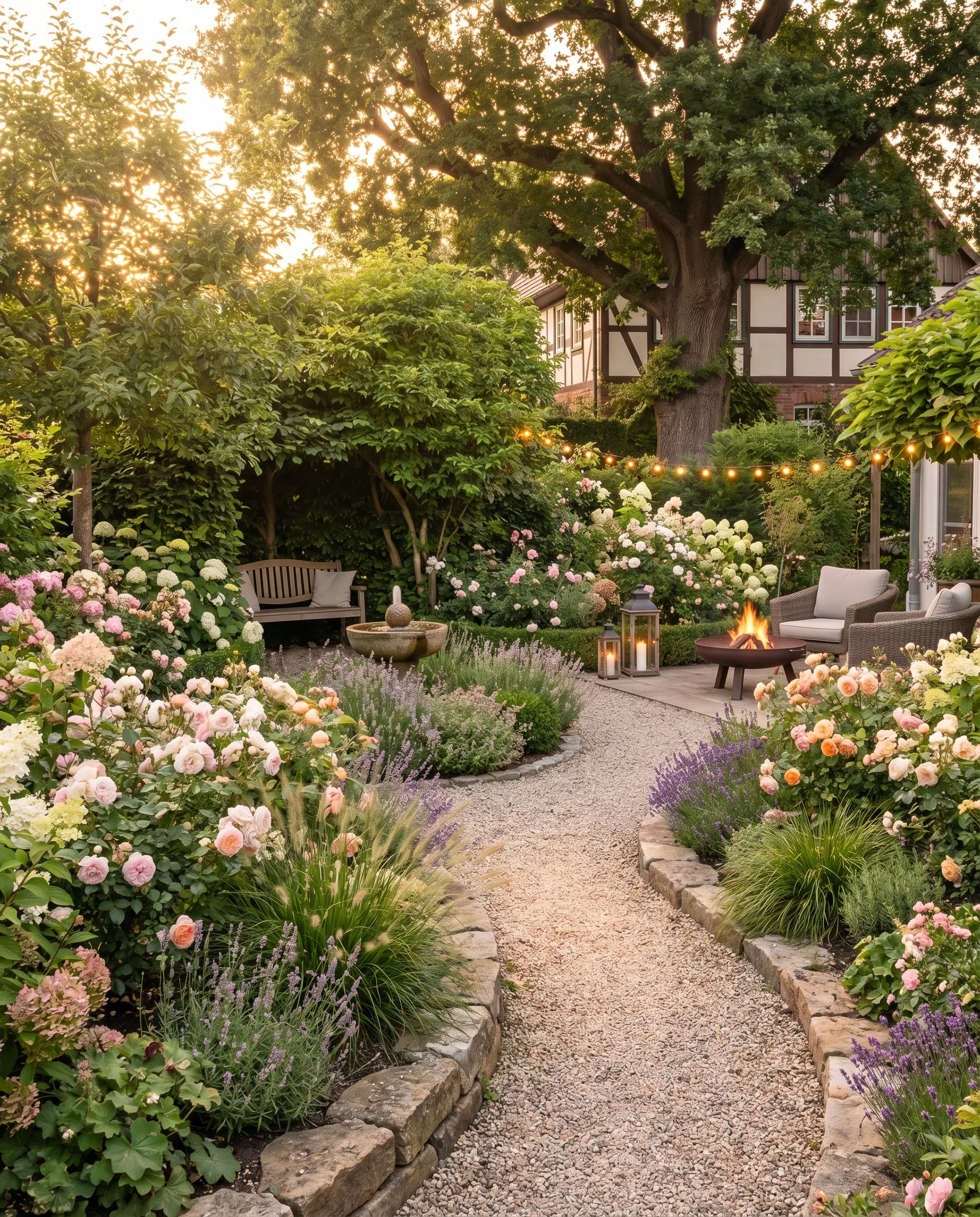
A romantic garden isn’t a fixed style—it’s an impression. It emerges when paths, plants, materials and lighting work together to create an atmosphere of calm, warmth and vitality. If you want to design your garden with a romantic feel, you’re not looking for strict form but for a feeling: a place that moves you, invites you in and makes you want to linger.
What Defines a Romantic Garden
A romantic garden doesn’t differ from other garden types through specific plants or materials, but through the way everything interacts.
The core principles of romantic garden design:
- Emotional impact – the garden creates a mood that goes beyond the visual
- Soft lines – curving paths, flowing bed edging, no hard corners
- Lush yet harmonious planting – blooms, grasses and perennials in coordinated colour palettes
- Intimate seating areas – hidden benches, sheltered corners, spots with focal views
- Light as the mood-maker – warm evening light that stages individual areas
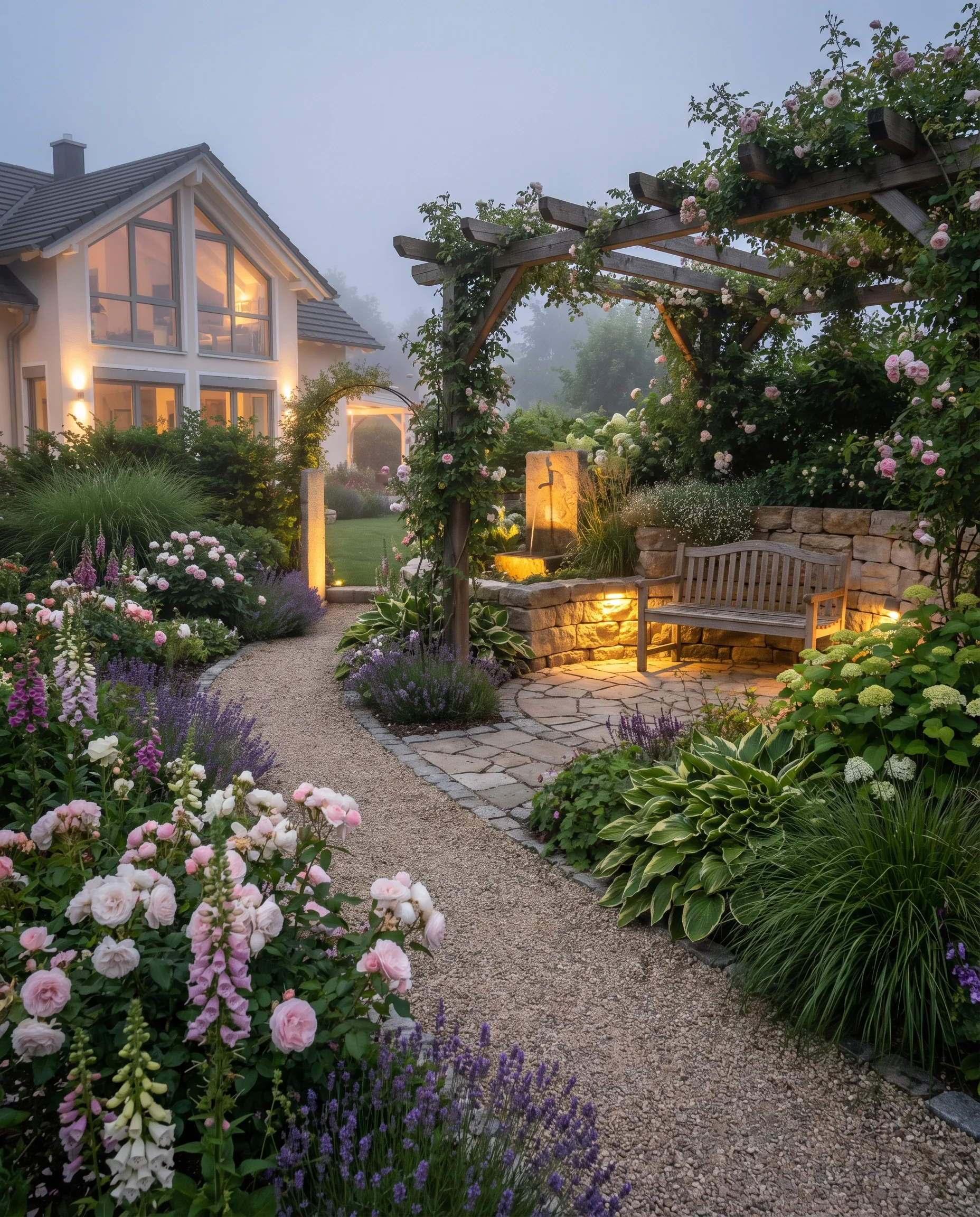
A romantic garden doesn’t have to feel overloaded. It lives from a few, deliberately placed elements that together create an atmosphere.
Paths and Sightlines in a Romantic Garden
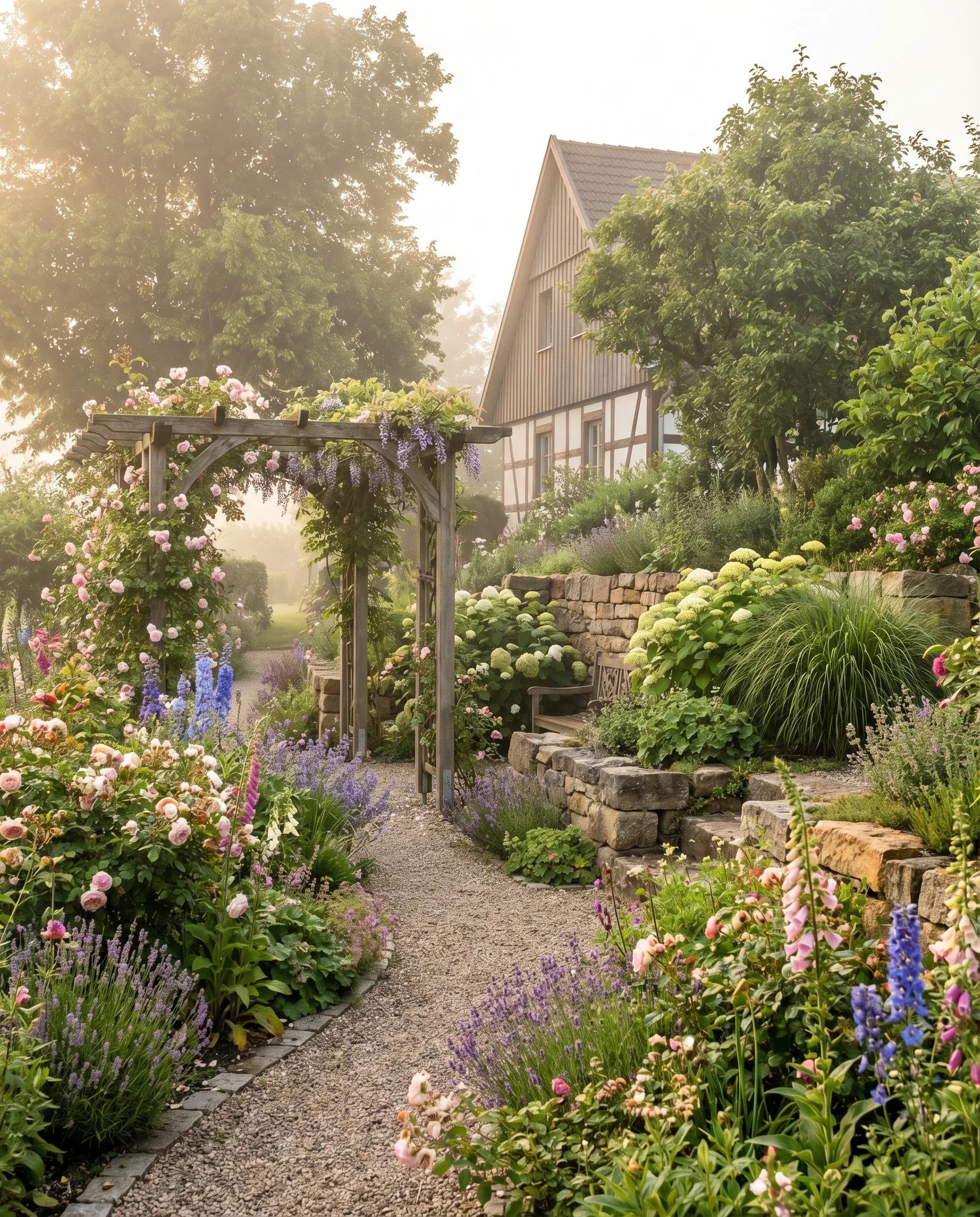
In a romantic garden, paths are more than connections between two points. They’re stories—they guide you, slow you down and surprise you.
Design principles for romantic paths:
- Curving route – no straight axes, but curves that spark curiosity
- Small moments of discovery – a flowering shrub after a bend, a spring stone by the path
- Sightlines with gentle guidance – the view is directed, but never forced
- Seating areas as destinations – at the end of a path awaits a bench, a niche, a view
The path materials intensify the effect: natural stone, gravel or stepping stones set into lawn feel softer and more inviting than concrete pavers or large slab surfaces.
If you’d like to use water as an additional element along your paths, you’ll find fitting ideas in our article on Designing a Garden by the Water.
Blooms, Colours and Textures
The planting in a romantic garden doesn’t follow a rigid plan—but it does follow a clear mood. Colours, shapes and textures are combined to create a harmonious overall picture.
Design principles for planting:
- Harmonious colour palettes – pastel tones like pink, white, lavender and apricot dominate; strong colours are used sparingly
- Bloom as seasonal mood – delicate bulbs in spring, lush perennials in summer, warm grasses in autumn
- Texture contrasts – fine grasses beside large-leaved perennials, delicate flowers next to bold foliage
- No hard geometry – plants may spill over edges, touch and overlap
The best plants for romantic gardens: roses (especially climbing and shrub roses), cranesbill (Geranium), lady’s mantle (Alchemilla), lavender, catmint (Nepeta), hydrangeas and ornamental grasses such as Stipa or Calamagrostis.
The Role of Light in the Evening
Light transforms a garden. A romantic garden often reveals its full effect at dusk, when warm light highlights certain areas and lets others fade into shadow.
Lighting concepts for romantic gardens:
- Warm, indirect light – no harsh spotlights, but warm-white fixtures with a soft beam
- Accenting individual plants – an illuminated rose shrub, a lit tree, a point of light in a border
- Atmosphere instead of full illumination – you don’t light the entire garden, only selected areas
- Candles and lanterns – as additional, mobile light sources for special evenings
The goal: in the evening, the garden should take on a different, deeper mood—not simply be bright.
Romantic Garden vs. Cottage Garden
The terms are often confused or used interchangeably. But there’s an important difference:
- Romantic is an effect – a feeling created through design. A romantic garden can be modern, nature-inspired or classic
- Cottage is a distinct style – rooted in English tradition, with abundant flowering planting and typical elements such as rose arches and wooden fences
When each term fits best:
- You want a garden with character and English tradition → Cottage Garden
- You want a garden with an emotional atmosphere, regardless of style → romantic garden
- You want both → a cottage garden is always romantic, but not every romantic garden is a cottage garden
Can a Romantic Garden Still Be Low-Maintenance?
Yes—if the planting remains structured and you choose the right plants.
What makes a low-maintenance romantic garden:
- Structured planting – a few key species in larger drifts instead of many single plants
- Focus on long-lived species – cranesbill, lady’s mantle, catmint and grasses are robust and spread on their own
- Quiet areas for balance – lawns, gravel areas or mulched zones reduce maintenance
- A conscious choice to skip delicate varieties – not every rose is easy-care, and not every perennial thrives without attention
A romantic garden doesn’t have to mean lots of work—if the foundation is right. Read more in our article on the low-maintenance nature-inspired garden.
Conclusion
Romantic gardens are defined by mood, not by excess. They come to life when paths, plants, materials and lighting work together to create a place with genuine presence. If you’re less interested in a rigid style and more in a feeling, romantic garden design is the perfect approach.
Want to discover how much naturalness and romance suit your garden? With GardenPilot, you can visualise different atmospheric variations directly on your home.
Further Reading
- Nature-Inspired Garden Ideas: Blooms, Grasses, Natural Stone and Soft Shapes
- Cottage Garden: Romantic Garden Design with Structure and Lightness
- Low-Maintenance Nature-Inspired Garden: Create a Lively Look with Minimal Effort
- Designing a Garden by the Water: Natural Banks, Paths and Calm Transitions
Atmosphere is created in the details: before you combine climbers, path surfacing and lighting, it’s worth seeing how it all comes together in your own garden. Upload a photo of your garden and use AI to see how it could look—complete with a rough cost range before you invest. That way, you avoid expensive planning mistakes. Visualise your garden with GardenPilot (here’s how it works).
Frequently Asked Questions
Which plants are best suited to a romantic garden?
For a romantic garden feel, lush flowering and fragrant plants such as climbing roses, lavender, clematis and peonies are especially suitable. With their soft flower forms and shades of pink, white and purple, they convey exactly the warmth and vitality that define a romantic garden.
Which path design feels most atmospheric in a romantic garden?
Curving paths made of natural stone, gravel or reclaimed brick feel far more romantic than straight, geometric walkways because they spark curiosity and make the garden appear larger and more mysterious. Feel free to let the path edges look slightly untamed so plants can gently spill into the route.
What’s the best way to light a romantic garden?
Warm, indirect light—such as lanterns, fairy lights or in-ground fixtures with warm-white colour temperature—creates an inviting evening atmosphere in a romantic garden. Harsh, cool-white spotlights, by contrast, feel technical and disrupt the ambience.
Can you design a small garden to feel romantic?
Yes—even in a small space, you can create romance. The key is a few thoughtfully chosen elements: a trellis with a climbing rose, a cosy seating spot and soft lighting. Lush planting in a compact area can even enhance the sense of shelter and abundance.
Gallery
Plan your own garden
Upload a photo of your garden and get a professional AI concept in minutes.
Start for freeMore articles from Nature-Inspired Gardens
Designing a Garden by the Water: Natural Banks, Paths, and Calm Transitions
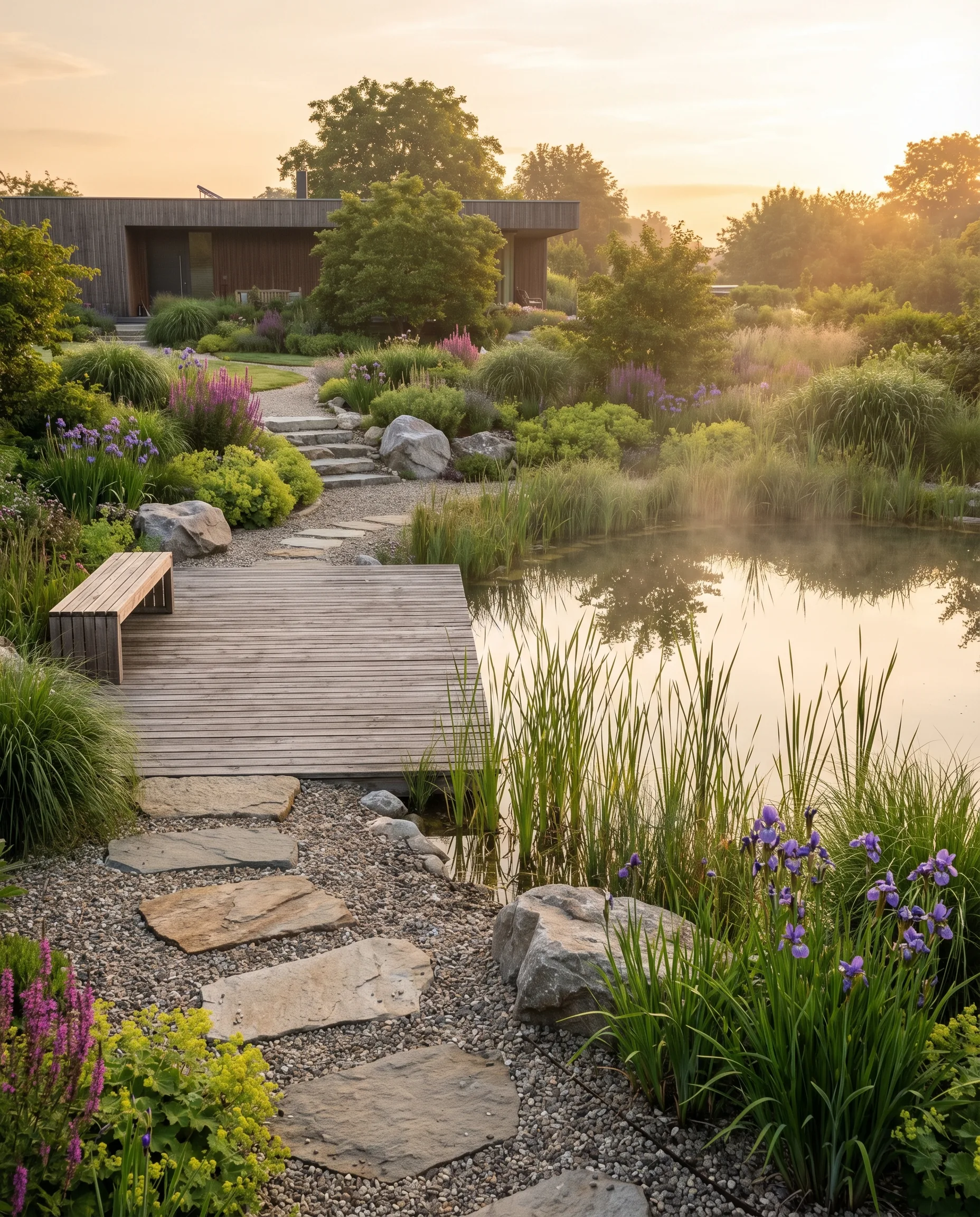
How to create a natural, harmonious garden by the water—with soft banks, natural stone, gravel, and calm transitions.
Low-Maintenance Natural Garden: Lush, Living Design with Minimal Effort
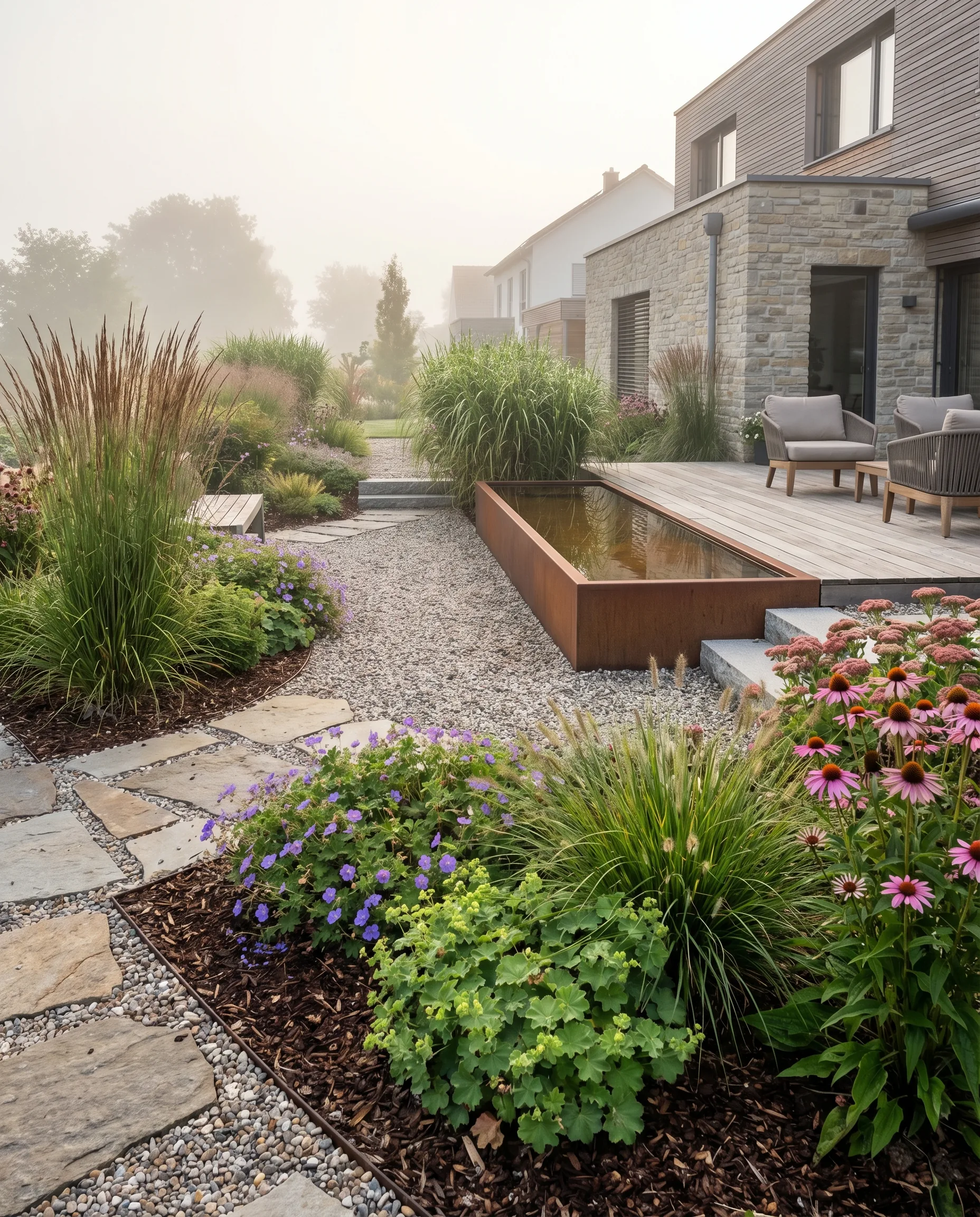
A natural garden can be vibrant and still low-maintenance—with the right plant choices, repetition, and clear care zones.
Cottage Garden: Romantic Garden Design with Structure and Effortless Charm
A cottage garden combines a profusion of flowers, natural stone, pathways and relaxed planting into a romantic garden design with real structure.