Designing a Cottage Garden: How Blooms, Pathways and Natural Materials Work in Harmony
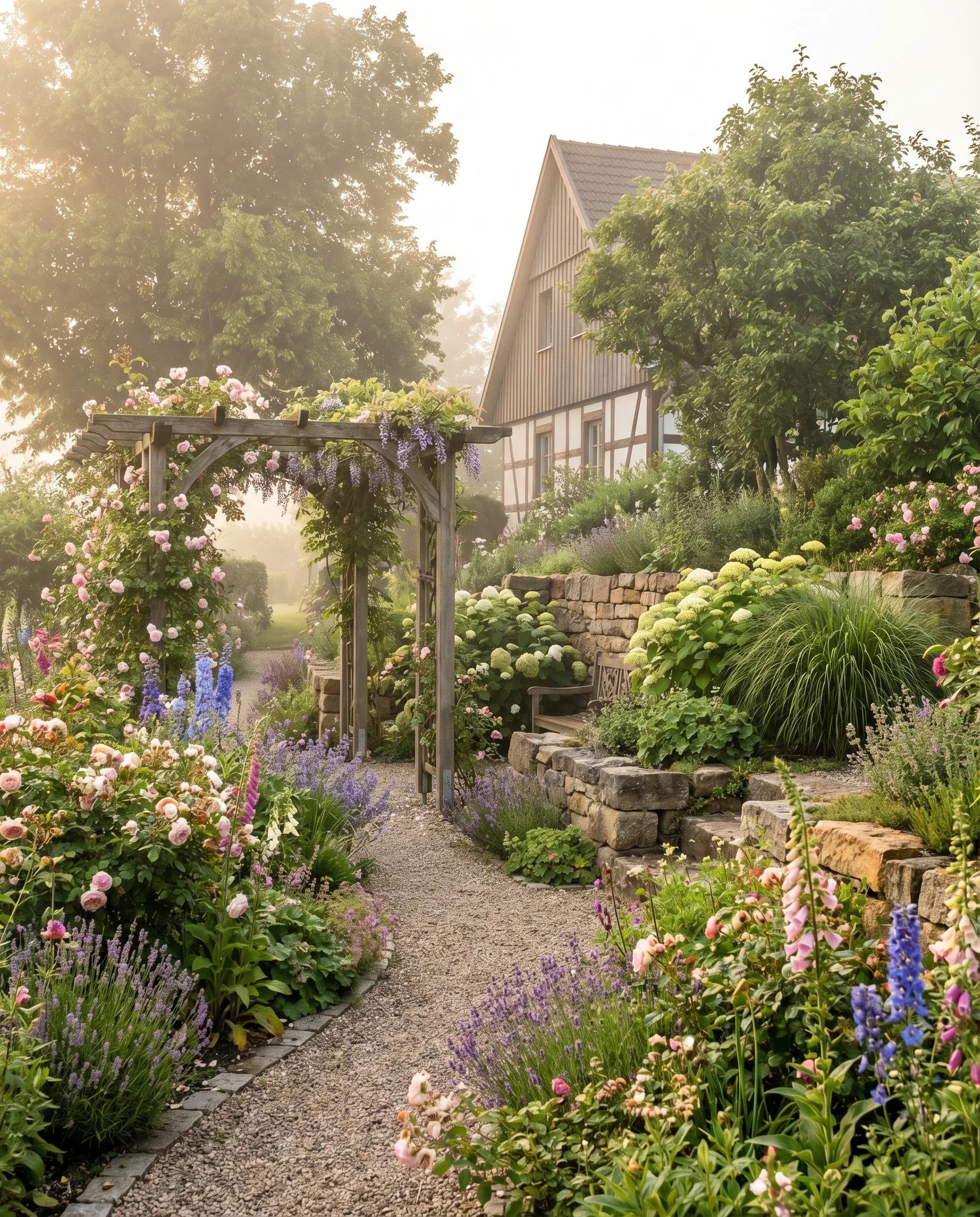
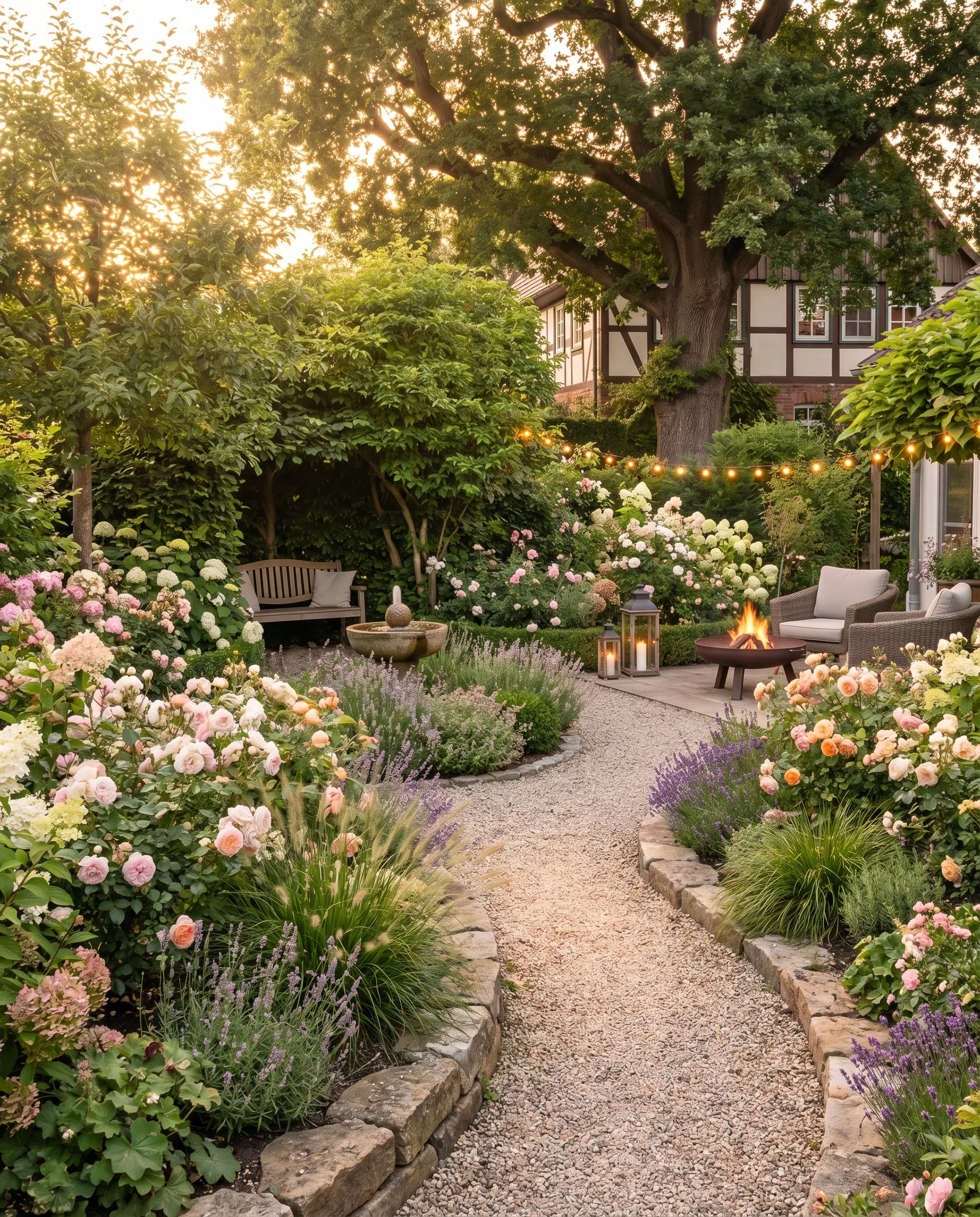
A cottage garden is more than a garden in bloom. It’s a garden with character, atmosphere and a distinctive design language. Lush planting, natural stone, gently curving paths and warm materials come together to create a romantic picture—yet never by accident. If you want to design a cottage garden, you’re choosing one of the most emotional and expressive styles of garden design.
What Defines a Cottage Garden
The cottage garden has its roots in the English garden tradition. Unlike the formal English garden, it doesn’t rely on symmetry and axes, but on abundance, lightness and a relaxed—yet carefully considered—composition.
Typical features of a cottage garden:
- Lush planting – beds that spill over, plants that touch, flowers layered in tiers
- Romantic atmosphere – rose arches, enchanting paths, hidden seating spots
- Natural stone and gravel – as path material, bed edging and a surface that provides structure
- Loose, but planned composition – nothing is random, yet everything looks natural
- Traditional warmth – a cottage garden feels like a place with history
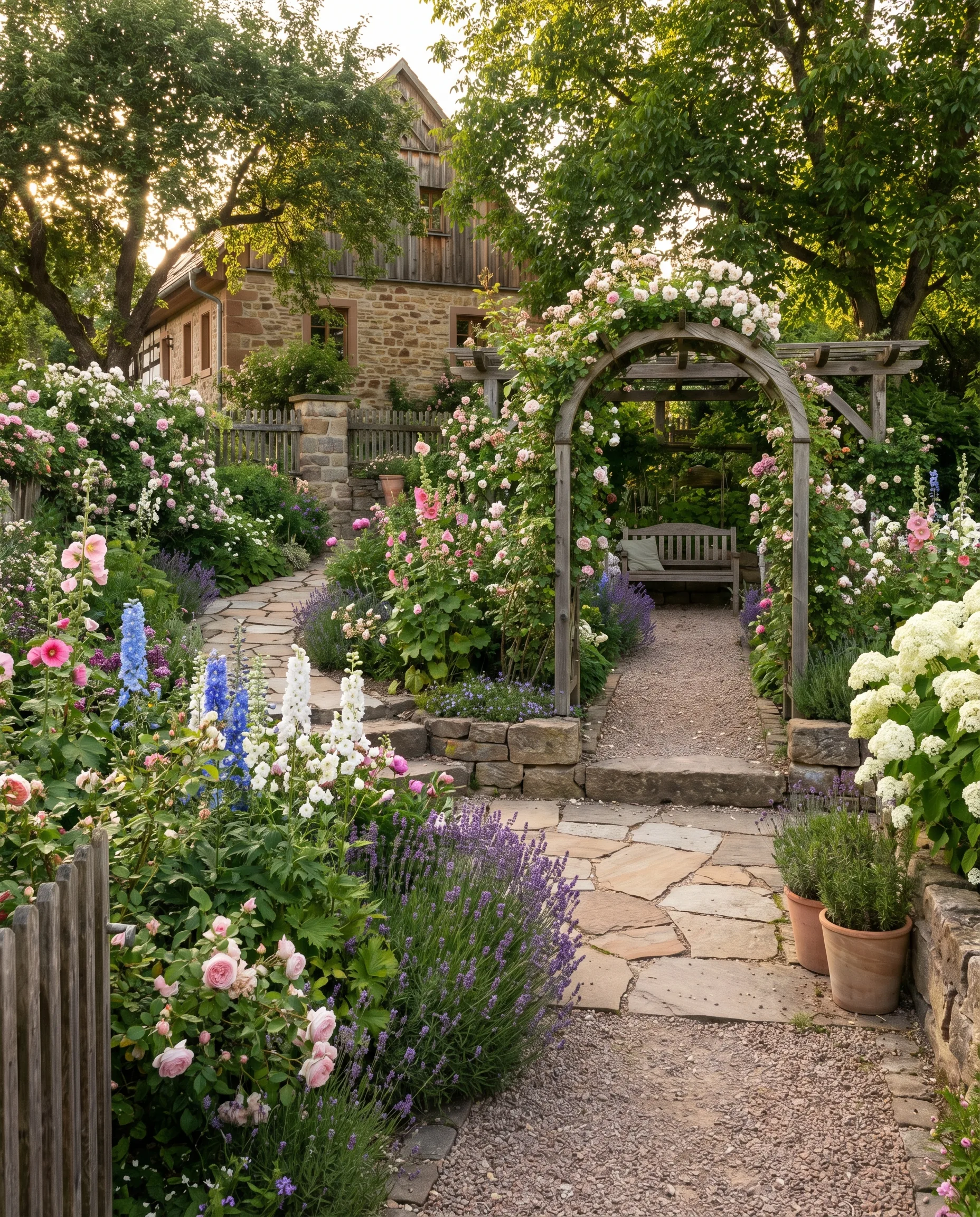
A cottage garden is the opposite of a minimalist garden. It thrives on abundance, fragrance and visual depth.
Which Plants Work Especially Well in Cottage Gardens
Planting is the heart of every cottage garden. It’s all about a wealth of flowers, seasonal succession, and a mix of heights, colors and textures.
Plants that shouldn’t be missing from any cottage garden:
- Roses – climbing roses, shrub roses and bed roses as the main protagonists
- Perennials – delphiniums, hollyhocks, lupines, peonies and cranesbill for structure and color
- Hydrangeas – voluminous focal points in white, pink or blue
- Lavender – for fragrance, color and Mediterranean lightness
- Grasses as soft structural elements – fountain grass or stipa for movement and contrast
The secret: plants aren’t set out in rigid rows, but in loose groups that support, overlap and complement one another. The planting feels like a living painting.
Paths, Edges and Materials in a Cottage Garden
A cottage garden doesn’t live on plants alone—it also depends on the materials that give it structure. Paths, edges and surfaces provide the garden with stability and orientation.
Typical materials and their effect:
- Natural stone paths – made from sandstone, granite or limestone, ideally laid irregularly
- Gravel areas – as a transition between beds and paths, relaxed and natural
- Soft edging – boxwood, lavender or low perennials instead of hard borders
- Wood and stone as a warm foundation – wooden fences, gates, pergolas and natural stone walls
The materials in a cottage garden tell a story. They look aged, weathered, timeworn—even when they’re new. This patina is a deliberate design element.
If you’re considering water as an additional feature, you’ll find fitting inspiration in our article on designing a garden by the water.
Cottage Garden vs. Romantic Garden
The terms “cottage garden” and “romantic garden” are often used interchangeably—but they describe different things.
What overlaps:
- Both thrive on flowers, soft forms and atmospheric design
- Both use natural materials and curving paths
- Both create an emotional, welcoming mood
Where the cottage garden is more typical and full of character:
- It has stronger tradition and a recognizable style
- Planting is denser, lusher and more floriferous
- Elements such as rose arches, wooden fences and mixed borders are style-defining
When a romantic garden can be interpreted more freely:
- It doesn’t have to follow the English model
- It can be more modern, more restrained or more experimental
- It’s an umbrella term that includes cottage style, but goes beyond it
If you’d like to explore the romantic side of garden design more broadly, you’ll find further ideas in our article on the romantic garden.
Can a Cottage Garden Also Be Low-Maintenance?
A cottage garden looks high-effort—and it can be. But with the right planning, the maintenance required can be reduced significantly.
What makes a low-maintenance cottage garden:
- Repetition of key species – instead of 30 different plants, choose 8–10 in larger groups
- Fewer varieties, more rhythm – repetition creates calm and makes care easier
- Robust plant partners – cranesbill, lady’s mantle and catmint instead of delicate exotics
- Mulch and groundcovers – suppress weeds and retain moisture
The key: a cottage garden doesn’t have to contain 100 different plants. Even with a reduced palette, the classic cottage effect can emerge. Learn more in our article on the low-maintenance natural garden.
Does a Cottage Garden Suit Every House?
Not every house automatically harmonizes with a cottage garden. The best results come when architecture and the garden’s design language fit together.
The cottage style works especially well with:
- Country homes and villas with a warm façade
- Older buildings with character and history
- Classic detached houses with rendered or brick façades
- Homes with timber elements, mullioned windows or natural stone details
With modern architecture, a cottage garden works only if the contrast is deliberately desired. A clean, minimalist home paired with a lush cottage garden can be captivating—but it needs a skilled transition to feel cohesive.
Conclusion
A cottage garden never looks accidental—it’s emotionally orchestrated. It combines abundant blooms with structure, romance with planning, and tradition with vitality. If you’re looking for a garden with personality, fragrance and overflowing beauty, the cottage garden is one of the most expressive garden styles of all.
If you want to test whether a cottage garden suits your home, you can use GardenPilot to visualize different blooming, romantic variations directly.
Related Articles
- Natural Garden Ideas: Flowers, Grasses, Natural Stone and Soft Forms
- Romantic Garden: Creating Atmosphere with Paths, Plants and Light
- Low-Maintenance Natural Garden: Lively Design with Minimal Effort
- Designing a Garden by the Water: Natural Shores, Paths and Calm Transitions
The appeal of a cottage garden lies in the right balance between abundance and structure—and a preview of your own garden shows whether you’ve achieved it before you plant. Upload a photo of your garden and use AI to see how it could look—along with a rough cost range before you invest. This helps you avoid expensive planning mistakes. Visualize your garden with GardenPilot (how it works).
Frequently Asked Questions
Which plants are best suited for a cottage garden?
Classic cottage garden plants include roses, delphiniums, foxgloves, mallows, lavender and cranesbill. They feel relaxed and natural, yet have different flowering times—so the garden stays in bloom for many months.
How do I create paths in a cottage garden?
Gently curving paths made of natural stone, reclaimed brick or gravel suit the romantic character of a cottage garden best. It’s important that paths feel narrow enough for the planting to visually frame them and softly spill over the edges.
How much maintenance does a cottage garden really need?
A cottage garden requires regular care such as pruning, deadheading spent stems and occasional thinning—but it looks its best with a certain looseness and abundance, which doesn’t demand strict order. With a good selection of robust perennials and self-seeding plants, the effort stays within a pleasantly manageable range.
Can you create a cottage garden in a small space?
Yes—a cottage garden can be beautifully implemented even in a small area, because the lush, multi-layered planting visually expands the space. The key is to include structuring elements such as a rose arch, a short path or a small seating nook with natural stone to give the garden depth and character.
Gallery
Plan your own garden
Upload a photo of your garden and get a professional AI concept in minutes.
Start for freeMore articles from Nature-Inspired Gardens
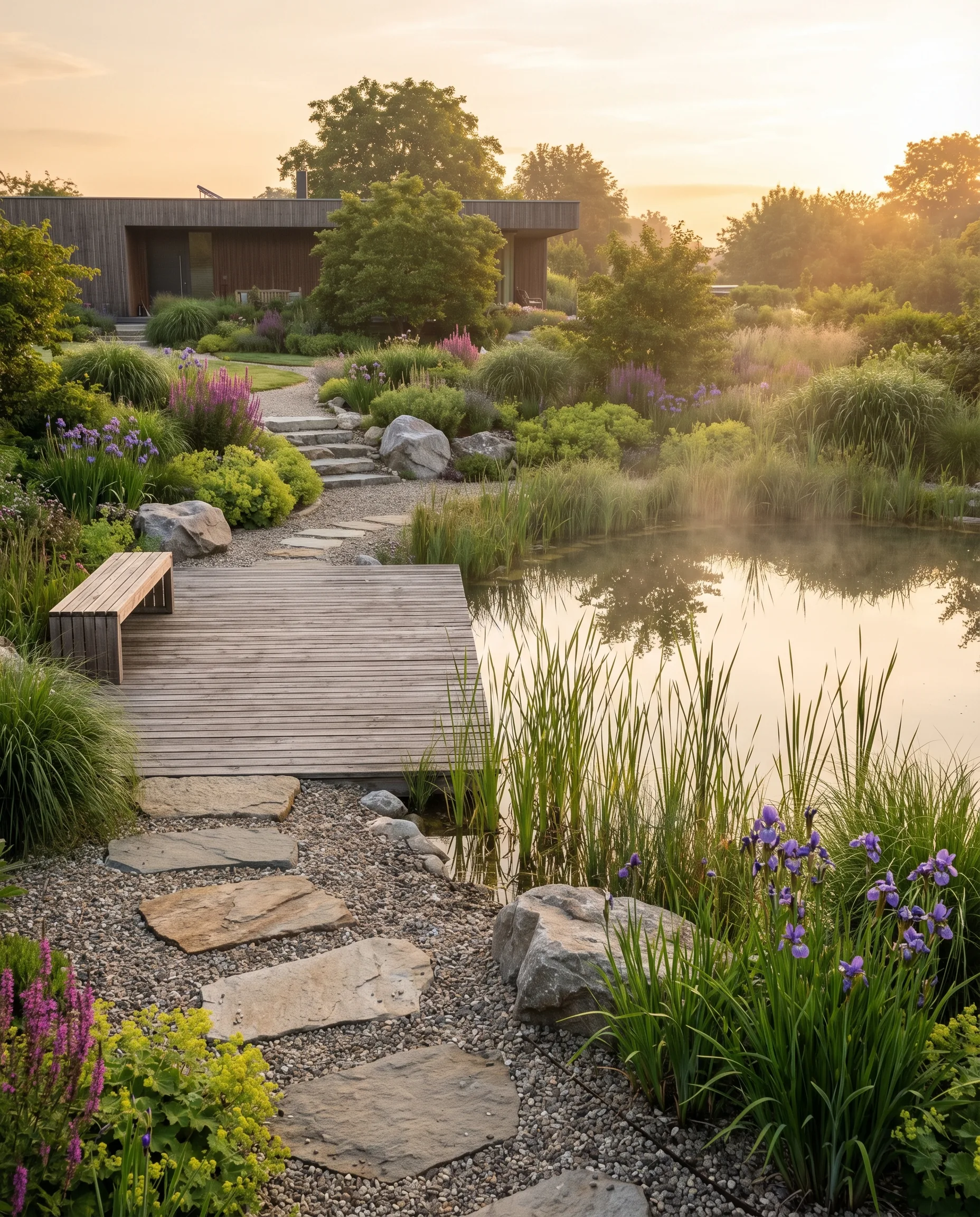
Designing a Garden by the Water: Natural Banks, Paths, and Calm Transitions
How to create a natural, harmonious garden by the water—with soft banks, natural stone, gravel, and calm transitions.
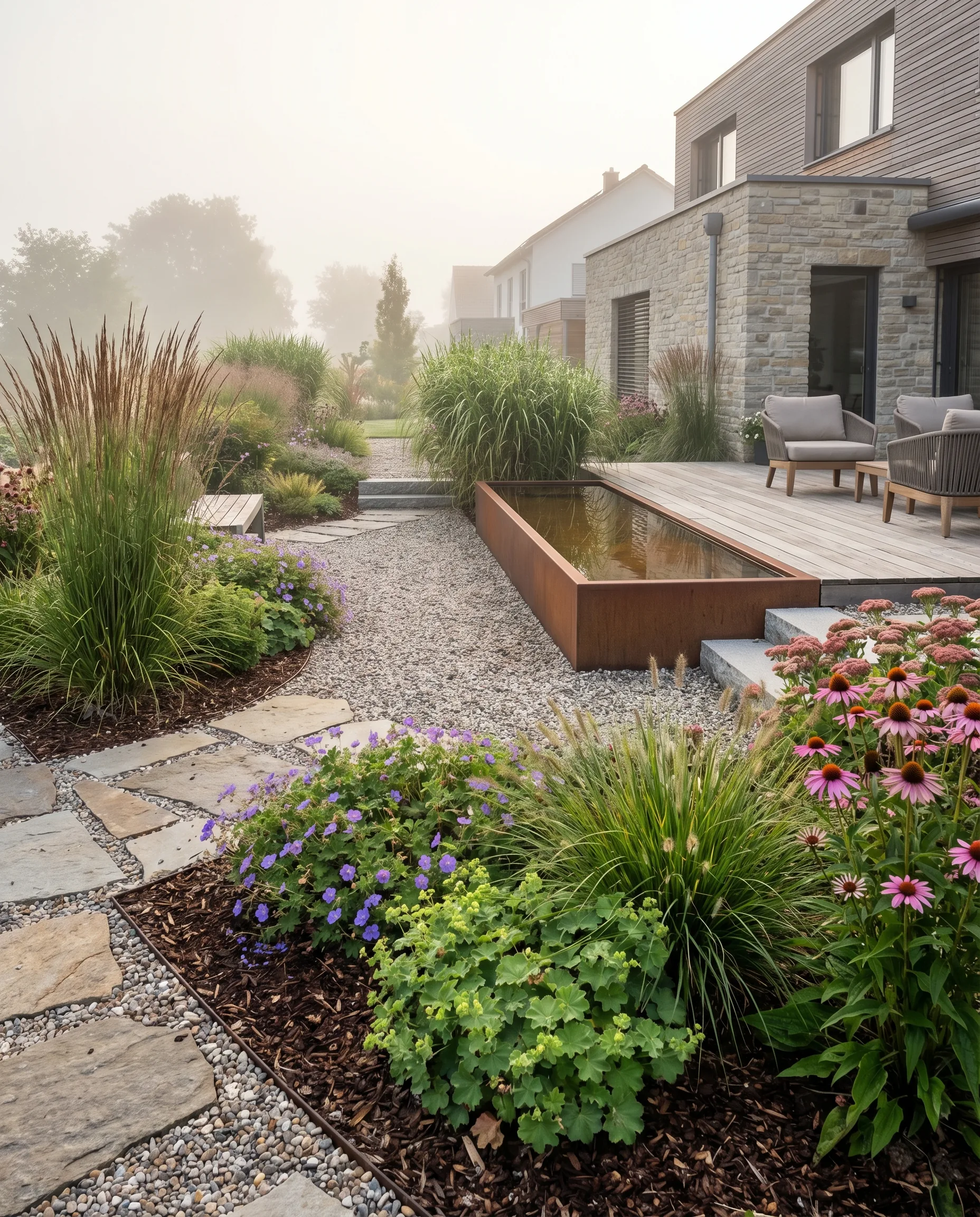
Low-Maintenance Natural Garden: Lush, Living Design with Minimal Effort
A natural garden can be vibrant and still low-maintenance—with the right plant choices, repetition, and clear care zones.
Romantic Garden: How to Create Atmosphere with Paths, Planting and Lighting
A romantic garden thrives on atmosphere, soft paths, blooms and warm light—for an evocative garden design with true presence and charm.