Redesigning Your Garden After Buying a Home: Rework What’s There Smartly and Protect Your Budget
You’ve bought a house—either a new build with bare, raw soil or an existing property with a garden that’s been left to its own devices for years. In both cases, one of the biggest single investments around the home is now on the horizon: redesigning the garden after buying a home. The good news: if you approach planning in a structured way, you can achieve far more with the same budget—and avoid costly tear-outs that happen when you just start building without a plan.
This article gives you an honest overview of costs, the right order of steps, and the key decisions that shape everything that follows.
What a new garden really costs—real numbers
One of the most common mistakes after buying a home: the garden is either completely forgotten in the budget or assigned a four-figure sum that simply isn’t realistic.
Rule of thumb (professional contractor): Landscape contractors often estimate garden projects at around 12–18% of the build cost. For a 300,000 EUR home, that’s 36,000–54,000 EUR for the garden—a figure that surprises many, but accurately reflects the reality of a fully finished, high-quality outdoor space.
| Scope of work | Price range | Notes |
|---|---|---|
| Full installation (patio, paths, lawn, planting) | 100–180 EUR/m² | Standard materials, local specialist contractor |
| High-end installation (natural stone, water features) | 250 EUR/m² and more | Custom design, premium execution |
| Earthworks / terrain shaping | 15–40 EUR/m² | Depends on the existing site |
| Irrigation system (underground) | 3,000–8,000 EUR | For a garden ~400–600 m² |
| Patio roof / pergola cover | 5,000–20,000 EUR | Depends on materials |
| Privacy fence / boundary enclosure | 80–250 EUR/linear m | Depends on material and height |
These figures are guidelines—actual quotes vary by region, slope, soil conditions, and material choices. That’s exactly why visual pre-planning is worth it before you request quotes.
Established garden or bare soil: two completely different starting points
New build: the opportunity of a blank canvas
A newly completed house offers maximum design freedom—but also the highest planning workload. The ideal starting point is after the structural shell is complete, once ground levels are fixed and wastewater, power, and water connections are in place. If you install conduit now for irrigation, outdoor lighting, and future tech, you’ll save yourself expensive demolition later.
For new builds, the rule is: infrastructure first, aesthetics second. If you only decide on patio orientation, access routes, and level adjustments after moving in, you’ll often pay twice.
Established garden: assess first, then act
A mature garden isn’t a blank slate—it’s an existing asset with value and potential. Before any demolition, it’s worth asking:
- Which trees and shrubs are worth keeping (shade, privacy, maturity)?
- Where is the basic structure already right (path layout, patio position)?
- What truly has to go—and what will it cost to rebuild it later?
An old apple tree or a mature hedge takes years to replace. Blind tabula rasa actions are expensive—and the loss of maturity can’t be compensated with money.
The fundamental decision: which garden type suits you?
Before the first stone is set or the first plant is bought, there’s one pivotal choice that determines everything else: What should the garden do for you?
Family garden
A lawn for play, robust materials, play equipment, low-maintenance planting, safe paths. Priority: usable space, durability, easy care.
Kitchen garden / productive garden
Raised beds, fruit trees, herb areas, compost, possibly a greenhouse. Priority: soil quality, water connections, sun exposure.
Ornamental / outdoor-living garden
Natural stone elements, designed planting, water features, an outdoor kitchen, a lighting concept. Priority: material quality, design depth, contractor selection.
In practice it’s usually a combination—but where you place the emphasis decides how the budget is allocated and which trades are commissioned when.
The right sequence: how to avoid expensive mistakes
A well-planned order saves real money and prevents you from having to tear up finished work later.
- Site analysis & grading plan – clarify slope, drainage, and soil quality
- Install infrastructure – conduit for power, water, irrigation, possibly smart home
- Boundary & privacy screening – create privacy, separate from neighbors’ noise/dirt
- Patio & main paths – the structural elements that define the garden
- Terrain shaping & lawn sub-base – topsoil, possibly drainage, seeding or sod
- Planting – trees and shrubs first (they take longest), then perennials, groundcovers
- Furnishings & systems – lighting, irrigation control, furniture, play equipment
If you do step 4 before step 2, you may end up paying for patio slabs twice in the worst case.
Visualize before the first spade goes in: plan with purpose instead of paying to correct
One of the biggest cost drivers in garden redesigns is the classic “I thought it would look different” problem: materials look completely different on sample boards than across 200 square meters, planting ideas that seem convincing on paper don’t work in reality—and only after the excavator leaves do you realize the patio is too small.
This is exactly where early visualization helps. With GardenPilot you can generate a photorealistic preview of different design options from a simple photo of your current situation—whether it’s bare soil after a new build or an overgrown existing garden—plus a rough cost framework. That gives you a concrete basis for conversations with specialist contractors, helps you compare quotes, and prevents you from signing off on a concept you ultimately imagined differently.
Before you commit tens of thousands of euros, it’s one of the smartest investments you can make in the planning phase.
DIY work: where it pays off—and where it doesn’t
DIY can reduce costs, but it has limits.
Good DIY options:
- Seeding or laying lawn (after a professional sub-base)
- Planting perennials and groundcovers
- Simple carpentry (raised beds, basic fences)
- Mulching, setting up a compost area
Better left to professionals:
- Earthworks, drainage, terrain shaping
- Paving with proper fall/drainage planning
- Irrigation systems with controls
- Anything involving excavation or outdoor electrical installations
Poorly executed foundations or incorrectly laid paving without proper slope are the most common causes of expensive remediation—often only becoming visible years later.
Before you set your garden budget (often 12–18% of the build cost): upload a photo of your plot and see a realistic preview + rough cost framework based on the current state—so you invest with clarity and avoid expensive planning mistakes. Visualize your garden with GardenPilot (how it works).
Frequently asked questions
When is the best time to start planning the garden?
For a new build, ideally in parallel with the house construction—at the latest after the structural shell is complete, once ground levels are fixed. For an existing home, it’s advisable to wait at least one full growing season before making major changes. That way you can see what actually sprouts, what casts shade, and which structures are worth preserving.
How much budget should I plan for the garden after buying a home?
A practical rule of thumb is 12–18% of the build cost for a complete garden installation by a specialist contractor. For a 300,000 EUR home, that’s 36,000–54,000 EUR. If you start with less, plan the garden in clearly defined stages—and implement the infrastructure (conduit, drainage) fully from the start.
Is it worth keeping existing plants?
Very often, yes. Mature trees and shrubs, hedges, or fruit trees have a time value you can’t quickly replace with money. Before you clear everything, have a specialist garden contractor or landscape architect assess what’s there. What has to go, goes—but what can stay saves money and gives the new garden instant maturity.
What’s the benefit of visual pre-planning before requesting quotes?
It prevents the most common issue in garden redesigns: the plan and the final result diverging. With a photorealistic preview—like the one GardenPilot creates from your current photo—you can compare options, evaluate materials, and go into professional discussions with a clear picture. That significantly improves the quality of the quotes you receive and gives you a solid basis for decisions involving tens of thousands of euros.
Plan your own garden
Upload a photo of your garden and get a professional AI concept in minutes.
Start for freeMore articles from Garden Planning & Costs
Creating a Garden: The Builder’s Checklist — So You Don’t Forget a Thing
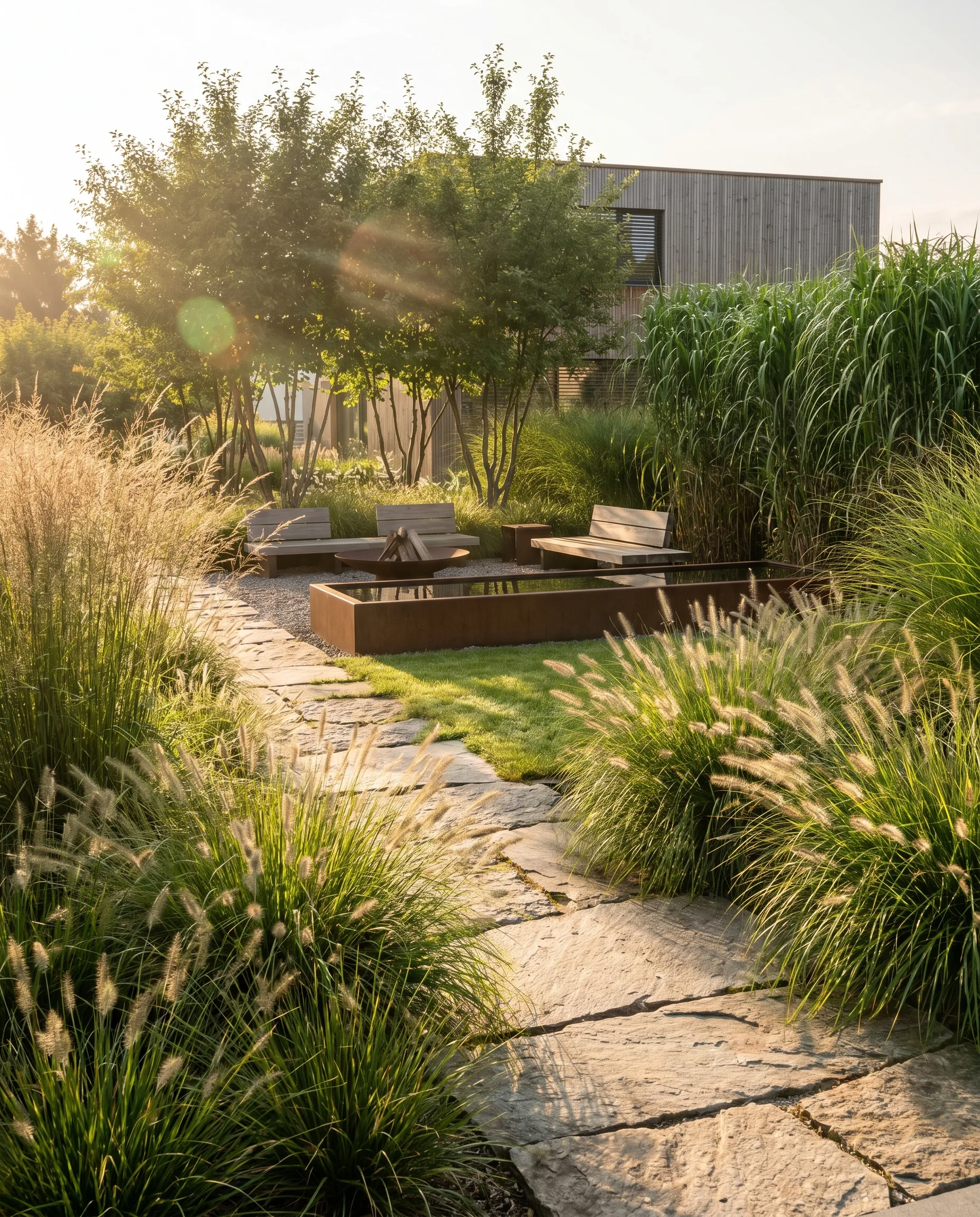
New-Build Garden Ideas: From Bare Ground to a Finished Garden
You’ve just built — and now you’re looking at a patch of rubble and compacted clay. Here you’ll learn how to use the right new-build garden ideas to plan a finished garden step by step, what it really costs, and which decisions you should make early on.
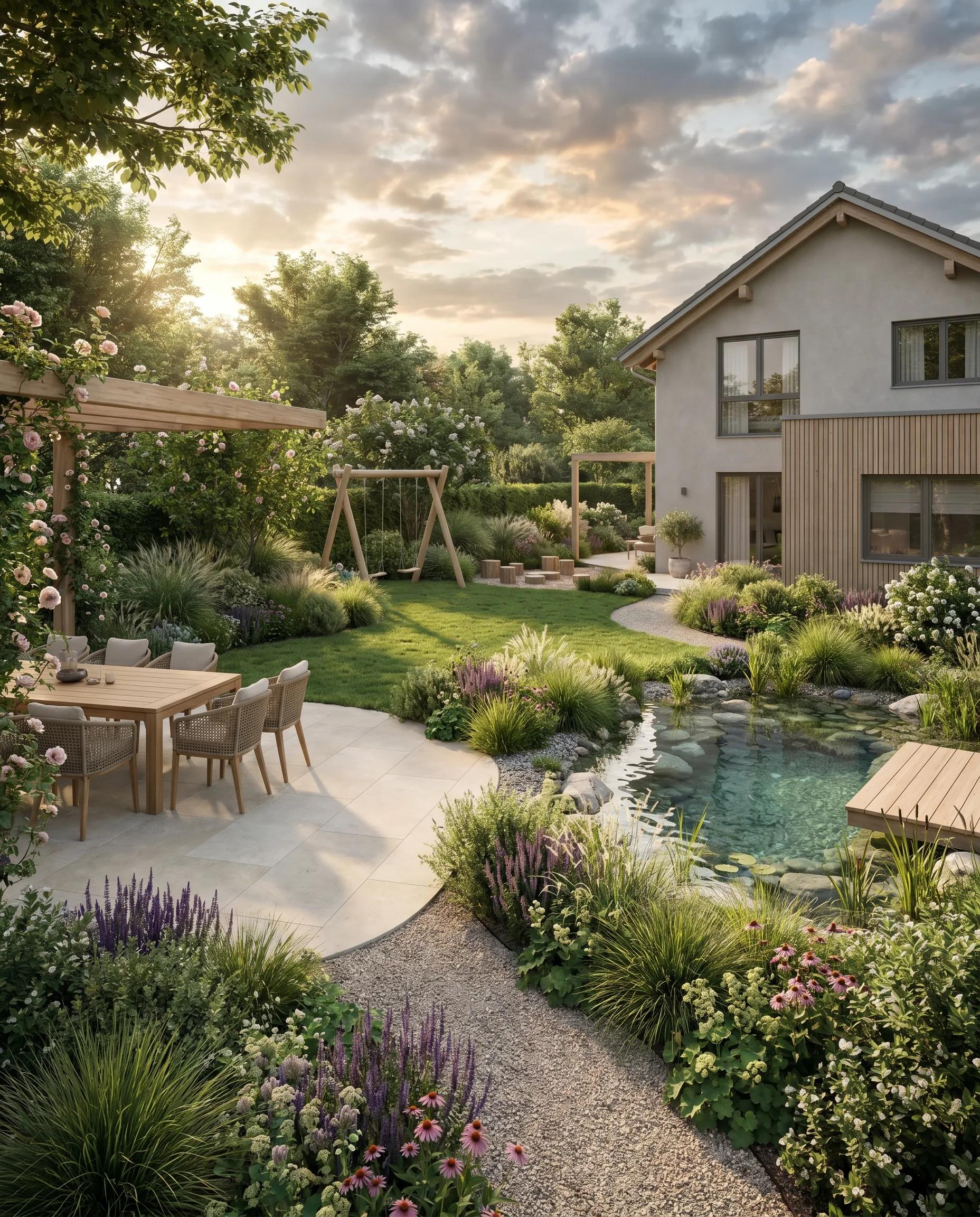
Garden Timeline When Building a House: What to Do When (Step by Step)
When does the lawn go in, when the patio, when the planting? The right sequence for creating your garden after building your house saves real money — and prevents costly mistakes that are hard to fix later.