Showing garden design variants: clarifying style, material and use with the client
Which variants help in client meetings, how modern, naturalistic and Mediterranean differ, and how you can show variants without drawing a design for each one.
Private clients often do not know exactly what they want until they see it. “Modern, but cosy” or “naturalistic, but tidy” means something different to everyone. Two to three clearly different variants help to clarify the direction early. This article shows which types of variants really help in the conversation, how the three most common styles differ, and how you can show variants without drawing a separate design for each one.
In short: Show two to three variants that differ clearly in one feature: style, material or use. Name the style with its typical materials and plants, so that the client gets words for their taste. Record the decision in writing before you move on to the concept.
Why variants make the decision easier
With only one design, the client has two options: yes or no. And for a larger purchase, “no” often feels safer. With two to three variants, the question shifts to “Which one suits us better?”. This has three advantages:
- The client feels advised, not sold to.
- Change requests come earlier, in the conversation instead of after the quote.
- Taste becomes concrete. Instead of “somehow modern”, the client says “the second one, but with the wood from the first”.
What matters is that the variants differ clearly. Three designs that differ only in the joint pattern confuse more than they help.
Three types of variants
1. Style variants
The same garden in two to three design languages, for example modern, naturalistic and Mediterranean. This helps above all when the client does not yet have a direction. The three styles are described in the next section.
2. Material variants
Same layout, different main materials: natural stone paving, large-format concrete slabs or a timber deck. This decision shapes appearance and costs alike. A side-by-side comparison makes price differences understandable before the quote is written.
3. Use variants
Same area, different focus: lounge, play area or kitchen garden with raised beds. With families in particular, this steers the conversation from taste to actual use.
The three most common styles
Styles are not a set of rules but a framework that organizes decisions: which surfaces, which plants, which edges. In practice, they are rarely implemented in pure form. Plot, house, existing garden and budget set the framework, and a mix often results.
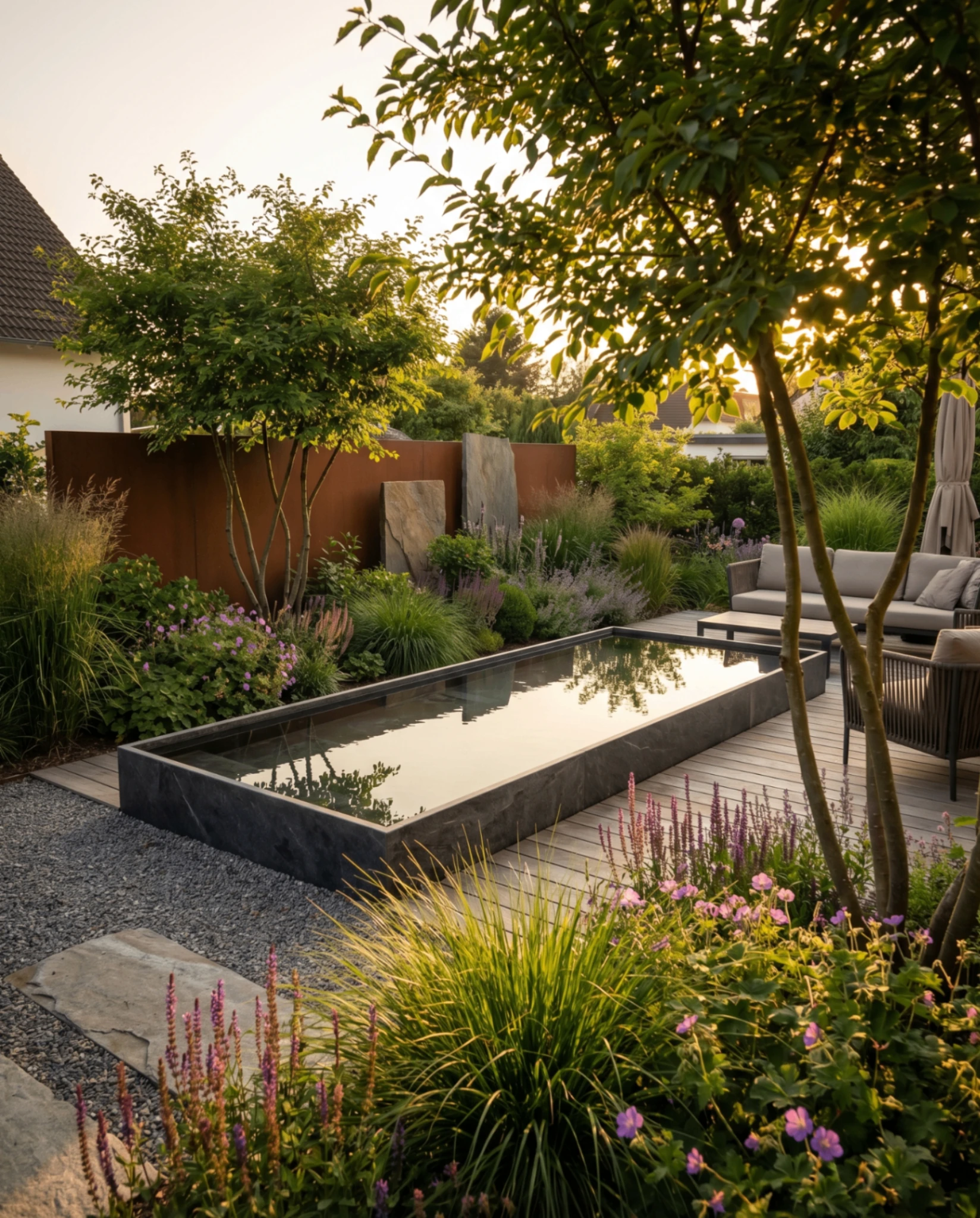
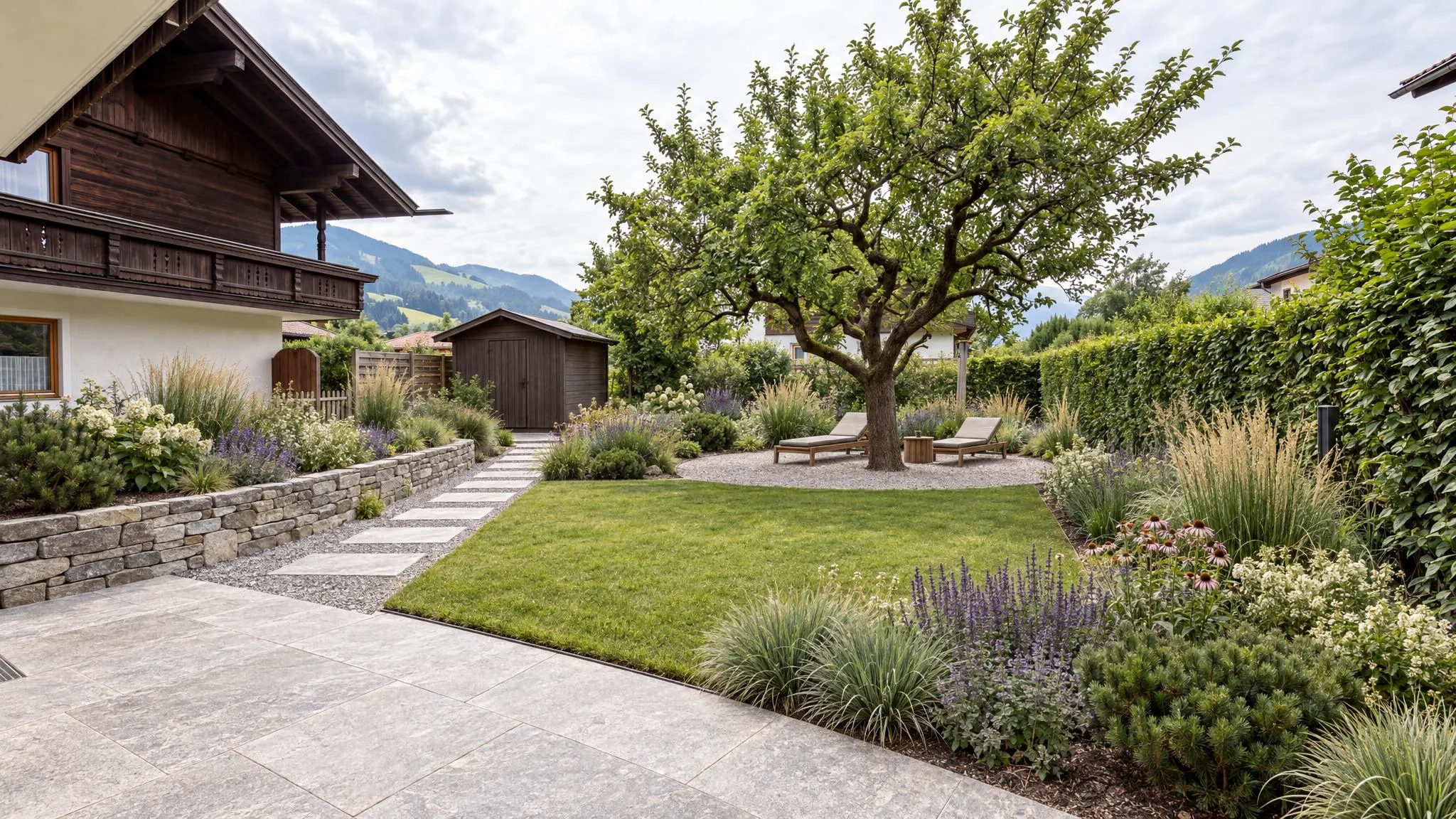
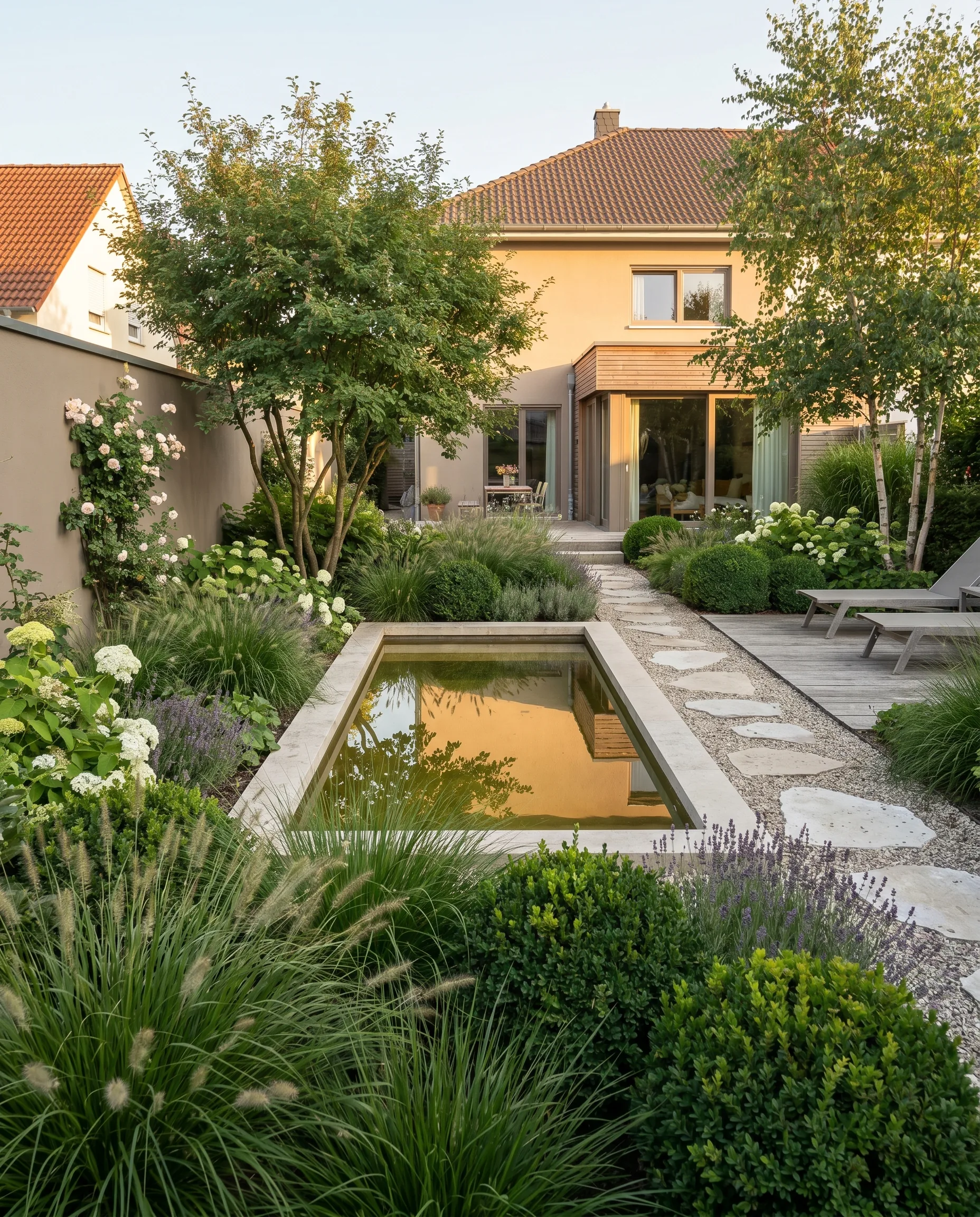
The three images in this section show the same garden in three directions: same house, same old apple tree, same view. This is exactly what a style variant looks like in a client meeting.
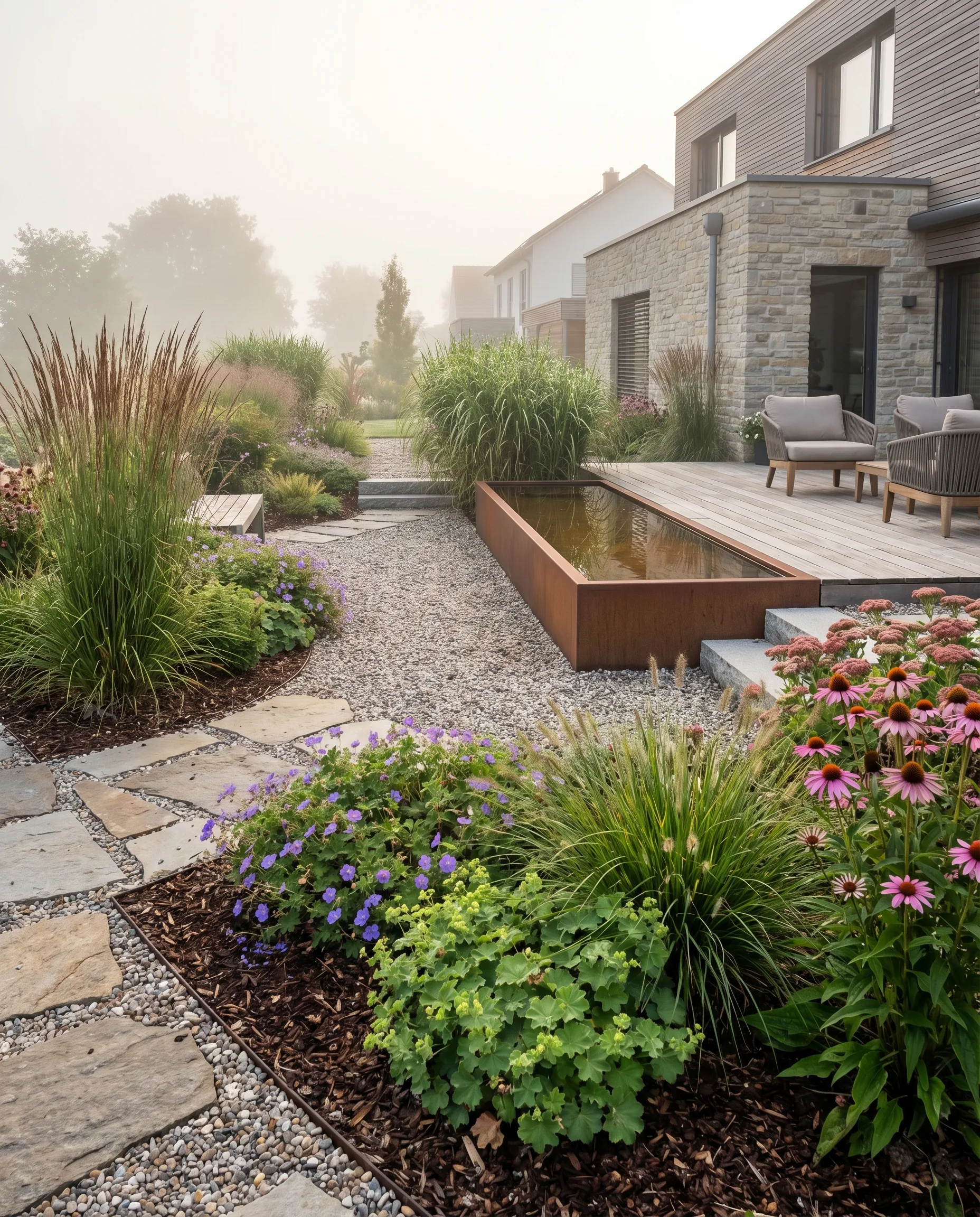
Modern: clean lines, few materials
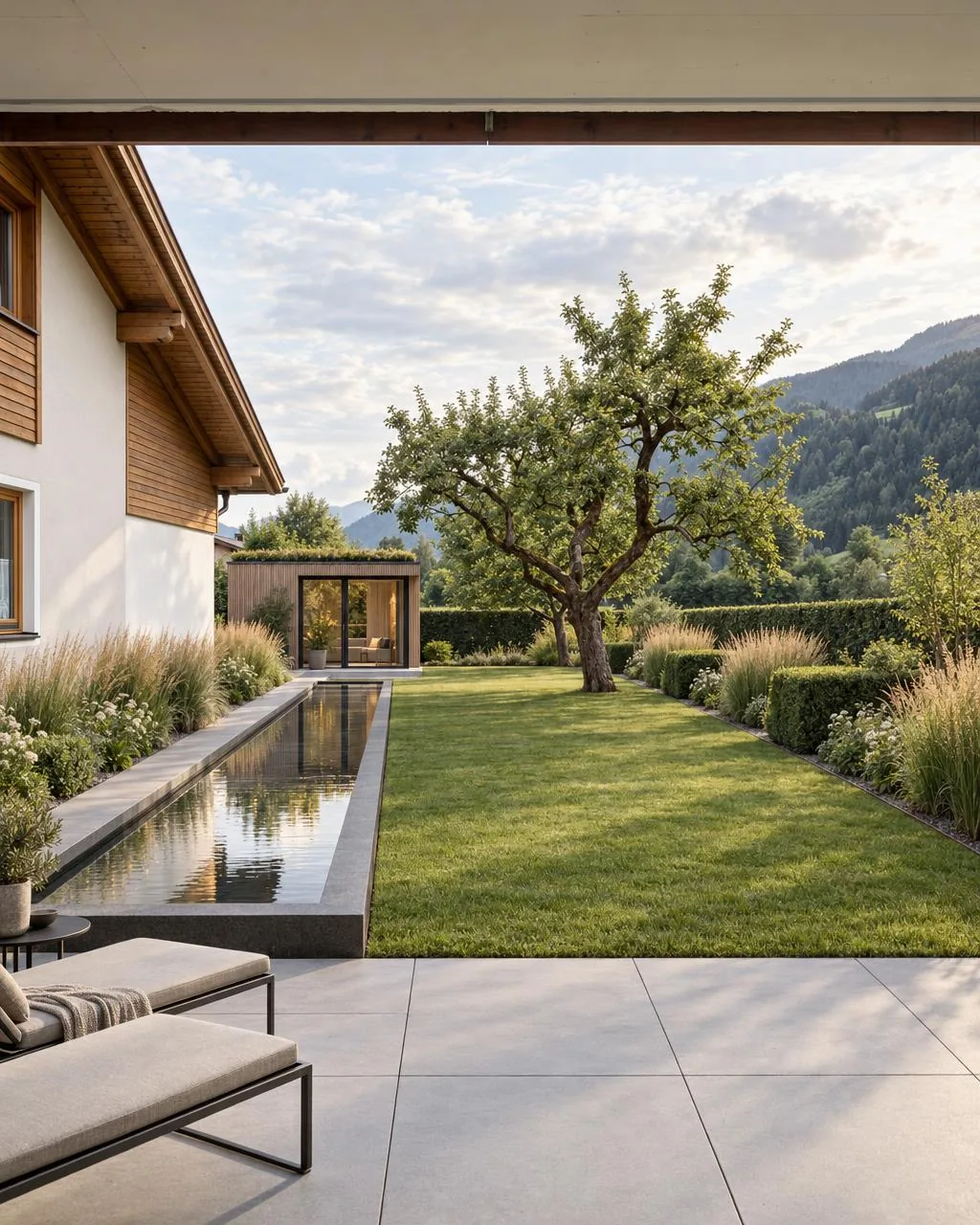
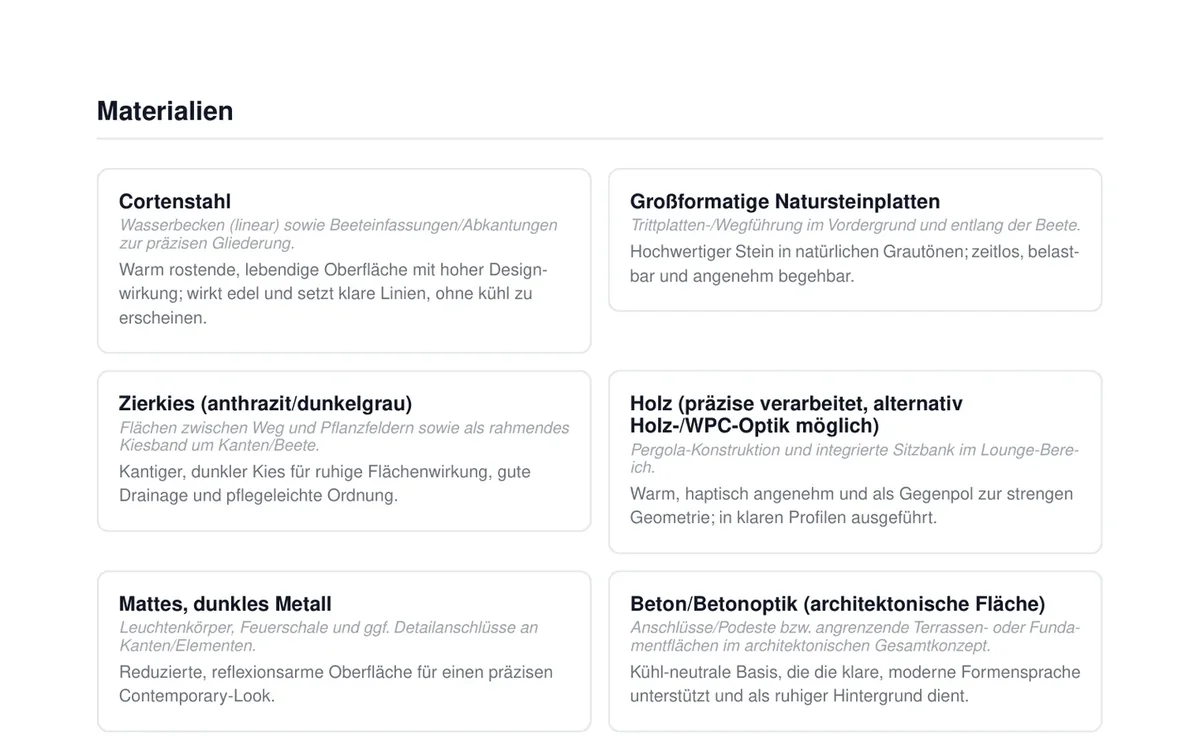
- Surfaces: large-format slabs, gravel in a single grain size, timber decking, edges of Corten steel or concrete
- Plants: repeated groups, topiary, grasses such as Calamagrostis or Miscanthus
- Water: calm basin with straight edges
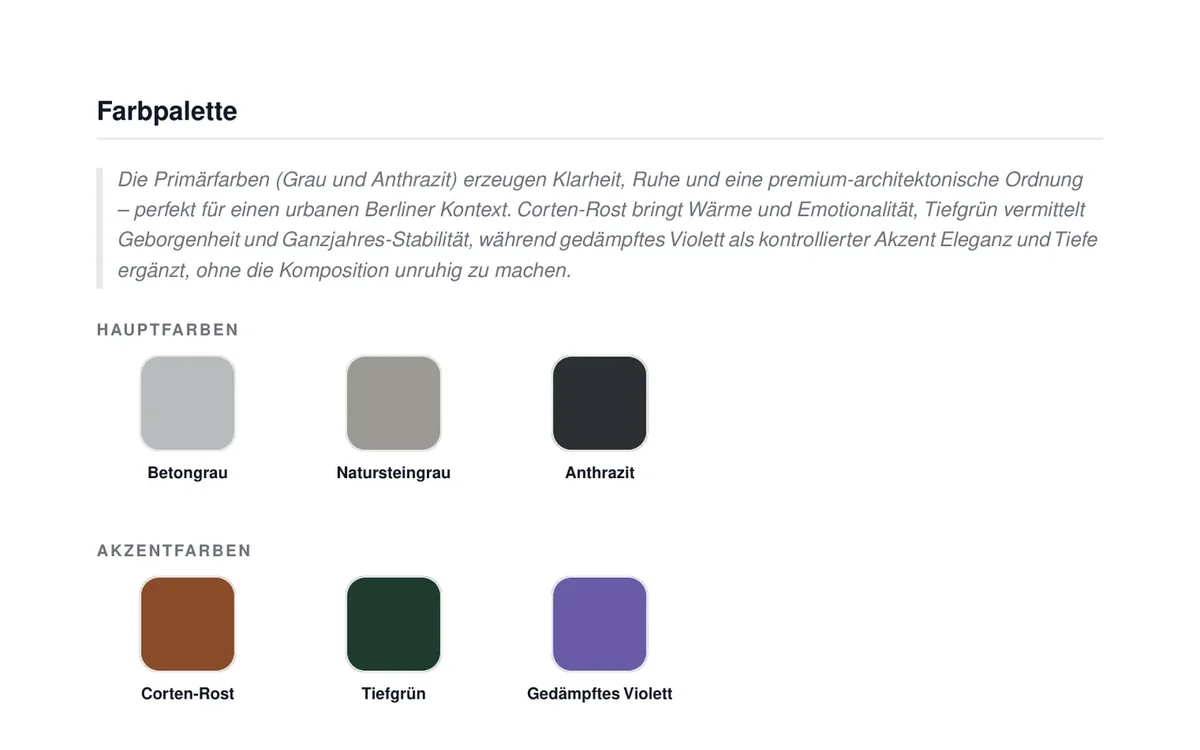
- Colours: anthracite, grey, off-white
Works well with new builds and contemporary architecture. The maintenance effort is easy to plan. Points to note: Large-format slabs and Corten steel come at a price, and the execution requires precise dimensional tolerances. On small areas, a strict design can feel cramped.
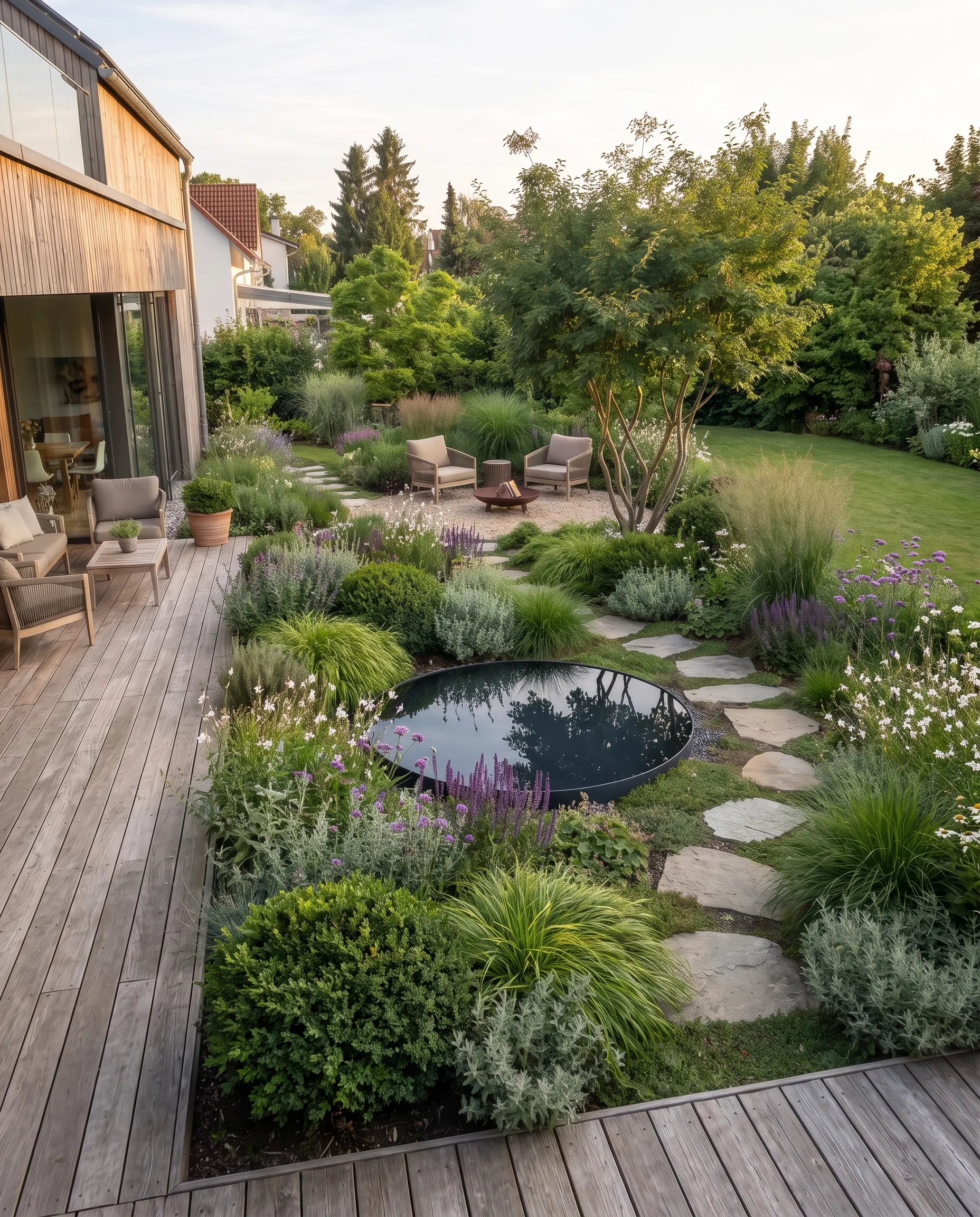
Naturalistic: diversity with recognizable order
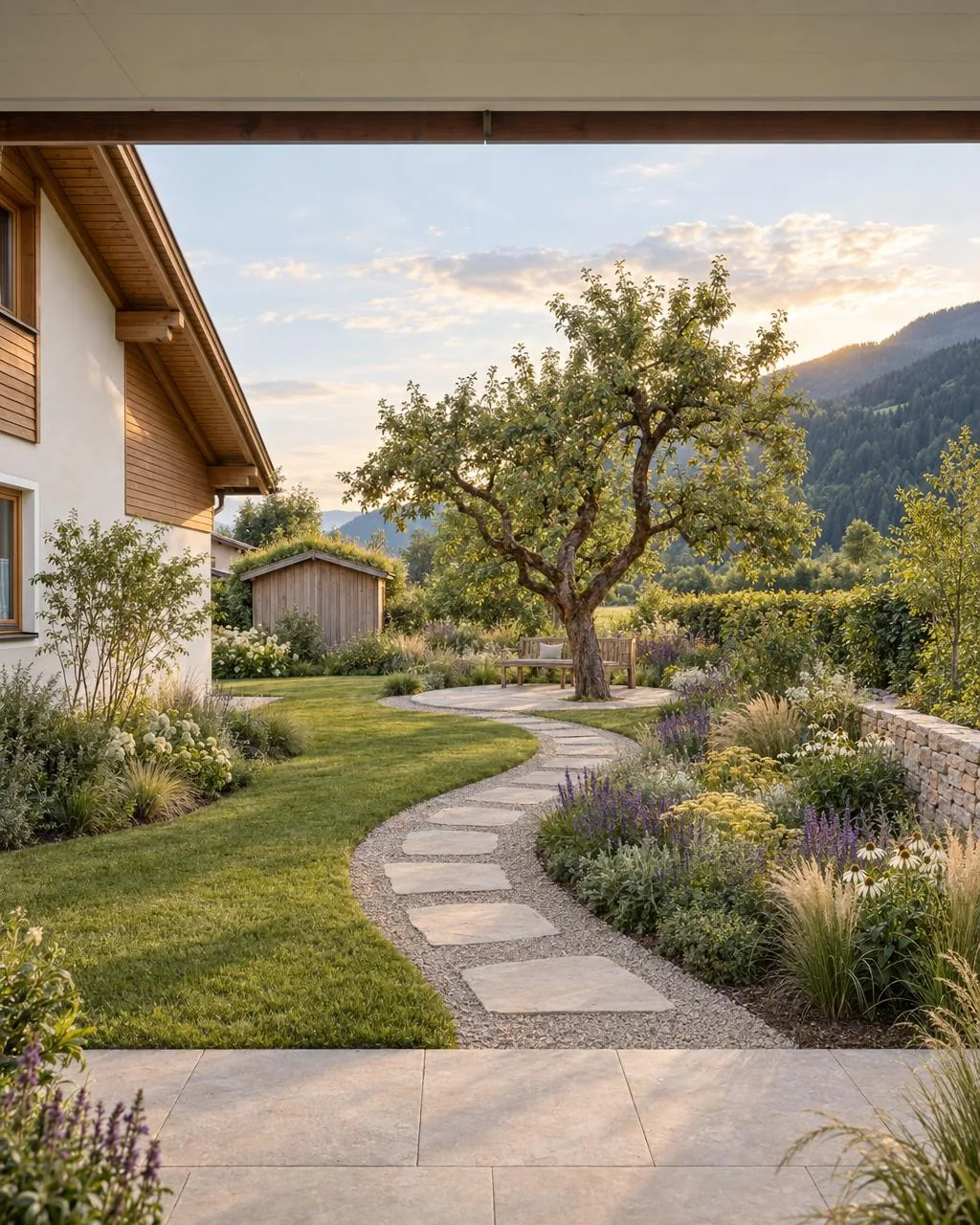
- Plants: perennials grouped by habitat, native wild shrubs, fruit trees, mixed hedges
- Materials: natural stone, untreated wood, dry-stone walls
- Structures: paths, edgings and individual trees and shrubs as anchor points
Works well for clients who value insect diversity and a lively look. Points to note: Naturalistic does not mean unkempt. A naturalistic garden is maintained differently, selectively and in cycles, but it is maintained. The client should know this beforehand.
Mediterranean: warmth that depends on the location
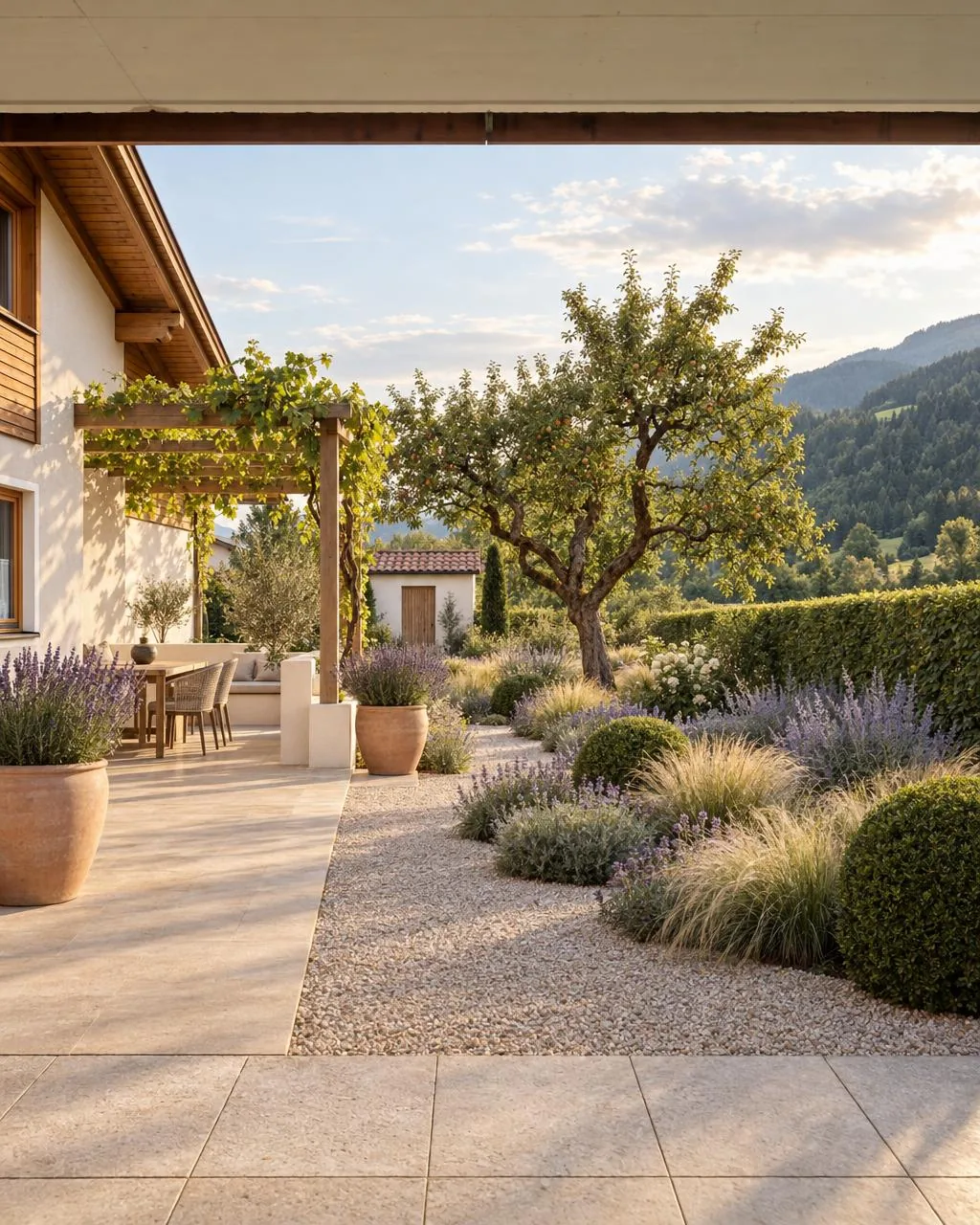
- Surfaces: natural stone in warm tones, gravel
- Plants: lavender, rosemary, rock rose, Perovskia, and in sheltered locations also olive in a container
- Structures: pergola, light-coloured walls, terrace levels
- Colours: earth tones, ochre, white, the blue-grey of lavender
Works well for sunny terraces and slopes; gravel areas and drought-tolerant plants save water. Points to note: In harsh locations, many Mediterranean plants reach the limits of their winter hardiness. Discuss frost protection and overwintering of container plants openly. Not every type of house suits the style.
Mixed forms
Clients collect inspiration from many sources, and the images rarely come from one style. A mix works if it is designed deliberately: a modern terrace element that merges into a naturalistic perennial area, with a connecting material or a connecting colour. It becomes restless when styles sit side by side without a transition.
Showing variants without drawing a design for each one
Traditionally, each variant means: new sketch, new perspective, new plant list. With AI visualization, you can show directions before the actual planning begins:
- Upload a photo of the existing garden. The project start (3 credits) delivers three design ideas directly on the photo.
- Specify the style. Curated styles, the theme worlds, serve as the starting point.
- Variants in the chat. You describe “Same garden, but with a timber deck instead of natural stone” or “with raised beds instead of lawn” in the chat; each additional variant costs 1 credit.
- Record the decision and work out the concept. The chosen variant becomes a concept with modules, materials, colour palette and planting concept (5 credits).
The images are design ideas, not scale plans. You continue to plan and check plant selection, soil preparation, drainage and irrigation yourself. How to use the chosen image in the meeting is described in the article Visualizing garden plans in client meetings, and how the decision becomes a concept in the article Creating a garden concept.
What this costs with GardenPilot
A typical project with project start, two further variants and a concept comes to around 10 credits, about €17 to €25 net depending on the package, with no subscription. Your first client project is free: project start with three visualizations and a fully worked-out concept. All prices are on the pricing page for businesses.
Frequently asked questions
How many variants should I show in the first meeting?
Two to three. Fewer does not allow a comparison, more is overwhelming and drags out the decision. The variants should differ in one relevant feature: style, material or use.
How early should the style be fixed?
As early as possible. The style determines materials, plants and therefore the budget. A change of style after the cost estimate means replanning.
How do I explain the difference between naturalistic and unkempt?
With images and a clear description of the maintenance. A naturalistic garden has a recognizable structure: paths, edgings, individual trees and shrubs as anchor points. A garden looks unkempt when this structure is missing.
Do the variants replace the planning?
No. They serve the decision in the conversation. Technical drawings, site measurement and construction details follow afterwards.
Try GardenPilot Professional
Your first client project is free: three visualizations directly on the photo of the existing garden and a worked-out concept – presented as a client folder.
Try your first client project for free