Creating a garden concept in landscaping: structuring the concept phase and clearly agreeing on planning work
What a garden concept for private clients should achieve, how to structure the concept phase, agree on the planning work in advance and use AI visualization sensibly.
The concept phase decides whether an enquiry turns into a job. At the same time, it is the phase in which a landscaping business does the most work up front without knowing whether it will win the contract. This article shows what a garden concept for private clients should achieve, how to structure the concept phase in five steps, how to clearly agree on the planning work in advance, and where AI visualization helps and where it does not.
In short: A garden concept sets the direction: use, zones, style, materials, planting character and a rough cost framework. It is not yet construction planning. Structure the phase into site survey, needs analysis, variants, decision and concept. Agree in writing beforehand whether and how the planning work will be paid.
What a garden concept should achieve and what it should not
A garden concept answers the question of what is to be created in the garden. How it is built in detail is a later question. Good orientation is provided by the structure of the HOAI (the German fee scale for architects and engineers) for open spaces: among other things, it distinguishes between basic evaluation, preliminary planning, design planning and construction planning (§ 39 HOAI). A garden concept for private clients typically lies between preliminary planning and design planning.
| A garden concept contains | A garden concept does not contain |
|---|---|
| Use and zones (seating area, play, kitchen garden, retreat) | Site measurement and level plan |
| Design direction and style | Bill of quantities and amounts |
| Main materials for paving, edging, furniture | Construction details, sections, drainage |
| Planting character: groups, key plants, effect | Plant list with plant counts |
| Rough cost framework per variant (from your cost estimate) | binding price |
This distinction also helps in conversations with the client. If you say clearly what the concept is and what only comes afterwards, you avoid expectations that later lead to change orders.
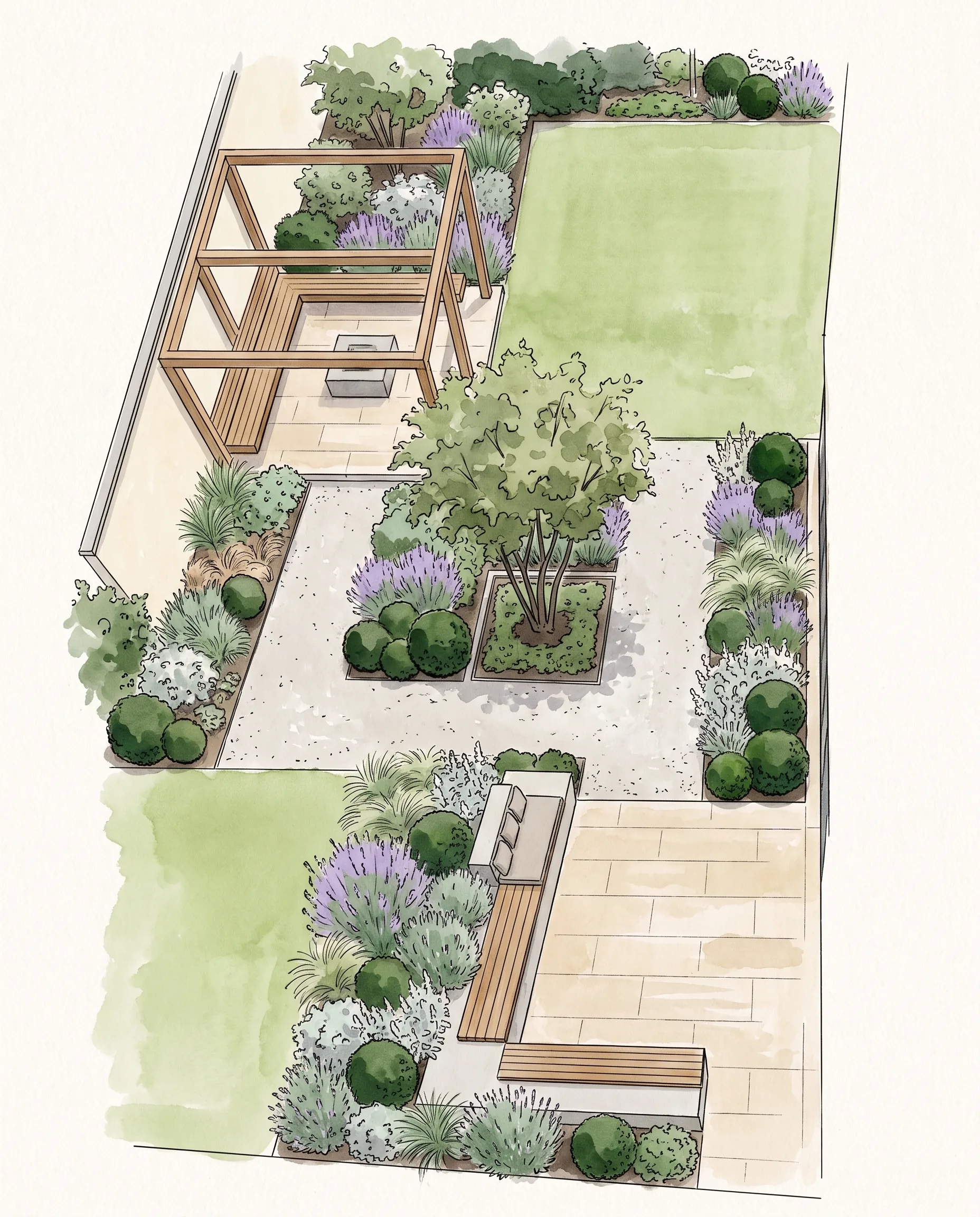
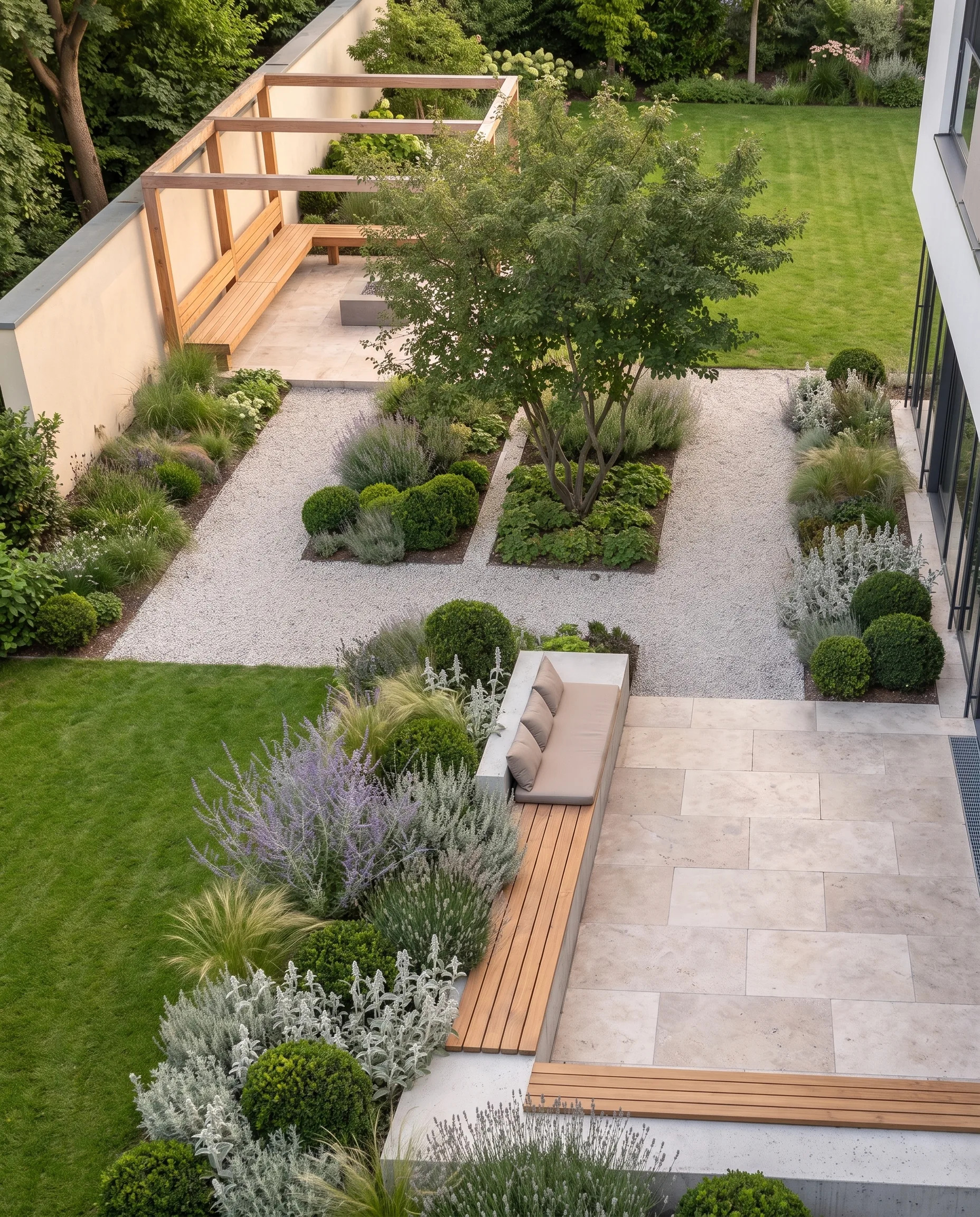
The concept phase in five steps
- Site survey. Dimensions, orientation, slope, soil, existing trees and shrubs, access points. Photos from several angles, at least one from the house into the garden.
- Needs analysis. Who uses the garden, for what, and when? What should definitely not be created? What level of maintenance is realistic? What budget framework is planned?
- Variants. Two to three clearly different directions, for example naturalistic, modern and Mediterranean, or a basic and a full expansion stage.
- Decision. The client chooses a direction or combines them. Record the decision in writing.
- Concept. The chosen direction is worked out: zones, materials, planting character, rough cost framework. This is the basis for the quote.
Steps 2 to 4 usually take the most time. Clients often do not know exactly what they want until they see it. Terms like “modern, but cosy” or “naturalistic, but tidy” mean something different to everyone.
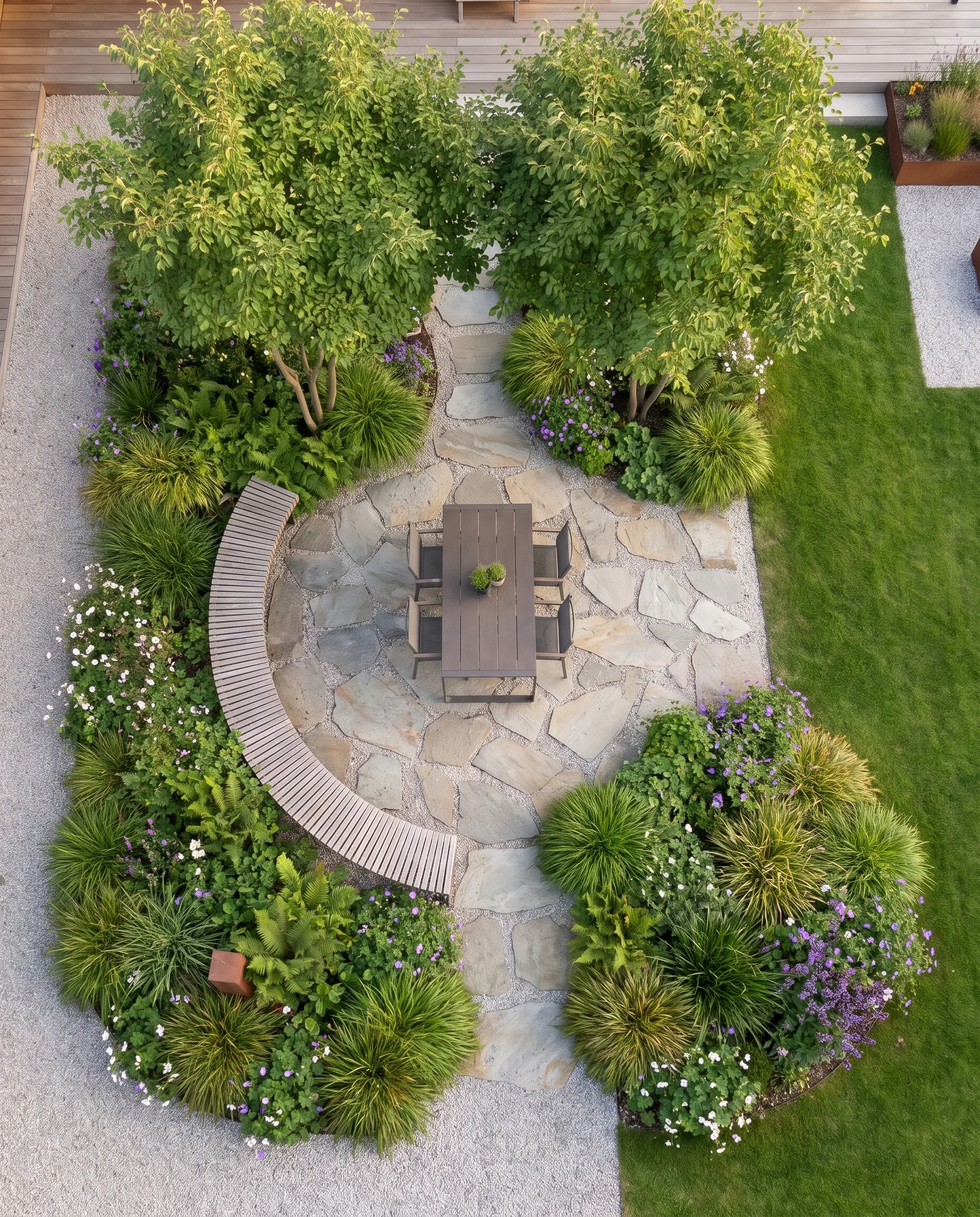
Clearly agreeing on the planning work in advance
Many landscaping businesses do the concept work without an agreement and hope for the job. That is rarely a deliberate decision, but it should be one. Typical approaches are:
- Free initial consultation, concept for a flat fee. The initial consultation is free, the detailed concept has a fixed price.
- Flat fee with crediting. The concept fee is credited against the job when the contract is awarded.
- Concept as part of the quote. Without separate payment, but with a clear limit, for example one variant and one round of changes.
What matters in every case: in advance and in writing. What is included in the concept, what it costs and what happens to the concept if no contract comes about. For landscape architects, the HOAI governs the fee agreement; it requires text form and, for consumers, written notice in advance (§ 7 HOAI). If in doubt, clarify with your association or a legal adviser whether and how such rules apply to your business. This article is not legal advice.
Where AI visualization helps in the concept phase
Steps 2 to 4 become easier when the client sees an image early. With GardenPilot it works like this:
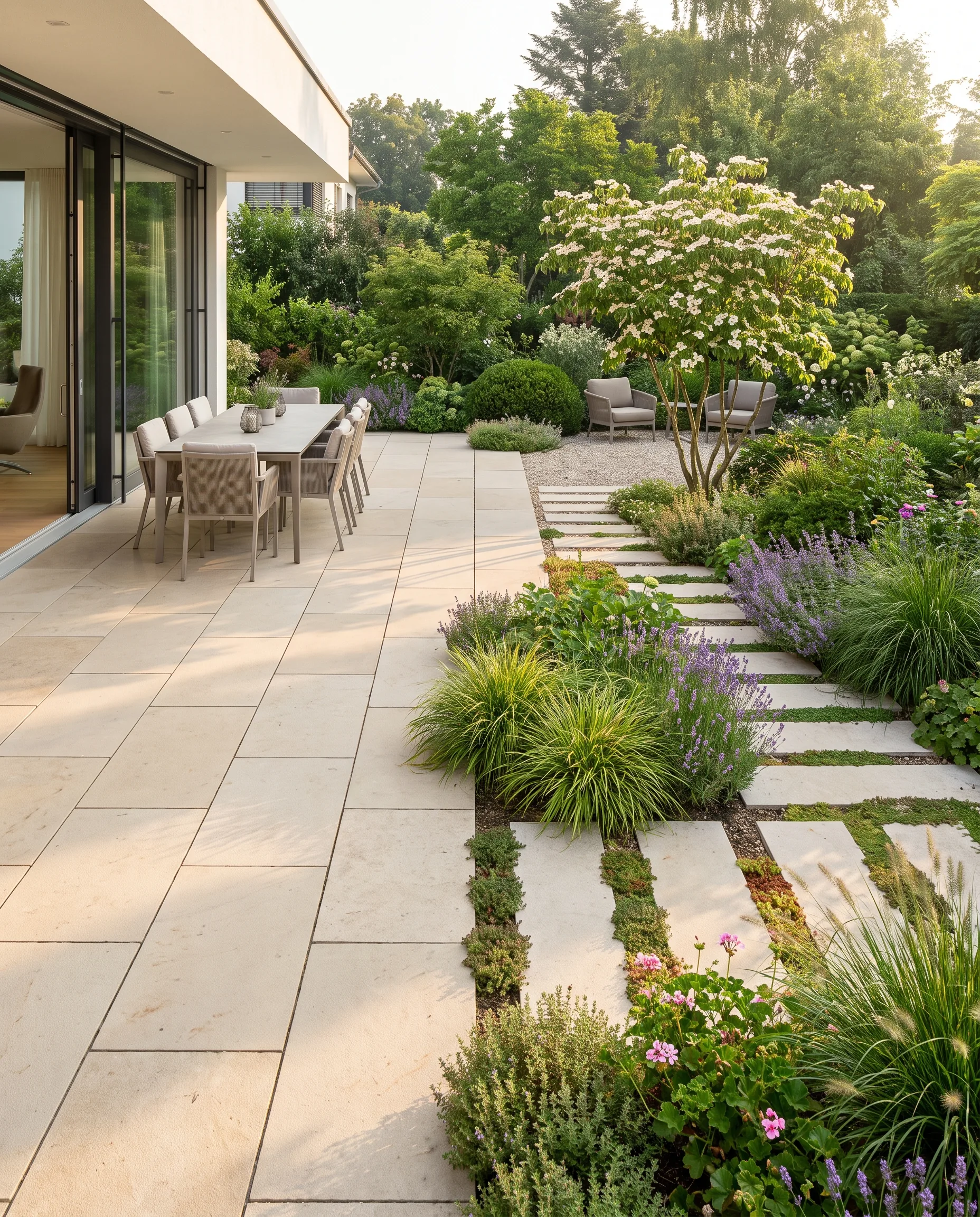
- Upload a photo of the existing garden. The project start (3 credits) delivers three design ideas directly on the photo, within a few minutes.
- Find a direction. Further variants are created in the chat (1 credit each); curated style directions, the theme worlds, can also serve as a starting point.
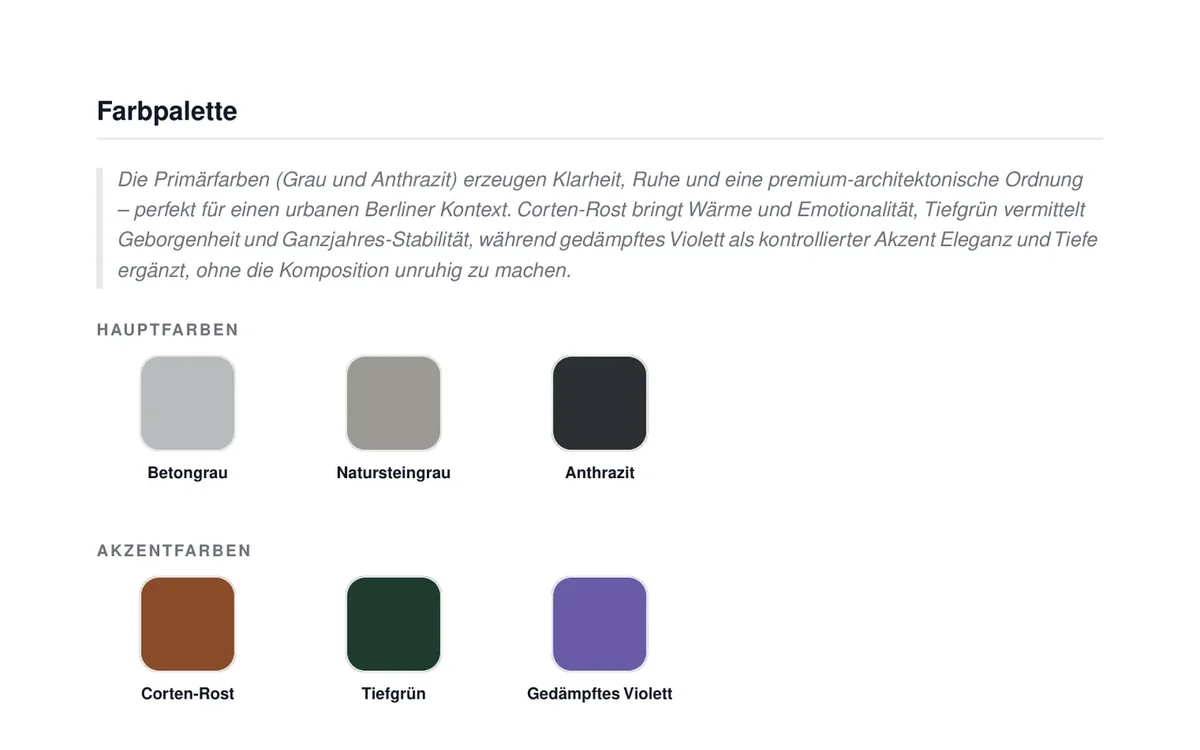
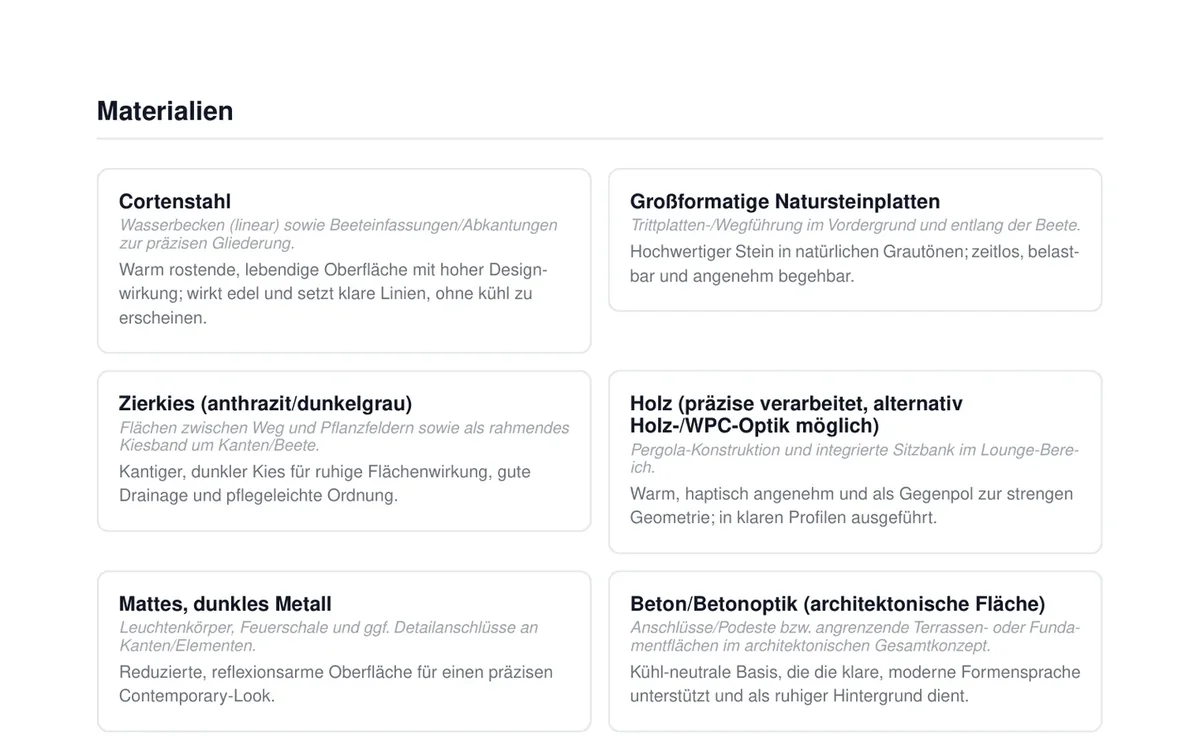
- Work out the concept. The chosen idea becomes a concept with modules, materials, colour palette and planting concept (5 credits).
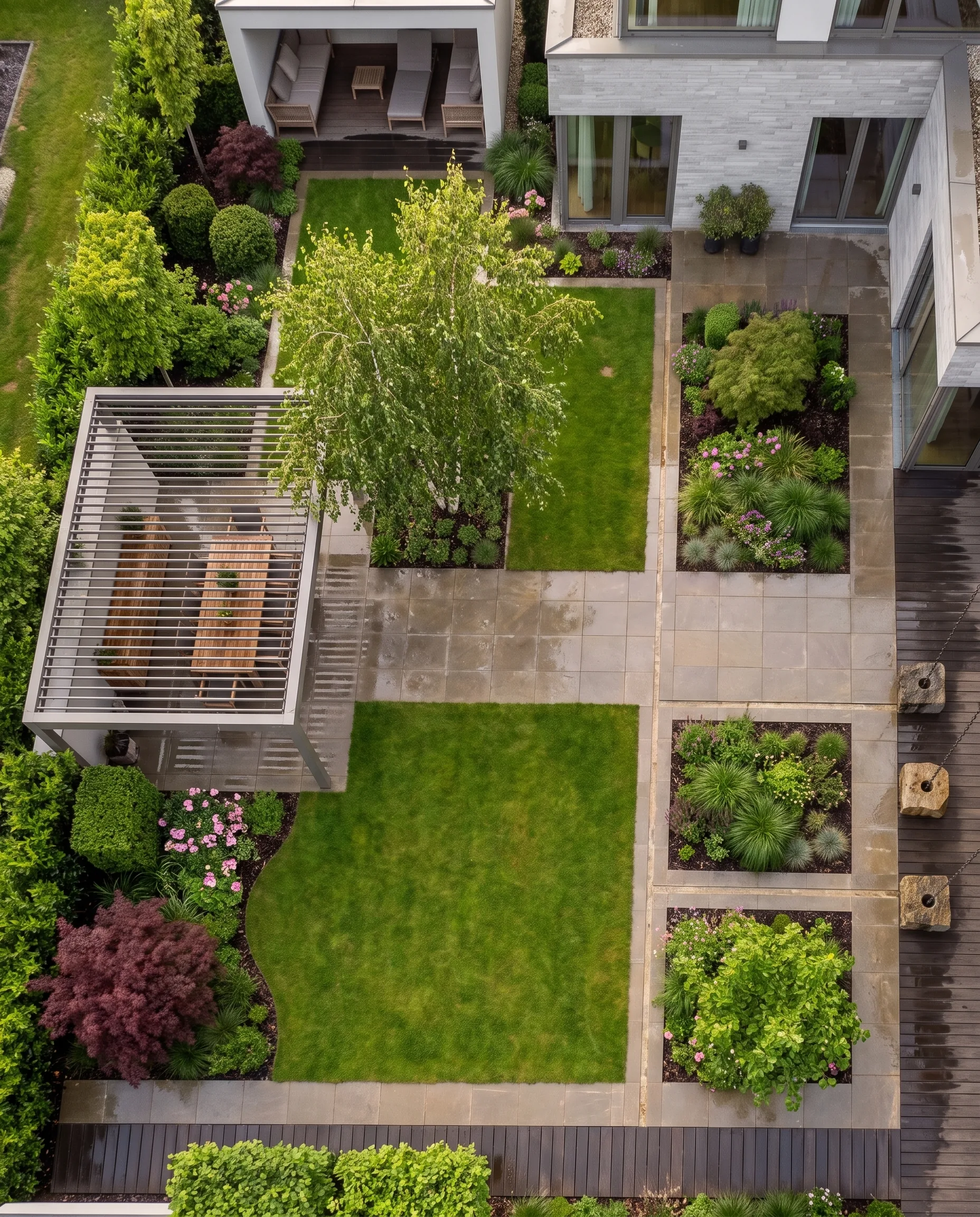
- Garden plan. On request, a top view with outer dimensions, north arrow, scale and legend (3 credits per concept variant), with concept accuracy.
- Client folder. Everything together as a PDF or protected link (free of charge).
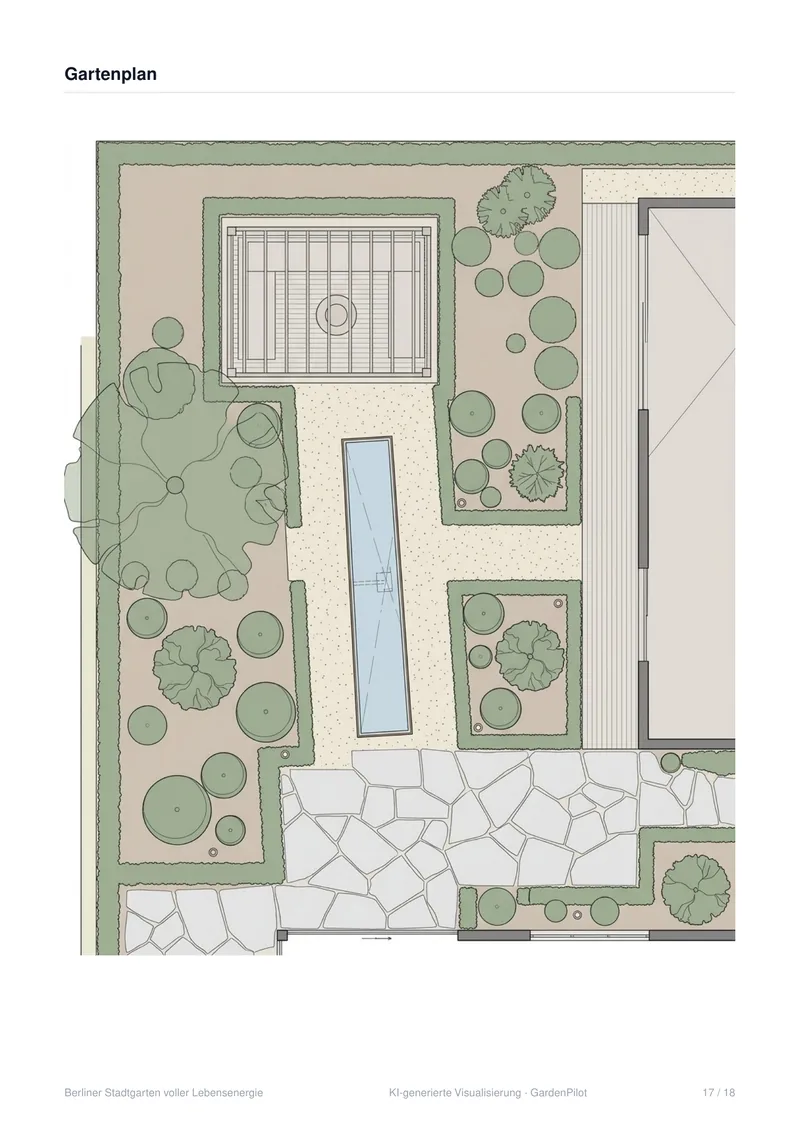
This gives you an image instead of terms for the needs analysis, several directions for the variants without three times the drawing effort, and for the decision a folder that the client can go through at home. How to use the images in the meeting is described in the article Visualizing garden plans in client meetings, how to present the result in the article Client presentation in garden design.
What the AI does not do in the concept
- No terrain analysis. Levels, load-bearing capacity and groundwater cannot be derived from a photo.
- No legal review. Development plan, boundary setbacks, tree protection bylaw and permits remain your responsibility.
- No quantities and no cost estimate. The concept names materials, but no quantities. You derive the cost framework from your own cost estimate.
- No plant list with plant counts. The planting concept describes groups, examples and effect.
- No assessment of existing trees. Whether a tree can be retained is assessed by a specialist on site.
If you name these limits openly in the conversation, you do not come across as weaker, but as more reliable.
What this costs with GardenPilot
GardenPilot works with credit packages, without a subscription. A typical project with project start, two variants and concept comes to around 10 credits, approx. €17 to €25 net depending on the package; the garden plan costs 3 credits per concept variant, the client folder nothing. Your first client project is free: project start with three visualizations and a detailed concept. All prices are on the pricing page for businesses.
Frequently asked questions
What belongs in a garden concept for private clients?
Use and zones, the design direction, main materials, the planting character and a rough cost framework. Site measurement, quantities, construction details and the binding price follow afterwards.
Should I charge for the concept work?
Every landscaping business decides that for itself. What matters is to settle it in writing beforehand: what is included, what it costs and whether it is credited if the job is awarded. Without an agreement, the concept work usually remains unpaid if no job follows.
Can I hand the AI concept to the client as a design draft?
As a basis for discussion and decisions, yes; as binding planning, no. The images are design ideas, the garden plan has concept accuracy with estimated proportions. Tell the client this openly.
How many variants should the concept include?
In the variant phase, two to three clearly different directions; in the detailed concept, one. More variants tend to prolong the decision rather than help.
Try GardenPilot Professional
Your first client project is free: three visualizations directly on the photo of the existing garden and a worked-out concept – presented as a client folder.
Try your first client project for free