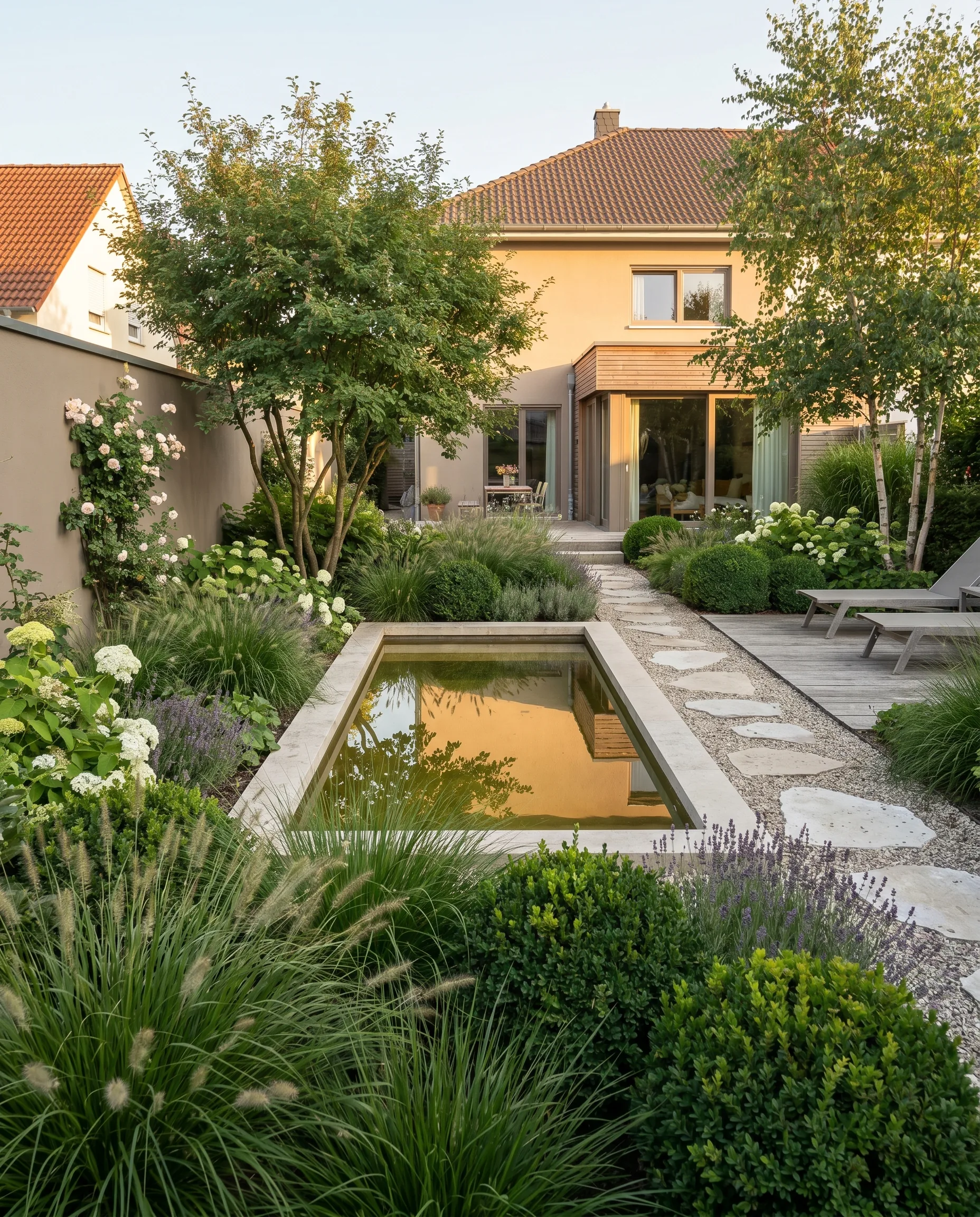
Preparing quotes in landscaping: from the first meeting to an accepted quote in four phases
A four-phase process for quotes to private clients: clarify needs, show the direction, estimate costs on a solid basis, present in person and follow up.
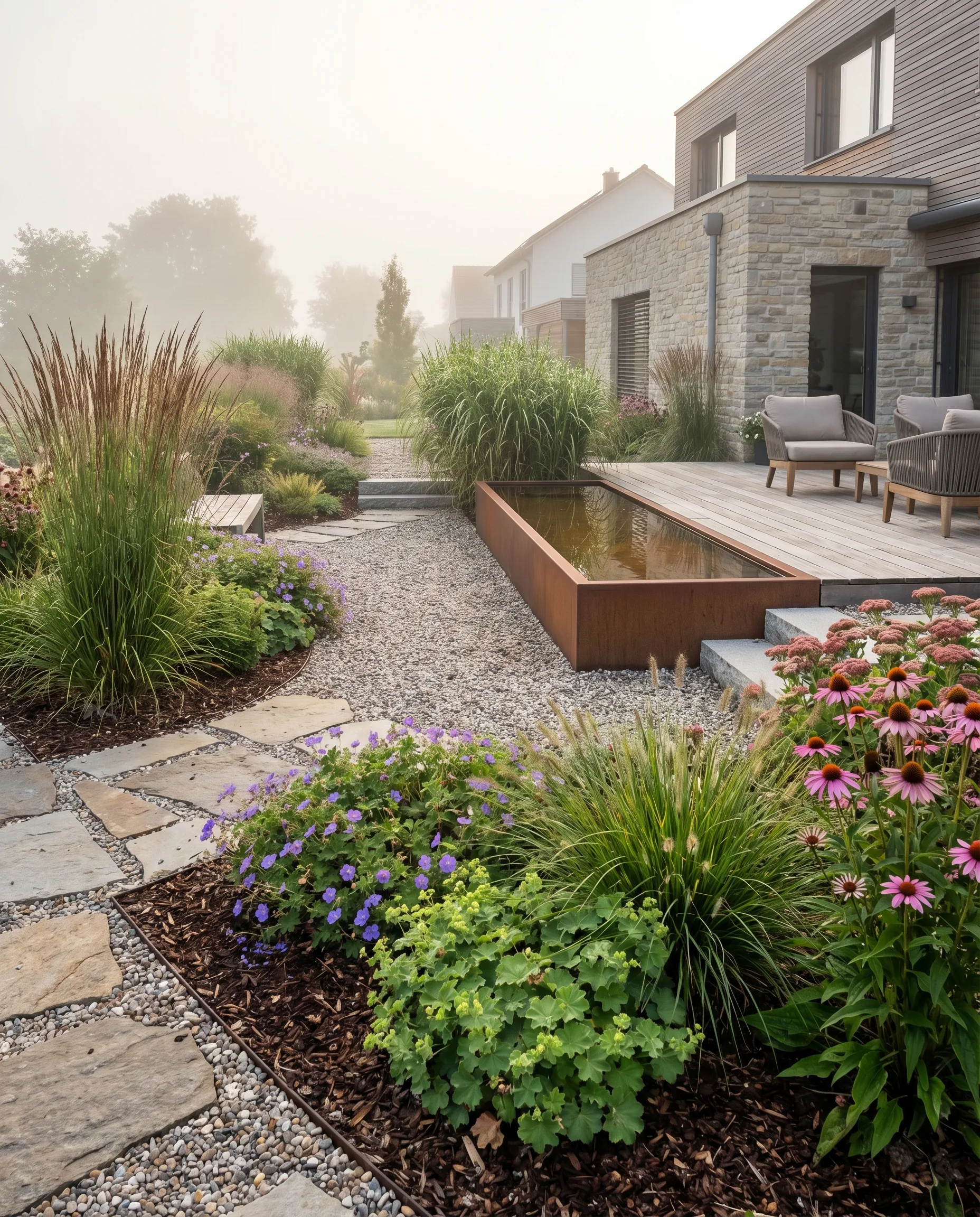
A quote for private clients takes time: site measurement, material research, cost estimate, writing it up, follow-up questions. And it often ends in silence or with the question of whether “there is still some room on the price”. This article shows a four-phase process that clarifies vague wishes before the cost estimate, and how a visualization and a client folder can accompany the quote without replacing it.
In short: Clarify the wishes before you estimate costs. Show the client an image of the chosen direction before the quote. Then estimate costs on that basis, and present the quote in person, with an agreed next step.
Why quotes take so much time
Between the first meeting and the finished quote, there are usually:
- Site measurement and assessment of the terrain on site
- Research on materials, plants and prices, sometimes with supplier enquiries
- Costing of labour, equipment and material costs
- Writing up the line items
- Follow-up questions, often several rounds, because the wishes are unclear
The last point is the silent time-waster. “Something Mediterranean, but not too dry, and low-maintenance” cannot be translated directly into line items. If you estimate costs anyway, you risk a quote that misses the wish, and a second round.
The most common mistake: the quote as the first image
In many businesses, the client sees the planned garden for the first time in the quote, as a list of line items: terrace paving 45 m², hedge planting 12 linear metres, irrigation as a lump sum. This makes it hard for the client to assess the work. The conversation then revolves around line items and prices instead of the garden. That is why an image of the chosen direction belongs before the quote.
Phase 1: Clarify needs
The aim is to understand the wish behind the statement. Helpful questions:
- Who uses the garden, and for what (children, dog, barbecues, retreat)?
- What budget range is planned?
- What should be avoided at all costs?
- How much maintenance is realistic?
- Are there images the client likes?
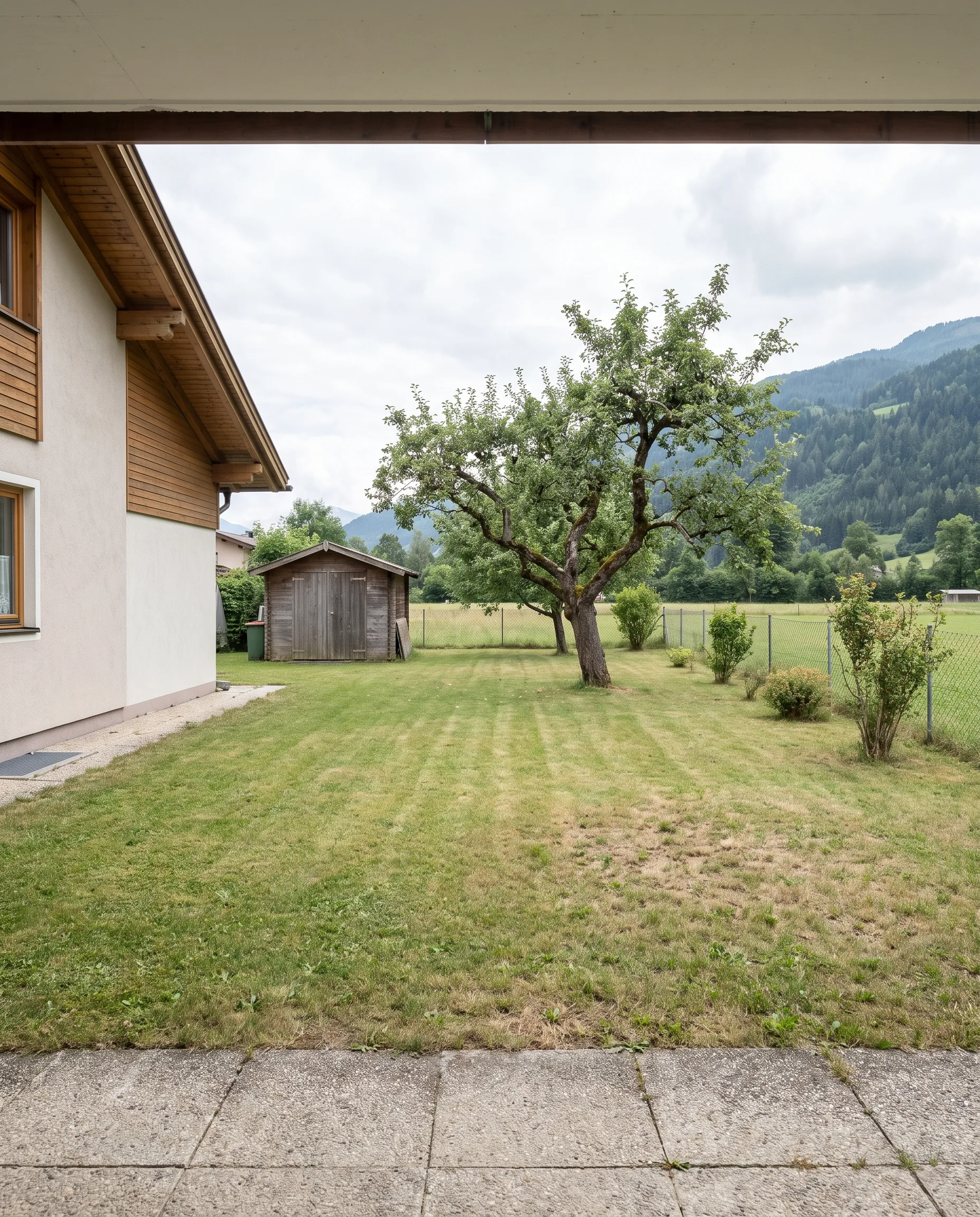
A short intake form, digital or on paper, ensures that nothing is missing. While you are there, take photos of the existing garden from several angles.
Phase 2: Show the direction before you estimate costs
Before you estimate costs, the client should be able to picture the direction. This does not have to be an elaborate rendering. What matters is that the client recognizes their garden and that materials, structures and planting are recognizable.
With GardenPilot, you upload a photo of the existing garden and receive three design ideas directly on the photo within a few minutes. Further variants are created in the chat. On request, the chosen idea becomes a concept with modules, materials, colour palette and planting concept. You give the result to the client as a client folder, as a PDF or a protected link.
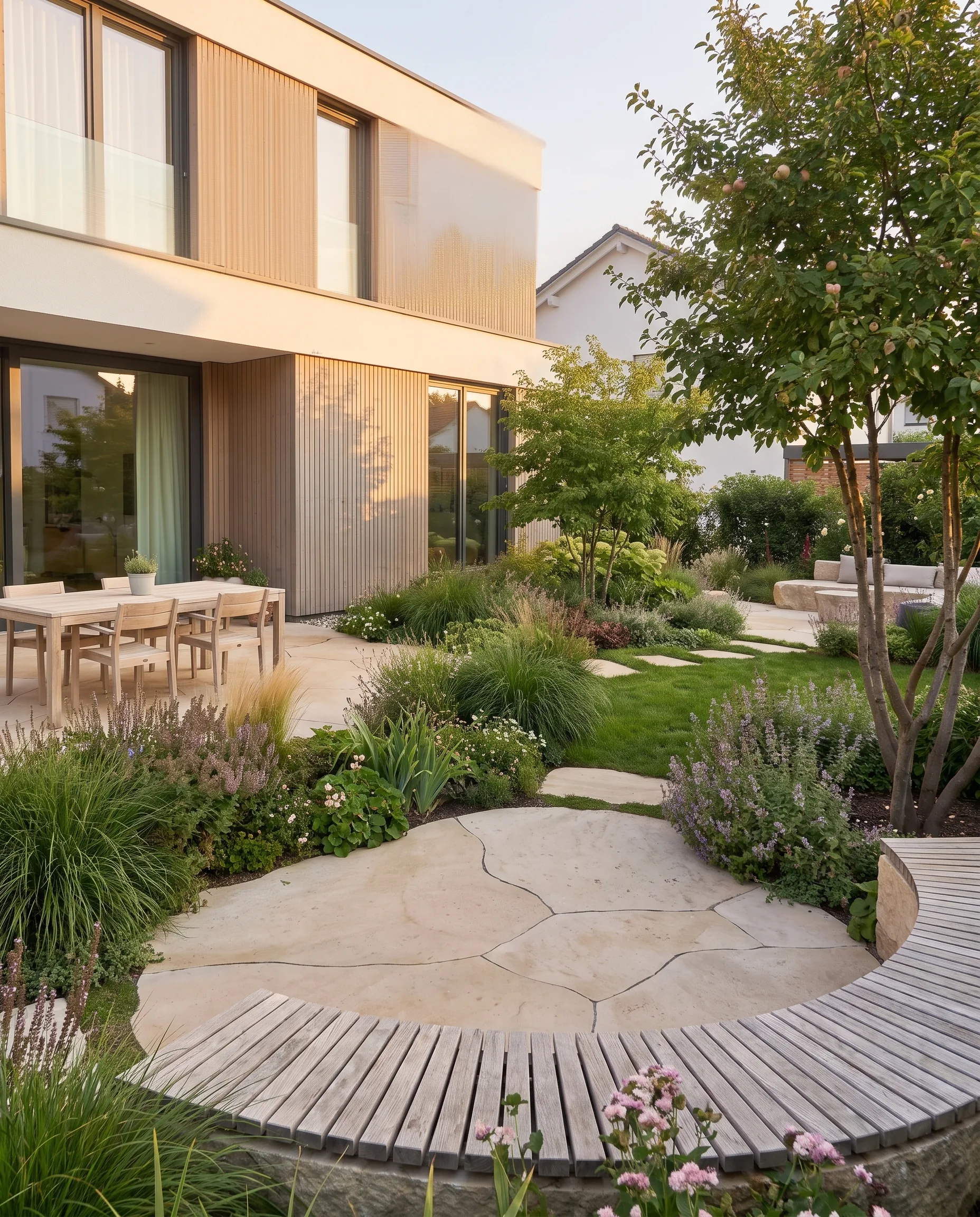
How to use the images in the meeting is described in the article Visualizing garden plans in client meetings.
The visualization replaces neither professional expertise nor structural checks. It is a basis for discussion.
Phase 3: Estimate costs on a solid basis
Once the client has decided on a direction and the key elements are fixed, the cost estimate begins. Now you are costing what is actually wanted, not a guess.
- Create templates for recurring line items.
- Keep material prices up to date, ideally in your costing software.
- Check your hourly charge-out rate regularly. Labour and overhead costs change.
- Assess risks, such as soil and weather, as a transparent line item instead of a hidden surcharge.
How to derive an hourly charge-out rate and avoid typical costing mistakes is described in the article Cost estimating in landscaping. Make sure that the quote matches the image you showed. If it differs, the disappointment comes later.
Phase 4: Present the quote and follow up
A quote that is only sent by email often gets left lying around. It is better to present the quote in person or by video call and to refer to the visualization while doing so.
- State the validity period clearly. Until when is the quote valid?
- Propose a follow-up appointment instead of waiting for a response.
- Address open questions before the client starts looking for alternatives.
The folder from Phase 2 helps with following up: the client has the image at home, and with the protected link you can see whether it has been opened. How to structure the meeting is explained in the article Client presentation in garden design.
Introducing digital tools with a sense of proportion
For landscaping, there is industry software, CAD, CRM, site measurement apps and AI visualization. Not every tool suits every business, and every introduction costs time before it saves time.
- Start with the biggest bottleneck. If quotes fail because the client cannot picture the result, start with visualization, not with the CRM.
- Choose tools that the team will actually use.
- Avoid duplicate work. New tools should complement the existing software.
An overview of costs and categories is given in the article Landscaping software: costs & comparison.
What this costs with GardenPilot
A typical project with project start, two variants and a concept comes to around 10 credits, about €17 to €25 net depending on the package, with no subscription. The client folder is free. Your first client project is free: project start with three visualizations and a fully worked-out concept. All prices are on the pricing page for businesses.
Frequently asked questions
How long does a quote for a private garden take?
That depends heavily on project size and organization. There is no reliable industry figure. Measure it in your business: for one month, record the hours per quote, broken down into site measurement, cost estimate and follow-up questions. Then you can see where the time actually goes.
Is a visualization worthwhile for smaller projects too?
Especially with medium-sized projects such as a terrace or a front garden, where the client is unsure, an image can make the decision easier. A project costs around €17 to €25, and the first one is free.
How do I explain to the client that the visualization is not a binding plan?
Openly and early: the visualization shows a design idea based on the wishes discussed. Dimensions, structural checks and the binding plant selection follow with your planning. Most clients understand this when you raise it.
What should I do if the client negotiates on price despite the image?
Explain what the price includes: planning, material quality, warranty, execution. If another quote is significantly cheaper, it is worth calmly asking which services it includes. Often the quotes differ in scope, not in the price for the same work.
Try GardenPilot Professional
Your first client project is free: three visualizations directly on the photo of the existing garden and a worked-out concept – presented as a client folder.
Try your first client project for free