Limits of AI garden planning: what AI can do today, what remains your expertise and what is changing
What AI achieves in garden planning today, where subsoil, scale, law and planting design need your expertise, and which limits are likely to shift with better models.
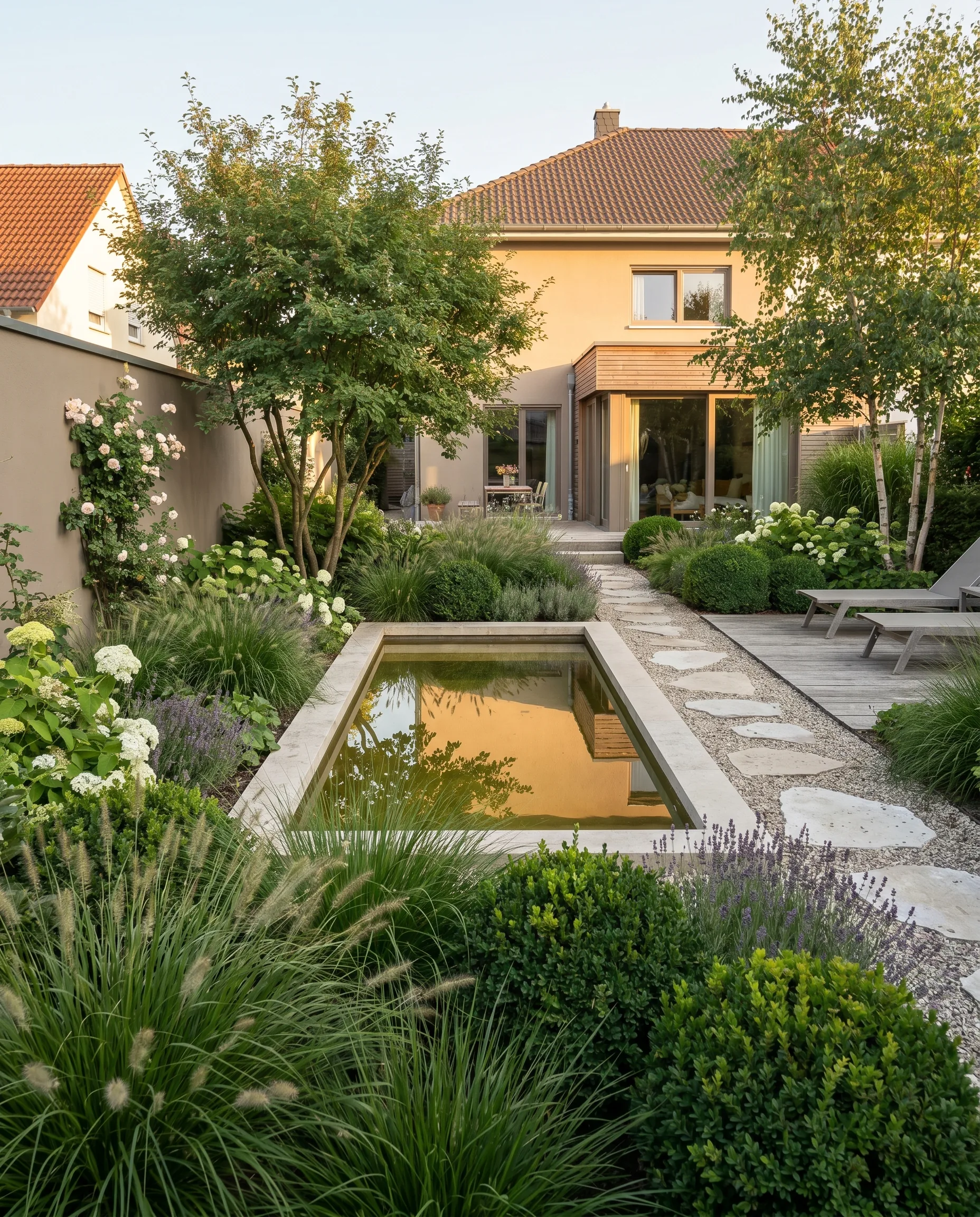
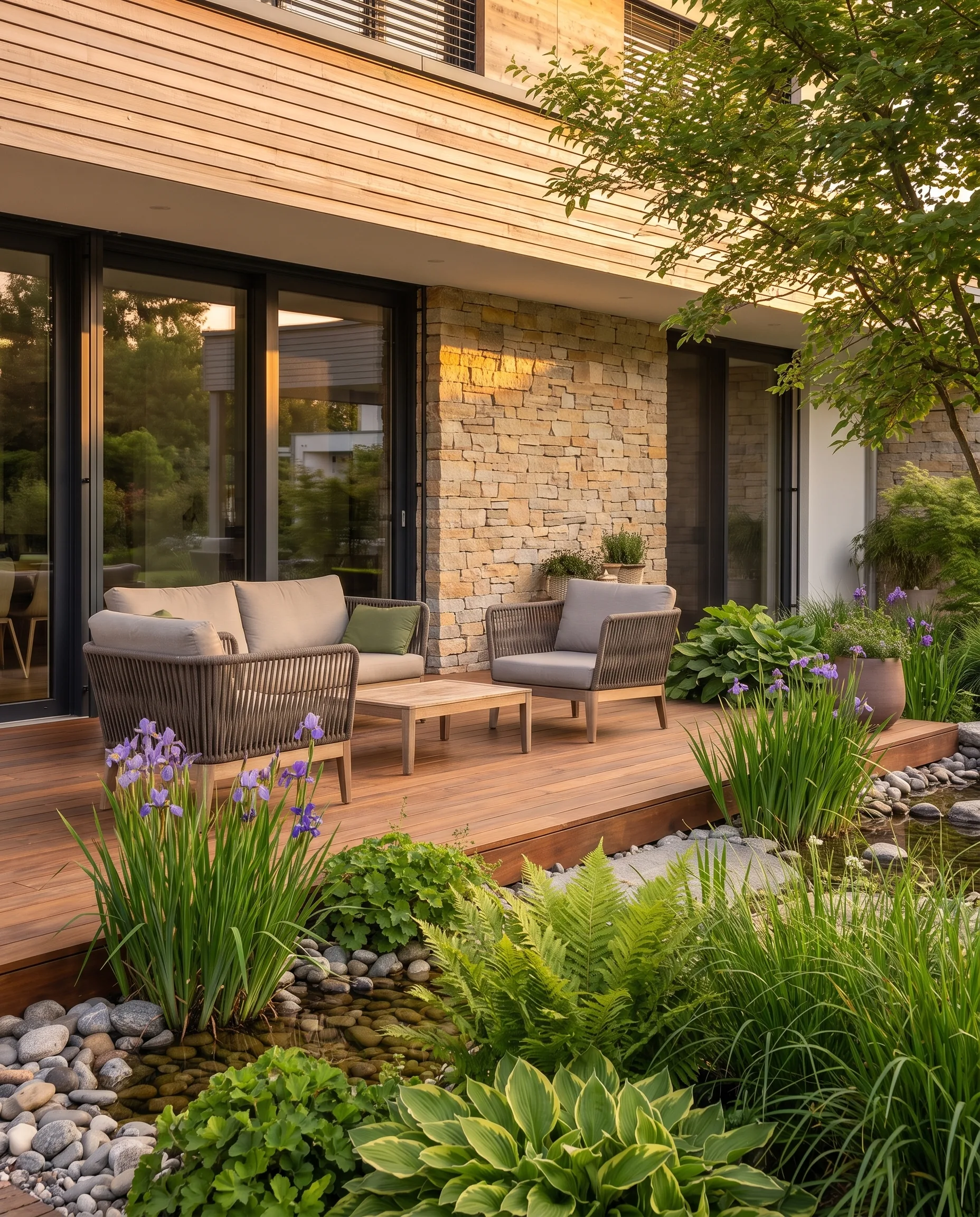
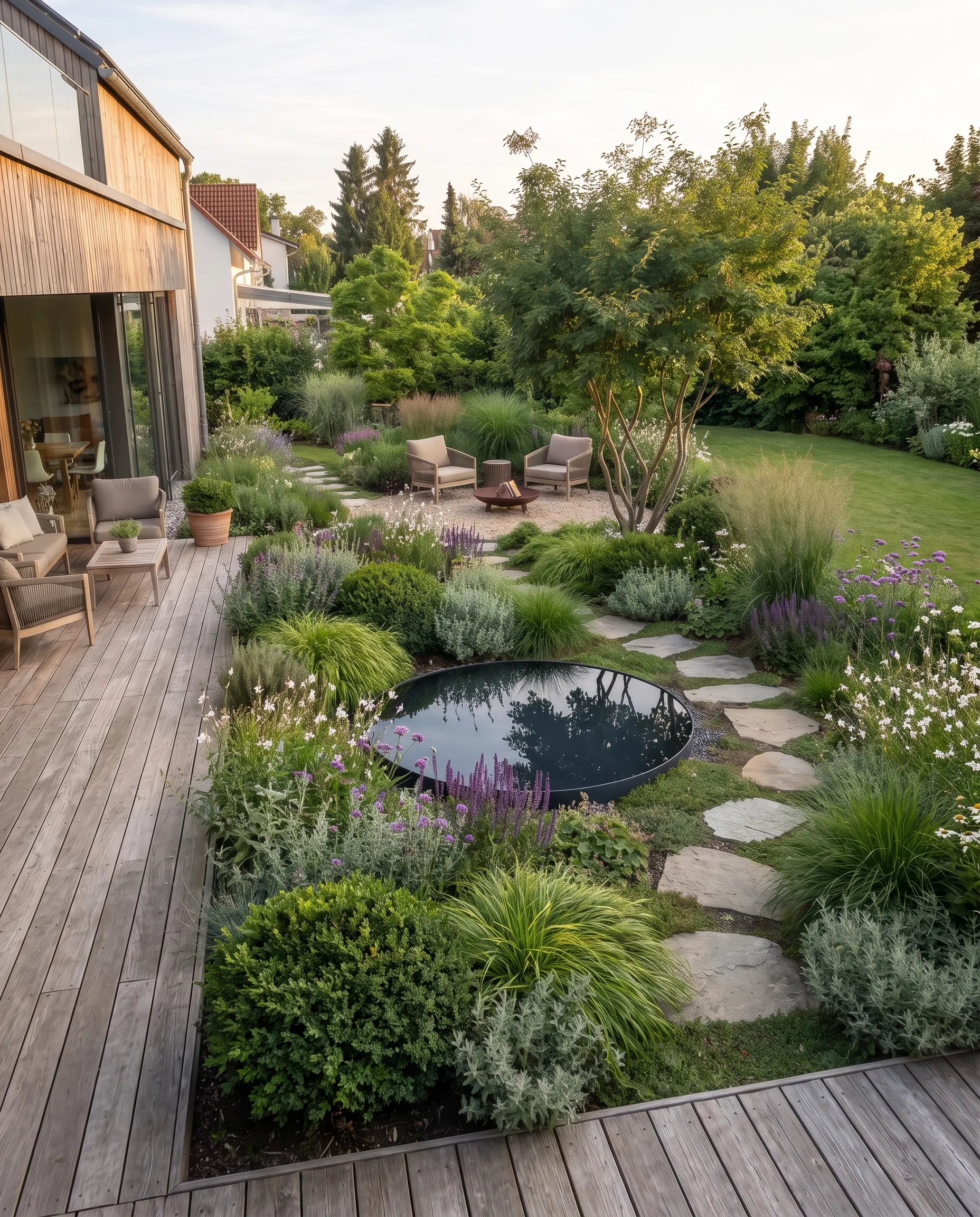
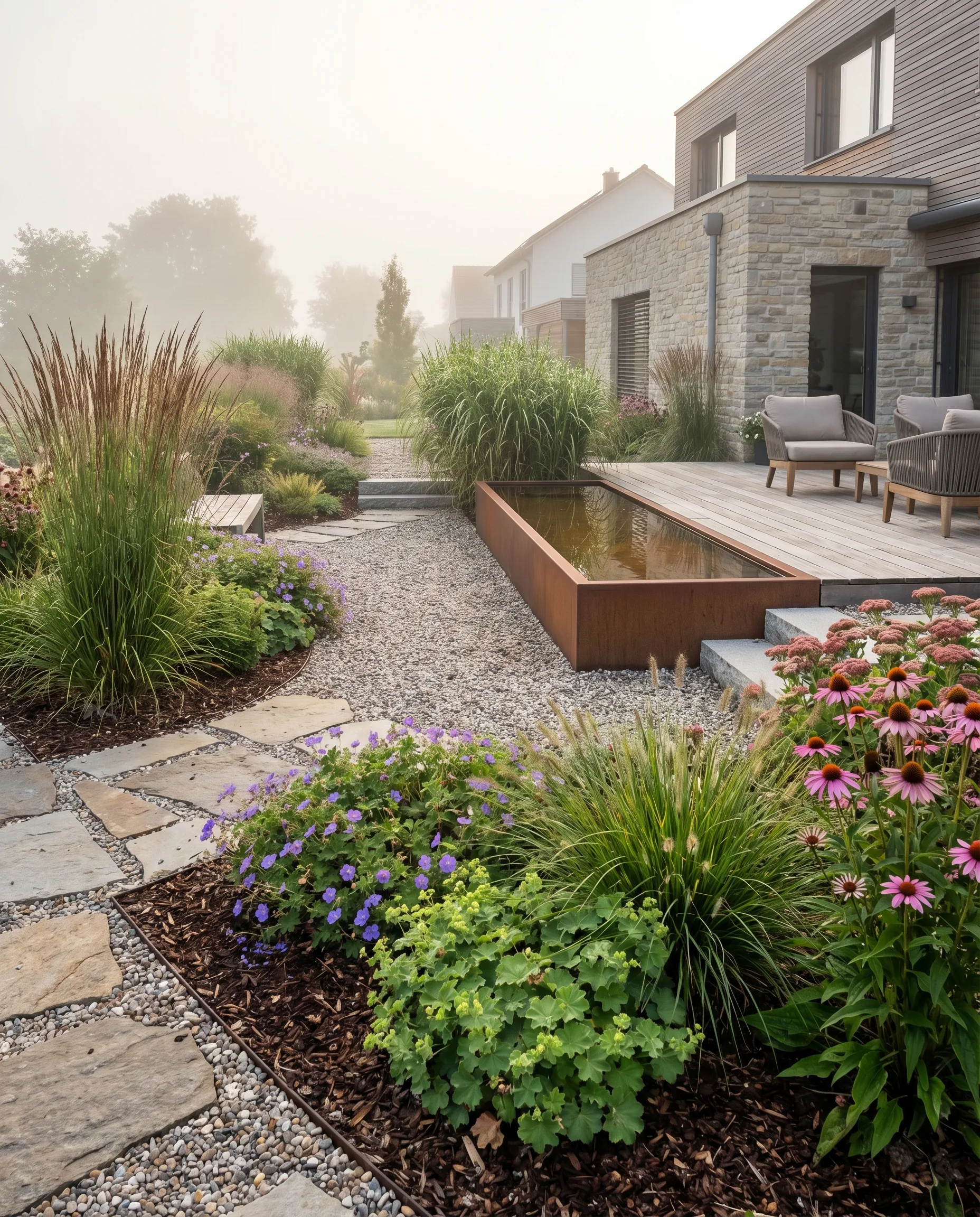
AI visualization has changed the early phase of garden planning. In minutes, a photo turns into design ideas that the client understands. At the same time, a photorealistic image raises expectations it cannot fulfil: it shows a surface, not a sub-base, and an established garden, not a fresh planting. This article shows what AI achieves in garden planning today, where its limits lie, what this means for planting design and which limits are likely to shift over the next few years.
In short: Today, AI delivers fast, understandable design ideas and a concept with materials and a planting character. It knows neither soil nor gradient, does not measure and takes no responsibility. Scale, quantities and regional plant selection will improve significantly with better models and more data. Subsoil, site visit and responsibility for the construction work stay with you.
What AI achieves in garden planning today
- Design ideas on the client's photo. House, trees and viewing angle remain recognizable, only the garden changes. The client does not have to read a plan.
- Variants in minutes. “Same garden, but with a wooden deck instead of natural stone” becomes a new variant instead of a new sketch.
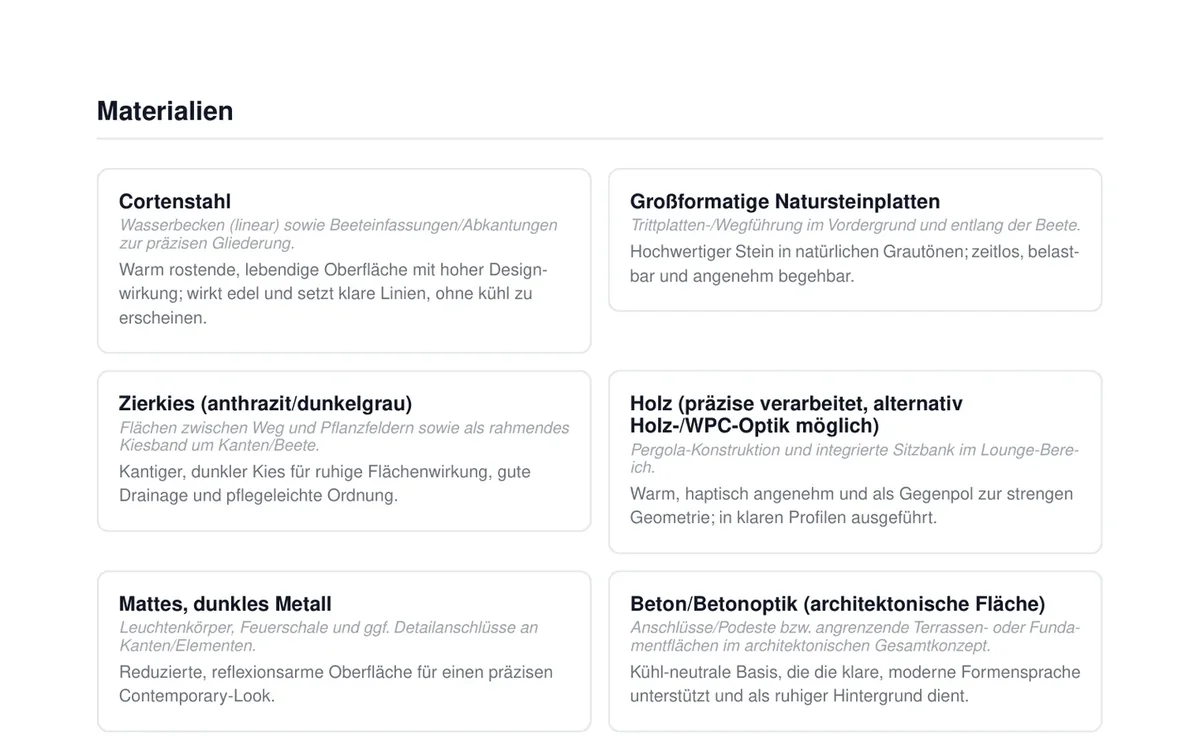
- A concept as a basis for discussion. Modules, materials, colour palette and a planting concept summarize the chosen direction.
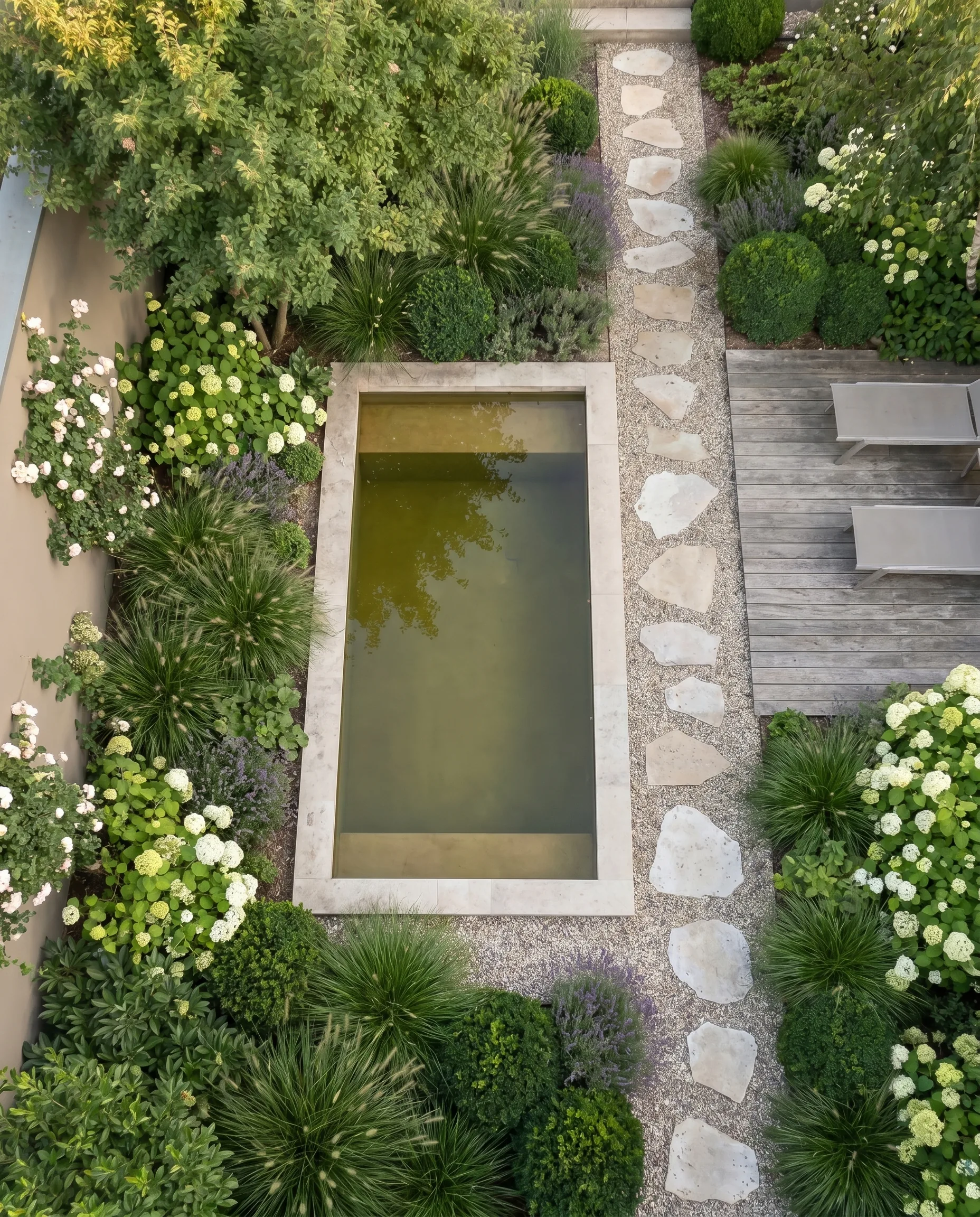
- A top view with concept-level accuracy. A garden plan with outer dimensions, north arrow, scale and legend places the elements in space. It is a guide, not a construction plan.
That is a lot for the first phase. Everything after that needs your expertise.
Where the limits lie today
What lies beneath the surface
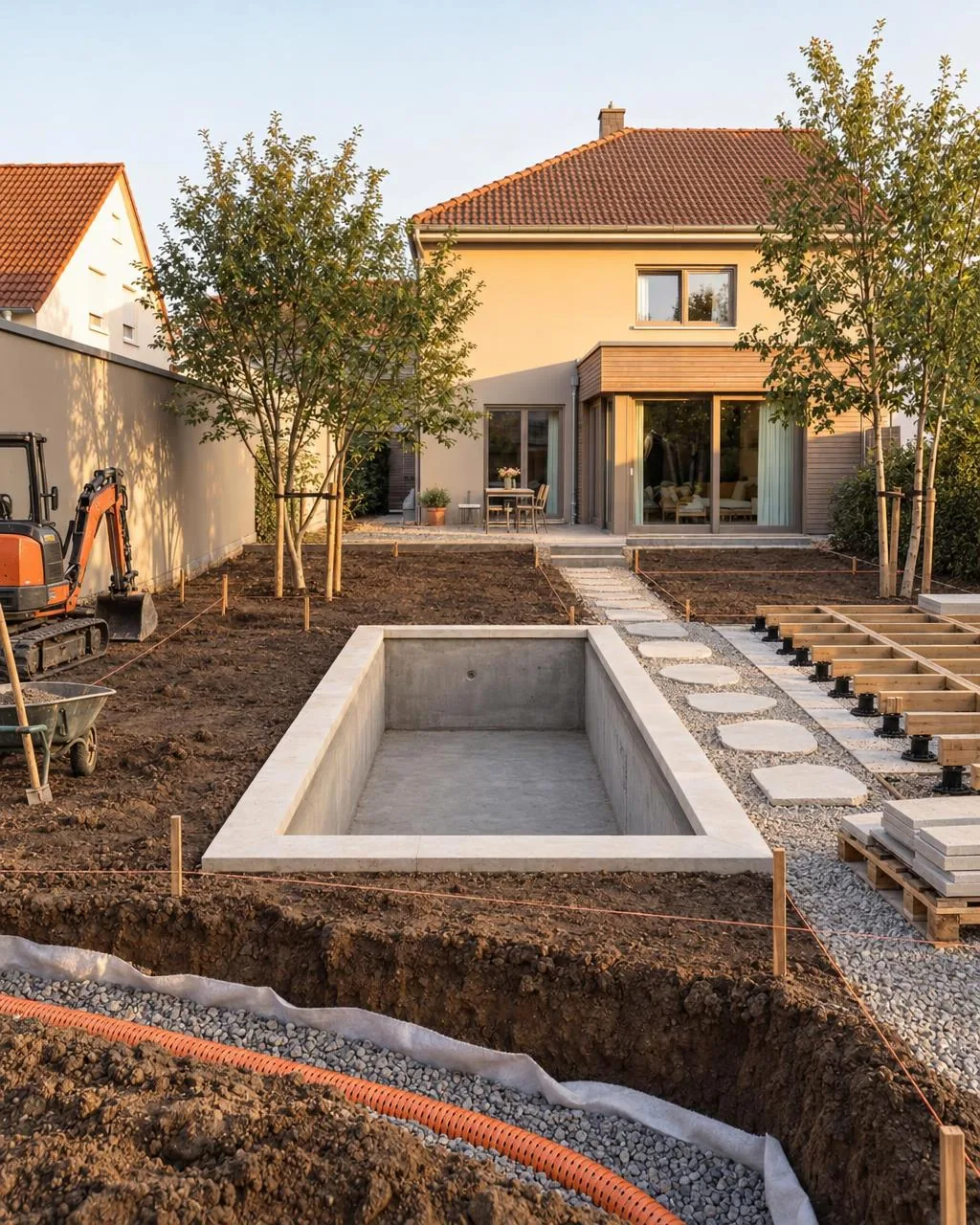
An image shows surfaces. Whether there is clay under the lawn, whether the subsoil can carry a terrace, where utility lines run and how much excavation is involved cannot be seen on any photo. That is exactly where the most expensive mistakes happen. Only the site visit clarifies this, if in doubt with a soil test or a utility records check.
Gradient and drainage
Where surface water flows and how the property behaves in heavy rain often depends on a few centimetres of height difference. A terrain model cannot be derived from a single photo. You plan gradient, drainage and connections to the house based on the site measurement.
Scale and quantities
A visualization knows no metres. In the image, a terrace can look larger or smaller than the space available for it on the property. The garden plan with concept-level accuracy helps with orientation, but does not replace a site measurement. You determine areas, quantities and line items yourself.
Building law and neighbour law
Boundary distances for hedges and trees, permitted heights of walls and privacy screens, requirements from local development plans: these are regulated differently in the federal states and municipalities. An AI does not know the individual case. What looks good in the image is not necessarily legally permitted.
Responsibility for the construction work
Responsibility for professional construction work lies with the business carrying it out, regardless of where an idea comes from. If a business considers a planned construction method unsuitable, the VOB/B (the German standard terms for construction contracts) provides for concerns to be raised in writing (§ 4 Abs. 3 VOB/B). An AI image does not change that. For your individual case, your trade association or a legal adviser can help; this article is not legal advice.
Planting design: what the AI suggests and what you decide
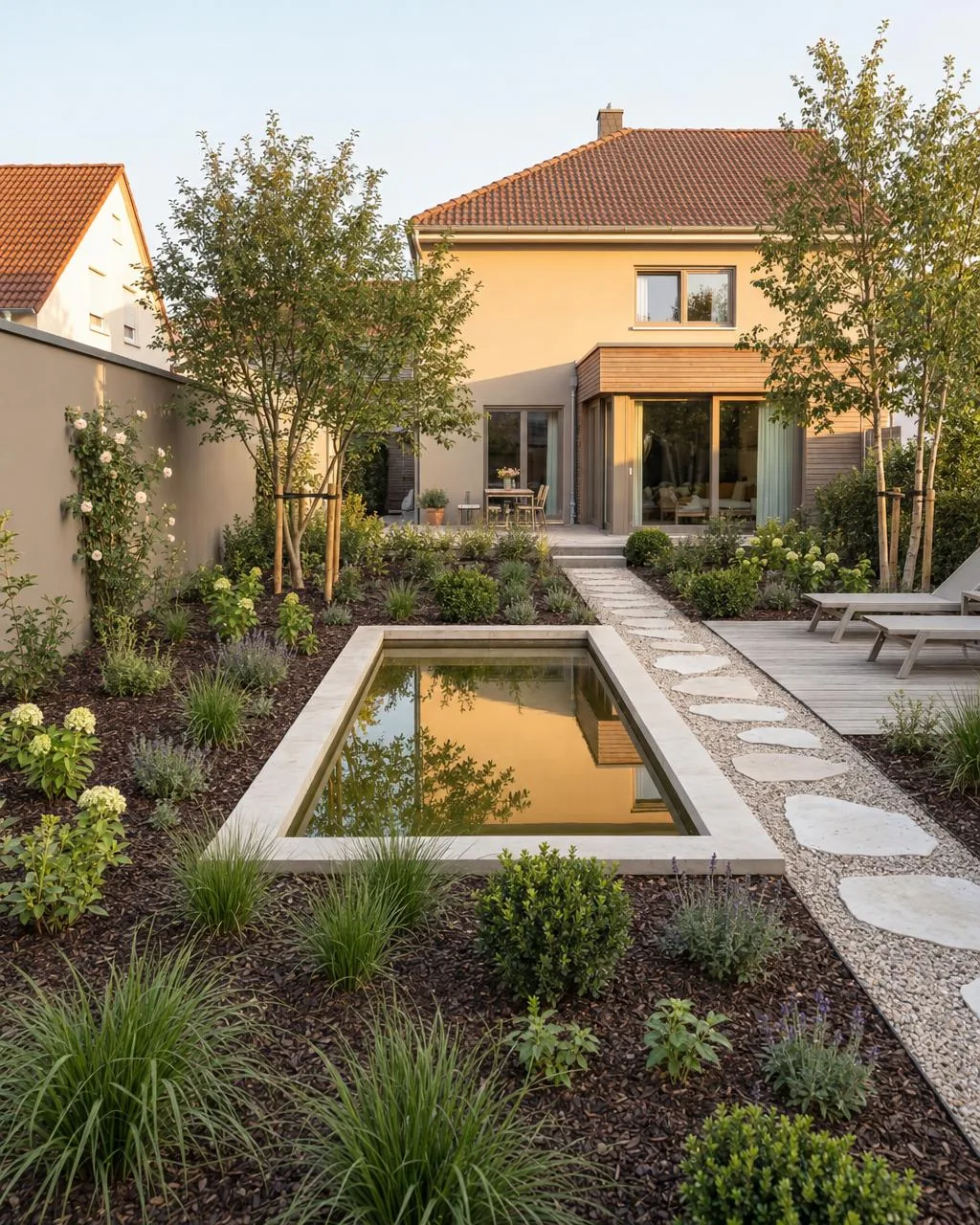
With planting, the gap between image and reality is greatest. A visualization almost always shows the established state: dense perennial areas, large hydrangeas, closed hedges. But planting is done in pot sizes and nursery grades, and depending on the planting it takes two to five years until the image is reached, longer for trees and shrubs.
What the AI contributes:
- A planting character and plant suggestions that match the style and the colour palette.
- Variants, for example “more grasses, fewer perennials” or “more shade-tolerant”.
- A common language with the client, who can rarely judge plant names and growth heights.
What you decide:
- Location: light, soil, moisture, root competition and the microclimate of the property.
- Planting plan: species, numbers of plants, planting distances and nursery grades. The planting concept in GardenPilot does not give numbers of plants.
- Soil preparation and maintenance: what the client has to do in the first years for the image to be reached.
Show the client both: the target image and an honest statement about the first year. How to address such expectations in the meeting is described in the article Managing expectations with AI visualizations.
Outlook: what is likely to change in the next few years
Image and language models are developing quickly. Much of what is a limit today is a limit of the data, not of the principle. The following assessment describes the direction, not commitments and not dates.
| Topic | Today | Likely in a few years | Remains with you |
|---|---|---|---|
| Scale | one photo, no dimensions | Several photos, video or depth sensors in the smartphone produce a spatial model with dimensions; the visualization is based on a site measurement | Checking the site measurement on site |
| Quantities | none | Areas, quantities and item counts can be derived from a dimensionally accurate plan | Prices, cost estimate, quote |
| Existing features in the image | good, but not error-free | House, trees and boundaries remain unchanged more reliably | Checking what really stays |
| Plant selection | by style and rough information | Links to climate data, soil maps and plant databases make suggestions more regional | Site assessment on site |
| Growth | mostly the established state | Depictions for year 1, year 3 and year 10 based on growth data | Maintenance plan and conversation about expectations |
| Subsoil | invisible | remains invisible; soil data becomes more precise, but not precise to the individual plot | Site visit, soil test, utility records check |
| Law and responsibility | with the business | with the business | Checking, notice of concerns, warranty |
For businesses, this means: the time between the first meeting and a reliable concept will continue to shrink, and the images will become more accurate. What does not shrink is the part the client hires you for: local knowledge, construction knowledge, plant knowledge and the responsibility for making sure the garden still works after five winters.
How to use AI sensibly
- In the first meeting for the direction: design ideas on the client's photo, two to three variants.
- Before the quote for the decision: concept with materials and planting character, on request the garden plan as a top view.
- After that with your own tools of the trade: site measurement, soil test, construction planning, planting plan, cost estimate.
How the process from first meeting to concept works is described in the article Creating a garden concept.
What it costs with GardenPilot
A client project starts with 3 credits and delivers three design ideas on the photo. Each additional variant costs 1 credit, the concept 5 credits, the garden plan 3 credits per concept variant; the client folder is free of charge. A typical project with around 10 credits comes to about €17 to €25 net depending on the package, with no subscription. Your first client project is free. All prices are on the pricing page for businesses.
Frequently asked questions
Can AI replace garden planning?
No. It partly replaces the early idea phase, not the planning. For reliable planning, it lacks the soil, gradient, dimensions and knowledge of the individual case.
How reliable are AI plant suggestions?
Good as a basis for discussion, not as a planting plan. They match the style and colour palette, but take the location into account only roughly. You determine species, numbers of plants and nursery grades.
Who is liable if an AI idea is implemented?
The business carrying out the work is responsible for the construction work, regardless of where the idea came from. If you consider a requested construction method unsuitable, raise your concerns in writing. For the individual case, your trade association or a legal adviser can help.
Is it worth waiting for better AI?
No. Even today, visualization saves time in the first meeting and makes decisions easier. If you gain experience now, you can assess new possibilities more quickly later.
Try GardenPilot Professional
Your first client project is free: three visualizations directly on the photo of the existing garden and a worked-out concept – presented as a client folder.
Try your first client project for free